
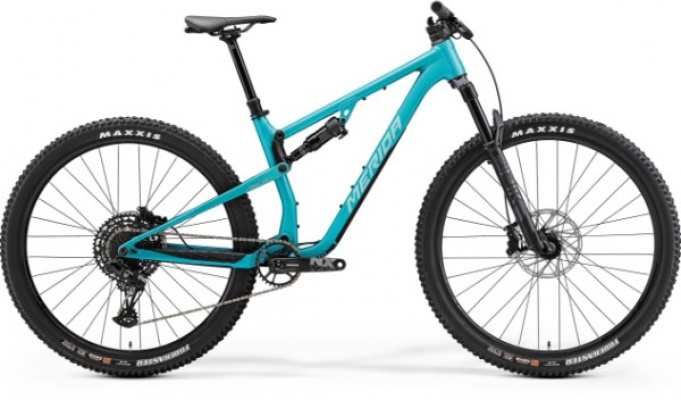
Merida ONE-TWENTY 700
Climb all day with XC lungs, then rail home with proper trail composure and zero fuss.
- P-FLEX seatstays: low-maintenance flex replaces complex linkages
- 130 mm RockShox Pike and Deluxe: plush trail control
- Steep seat angle and long reach: climb sharp, descend calm
- SRAM NX Eagle 12-speed: wide 10 - 50T range
- Dropper post up to 200 mm: full descending freedom
- 29×2.5" tyre clearance: room for aggressive rubber
Merida ONE-TWENTY 700 Deals

Prices and availability can change quickly. Delivery charges are not always included in listed prices.
Final price, stock status and delivery terms are set by retailer. We may receive a commission on purchases made.
Bikesy's Verdict
The Merida ONE-TWENTY 700 is that rare thing: a trail bike that genuinely delivers on the 'do-it-all' promise without asking you to compromise on climbs, descents, or your bank balance. P-FLEX suspension strips out complexity and maintenance faff while delivering progressive, capable travel that soaks up rough ground and pedals crisply when you're chasing the next summit. Progressive geometry - long reach, slack head angle, steep seat tube - gives you the poise to commit on descents and the efficiency to keep pace on climbs, all wrapped in a robust aluminium frame that's built for real-world abuse.
Stock spec is impressively well-sorted: RockShox Pike and Deluxe suspension, SRAM NX Eagle drivetrain, DB8 four-piston brakes, and size-specific dropper posts up to 200 mm. It's the kind of build that used to cost significantly more, and Merida's nailed the balance between capability and value. You'll ride this bike hard for a season or two before any upgrades feel necessary, and when they do, it's a platform that rewards your skills first.
If you're after a versatile trail bike that climbs like it's got less travel than it does, descends like it's got more, and handles everything in between with playful, intuitive confidence, the ONE-TWENTY 700 is an outstanding choice.
Pros
- Progressive geometry delivers climb-sharp posture and descend-calm poise
- P-FLEX suspension: low-maintenance, progressive, genuinely capable
- Well-judged spec - Pike Select, Deluxe Select+, NX Eagle, DB8 brakes - punches above its weight
- Size-specific dropper posts up to 200 mm give full descending freedom
- Robust aluminium frame with clearance for 29×2.5" rubber and practical mounts
Cons
- Around 15 kg - heavier than racier XC platforms if you chase KOMs
- SRAM DB8 brakes can feel underwhelming for heavier riders or long, steep descents
- Forekaster rear tyre lacks bite in loose or wet corners; a more aggressive tread helps
About the Merida ONE-TWENTY 700
Merida's ONE-TWENTY 700 sits in that sweet spot where cross-country efficiency meets genuine trail capability - and it does so without asking you to mortgage the house. Built around 130 mm of RockShox suspension front and rear, this aluminium trail bike leans on Merida's P-FLEX technology: shaped, butted seatstays that flex rather than pivot, paired with a rocker link to deliver rear travel. It's a clever bit of engineering that strips out bearings and complexity, leaving you with a frame that pedals crisply, absorbs chatter, and shrugs off the kind of neglect that would leave a multi-pivot design creaking like a haunted staircase.
The geometry tells you everything you need to know about intent. Long reach figures and a slack-for-short-travel head angle give you the poise to commit on descents, while a steep seat tube plants you over the pedals when the gradient kicks up. It's not trying to be an enduro sled - this is a bike that rewards rhythm and flow rather than brute force. You'll find yourself carrying speed through technical sections, leaning on that progressive suspension curve when roots stack up, and still having enough in the tank to sprint the final climb back to the car. The SRAM NX Eagle drivetrain offers a wide 10 - 50T cassette range, so whether you're grinding fire-road switchbacks or spinning out on fast singletrack, there's a gear that fits.
What makes the 700 stand out in a crowded field is how well-sorted the stock build feels. RockShox Pike Select forks and a Deluxe Select+ shock bring genuine trail performance, SRAM DB8 four-piston brakes haul you down with authority, and a size-specific dropper post (up to 200 mm on larger frames) means you're not compromising cockpit freedom. It's the kind of spec that used to live a tier or two higher, and Merida's pulled it off without cutting corners on the frame itself. Smooth welds, internal cable routing through the headset, and clearance for 29×2.5" rubber all point to a bike designed for real-world abuse, not just catalogue glamour shots.
Merida ONE-TWENTY 700 geometry
The numbers translate into a bike that feels planted without being ponderous. Reach is generous across the size range, pushing your weight forward enough that the front wheel stays weighted through steep climbs and committed turns. That longer front centre also means the Pike doesn't dive under braking or feel twitchy when you're threading narrow lines - there's a calm, predictable quality to the steering that inspires confidence even when you're riding beyond your usual comfort zone.
Pair that with a steep seat angle and you're sitting right over the bottom bracket when you're climbing, maximising traction on loose or technical ascents. You won't be sliding forward on the saddle hunting for grip; the geometry does the work for you. When you drop the post and point downhill, that slacker head angle (for a 130 mm bike) and the longer wheelbase give you stability at speed, letting you relax your grip and let the bike do the talking. It's not as slack as a full enduro rig, so you'll still feel engaged and able to flick the bike around tight switchbacks, but there's enough composure that you're not white-knuckling every rock garden.
Chainstays are kept reasonably short, which helps the rear end snap around when you need to change direction quickly or manual over obstacles. Combined with the progressive P-FLEX suspension, the back wheel tracks beautifully through rough ground, soaking up square-edge hits without feeling vague or wallowy. The result is a bike that climbs like it's got less travel than it does, descends like it's got more, and corners with a playful, intuitive feel that makes every trail session feel like you've improved overnight.
Component choices & upgrades
Out of the box, the ONE-TWENTY 700 is already well equipped for serious trail riding. The RockShox Pike Select fork and Deluxe Select+ shock offer platform damping and rebound adjustment, giving you enough tuning range to dial the bike for your weight and local terrain. SRAM NX Eagle is a workhorse drivetrain - it shifts cleanly, the wide cassette range covers everything from lung-busting climbs to flat-out descents, and it's robust enough to handle the kind of punishment that comes with regular trail use. The SRAM DB8 four-piston brakes deliver strong, consistent stopping power, and while some riders chasing maximum modulation might hanker for a step up, they're more than adequate for the bike's intended use.
If you're the sort of rider who's already pushing the limits of what 130 mm can handle - charging steep, loose descents or riding year-round in wet, gnarly conditions - there are sensible upgrade paths. Swapping the Maxxis Forekaster rear tyre for something with more aggressive side knobs (a Dissector or Assegai, for instance) will give you extra bite in corners and under braking without sacrificing too much rolling speed. If you find yourself cooking the brakes on long descents, moving to SRAM Code or Shimano XT four-piston brakes will add power and heat management. A coil shock conversion is worth considering if you're a heavier rider or you want a more supple, consistent feel through the travel, though the Deluxe Select+ is impressively capable as-is.
For riders focused on weight savings or race-day performance, a lighter wheelset with wider internal rims (around 30 - 32 mm) will sharpen handling and let you run lower tyre pressures for better traction. Upgrading the fork to a Pike Ultimate or a Fox 34 Factory adds high- and low-speed compression damping, giving you finer control over how the suspension behaves. But here's the thing: the stock build is so well-judged that you can ride this bike hard for a season or two before any of these upgrades feel necessary. It's a platform that rewards your skills first, and only asks for better components when you've genuinely outgrown what's there.
Where the Merida ONE-TWENTY 700 excels
This bike is outstanding at all-day trail riding where you're mixing long climbs with technical descents and everything in between. If your typical weekend involves fire-road slogs to access singletrack, then fast, flowy descents punctuated by rooty, rocky sections, the ONE-TWENTY 700 will feel like it was built for exactly that. The steep seat angle and efficient P-FLEX suspension mean you can keep pace with XC riders on the way up, and the progressive geometry and 130 mm of travel give you the confidence to let off the brakes and carry speed on the way down.
It also excels as a first serious trail bike for riders stepping up from hardtails or shorter-travel rigs. The geometry is forgiving enough that you won't feel out of your depth, but it's progressive enough that you'll grow into it as your skills develop. Because the P-FLEX suspension is low-maintenance and the spec is robust, it's a bike you can ride hard without constantly worrying about service intervals or fragile components. It's practical, dependable, and genuinely fun - a rare combination at this price point.
Where it's less ideal is at the extremes. If you're chasing podiums in XC races, the weight (around 15 kg depending on size) will feel like a handicap compared to lighter, racier platforms. And if you're regularly riding bike-park laps or ultra-steep, chunk-heavy enduro trails, you'll eventually want more travel and a burlier build. The SRAM DB8 brakes, while solid, can feel a touch underwhelming if you're a heavier rider or you're descending long, steep runs where heat management becomes critical. The Forekaster rear tyre is fast-rolling and predictable, but it won't give you the same cornering confidence as a more aggressive tread pattern when conditions turn loose or wet.
Think of the ONE-TWENTY 700 as the bike that does 90 per cent of what most riders need, most of the time, without compromise. It's not a specialist, but that's precisely the point - it's a bike that lets you ride more and worry less.
Merida ONE-TWENTY 700 FAQs
What is the Merida ONE-TWENTY 700 good for?
It's built for versatile trail riding: long climbs, technical singletrack, and fast descents. The geometry and suspension balance efficiency with capability, so you can tackle all-day epics without feeling like you're on the wrong tool for the job. It's equally at home on flowy trails and rougher, more technical terrain.
How much travel does the Merida ONE-TWENTY 700 have?
It runs 130 mm of travel front and rear. The RockShox Pike Select fork and Deluxe Select+ shock deliver that travel through a progressive curve, so you get suppleness over small bumps and support when you're pushing hard into bigger hits.
Is the Merida ONE-TWENTY 700 a good beginner bike?
Absolutely. The forgiving geometry, reliable spec, and low-maintenance P-FLEX suspension make it an excellent choice for riders developing their skills. It's capable enough that you won't outgrow it quickly, but it's not so aggressive or demanding that it'll intimidate you when you're still learning to read trail.
What is the weight of the Merida ONE-TWENTY 700?
Expect around 15 kg for a medium frame, depending on exact spec and build variations. That's not featherweight, but it's reasonable for a well-equipped aluminium trail bike with this level of capability and durability.
How does the P-FLEX suspension work on the Merida ONE-TWENTY?
P-FLEX uses shaped, butted seatstays that flex to provide rear suspension travel, working in tandem with a rocker link. It's a simpler, lower-maintenance design than traditional multi-pivot systems, with fewer bearings to service. The result is a progressive feel that pedals efficiently and absorbs impacts without feeling harsh or vague.
What are the best upgrades for a Merida ONE-TWENTY 700?
Start with tyres if you want more grip - swap the rear Forekaster for something more aggressive. If you're riding hard and often, consider upgrading the brakes to SRAM Code or Shimano XT for more power and heat management. A lighter wheelset or a coil shock conversion are worthwhile if you're chasing performance gains, but the stock build is strong enough that upgrades can wait until your riding genuinely demands them.
How does the Merida ONE-TWENTY 700 compare to the Merida ONE-FORTY?
The ONE-FORTY offers 140 - 150 mm of travel and a more enduro-focused build, making it better suited to steeper, rougher descents and bike-park laps. The ONE-TWENTY 700 is lighter, more efficient on climbs, and more playful on mellower trails. If you're spending more time climbing than descending, or you want a bike that's nimble and engaging rather than purely confidence-inspiring, the ONE-TWENTY is the better choice.
What tyre pressure should I run on my Merida ONE-TWENTY 700?
Start around 25 - 28 psi front and 27 - 30 psi rear for a 75 kg rider on tubeless Maxxis Forekasters, then adjust based on terrain and feel. Lower pressures give you more grip and comfort but increase the risk of pinch flats or burping; higher pressures roll faster but can feel harsh and reduce traction. Experiment in 2 psi increments until you find the sweet spot for your weight and riding style.
Key Features & Benefits
- P-FLEX seatstay suspension with rocker link: Delivers progressive 130 mm travel with fewer bearings to service, so you ride more and wrench less
- Long reach and slack head angle for a short-travel bike: Plants the front wheel on climbs and keeps you calm at speed on descents, inspiring confidence beyond the travel figure
- Steep seat tube angle: Positions you over the pedals for maximum traction on technical climbs without sliding forward on the saddle
- SRAM NX Eagle 12-speed with 10 - 50T cassette: Wide range covers lung-busting climbs and flat-out descents without gaps or compromises
- Size-specific dropper posts (150 - 200 mm): Full descending freedom on larger frames, proper cockpit fit on smaller sizes, no compromise either way
Merida ONE-TWENTY 700 2024 & 2023 differences
The 2024 model introduced a significant update with a new LITE aluminium frame featuring P-FLEX suspension technology and revised 'Agilometer' geometry. Reach figures grew longer, the seat angle steepened, and the head angle slackened compared to the previous generation, transforming the bike's on-trail character from capable to genuinely progressive. The 2024 spec retained 130 mm RockShox suspension (Pike Select and Deluxe Select+) and the SRAM NX Eagle drivetrain, but the frame redesign was the headline change - smoother welds, internal headset cable routing, and clearance for 29×2.5" tyres all pointed to a more refined, trail-focused platform.
The 2023 and earlier models (2019 - 2023 generation) ran 120 mm of travel in an aluminium frame with less progressive geometry. While those bikes were capable and well-regarded, they lacked the longer reach, slacker head angle, and steeper seat tube that define the current generation. Suspension performance was solid but less refined, and the overall ride character leaned more towards traditional trail bike manners than the modern, downcountry-influenced feel of the 2024-onwards models. If you're considering a used 2023 or older ONE-TWENTY 700, expect a slightly more conservative geometry and 10 mm less travel, though the core versatility and value proposition remain strong.
Alternatives to Consider
Within Merida's own range, the ONE-FORTY 700 steps up to 140 - 150 mm of travel and a burlier build, making it the natural choice if you're riding steeper, rougher descents or spending more time in the bike park than on long climbs. For riders chasing lighter weight and pure XC speed, the Merida Ninety-Six 7000 strips back the travel and sharpens the geometry, though you'll sacrifice the ONE-TWENTY's descending composure and all-day comfort.
Cross-brand, the Trek Fuel EX 5 offers similar 130 mm travel and a progressive geometry ethos, with Trek's ABP suspension and a comparable SRAM NX Eagle build. The Specialized Stumpjumper Alloy brings more travel (typically 140 - 150 mm) and a slightly more aggressive stance, making it a closer rival to the ONE-FORTY than the ONE-TWENTY. If you want a playful, poppy feel with less weight, the Santa Cruz Tallboy Aluminium R delivers 120 mm of VPP suspension and a lively ride character, though it leans more XC-race than all-day trail. The YT Jeffsy Core 2 offers 130 mm travel and a value-focused spec, with a geometry that's slightly slacker and more enduro-leaning than the Merida. Finally, the Nukeproof Reactor 290 Comp sits in a similar sweet spot - 130 mm travel, progressive geometry, and a robust aluminium frame - making it one of the closest direct competitors in terms of capability and intent.
Reviews
Progressive geometry and clever suspension engineering make this aluminium trail bike feel more expensive than it is. Longer reach and a calmer front centre bring poise on descents, while the steep seat angle keeps you planted over the pedals when the gradient kicks up. P-FLEX seatstays flex rather than pivot, stripping out bearings and complexity without sacrificing performance - the rear end soaks up chatter and square-edge hits with a progressive feel that never wallows or feels harsh.
When you're threading tight singletrack or railing berms, the bike responds with an intuitive, playful quality that rewards rhythm and flow. Shorter chainstays help the rear snap around quickly, and the 130 mm of RockShox travel front and rear gives you enough cushion to carry speed through rough sections without feeling like you're riding a pogo stick. Because the suspension curve is progressive, you can push hard into compressions and landings without blowing through the travel or feeling like you've run out of support.
Stock spec is impressively well-judged. RockShox Pike Select forks and a Deluxe Select+ shock bring genuine trail capability, SRAM NX Eagle shifts cleanly across the wide 10 - 50T cassette range, and SRAM DB8 four-piston brakes deliver strong, consistent stopping power. The size-specific dropper posts (up to 200 mm on larger frames) mean you're not compromising cockpit freedom, and the Maxxis Forekaster tyres roll fast while offering predictable grip in most conditions. It's the kind of build that used to live a tier or two higher, and Merida's pulled it off without cutting corners on the frame itself.
Weight sits around 15 kg depending on size, which is reasonable for an aluminium trail bike with this level of kit, though lighter XC platforms will feel snappier if you're chasing race results. SRAM DB8 brakes are solid for most riding, but heavier riders or those tackling long, steep descents might find them a touch underwhelming when heat builds. The Forekaster rear tyre is fast-rolling and predictable, but it won't give you the same cornering confidence as a more aggressive tread pattern when conditions turn loose or wet - a simple swap sorts that.
This is a bike that does 90 per cent of what most riders need, most of the time, without compromise. It climbs with XC efficiency, descends with trail composure, and corners with a playful, intuitive feel that makes every ride session more fun than the last.
Full Specification
| Frame Material | LITE Aluminium |
| Suspension Design | P-FLEX single pivot with flexing seatstays |
| Front Suspension | RockShox Pike Select, 130mm travel, air, tapered steerer, 44mm offset |
| Rear Suspension | RockShox Deluxe Select+, 130mm travel, lockout, rebound adjustment |
| Drivetrain | SRAM NX Eagle, 12-speed |
| Cassette | SRAM PG-1210 Eagle, 10-50T |
| Crankset | SRAM NX Eagle DUB, 32T, 170mm |
| Chain | SRAM SX Eagle |
| Brakes | SRAM DB8 hydraulic disc, 4-piston callipers |
| Brake Rotors | SRAM Centerline, 200mm front and rear |
| Rims | Merida Expert TR, 29mm internal width, aluminium, tubeless ready |
| Front Hub | Novatec SL-TEAM, 110x15mm |
| Rear Hub | Novatec SL-TEAM, 148x12mm Boost |
| Spokes | Double butted stainless steel, black |
| Tyres | Maxxis Forekaster 29x2.4" EXO TR 3C MaxxTerra |
| Handlebar | Merida Expert TR II, 780mm width, 18mm rise |
| Stem | Merida Expert eTRII, 35mm clamp diameter, 40mm length |
| Grips | Merida Comp EC |
| Headset | Acros ICR MERIDA EXTERNAL neck, upper and lower IPS sealing |
| Seatpost | Merida Expert TR II dropper post (150mm XS/S, 170mm M, 200mm L/XL) |
| Saddle | Proxim W400 STN |
| Bottom Bracket | SRAM DUB BSA 73 MTB Wide |
| Rear Axle | 148x12mm Boost |
| Maximum Tyre Clearance | 29x2.5" |
| Frame Weight | 3.1 kg (size Medium) |
| Approximate Complete Weight | 14.92 kg |