
Pinnacle Hybrid Bikes
Pinnacle hybrid bikes are built with one eye firmly on British reality - greasy November commutes, potholed B-roads, and canal towpaths that can't decide if they're tarmac or gravel. The range is deliberately practical: 6061-T6 heat-treated aluminium frames, generous tyre clearances, and braze-ons for racks and mudguards across virtually the whole lineup. No bike is dressed up to look capable while quietly falling apart by February. What you get instead is a trio of genuinely distinct models - the tough, wide-tyred Lithium for battered urban roads and mixed surfaces; the flat-bar, tarmac-focused Neon for riders who want speed without dropping into road bike geometry; and the dual-sport Cobalt for those who want a short-travel fork and a little more trail confidence at weekends. Each family runs multiple spec levels, so you're not locked into one component tier. The framing is simple: Pinnacle makes bikes for people who actually use them, in the kind of conditions UK cyclists face every day. If you want to compare with similar value-focused alternatives, Carrera hybrid bikes and Boardman hybrid bikes sit in the same conversation, but Pinnacle's braze-on specification is notably comprehensive for the money.
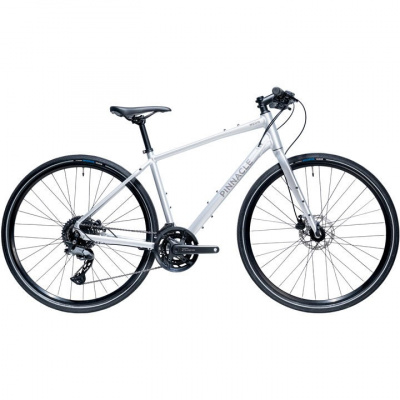
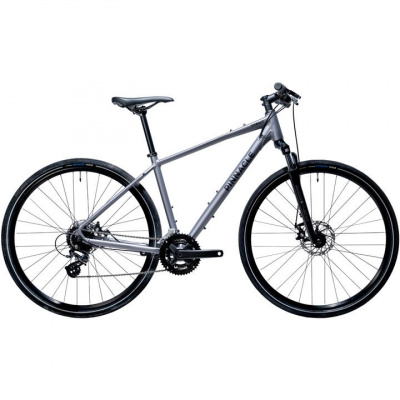
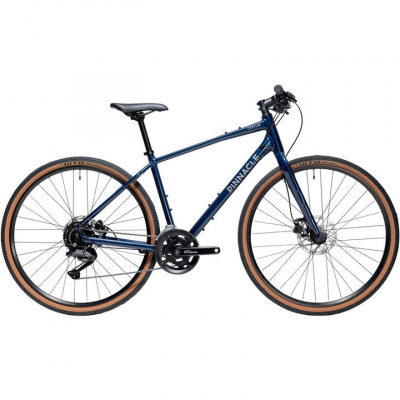
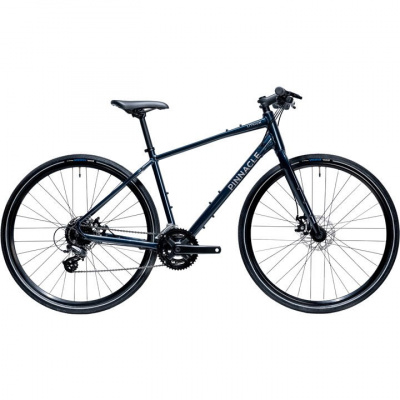
Prices and availability can change quickly. Delivery charges are not always included in listed prices.
Final price, stock status and delivery terms are set by retailer. We may receive a commission on purchases made.
Decoding the Pinnacle Hybrid Lineup
Three families, three very different intentions. The Lithium is Pinnacle's urban workhorse - wide 700c tyres (or 650b wheels on some builds), an MTB-influenced riding position, and a frame that's designed to absorb rather than deflect whatever a British city street throws at it. Think cracked tarmac, speed humps, and the kind of potholes that could swallow a small dog. The Lithium isn't trying to be fast; it's trying to be unflappable.
The Neon is the other end of the spectrum. It's a flat bar road bike in everything but name - narrower tyres, a more stretched-out riding position, and a focus on covering ground efficiently on tarmac. If your commute is mostly smooth city streets or cycle paths and you want to arrive less sweaty, the Neon is where to look. It's not built for grit or gravel; it's built for pace.
The Cobalt sits between the two, adding a short-travel suspension fork into the mix. That fork takes the edge off rougher surfaces and makes the bike feel more planted on compacted paths or light off-road use. It's the choice for riders who commute Monday to Friday and want to head out on mixed-surface routes at the weekend without swapping bikes.
Across all three, Pinnacle uses a numbered spec system - higher numbers mean higher-spec components. Moving from a 1 to a 2 or 3 typically brings upgrades like hydraulic disc brakes instead of mechanical, a wider gear range, or a lighter wheelset. It's a logical ladder: start where your budget sits, and the trade-offs are transparent.
The Pinnacle Tech Philosophy
Pinnacle's engineering decisions aren't glamorous, but they're consistent. The 6061 alloy frame construction - specifically 6061-T6, heat-treated after forming - gives a frame that's stiffer and more fatigue-resistant than standard alloy, without the weight or cost of carbon. It's the material choice of a brand that expects its bikes to take a daily kicking and still feel crisp after two years of commuting.
Tyre clearance is where Pinnacle genuinely stands out. The frames are cut generously, which matters in two ways: you can run high-volume rubber for pothole absorption, and you still have room for full-length mudguards without the tyre rubbing. On a wet Tuesday in November, that combination is worth more than a carbon fork. Mudguard eyelets and rack mounts are standard fitment, not an afterthought - multiple bottle cage mounts are included too, which sounds minor until you're packing for a loaded commute.
The upright geometry runs with a longer wheelbase than a typical road bike. That translates to a stable, planted feel at lower speeds - useful when you're filtering through traffic or navigating a narrow towpath with a pannier on the back. It does mean the Pinnacle range isn't optimised for aggressive riding, but that's not the point. These bikes are built for urban commuting and practical daily use, and the geometry reflects that honestly.
For riders curious about what Pinnacle does when the tarmac runs out entirely, their Pinnacle mountain bikes follow a similar philosophy of value-focused practicality.
Living with a Pinnacle in the UK
A few things worth knowing before you click buy. Pinnacle's sizing tends to feel slightly long in the reach compared to some rivals - the stable geometry that makes them confident at speed can feel a touch stretched for shorter-armed riders. If you're between sizes, check the geometry chart rather than assuming your usual size. A shorter stem can sort most reach issues cheaply if you do end up slightly long.
On the Lithium, dropping tyre pressure by 5 - 10 PSI from the maximum can transform how the bike rides on broken British tarmac. Softer pressure lets the tyre deform over surface imperfections rather than bouncing off them. It's a minor adjustment that makes a real difference on a potholed commute. Just keep an eye on the lower limit to avoid pinch flats.
Canal towpaths and gritty cycle paths will get into your drivetrain faster than road riding. A quick wipe-down and chain lube after a muddy run keeps things shifting cleanly - Pinnacle's mid-range groupsets are reliable, but no cassette enjoys being left caked in grit for weeks. Hydraulic disc brakes on the higher-spec models handle wet conditions well and need less hand force than mechanical discs, which matters on longer commutes.
To run a Pinnacle as a proper commuter, you'll want to add lights and mudguards if they're not already fitted. Pinnacle lights are a practical starting point, and Pinnacle pannier bags are sized to work with the rack mounts already on the frame. If you're commuting through winter, a decent jacket makes more difference than almost any bike upgrade - Pinnacle jackets are cut for cycling and worth pairing with a Pinnacle helmet to keep the setup consistent. Completing the kit doesn't have to be complicated.
One honest limitation: the Cobalt's suspension fork adds weight and needs occasional maintenance (stanchion wipe-down, air pressure checks if it's an air fork). It's not a performance suspension unit - treat it as comfort insurance rather than trail capability, and you'll get on fine.
Pinnacle Hybrid Bikes FAQs
Are Pinnacle hybrid bikes good for commuting?
Yes - and they're specifically configured for UK conditions rather than general use. Models like the Lithium and Neon come with stable geometry, reliable disc brakes, and the braze-ons you need for racks and mudguards. The frame clearances are generous enough to fit full-length guards, which matters if you're riding in all weathers.
What is the difference between Pinnacle Lithium and Neon?
The Lithium runs wider tyres and a more upright, MTB-influenced position - it's built for rough roads, canal paths, and commutes where the surface quality is unpredictable. The Neon uses narrower tyres and a more stretched geometry, functioning as a flat-bar road bike for riders whose commute is predominantly smooth tarmac and who want to cover distance efficiently.
Do Pinnacle hybrid bikes come with mudguards?
Most Pinnacle hybrids don't ship with mudguards fitted as standard. However, the frames include mudguard eyelets and are designed with enough tyre clearance to accept full-length aftermarket guards without rubbing - so fitting a set is straightforward. For UK commuting, it's worth adding them early.