
Pinnacle Pannier Bags
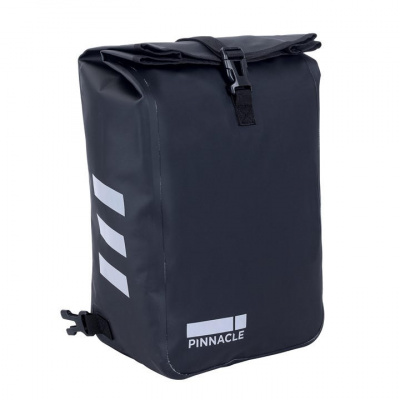
Pinnacle pannier bags are built for riders who want dependable, weather-proof carrying without spending Ortlieb money - and for daily UK commuting, that's a perfectly sensible position to take. These are no-frills bags in the best sense: practical shapes, secure rack mounting, and weather resistance that holds up against the kind of persistent horizontal rain that makes a zip-closed bag a liability by Tuesday.
The range covers both entry-level commuter options and more capable touring models, so whether you're running a Pinnacle hybrid to the station or loading up for a multiday trip, there's a bag in the line-up that fits the job. Capacity, closure type, and mounting hardware all vary across the tiers - more on that below.
Reflective detailing matters on UK roads from October through March, and Pinnacle builds it in as standard. That's a practical detail, not a marketing line. If you're building out a broader luggage setup, don't try to make panniers do everything - our dedicated Pinnacle accessories pages can point you toward bar bags, frame bags, and saddle bags for a more balanced kit.
Prices and availability can change quickly. Delivery charges are not always included in listed prices.
Final price, stock status and delivery terms are set by retailer. We may receive a commission on purchases made.
Will It Fit Your Rack? Compatibility and Sizing Explained
Most Pinnacle pannier bags use adjustable quick-release hooks that span the standard range of pannier rack tubing diameters - typically 8mm to 12mm. That covers the vast majority of rear racks you'll find on hybrid and touring bikes, but it's worth measuring yours before you buy. Racks with unusually thin or thick rails, or those with a short horizontal upper tube, can cause fitment problems regardless of brand.
The more overlooked issue is heel clearance. Slide the mounting hooks too far forward on the pannier rail and your heel clips the bag on every pedal stroke - an annoyance that becomes a real problem on longer rides. Adjust the fore/aft position so the bag sits behind the heel's arc. Most riders need a good 5 - 10cm of clearance; it's worth standing over the bike and turning the cranks by hand before committing to a final position.
The lower hook or bungee strap is the other critical point. It anchors the base of the bag to the lower leg of the rack, creating downward tension that stops the bag swinging inward toward the spokes. Skip this step and you'll have a bag flopping around within half a mile. Secure the bottom fixing first, then clip the top hooks onto the upper rail. It takes thirty seconds and makes a noticeable difference to how stable the bag feels at speed.
Commuter Models vs. Touring Models: What the Extra Money Buys
Pinnacle's entry-level bags lean on water-resistant coated fabrics and zip closures. They're fine for light showers and short commutes where you can dry things out overnight. The zips are the weak point in sustained rain - water finds its way along the zip teeth after twenty minutes of heavy downpour, which in the UK means roughly every other commute from October onwards.
The touring and premium commuter models are a different proposition. High-frequency welded seams replace stitching entirely, removing the needle holes that stitched construction leaves behind. Pair that with a roll-top closure - fold the top down three or four times, clip it shut - and you've got genuine waterproofing rather than water resistance. The roll-top also gives you variable capacity: loosely packed load, leave extra room at the top; stuffed to the brim, roll it down as tight as it'll go. It's a flexible system that works well when your load changes day to day.
The quick-release hook systems on the upper-tier bags are also notably more robust than the basic bungee arrangements on entry models. Adjustable tension, positive engagement, and enough clearance to fit a wider range of rack tubing profiles. If you're commuting five days a week and pulling the bags on and off twice a day, the better hardware pays for itself in longevity within a season. For an indication of where Pinnacle sits in the broader market, Ortlieb panniers remain the benchmark for welded waterproofing, while Altura panniers occupy similar mid-range territory with a strong UK following.
Keeping the Hardware Clean Through a UK Winter
Road salt is the enemy of any metal mounting mechanism. It coats the rear of the bike from the first cold, wet ride of autumn and doesn't really let up until April. The quick-release springs in pannier hooks are small, tight mechanisms - let salt and grit build up in there and they'll start to stick, then seize. A quick rinse with warm soapy water every couple of weeks is all it takes to keep them moving freely. It sounds obvious, but most riders only notice the problem once the hook won't release at the end of a cold commute.
The bags themselves are low maintenance, but there's a right and wrong way to clean the waterproof outer. Don't machine wash PVC or TPU-coated panniers - the agitation and heat stress the welded seams over time and can introduce micro-failures that only become obvious when it's raining hard. Wipe the outers down with a damp cloth, rinse the mounting hardware separately, and let everything dry before storing. If the surface starts to look dull or slightly tacky, a very light application of 303 Aerospace Protectant (or similar UV protectant) keeps the material supple. Check your maintenance kit for suitable cleaning options.
Reflective detailing on the rear and sides of the bags is a genuine safety asset on dark winter commutes, but it does fade with abrasive cleaning. Wipe rather than scrub. The reflective patches on Pinnacle bags are stitched or bonded onto the outer - they're not going anywhere with normal care, but harsh chemicals will dull them faster than anything else.
If you're weighing up whether Pinnacle's range suits your setup or want a higher-spec waterproof option, it's worth browsing Madison panniers as a direct comparison point - similar price brackets, different design priorities. Pinnacle's real advantage is straightforward value: functional waterproofing on the upper models, honest rack compatibility across most standard setups, and reflective safety features that don't feel like an afterthought.
Pinnacle Pannier Bags FAQs
Do Pinnacle pannier bags fit any bike rack?
Pinnacle panniers work with most standard rear racks running 8mm to 12mm tubing diameters, which covers the majority of hybrid and touring setups. You'll also need a lower mounting point on the rack - a bottom rail or leg - to secure the bag's base hook or bungee and stop it swinging toward the spokes.
Are Pinnacle pannier bags fully waterproof?
It depends on the model. The upper-tier touring and commuter bags use welded seams and roll-top closures, making them genuinely waterproof in heavy UK rain. Entry-level zipped models are water-resistant and handle light showers well, but sustained downpours can work moisture in along the zip line.
How do you attach a Pinnacle pannier bag to a rear rack?
Start with the lower hook or bungee - fix it to the bottom leg of the rack first to create downward tension. Then clip the top hooks onto the upper rail. Adjust the fore/aft position so the bag clears your heel during the pedal stroke. Takes about a minute once you've done it once.