
Madison Pannier Bags
Madison pannier bags are designed to take the worst a British winter can throw at a commuter and still deliver dry kit at the other end. We're talking persistent rain, road grit, salt spray, and those pre-dawn rides where the only light you're getting is what reflects back at you. Madison has built its pannier range around three practical realities: true waterproofing rather than a thin DWR coating that fails by November, mounting hardware that stays secure and rattle-free over potholed B-roads, and integrated reflective panelling that actually covers meaningful angles.
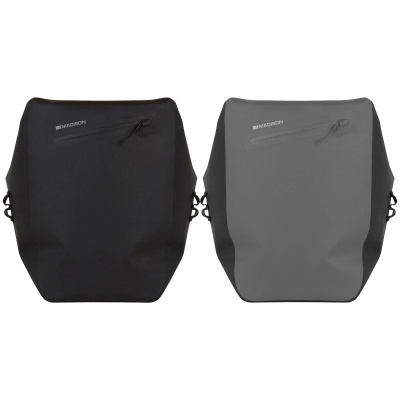
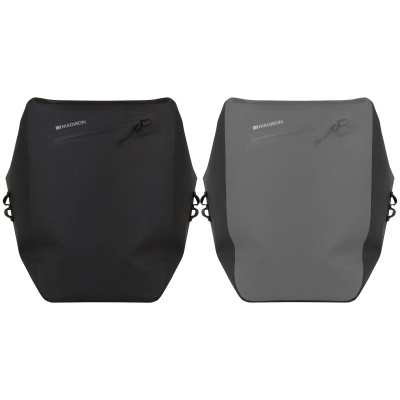
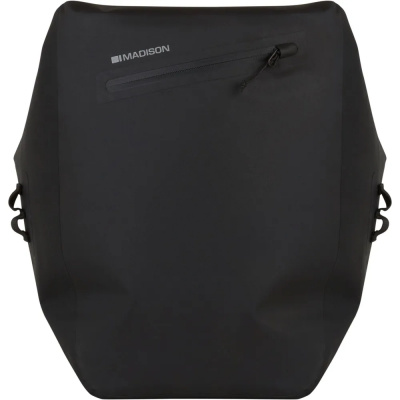
The range splits broadly between everyday commuter options and higher-spec touring bags. Entry-level models pair water-resistant ripstop nylon with deployable rain covers for lighter loads and shorter runs. Step up and you get high-frequency welded seams, roll-top closures, and TPU construction that seals water out completely - no stitching, no leakage points. Mounting systems across the range use adjustable quick-release hooks to grip standard rack tubing, with a lower retention hook that stops the bag swinging into your wheel mid-sprint. Whether you're hauling a laptop across Leeds or packing for a week on the Sustrans network, there's a Madison pannier sized and spec'd for it.
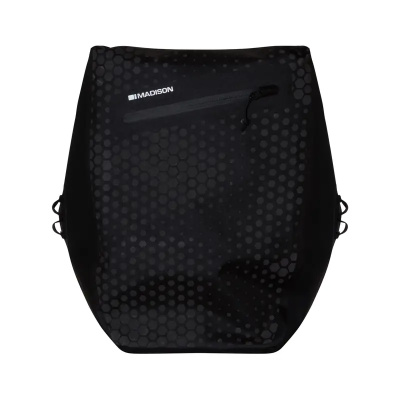
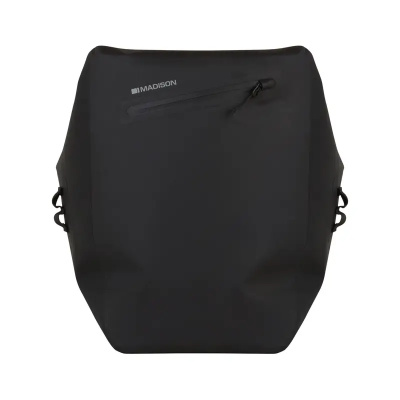
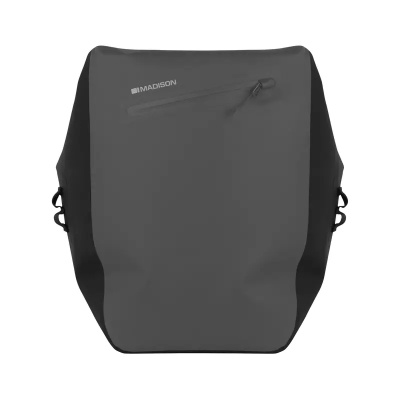
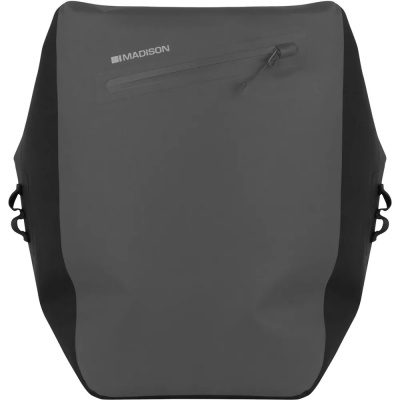
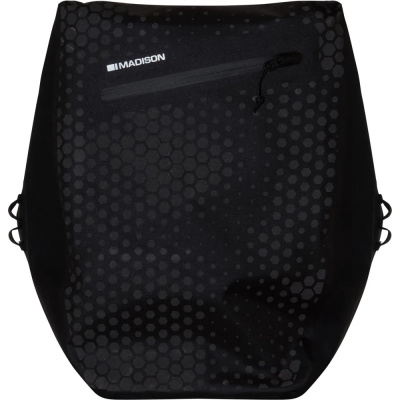
Prices and availability can change quickly. Delivery charges are not always included in listed prices.
Final price, stock status and delivery terms are set by retailer. We may receive a commission on purchases made.
Rack Fitment and Getting the Mount Right
Rack compatibility is where most pannier problems start, and it's worth sorting before you're three miles into a commute listening to your bag tick against the frame. Madison's quick-release mounting systems are designed to clamp onto rack tubing between roughly 8mm and 16mm in diameter - which covers the vast majority of Tubus, Topeak, and own-brand alloy racks you'll find on commuter and touring bikes in the UK. If your rack sits at the narrower end of that range, use the shim inserts that ship with the bag. Skip them and the hook will rock, transferring that movement into a low-frequency rattle that gets old very quickly, and it'll wear through your rack's paint finish over a winter.
The lower retention hook is the bit riders often overlook. It clips onto the rack stay and stops the bag pendulum-swinging when you're grinding out of the saddle on a canal towpath climb. Get it snug. If the bag is still moving, check that the top hooks are fully seated - a half-engaged clip is the usual culprit. Heel clearance deserves attention too: if your heel is catching the bag on the pedal stroke, loosen the top hook rail and slide the bag further rearward on the rack before re-clamping. A level rack mounting also helps here; a rear rack that tilts down at the back pitches the bag forward, directly into your heel's path.
One rack-standard note: some ultralight carbon touring racks use tube diameters outside the standard window. Check your specific rack spec before buying rather than assuming compatibility.
How the Madison Pannier Range Stacks Up
Madison's pannier lineup divides along clear lines once you know what to look for. The commuter-focused options - think the Transit range - use coated nylon construction with taped or stitched seams and include a rain cover for the heavier downpours that a DWR finish won't handle alone. These are practical, reasonably light, and well-priced for riders doing five days a week who want something that works without fuss. The trade-off is that the seam construction means water can track through under sustained pressure, so the rain cover isn't optional in a proper British downpour - it's part of the system.
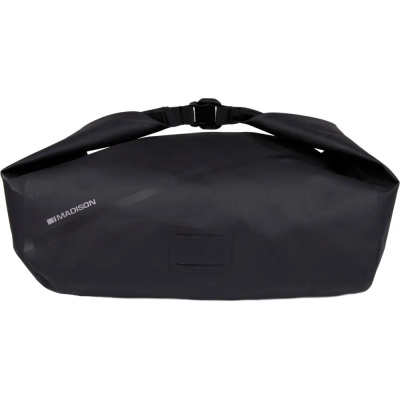
Higher-spec options shift to fully welded TPU construction. The welded seams eliminate every conventional leak point - there's no thread to wick water, no stitch hole left unprotected. Pair that with a roll-top closure and you've got a bag that handles submersion, not just drizzle. The roll-top closure also lets you dial the internal volume down when you're running a lighter load, which keeps the bag from flopping around on the rack. Quick-release hardware on these models is more refined too, with a spring-loaded mechanism that clips on and off a rack in one motion - useful when you're commuting and want the bags off the bike the moment you lock up.
Reflective detailing is integrated throughout the range rather than added as an afterthought. The reflective panelling runs across the rear face and sides, which matters on unlit roads in December when the sun sets before most people leave the office. It's not a substitute for a rear light, but it adds meaningful passive visibility from multiple angles.
If you're building a full touring or bikepacking setup rather than a commuter rig, rear panniers alone won't distribute weight effectively. A heavy rear load makes the front wheel light and the bike slow to respond. Spread it front and back, or mix panniers with a Madison frame bag to keep weight central and low. A Madison saddle bag handles the lightweight overnight kit, while a Madison bar bag puts snacks and navigation within reach without digging into a pannier at every junction. Balance the load and the bike handles like a bike rather than a laden shopping trolley.
Keeping Your Panniers Working Through a UK Winter
Road grit is relentless. A rear pannier sits directly in the spray arc off your back wheel, and by February the back face of the bag and the mounting clips will be coated in a cement-like mix of salt, mud, and ground stone. Leave that in the spring mechanisms and they'll seize or wear faster than they should.
The fix is simple and takes two minutes. After a wet ride, flush the quick-release spring mechanisms with clean water from a bottle - not a pressure washer, which forces grit further in rather than washing it out. Once dry, a dry PTFE spray on the moving parts keeps them operating cleanly. Avoid oil-based lubricants here; they attract grit rather than repelling it.
For the bag itself, welded TPU panels wipe down with a sponge and mild soapy water. Don't machine-wash these bags - the agitation cycle stresses the welded seams and can compromise the waterproof rating over time. Coated nylon options can be hand-washed gently, but again, keep detergent minimal to preserve whatever DWR treatment is left in the fabric. Store panniers unclipped from the rack and loosely open so air can circulate - a damp bag sealed up in a garage breeds mildew faster than you'd expect.
Worth pairing Madison panniers with appropriate riding kit for the same conditions. Their Madison jackets use similar waterproofing logic - seam-sealed construction over a DWR shell - and the Madison overtrousers handle the lower-half spray that even the best mudguard setup doesn't fully stop.
Madison Pannier Bags FAQs
Are Madison pannier bags fully waterproof?
The premium end of the range - bags with high-frequency welded seams and roll-top closures - are genuinely waterproof, not just water-resistant. Entry-level commuter models use coated nylon with a DWR finish, which handles light rain well but comes with a deployable rain cover for heavier conditions. If you're riding through sustained downpours regularly, go for the welded construction.
Do Madison panniers fit all bike racks?
Madison's adjustable quick-release hooks are designed for rack tubing between roughly 8mm and 16mm in diameter, which covers most standard commuter and touring racks. Use the supplied shim inserts if your rack sits at the narrower end of that range - they stop the hooks rocking and prevent paint wear. Check your specific rack's tube diameter before buying if you're running something non-standard.
How do I stop my heels hitting the pannier bag?
Loosen the top mounting hook rail and slide the bag rearward on the rack before re-clamping - that moves the bag's bulk away from your heel's arc. Also check your rear rack is mounted level; a rack angled downward at the back tips the bag forward into the pedal stroke. Clipping the lower retention hook onto the rack stay keeps the bag stable once you've found the right position.