
Madison Saddle Bags
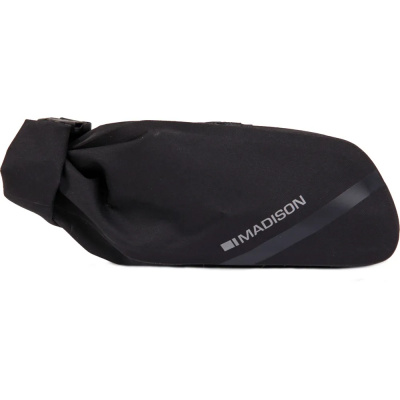
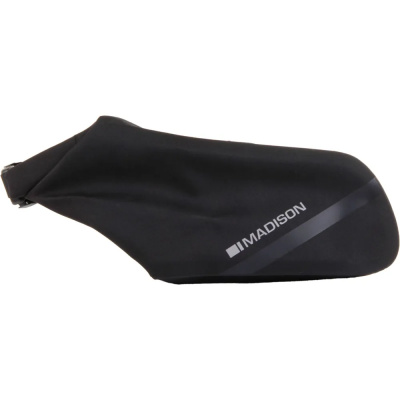
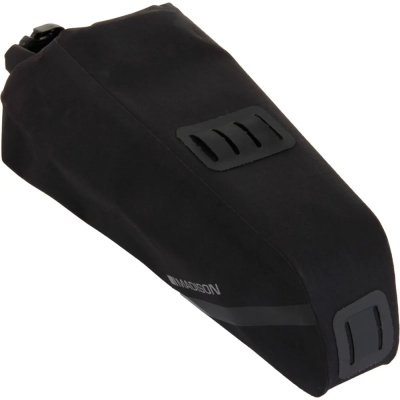
Madison saddle bags keep your essential spares dry, secure, and tucked neatly under the saddle where they belong - not rattling around in a jersey pocket or bouncing off the trail. Whether you're threading through city traffic on a wet Tuesday, grinding up a Peak District climb, or heading out for a multi-day adventure, there's a bag in the range sized for the job. At the compact end, slim aerodynamic wedges carry just enough for a road tube and levers without disturbing your bike's silhouette. At the other extreme, high-capacity seat packs swallow tools, spare layers, food, and a full MTB tube with room to spare. What ties the range together is the build quality: fully welded seam construction rated to IPX6 water resistance means rear-wheel spray is dealt with rather than tolerated, and Hypalon reinforced strap points resist the constant abrasion that chews through cheaper bags inside a season. There's also a practical detail that gets overlooked until it isn't - a rear LED light loop so you're not sacrificing visibility to gain storage. If you're after the right bag rather than just any bag, the sections below will sort you out.
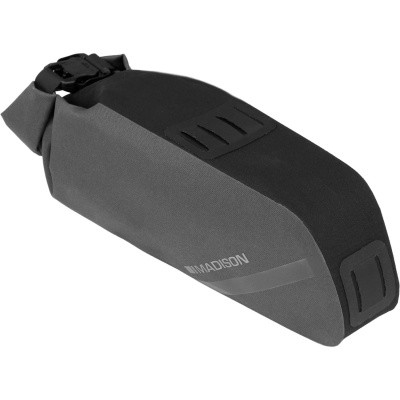
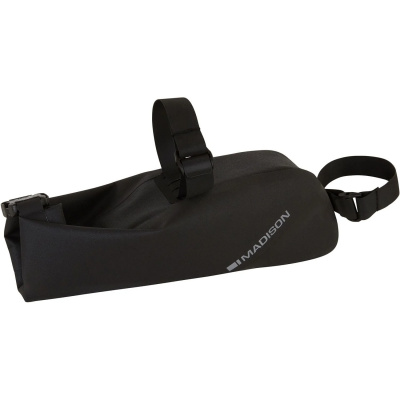
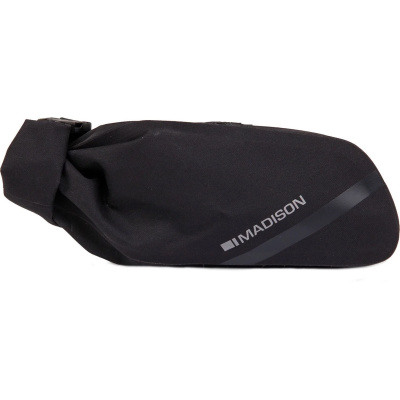
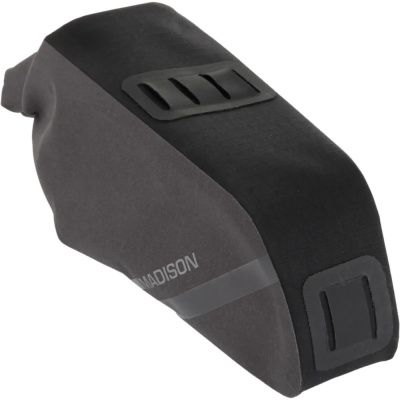
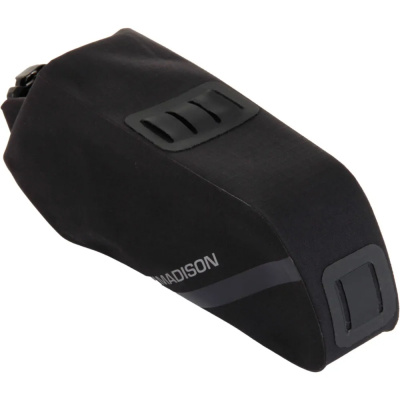
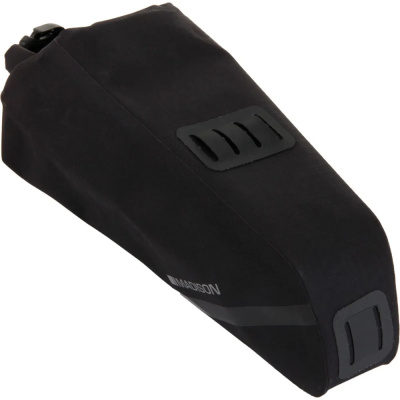
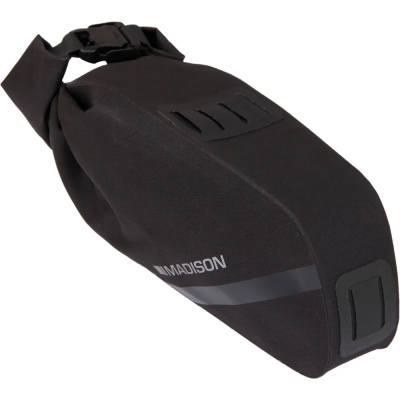
Prices and availability can change quickly. Delivery charges are not always included in listed prices.
Final price, stock status and delivery terms are set by retailer. We may receive a commission on purchases made.
Fitting It Right: Mounting and Compatibility
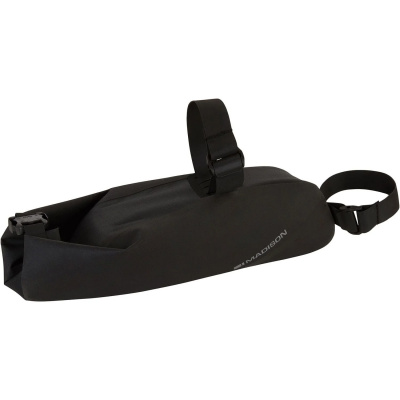
Most Madison saddle bags use a dual-point attachment: either hook-and-loop straps looping over the saddle rails and wrapping the seatpost, or a tool-free quick-release saddle rail mounting bracket that clicks on and off in seconds. The strap system is genuinely universal - it'll work on carbon rails, alloy rails, titanium, whatever you've got - but it needs checking regularly because vibration loosens things and a swaying bag creates tyre buzz on climbs. The quick-release bracket is a cleaner solution and produces almost no movement, but it's designed around standard 7×7mm round saddle rails. If your saddle runs oval, flat, or carbon rails, check the bracket spec carefully before buying.
MTB riders on full-suspension bikes need to think about two things. First, seatpost clearance: a dropper post stanchion is a precision-machined surface, and wrapping an abrasive strap around it is a quick way to score the coating. Check that any strap sits on the post body well clear of the stanchion, or go with a rail-mount-only system. Second, dropper post compatibility at full travel - drop the post completely and spin the wheel, then check there's no contact between the bag and your rear tyre. A bag that clears fine at normal height can brush the tyre at bottom-out, and that's a problem you want to find in the car park, not halfway down a descent.
Picking Your Capacity: From Minimalist Wedge to Seat Pack
The range spans a wide spread of capacity in litres, and getting that number right matters more than most riders admit. A 0.5L micro-wedge is genuinely all you need for a road tube, a couple of tyre levers, and a CO2 canister - it sits flush under the saddle and adds almost nothing aerodynamically. Step up to the 0.8 - 1L bracket and you can fit a multi-tool in there too, which is the sensible minimum for anything longer than a café loop. Go to 1.5 - 2L and you've got room for a packable gilet, a tube, and tools - that's the best Madison saddle bag for commuting territory, where you might also want to stuff in a snack or a spare pair of gloves.
The larger Madison bikepacking seat pack options at 6L and above are a different category entirely. These use roll-top closures rather than zips, which is the right call - waterproof zippers on bags this size are expensive to replace when they eventually fail, and a roll-top sealed over a welded seam construction is genuinely more water-resistant anyway. Load them with overnight kit, spare clothing, or the kind of multi-day tool roll you'd need for a self-supported trip. Just be honest with yourself about whether your ride actually calls for a seat pack, or whether splitting the load across a Madison frame bag and a smaller saddle bag gives you better weight distribution and handling. For riders needing to carry serious volume up front, a Madison bar bag paired with a mid-size seat pack often works better than one enormous rear pack. And if you're commuting with panniers in mind, the Madison pannier bags range is worth a look before you commit to a seat pack that might be too big for the job.
UK Conditions and Long-Term Care
A saddle bag sits directly in the spray line of your rear wheel. On a wet British road - or any gravelly trail in the Welsh borders - that means a constant stream of grit-laden water hitting the bag from below. Madison's welded seam construction means there are no stitched holes for water to wick through, which is the single most important feature for year-round UK riding. The Madison waterproof saddle bag models take this further with IPX6-rated fabrics that handle sustained spray rather than just a light shower. Reflective detailing adds visibility on dark winter rides without any effort on your part.
Maintenance is straightforward but easy to skip. Velcro straps pick up grit and road debris over time, and once the hooks fill with muck they stop gripping properly - the bag starts to shift, and that's when tyre buzz starts. A stiff brush run through the hook-and-loop every few weeks keeps the grip live. For zipped bags, a drop of silicone lubricant on the zip teeth after winter rides stops them seizing; avoid petroleum-based products, which degrade the zip tape. Hypalon reinforced strap points handle the abrasion that kills standard webbing, but it's still worth checking the strap anchors after a particularly gritty ride. If you're putting together a full wet-weather kit, pairing the bag with Madison overshoes and a Madison jacket gives you a coherent, weather-ready setup. A well-matched Madison saddle also ensures the rail geometry plays nicely with any bracket-mount system you choose.
Madison Saddle Bags FAQs
What size saddle bag do I need for my bike?
For a basic repair kit - one tube, tyre levers, and a multi-tool - a 0.5L to 0.8L bag covers it. If you're running larger MTB tubes, want to carry a packable layer, or commute with a few extras, look for 1.5L or more. Match capacity to what you actually carry, not what you think you might need.
How do you attach a Madison saddle bag?
Most Madison bags use a two-point system: a primary strap or quick-release bracket over the saddle rails, plus a secondary hook-and-loop strap around the seatpost to stop the bag swaying. Pull both tight. A loose saddle bag creates tyre buzz and can shift under load - a quick check before you set off saves hassle mid-ride.
Are Madison saddle bags completely waterproof?
The premium commuter and bikepacking models use fully welded seams and roll-top closures, making them highly resistant to heavy rain and wheel spray - IPX6 rated. Standard stitched models are water-resistant rather than waterproof and are fine for lighter conditions. If you ride through British winters regularly, the welded-seam versions are worth the step up.