
Pinnacle Helmets
Pinnacle helmets sit in a genuinely useful spot in the market - CE EN1078-certified protection that doesn't ask you to re-mortgage for the privilege. Whether you're threading through city traffic on the morning commute, spinning laps at a trail centre, or grinding out road miles on a wet Saturday, there's a Pinnacle lid built around what you actually need.
The construction is smarter than the price suggests. In-mould polycarbonate shells fused to shock-absorbing EPS foam keep weight down without sacrificing structural integrity. Ventilation channels run front to back on most models, so you're not riding in a sauna even when the cols are long. The micro-adjust dial retention system at the rear means dialling in a secure, precise fit takes about ten seconds - no fiddle, no faff.
Reflective detailing on commuter-focused models is a practical nod to dark UK winters, where visibility matters more than looking fast. Removable, washable padding keeps things fresh over a full season. These are helmets that get on with the job quietly and competently - and at a price that leaves room in the budget for everything else you need on the bike.
Prices and availability can change quickly. Delivery charges are not always included in listed prices.
Final price, stock status and delivery terms are set by retailer. We may receive a commission on purchases made.
Safety Tech and Construction: What's Actually Going On Inside
Pinnacle helmets use in-mould construction - a process that bonds the polycarbonate outer shell directly to the EPS foam liner during manufacture rather than clipping a shell over a separate foam chunk. The result is a stiffer, lighter structure with no weak join between the two layers. In a real impact, that matters. The foam absorbs and disperses energy; the shell keeps it intact. It's a method you'll find on helmets costing considerably more from the likes of Giro and Bell, so getting it at Pinnacle's price point is genuinely good value.
All Pinnacle helmets carry CE EN1078 certification - the European safety standard that governs impact protection for cycling helmets sold in the UK. That's not marketing copy; it's a tested, regulated benchmark. So if someone asks whether a Pinnacle lid meets UK safety standards, the short answer is yes, unambiguously.
The removable internal padding does two jobs: it improves comfort against your head, and it wicks moisture away during hard efforts. Crucially, it's washable - pull it out, rinse it, refit. After a muddy Peak District loop or a sweaty summer sportive, you'll be glad that option exists.
How the Pinnacle Range Breaks Down
Pinnacle covers three distinct adult use cases, and picking the wrong one for your riding is the only real mistake you can make here.
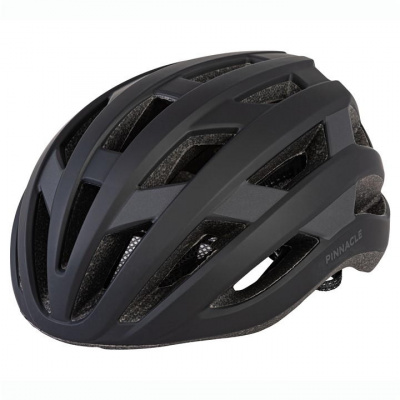
The road-focused models lean into aerodynamic shaping and generous ventilation channels. Vents are larger and more numerous, the profile sits closer to the head, and the styling is clean without being aggressively race-oriented. If your weekends involve timed climbs or back-to-back sportive miles, these are the ones to look at. They pair naturally with whatever you've got on your feet - check out the Pinnacle jackets range if you're building a full kit around them.
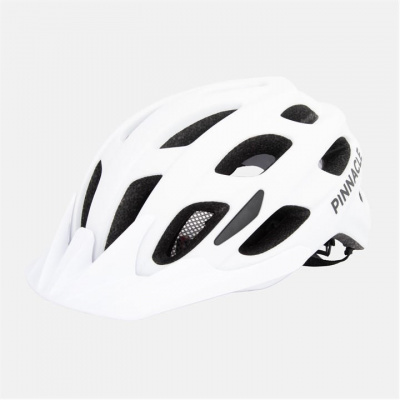
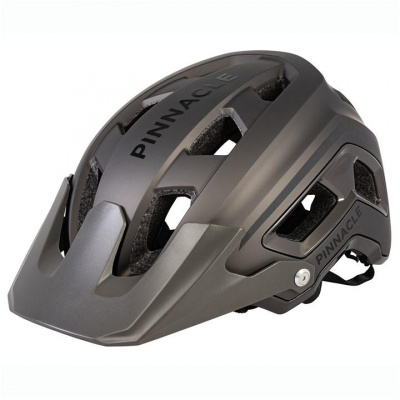
The MTB helmets take a different approach. Extended rear coverage wraps further down the back of the head - the bit that tends to connect with the ground first in a backwards tumble on a rooty descent. An adjustable visor keeps low sun and Welsh rain out of your eyes, and the deeper fit profile sits more securely when you're bobbing through technical sections. Ventilation is still solid, just configured differently. If you're running a Pinnacle mountain bike, matching it with one of these makes obvious sense.
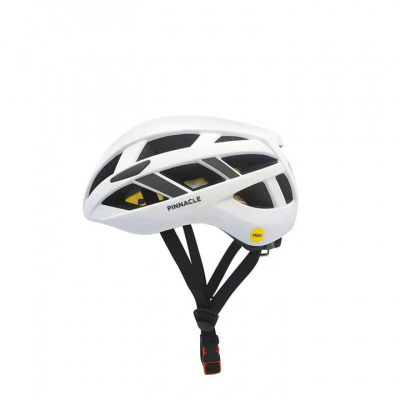
The commuter helmets are more understated. Subtler styling means they don't look out of place off the bike. Reflective detailing catches car headlights during dark winter commutes - more useful than it sounds when you're filtering through Stockport at 7am in November. Several models also offer rear light compatibility, so you can mount a Pinnacle rear light directly to the helmet rather than the seatpost. That's a small but genuinely practical feature if your commute involves low-light stretches.
Looking to protect your little ones? Pinnacle offers a dedicated range of highly adjustable, brightly coloured youth lids. Head over to our kids helmets category to find the perfect fit for your child.
Getting the Fit Right Before You Ride
The micro-adjust dial retention system on Pinnacle helmets is the key to a fit that actually holds. Spin the dial clockwise to tighten the internal cradle around the back and sides of your head; anti-clockwise to open it up. You're aiming for snug - the helmet shouldn't rock forward when you nod, or shift sideways when you shake your head. It shouldn't feel like a vice, either. Two fingers under the strap at the chin is the old standard, and it still works.
The side strap splitters - the small Y-shaped adjusters on each side - should position the straps so they meet just below each ear, not on the jaw or halfway up the cheek. Get those right and the whole system locks together properly. Most people set these once and never touch them again, which is fine as long as you set them correctly first time.
Worth knowing for winter: the retention system has enough range to accommodate a thermal cycling cap or a merino skull cap underneath. You won't need to go up a size just because the temperature dropped. That's a real consideration for UK riders - the season doesn't stop in October, and a helmet that only works in shorts weather isn't much use from November through March on the South Downs or the Dales.
If the helmet is sitting more than two finger-widths above your eyebrows, it's too far back - tilt it forward and readjust. And check the fit after a few minutes of riding. Heads compress padding slightly under load; a quick dial tweak after the first kilometre often improves things noticeably.
Pinnacle Helmets FAQs
Are Pinnacle helmets good for mountain biking?
Yes. Pinnacle's MTB-specific helmets feature extended rear coverage that protects the back of the head - useful on technical UK trails where backwards falls happen. The adjustable visor deals with sun and rain, ventilation is well thought through, and the construction is robust enough for regular trail use.
How do I adjust the fit on a Pinnacle bike helmet?
Turn the rear micro-adjust dial clockwise to tighten the retention cradle around your head, anti-clockwise to loosen it. Then position the side strap splitters so the straps meet just below each ear. The chin strap should be snug - you should just be able to fit two fingers underneath it comfortably.
Do Pinnacle helmets meet UK safety standards?
Yes. Every Pinnacle helmet carries CE EN1078 certification - the regulated European standard for cycling helmet impact protection, which applies in the UK. It's a tested benchmark, not a self-declared claim, so you can buy with confidence regardless of the lower price point.