
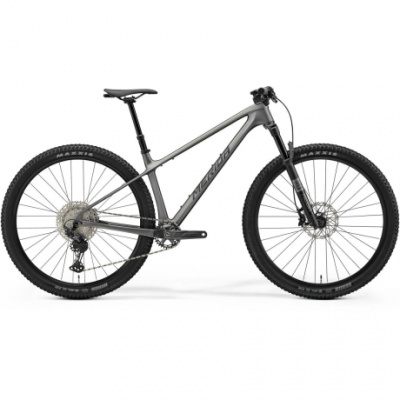
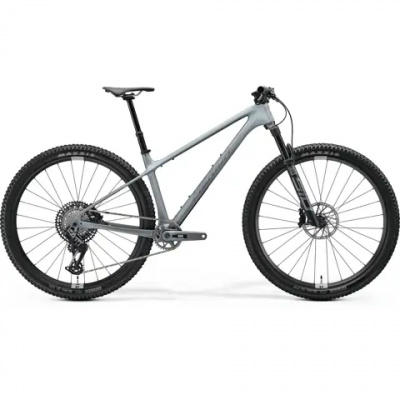
Merida BIG.NINE TR 5000
Climb with XC speed, descend with trail confidence, and enjoy the simplicity of a hardtail that does both without compromise.
- CF3 carbon frame: stiff, light, climbs fast
- 120mm Reba RL fork: trail-ready, soaks impacts
- Dropper post: 150 - 170mm travel, descend with confidence
- Shimano XT/Deore 1×12: wide range, reliable shifts
- 29×2.4" Maxxis Rekon tyres: grip, tubeless-ready
- Smart Mount stem: clean accessory integration
Merida BIG.NINE TR 5000 Deals
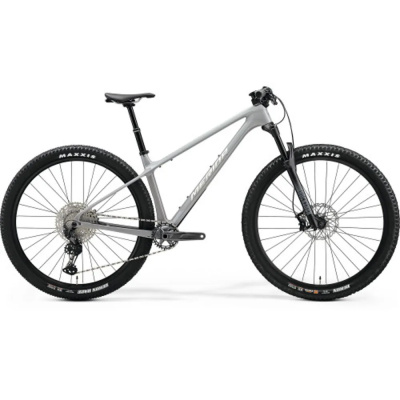
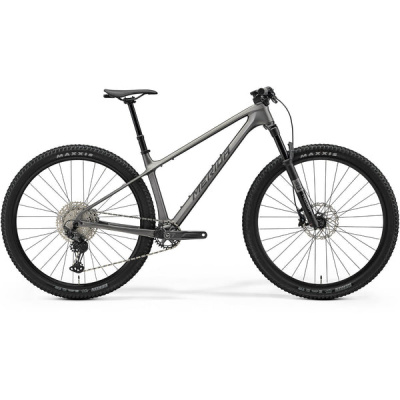
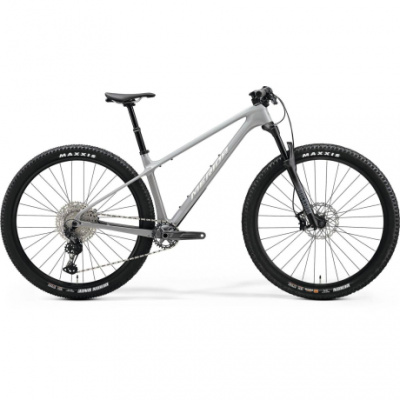

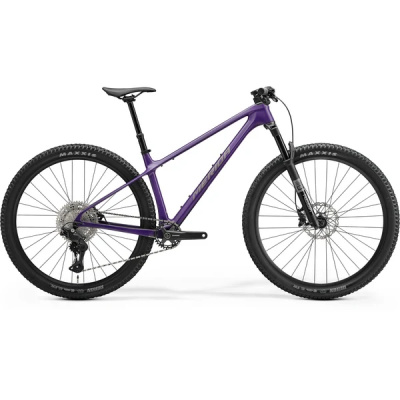
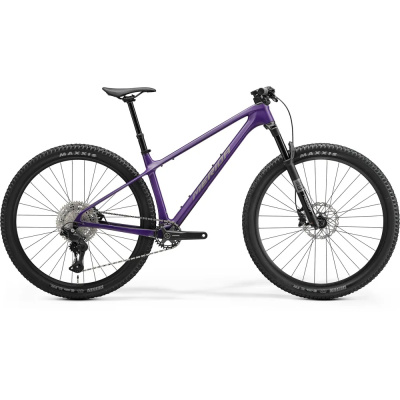
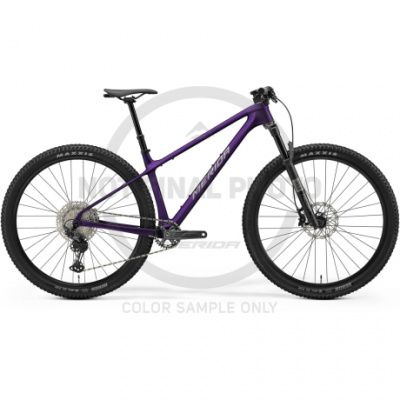
Prices and availability can change quickly. Delivery charges are not always included in listed prices.
Final price, stock status and delivery terms are set by retailer. We may receive a commission on purchases made.
Bikesy's Verdict
The Merida BIG.NINE TR 5000 nails the brief for riders who want one bike that climbs fast, descends with confidence, and doesn't demand constant fettling or compromise. The lightweight carbon frame and efficient drivetrain mean you're not hauling unnecessary weight uphill, while the 120mm fork, dropper post, and progressive geometry give you the capability to push harder on descents than you would on a traditional XC hardtail. It's engaging, direct, and rewards active riding without punishing small mistakes.
The component spec is well-judged - Shimano XT and Deore deliver reliable shifts, the Reba RL fork offers enough adjustability to dial in your preferred feel, and the tubeless-ready wheels and wide tyres let you experiment with pressures to suit your terrain. Yes, the SLX brakes could be more powerful for very steep descents, and the rigid rear end will transmit more trail chatter than full suspension, but those are reasonable trade-offs for a bike that's lighter, simpler, and more efficient on climbs.
If your rides mix long fire roads with technical singletrack, or if you want a versatile hardtail that can handle trail centres, weekend epics, and the odd gravel adventure without feeling out of its depth, the BIG.NINE TR 5000 is a smart choice. It's fast enough to keep up with XC bikes, capable enough to tackle trail-bike terrain, and simple enough that you're spending time riding rather than worrying about maintenance. That's a combination worth having.
Pros
- Lightweight CF3 carbon frame climbs fast, responds instantly
- 120mm Reba RL fork and dropper post deliver trail-bike confidence
- Shimano XT/Deore 1×12 drivetrain: wide range, dependable shifts
- Progressive geometry balances climbing efficiency with descending poise
- Tubeless-ready 29×2.4" tyres offer grip and compliance
- Smart Mount stem integrates accessories cleanly
Cons
- Shimano SLX brakes adequate for most, but lack ultimate power if you're tackling very steep or technical descents regularly
- Hardtail rear end transmits more trail chatter than full suspension, so longer rough descents will be more fatiguing
About the Merida BIG.NINE TR 5000
The Merida BIG.NINE TR 5000 sits right in the sweet spot where cross-country speed meets trail-bike confidence. Built around a CF3 carbon frame and equipped with a 120mm Rock Shox Reba RL fork, this hardtail doesn't ask you to choose between racing up fire roads and railing rough descents - it does both with the sort of poise that makes you wonder why you'd bother with the extra weight and complexity of rear suspension. The TR badge signals trail-ready intent: a dropper post, aggressive rubber, and geometry that's been nudged toward stability without sacrificing the snap you want when the gradient kicks up.
Merida's built a reputation for delivering proper performance without the hype, and this bike embodies that ethos. The frame is light enough to reward every pedal stroke, yet stiff enough that power doesn't vanish into flex when you're out of the saddle. Shimano XT and Deore components form a drivetrain that shifts cleanly under load, while SLX brakes offer dependable stopping power for most riders. It's a package that feels considered rather than compromised, aimed squarely at riders who want one bike for varied terrain and don't need the marketing gloss of a flagship model.
What you're getting is a modern downcountry hardtail that climbs with purpose and descends with composure. The 29-inch wheels roll over trail chatter with that familiar big-wheel calm, and the 2.4-inch Maxxis Rekons provide enough grip and cushion to let you push harder than you might expect from a rigid rear end. Whether you're chasing mates up singletrack or threading technical descents on your local loop, the BIG.NINE TR 5000 responds with the sort of directness that reminds you why hardtails remain so engaging.
Merida BIG.NINE TR 5000 geometry
Merida's dialled the geometry to give you confidence without dulling the bike's responsiveness. The head angle sits at 66.9 degrees across all sizes - slack enough to steady the front end when the trail gets loose or steep, but not so laid-back that you're wrestling the bars through tight switchbacks. Paired with a 44mm fork offset on the Reba RL, the steering feels planted yet quick to respond when you weight the front tyre.
Reach grows progressively from 436mm on the small through to 495mm on the extra-large, giving taller riders room to move without feeling cramped when the trail tilts down. Stack climbs in step, so you're not folded over the bars regardless of frame size. The seat angle holds at 76 degrees (dropping half a degree on the XL), which plants you over the bottom bracket for efficient climbing and keeps your weight forward enough that the front wheel tracks predictably on technical ascents.
Chainstays measure between 433mm and 442mm depending on size - short enough to keep the bike playful and easy to manual over roots, but long enough that the rear wheel doesn't break traction the moment you stand and sprint. The wheelbase stretches from 1155mm on the small to 1235mm on the XL, delivering stability at speed without making the bike feel like a barge in tight woods. Bottom bracket drop is a consistent 57mm, offering a low centre of gravity that aids cornering grip while leaving enough clearance for most trail obstacles.
In practice, this geometry puts you in a posture that's upright enough for all-day comfort yet aggressive enough to commit on descents. You'll feel balanced rather than perched, and the bike rewards active riding - shifting your weight, pumping transitions, leaning into corners - without punishing small mistakes with harsh feedback or vague handling.
Component choices & upgrades
The stock build on the BIG.NINE TR 5000 is already well sorted for the bike's intended use. Shimano's XT rear derailleur and Deore shifter/cassette combination delivers crisp, reliable shifts across the 10-51 tooth range, giving you enough low gears for steep climbs and a tall enough top end to keep pedalling on fast descents. The KMC X12 chain is durable and pairs well with the drivetrain. The Rock Shox Reba RL fork offers a remote lockout and enough adjustability to dial in your preferred feel, while the Merida Expert CC rims are tubeless-ready and wide enough to support the 2.4-inch Maxxis Rekons at lower pressures for better grip and compliance.
That said, if you're pushing the bike hard or riding particularly demanding terrain, a few targeted upgrades can sharpen its edge. The Shimano SLX brakes are dependable and offer good modulation, but if you're regularly tackling steep, technical descents or you're a heavier rider, stepping up to four-piston XT or even SLX four-pots will give you more outright power and better heat management on long descents. Swapping the stock Maxxis Rekons for a more aggressive front tyre - perhaps a Minion DHF or Dissector - can boost cornering confidence and braking traction on loose or wet trails, while keeping the Rekon on the rear maintains rolling speed.
The dropper post offers 150mm of travel on small and medium frames, 170mm on large and above - plenty for most riders. If you find yourself wanting more drop, aftermarket posts with longer travel are available, though you'll need to check internal frame clearance. The Merida Expert CC handlebar is a sensible 760mm width, but if you prefer a wider stance for descending or narrower for tight trails, swapping bars is straightforward. The stem length varies by size (60mm on S/M/L, 70mm on XL/XXL), and while these lengths suit the geometry well, experimenting with a shorter or longer stem can fine-tune the handling to your preference.
The beauty of this build is that you don't need to upgrade anything immediately. Ride it as it comes, learn where your priorities lie, and then invest in components that match your riding style and local terrain. The frame is stiff and light enough to reward better parts, but the stock kit won't hold you back until your skills or ambitions outgrow it.
Where the Merida BIG.NINE TR 5000 excels
This bike is outstanding at blending cross-country efficiency with trail-bike capability. If your typical ride involves long climbs on fire roads or singletrack followed by technical descents with roots, rocks, and off-camber turns, the BIG.NINE TR 5000 will feel like it was built for exactly that. The lightweight carbon frame and efficient drivetrain mean you're not hauling unnecessary weight uphill, while the 120mm fork, dropper post, and progressive geometry give you the confidence to push harder on the way down than you would on a traditional XC hardtail.
It also excels on varied terrain where you need versatility. Gravel byways, rough bridleways, and flowing singletrack all suit this bike's character. The 29-inch wheels and wide tyres smooth out trail chatter and maintain momentum over uneven ground, and the hardtail rear end delivers immediate feedback so you can read the trail and adjust your line on the fly. The bike rewards active riding - pumping transitions, weighting the front wheel in corners, unweighting over obstacles - and it's engaging in a way that full-suspension bikes sometimes aren't.
Where it's less ideal is on extremely rough, high-speed descents where a full-suspension bike's rear travel would offer more control and comfort. The rigid rear end will transmit every bump and root through the saddle and bars, and while the fork does a good job of smoothing the front end, you'll feel more fatigue on long, technical descents compared to a bike with rear suspension. It's also not the best choice if you're primarily racing pure XC events where every gram and every watt counts - bikes with 100mm forks and no dropper post will be lighter and more efficient on smooth, fast courses.
But if you want one bike that can handle your local trail centre, weekend epics, and the odd gravel adventure without feeling out of its depth, the BIG.NINE TR 5000 hits the mark. It's fast enough to keep up with XC bikes on climbs, capable enough to tackle trail-bike terrain on descents, and simple enough that you're spending time riding rather than fiddling with suspension settings or worrying about pivot bearings.
Merida BIG.NINE TR 5000 FAQs
What is the best tyre pressure for a Merida BIG.NINE TR 5000?
Start around 25 - 28 psi for the front and 28 - 30 psi for the rear if you're running tubeless, then adjust based on your weight, riding style, and terrain. Lower pressures improve grip and comfort on rough trails but increase the risk of pinch flats or tyre roll if you're aggressive in corners. Heavier riders or those on rockier terrain will want to add a few psi, while lighter riders on smoother trails can drop lower for better traction.
How does the Merida BIG.NINE TR 5000 compare to a full-suspension bike?
The BIG.NINE TR 5000 is lighter, simpler, and more efficient on climbs, with a direct, engaging feel that rewards active riding. A full-suspension bike offers more comfort and control on rough, high-speed descents and will be less fatiguing over long technical sections. If your rides are varied and include plenty of climbing, or if you value simplicity and lower maintenance, the hardtail makes sense; if you're tackling consistently rough terrain or prioritise descending performance, full suspension is worth the trade-off in weight and complexity.
What is the maximum tyre clearance on a Merida BIG.NINE TR 5000?
The frame clears up to 29×2.4-inch tyres, which is what the bike ships with. That's enough width for aggressive trail riding and allows you to experiment with different tread patterns and casing weights without worrying about clearance. You won't fit plus-sized tyres, but 2.4 inches is a sweet spot for balancing grip, cushion, and rolling speed on varied terrain.
Is the Merida BIG.NINE TR 5000 good for bikepacking?
It's capable but not ideal. The frame has V-mounts for a frame bag, and you can fit a seat pack and handlebar roll, but the aggressive geometry and lack of additional bottle mounts or rack eyelets mean it's better suited to fast, light overnight trips than multi-day expeditions. The dropper post also limits seat-pack size unless you remove it. If bikepacking is a priority, look for a bike with more mounts and a more relaxed geometry designed for loaded riding.
What upgrades are recommended for the Merida BIG.NINE TR 5000?
The stock build is solid, so upgrades should be driven by your riding style and terrain. If you're tackling steep, technical descents, consider four-piston brakes for more power. A more aggressive front tyre - like a Minion DHF or Dissector - will boost cornering grip and braking traction on loose or wet trails. Beyond that, a dropper post with more travel (if your frame allows), a wider or narrower handlebar to suit your preference, or lighter wheels can all refine the bike's performance, but none are essential until you've ridden it enough to know where your priorities lie.
How do I set up the suspension on a Merida BIG.NINE TR 5000?
Start by setting the fork's air pressure to achieve around 20 - 25 per cent sag - sit on the bike in your riding gear, bounce gently, and measure how much the fork compresses under your weight. Adjust rebound so the fork returns quickly but doesn't bounce back harshly, and use the remote lockout on climbs or smooth sections to reduce bob. The Reba RL doesn't have extensive damping adjustments, so focus on getting the air pressure right and experiment with small changes to rebound until the fork feels controlled and responsive.
What is Agilometer sizing on Merida bikes?
Agilometer is Merida's sizing system that accounts for your height, inseam, and riding style to recommend the best frame size. It's more nuanced than a simple height chart, recognising that riders of the same height may prefer different reaches or stack heights depending on whether they prioritise agility or stability. Use Merida's online Agilometer tool or consult a dealer to get a personalised recommendation, especially if you're between sizes or have specific fit preferences.
Key Features & Benefits
- CF3 carbon frame: Lightweight and stiff construction delivers efficient power transfer on climbs and responsive handling without unnecessary weight
- 120mm Rock Shox Reba RL fork with remote lockout: Soaks up trail impacts and rough terrain on descents, locks out for efficient climbing on smooth sections
- Dropper seatpost with 150 - 170mm travel: Drop the saddle instantly for descending confidence and control, raise it back up for efficient pedalling on climbs
- Shimano XT/Deore 1×12 drivetrain with 10-51t cassette: Wide gear range tackles steep climbs and fast descents with reliable, crisp shifts under load
- Progressive geometry with 66.9° head angle and long reach: Stable and confident on descents and rough terrain, yet responsive and efficient when climbing or navigating tight trails
Merida BIG.NINE TR 5000 2025, 2024 & 2023 differences
The 2026 model upgrades the fork from the Rock Shox Judy Gold (fitted to 2025 and 2024 versions) to the Rock Shox Reba RL, which offers better damping performance and a remote lockout. The Reba RL also features a 44mm fork offset compared to the Judy Gold's 51mm, subtly sharpening steering response and trail feel. Dropper post travel remains consistent at 150mm for small and medium frames, 170mm for large and above, matching the 2025 spec; the 2024 model had just 100mm of travel across all sizes, so the jump to longer-travel posts in 2025 was a significant improvement for descending confidence.
The 2025 model listed a Maxxis Rekon Race on the rear in some sources, while the 2026 spec consistently shows Maxxis Rekon front and rear. The saddle has also been updated to the Merida Comp SL with 25 per cent recycled material for 2026, replacing the Expert SL used in earlier years. Core geometry - head angle, reach, stack, and chainstay length - remains unchanged across 2024, 2025, and 2026, so the ride character and handling are consistent; the component upgrades are the main story. If you're considering a 2025 or 2024 model, the Judy Gold fork is still capable, but the Reba RL on the 2026 bike is a noticeable step up in performance and adjustability.
Alternatives to Consider
Within Merida's own range, the standard BIG.NINE models - equipped with 100mm forks and rigid seatposts - offer a more race-focused XC feel if you're chasing podiums on smoother courses and don't need the descending capability of the TR setup. Step up to the BIG.TRAIL series and you'll find 140mm of travel and even more aggressive geometry for riders who prioritise technical descents and rougher terrain over outright climbing speed.
Cross-brand, the Whyte 629 V4 remains a benchmark in the 120 - 130mm hardtail category, with similar trail-ready intent and a reputation for composed handling. The Specialized Fuse Comp 29 offers a slightly more playful character with its longer travel fork and slacker geometry, though it's a touch heavier. Trek's Roscoe 8 leans more toward aggressive trail riding with a burlier build, while the Cannondale Habit HT 1 brings a similar downcountry ethos with a carbon frame and modern geometry. The Giant Fathom 29 2 sits at a more accessible price point with a capable aluminium frame and solid component spec, making it a strong choice if you're prioritising value over outright weight savings.
Each of these bikes carves out a slightly different niche - some lean harder into XC efficiency, others into trail capability - but the BIG.NINE TR 5000's blend of lightweight carbon, progressive geometry, and trail-ready components positions it as a versatile option that doesn't ask you to compromise too heavily in either direction.
Reviews
Longer reach and a calmer head angle bring poise to descents without dulling the bike's responsiveness when the trail tightens or tilts up. The CF3 carbon frame feels stiff underfoot - power goes straight to the rear wheel rather than vanishing into flex - and the weight stays low enough that you're not hauling dead mass on climbs. When you drop the saddle and point it downhill, the 120mm Reba RL fork absorbs the bigger hits while the 29-inch wheels roll over roots and rocks with that familiar big-wheel composure.
Shimano's XT rear derailleur shifts cleanly under load, and the 10-51 tooth Deore cassette offers enough range to spin up steep pitches without running out of gears on fast descents. The SLX brakes deliver dependable stopping power and good modulation for most riders, though they can feel a touch less authoritative than four-piston options if you're regularly tackling very steep or technical descents. The Maxxis Rekon tyres strike a sensible balance between grip and rolling speed, and the tubeless-ready setup lets you drop pressures for better traction and compliance without worrying about pinch flats.
Because the rear end is rigid, you feel every bump and root through the saddle and bars - it's engaging and direct, but also more fatiguing on long, rough descents than a full-suspension bike would be. The dropper post is a game-changer, though, giving you the freedom to shift your weight back and low when the trail gets steep or loose. We rate the geometry as well-judged: you're not folded over the bars, but you're not sitting bolt upright either, and the bike rewards active riding - pumping transitions, weighting the front wheel in corners, unweighting over obstacles.
Overall, the BIG.NINE TR 5000 delivers on its downcountry promise. It climbs with the efficiency of an XC bike, descends with the confidence of a trail hardtail, and remains simple and engaging in a way that reminds you why hardtails are still so much fun.
Full Specification
| Frame Material | CF3 carbon fibre |
| Fork | Rock Shox Reba RL, 120mm travel, air spring, tapered steerer, remote lockout |
| Rear Derailleur | Shimano XT SGS |
| Shifters | Shimano Deore M6100 |
| Crankset | Shimano Deore MT512, 170mm (S), 175mm (M and above) |
| Cassette | Shimano Deore M6100, 10-51 teeth, 12-speed |
| Chain | KMC X12 |
| Brakes | Shimano SLX M7100 hydraulic disc, 2-piston, 180mm front / 160mm rear rotors |
| Wheels | Merida Expert CC II rims (25mm internal width, tubeless ready), Shimano TC500 hubs, 110x15mm front / 148x12mm Boost rear |
| Tyres | Maxxis Rekon 29x2.4" WT, tubeless ready, 3C EXO |
| Handlebar | Merida Expert CC aluminium, 760mm width, flat |
| Stem | Merida Team CC III aluminium, 31.8mm, -6°, 60mm (S/M/L), 70mm (XL/XXL) |
| Seatpost | Merida Team TR SL dropper, 30.9mm, 150mm travel (S/M), 170mm travel (L/XL/XXL) |
| Saddle | Merida Comp SL (25% recycled material) |
| Headset | Acros ICR Merida Integrated |
| Bottom Bracket | Shimano BB-MT-501, BSA threaded, 73mm, 24mm spindle |
| Rear Axle | 148x12mm Boost |
| Tyre Clearance | Up to 29x2.4" |
| Approximate Weight | 11.8 kg |