
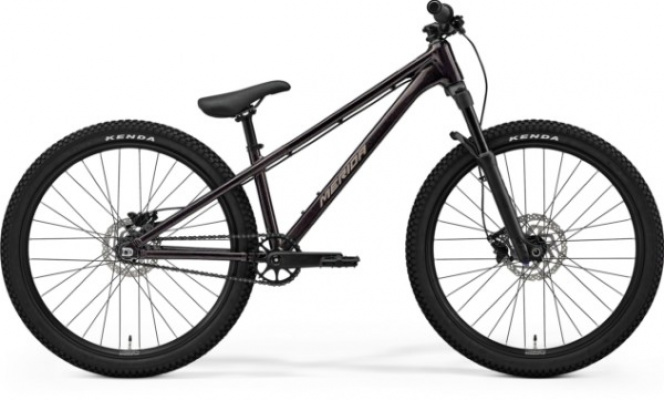
Merida DIRT 500
Learn to jump, perfect your whip, and session all day on a bombproof hardtail that's built for air.
- Singlespeed simplicity: no gears, no faff, just jump
- Manitou Circus fork: 100mm air travel for forgiving landings
- Gyro-ready frame: unlimited barspins without brake-hose tangles
- 26-inch wheels: nimble, flickable, and built for air
- 12 kg complete: light enough to throw around
- Category 5 warranty: five-year confidence for hard landings
Merida DIRT 500 Deals
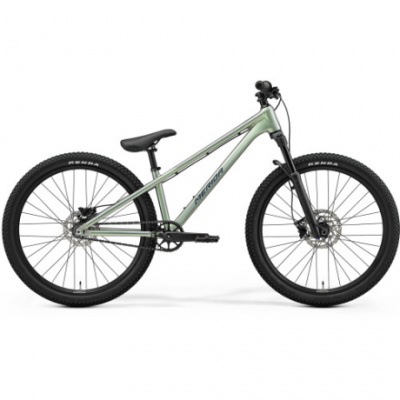

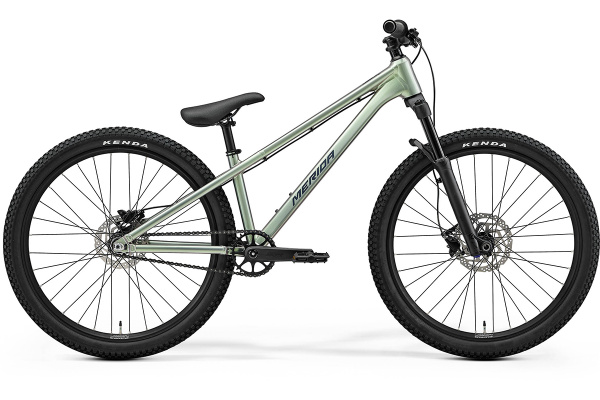
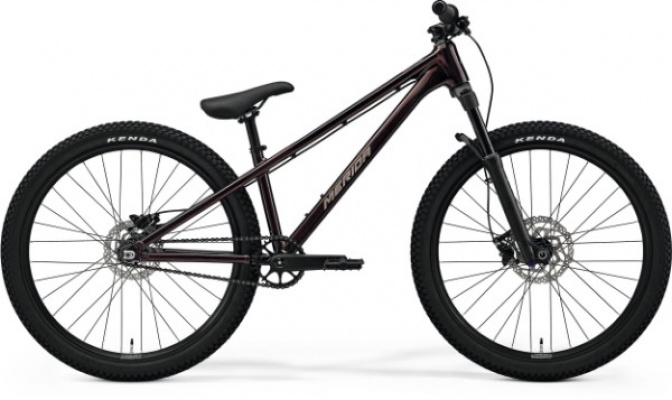
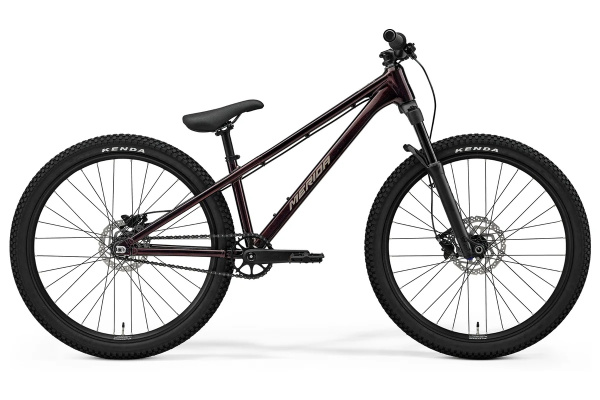
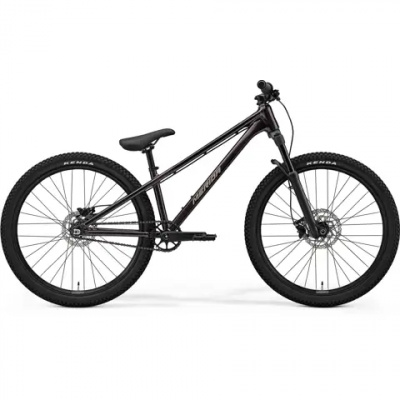
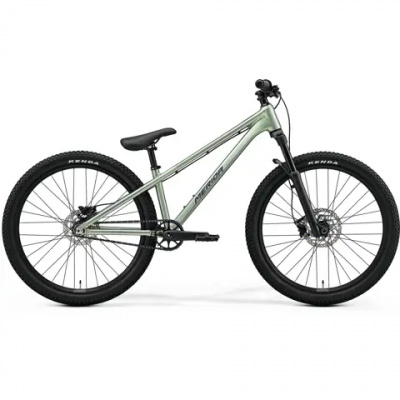
Prices and availability can change quickly. Delivery charges are not always included in listed prices.
Final price, stock status and delivery terms are set by retailer. We may receive a commission on purchases made.
Bikesy's Verdict
The Merida DIRT 500 is a brilliantly focused machine that does one thing exceptionally well: getting you airborne and keeping you grinning. It's not trying to be a trail bike, a commuter, or an all-rounder - it's a dirt jump hardtail that prioritises durability, simplicity, and fun at a price that won't make you wince when you case a landing.
The singlespeed drivetrain is liberating rather than limiting, the Manitou fork offers forgiving travel for progression, and the frame's robustness is backed by a five-year warranty that says Merida expects you to send it hard. Short chainstays and slack geometry make it effortless to manual, whip, and pump, while gyro compatibility future-proofs your trick repertoire. If you're learning to jump, sessioning pump tracks, or just want a bike that laughs at abuse, the DIRT 500 is a smart, honest choice that'll reward commitment without demanding perfection.
Pros
- Singlespeed drivetrain is bombproof and maintenance-free, perfect for progression
- Robust TFS aluminium frame with five-year Category 5 warranty for hard landings
- Gyro-ready with extra-long brake hose for unlimited barspins
- Manitou Circus fork offers forgiving 100mm air travel for learning jumps
- Short 385mm chainstays make manuals, hops, and whips effortless
- 12 kg weight balances flickability with planted stability
Cons
- Singlespeed limits versatility if you're climbing or riding varied terrain beyond jumps
- Entry-level brakes and tyres work fine but lack bite and grip for aggressive riders
- 26-inch wheels feel small if you're used to modern trail bike standards
About the Merida DIRT 500
The Merida DIRT 500 is a hardtail built for one thing: getting airborne. Whether you're learning to pump, perfecting your whip, or just want a bike that laughs at abuse, this is Merida's entry ticket to dirt jumping and pump-track progression. It strips away everything you don't need - gears, complexity, excuses - and leaves you with a robust aluminium frame, a forgiving fork, and geometry that begs you to send it.
At its heart sits a 6061 TFS aluminium frame designed to survive the kind of impacts that would leave a trail bike weeping. The singlespeed drivetrain is bombproof by design: one gear, one chain, zero derailleur hangers to snap. You'll find a Manitou Circus Expert fork up front with 100mm of air-sprung travel, enough cushion to smooth out sketchy landings without wallowing through transitions. The whole package weighs in around 12 kilograms, light enough to manual across a car park yet sturdy enough to take repeated flat landings without complaint.
This isn't a bike that pretends to do everything. It won't climb fire roads with grace, and you won't be chasing Strava segments on singletrack. But point it at a set of doubles, a rhythm section, or a concrete bowl, and the DIRT 500 comes alive. The frame's gyro compatibility means you can spin bars all day without wrapping brake hoses into knots, and the extra-long rear brake line is already specced for exactly that. Merida backs the frame with a Category 5 warranty - five years of coverage for freeride and downhill abuse - which tells you everything about how seriously they've built this thing.
Merida DIRT 500 geometry
The numbers here are tuned for pop and stability in equal measure. A slack 68.5-degree head angle keeps the front wheel planted when you're landing nose-heavy, while the steep 76.2-degree seat tube puts your weight forward enough to manual and hop with intent. Reach grows from 415mm in medium to 440mm in large, but stack stays constant at 564mm across both sizes, so you're choosing between compact and flickable or stretched and stable.
Short 385mm chainstays are the real story. They tuck the rear wheel tight under you, making it effortless to lift the back end, snap through transitions, or whip the bike sideways mid-air. The 25mm bottom bracket drop sits low enough to feel planted through berms but high enough that you won't clip pedals on flat corners. Wheelbase stretches from 1054mm to 1079mm depending on size, long enough to inspire confidence at speed but short enough that the bike pivots around you rather than ploughing through turns.
When you're pumping a track, that steep seat angle and compact rear end let you drive weight through the bike's centre, loading transitions cleanly. On jumps, the slacker head angle and longer wheelbase mean you can land a bit back without looping out. It's a geometry that forgives mistakes while rewarding commitment, which is exactly what you want when you're learning to clear bigger gaps or trying tricks for the first time.
Component choices & upgrades
The stock build is sensibly specced for durability over flash. Shimano MT200 hydraulic brakes front and rear offer two-piston stopping power with 180mm and 160mm rotors respectively - enough bite to scrub speed before a jump or lock up for a nose manual, though they're not the most powerful anchors if you're riding steep transitions at speed. The Manitou Circus Expert fork does honest work with its air spring and 41mm offset, offering adjustable preload and enough small-bump sensitivity to take the sting out of rough landings. It's not a Pike, but it's far from a pogo stick.
Wheels are built around Alexrims MD30 rims - 30mm internal width, tubeless-ready, laced to Novatec hubs with black stainless spokes. They're robust hoops that'll take repeated flat landings without folding, though the wire-bead Kenda K-Rad tyres are the first thing many riders swap. A tubeless setup with stickier rubber (think Maxxis DTH or Schwalbe Table Top) transforms grip and reduces pinch-flat risk, and those wide rims support bigger volume beautifully.
The Merida-branded cockpit - 780mm bars with 20mm rise, a stubby 40mm stem, and simple grips - works well enough, though riders chasing specific bar sweep or width often upgrade here. The singlespeed drivetrain uses a KMC Z1 chain and a 14-tooth rear cog; if you're riding steeper pump tracks or want more snap out of transitions, swapping to a 15 or 16-tooth cog changes the gearing without fuss. The threaded BSA bottom bracket and 160mm cranks are solid, low-maintenance choices that you can service with basic tools.
Because the frame's already gyro-compatible and the rear brake hose runs long, adding a gyro system is straightforward if barspins become your obsession. Otherwise, the stock build is well-judged: it's not trying to be a race bike, and every component choice prioritises reliability over grams. Upgrade when your skills demand it, not because the spec sheet looks entry-level.
Where the Merida DIRT 500 excels
This bike is outstanding at dirt jumping and pump-track riding. If your weekends revolve around hitting doubles, learning to table, or sessioning a rhythm section until your arms give out, the DIRT 500 is built for exactly that. The singlespeed drivetrain means you're never hunting for gears mid-transition, the short rear end makes it effortless to manual and hop, and the frame's robustness means you can case a landing without worrying you've cracked something expensive.
It's also brilliant for street riding and skatepark sessions. The gyro-ready frame and playful geometry make it a natural for learning tricks - barspins, 360s, nose manuals - and the simple spec means less to break when you're experimenting. The ability to mount a bottle cage (rare on dirt jump bikes) adds a practical touch if you're riding to spots or spending long afternoons at the park.
Where it's not ideal: traditional trail riding. The singlespeed setup and dirt-jump geometry mean climbs are a grind, and you'll spin out on flat sections faster than you'd like. The 26-inch wheels and slack head angle aren't optimised for technical singletrack, and the lack of a dropper post or multiple gears limits versatility. This is a bike for progression and play, not for logging miles or tackling alpine descents. If you want one bike to do everything, look elsewhere. If you want a tough, fun machine that'll teach you to jump and reward commitment, the DIRT 500 is spot-on.
Merida DIRT 500 FAQs
What is the Merida DIRT 500 used for?
The DIRT 500 is designed for dirt jumping, pump tracks, street riding, and skatepark sessions. It's built to handle repeated impacts, big air, and tricks, with a singlespeed drivetrain and robust frame that prioritise durability and simplicity over versatility.
Is the Merida DIRT 500 good for beginners?
Absolutely. The forgiving geometry, simple singlespeed setup, and durable build make it an excellent choice for riders learning to jump or developing pump-track skills. The Manitou fork offers enough cushion to smooth out mistakes, and the frame's robustness means you won't destroy it while you're figuring things out.
What are the best dirt jump bikes for under £1000?
The DIRT 500 sits comfortably in this bracket, offering solid value with its aluminium frame, air fork, and hydraulic brakes. Comparable options include the NS Bikes Movement 1, Specialized P.1, and Trek Ticket S, all of which share similar singlespeed setups and dirt-jump geometry at accessible price points.
Can I ride trails on a Merida DIRT 500?
You can, but it's not what the bike's designed for. The singlespeed drivetrain and slack geometry make climbs laborious, and the short travel fork isn't suited to rough, technical descents. It'll handle mellow singletrack or urban trails, but if you're after a proper trail bike, this isn't it.
What size Merida DIRT 500 should I get?
Merida offers medium and large, with reach growing from 415mm to 440mm. Medium suits shorter riders or those who want a more compact, flickable feel; large offers more stability at speed and in the air. Because stack stays constant, the choice is mostly about how stretched or centred you want to feel over the bike.
How much does the Merida DIRT 500 weigh?
Around 12 kilograms for a medium frame. That's light enough to throw around on jumps and manuals but heavy enough to feel planted when you're landing hard or pumping through transitions.
Can you put gears on a Merida DIRT 500?
Technically yes - the frame has a threaded bottom bracket and standard rear dropouts - but it's not designed for it. The geometry and short chainstays are optimised for singlespeed simplicity, and adding gears would compromise the bike's core purpose. If you need gears, you're looking at the wrong bike.
What are the main differences between the Merida DIRT 500 and DIRT 700?
The DIRT 700 steps up with a RockShox Pike DJ fork, SRAM four-piston rear brake, and a DT Swiss wheelset. It's a more refined, higher-performance package aimed at riders who've outgrown entry-level kit. The DIRT 500 prioritises value and durability, making it the smarter choice if you're starting out or don't need race-level components.
Key Features & Benefits
- Singlespeed drivetrain with 14t cog: Zero gears to shift or derailleurs to snap - just pure, reliable drive for jumps and tricks
- Gyro-compatible frame with long rear brake hose: Spin bars endlessly without tangling cables, opening up your trick repertoire
- Manitou Circus Expert air fork, 100mm travel: Forgiving landings and adjustable preload let you tune feel as your skills progress
- Short 385mm chainstays and slack 68.5° head angle: Flickable rear end for manuals and whips, stable front for confident landings
- TFS aluminium frame with Category 5 warranty: Five years of coverage for freeride abuse means you can send it without second-guessing durability
Merida DIRT 500 2025 differences
The 2025 model shared the same core identity as the 2026 release: a robust TFS aluminium frame, Manitou Circus Expert fork with 100mm travel, and singlespeed drivetrain. The most notable change between the two years centres on brake specification. Some 2025 descriptions referenced a mechanical front brake paired with a hydraulic rear, likely for barspin compatibility, whereas the 2026 model consistently lists dual Shimano MT200 hydraulic brakes front and rear. This shift brings more consistent stopping power across both wheels, though riders chasing unlimited barspin freedom may still opt for a gyro setup regardless.
Frame geometry, wheel size, and componentry - including the Alexrims MD30 hoops, Novatec hubs, and Merida-branded cockpit - remain unchanged year-on-year. The Category 5 warranty and gyro-ready frame design carry over as well, reinforcing Merida's commitment to durability and trick progression. If you're considering a 2025 model, expect the same forgiving handling and bombproof build, with the only meaningful difference being the potential for a mechanical front brake rather than full hydraulic stopping.
Alternatives to Consider
Within Merida's own range, the DIRT 700 is the natural step up, swapping the Manitou fork for a RockShox Pike DJ, adding a SRAM four-piston rear brake, and rolling on DT Swiss wheels. It's a more refined package for riders who've outgrown entry-level kit and want sharper performance on bigger jumps. If you're just starting out or want to keep costs down, the DIRT 500 offers better value without sacrificing the core dirt-jump experience.
Cross-brand, the NS Bikes Movement 1 is a close peer, offering a similarly robust aluminium frame, singlespeed drivetrain, and dirt-jump geometry at a comparable price. The Specialized P.1 brings a slightly more refined spec with hydraulic brakes and a proven frame design, while the Trek Ticket S leans into playful handling with a shorter wheelbase and compact rear end. For riders chasing a bit more travel and adjustability, the Scott Voltage YZ 0.1 offers a plusher fork and wider tyres, though it sits at a higher price point. The Commencal Absolut is another strong contender, known for its bombproof construction and race-proven geometry, though availability can be patchy. Each of these bikes shares the DIRT 500's core mission - getting you airborne and keeping you there - but differs in spec focus, geometry nuance, and brand philosophy.
Reviews
Robust construction and forgiving geometry make this a confidence-inspiring machine for learning to jump. The Manitou Circus fork absorbs sketchy landings without complaint, and the singlespeed drivetrain eliminates any distraction - you're focused on the lip, not hunting for gears. Short chainstays let you snap the rear end around with minimal effort, whether you're manualing into a jump or whipping mid-air.
Shimano MT200 brakes offer enough bite for scrubbing speed before a gap, though they lack the power for locking up hard on steep transitions. When you're pumping a track, the steep seat angle and compact rear centre let you drive weight cleanly through transitions, loading the bike without fighting it. The frame's gyro compatibility and extra-long brake hose are thoughtful touches that open up trick progression without requiring immediate upgrades.
Because the spec prioritises durability over grams, the DIRT 500 feels planted rather than nervous. Alexrims MD30 hoops take repeated flat landings without folding, and the wire-bead Kenda tyres grip well enough for learning, though a tubeless setup with stickier rubber transforms confidence on dusty landings. At 12 kilograms, it's light enough to throw around but heavy enough that you're not second-guessing stability when you're in the air. Worth it if you want a tough, simple bike that'll teach you to jump without punishing mistakes.
Full Specification
| Frame Material | 6061 Aluminum (TFS) |
| Fork | Manitou Circus Expert, Air, 100mm |
| Fork Offset | 41mm |
| Drivetrain | Singlespeed (1x1) |
| Crankset | MERIDA Expert TR II, 160mm |
| Bottom Bracket | Samox BSA 24mm EB2401 |
| Cassette | 14t singlespeed cog |
| Chain | KMC Z1 narrow |
| Brakes | Shimano MT200 hydraulic disc, 2-piston |
| Brake Rotors | Front: 180mm, Rear: 160mm |
| Rims | Alexrims MD30, 30mm internal width, tubeless-ready, 32H |
| Front Hub | Novatec DH61SB-HL, 110x20mm, 6-bolt |
| Rear Hub | Novatec D256SBT, 135x10mm, 6-bolt |
| Tyres | Kenda K-Rad K905, 26x2.3" wire bead |
| Handlebar | MERIDA COMP TR, aluminum, 780mm width, 20mm rise |
| Stem | MERIDA COMP TR, aluminum, 35mm clamp, 40mm length, 0° |
| Headset | FSA NO.57SC, tapered (ZS44/ZS56) |
| Seatpost | MERIDA COMP DR, aluminum, 27.2mm, 250mm length |
| Saddle | MERIDA COMP DR |
| Grips | MERIDA COMP DR |
| Pedals | VP VPE-536 |
| Wheel Size | 26" |
| Maximum Tyre Clearance | 26 x 2.5" |
| Weight (Size M) | Approximately 12 kg |
| Available Sizes | M, L |