
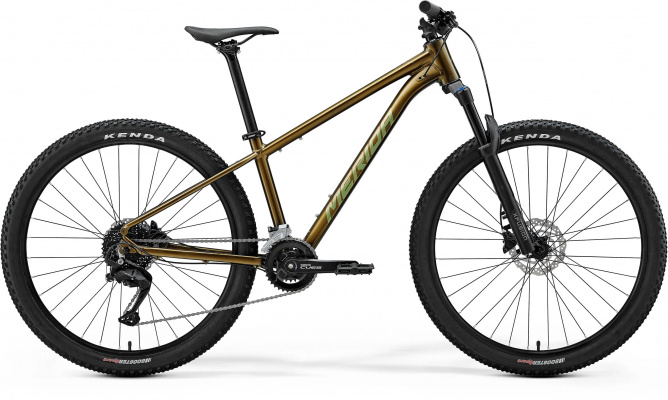
Merida BIG.SEVEN 60
Agile trail fun with modern geometry and proper suspension travel for riders chasing confidence, not podiums.
- X-Fusion Migo 32 Air fork: 120mm travel, lockout control
- 27.5" wheels: nimble handling, ideal for shorter riders
- Shimano CUES 2×9: reliable shifting across varied terrain
- Steeper seat angle, slacker head: confident modern trail geometry
- TFS aluminium frame: shaped tubes, clean welds, rack mounts
- Kenda Booster 2.4" tyres: grip and cushion for trail use
Merida BIG.SEVEN 60 Deals

Prices and availability can change quickly. Delivery charges are not always included in listed prices.
Final price, stock status and delivery terms are set by retailer. We may receive a commission on purchases made.
Bikesy's Verdict
The Merida BIG.SEVEN 60 delivers genuine trail capability without the price-tag anxiety that comes with pricier machines. Its modern geometry and 120mm air fork bring confidence to descents, while the steep seat angle and efficient hardtail platform reward your effort on climbs. The 27.5-inch wheels suit shorter riders perfectly and offer nimble, playful handling that makes every ride feel engaging rather than workmanlike.
This isn't a bike you'll outgrow in a season. The tapered head tube, wide tyre clearance and accessory mounts mean it'll adapt as your skills and ambitions grow - add a dropper post, go tubeless, fit a rack for a weekend adventure. It's versatile enough to double as a rugged commuter yet capable enough to tackle proper singletrack with a grin. If you're stepping up from a basic trail bike or simply want something that rewards curiosity without punishing mistakes, the BIG.SEVEN 60 is a smart, sensible choice that'll have you riding more and worrying less.
Pros
- Agile 27.5" wheels suit shorter riders and tight, twisty trails
- Modern geometry with steep seat angle and slack head angle inspires confidence
- X-Fusion Migo 32 Air fork offers 120mm travel and lockout control
- Versatile frame with mounts for racks, mudguards and kickstand
- Shimano CUES drivetrain and MT200 hydraulic brakes deliver reliable performance
Cons
- Heavier than race-focused hardtails if you're chasing KOMs or XC podiums
- 120mm front travel won't soak up the biggest hits on aggressive descents; longer-travel bikes suit bike-park laps better
- Entry-level componentry means you may want upgrades (dropper post, tubeless) as your skills progress
About the Merida BIG.SEVEN 60
Merida's BIG.SEVEN 60 lands squarely in the sweet spot where accessible pricing meets genuine trail capability. Built around 27.5-inch wheels and a TFS aluminium frame that's been technoformed and double-butted for strength without the weight penalty, this hardtail speaks directly to riders who want a bike that'll grow with them - whether you're stepping up from a basic trail bike or simply want something that handles real singletrack without demanding race-day commitment. The frame's clean internal routing and threaded bottom bracket signal practical intent, while mounts for mudguards, racks and kickstands mean it'll double as a rugged commuter when the trails are too wet to ride.
For the latest iteration, Merida has dialled in the geometry with a steeper 78-degree seat angle and a slacker 67-degree head angle, pushing the bike's character firmly into modern trail territory. You'll sit more over the pedals on climbs, and the front end stays calmer when the descent gets choppy. Paired with the X-Fusion Migo 32 Air fork - now offering 120mm of travel with a lockout lever - the BIG.SEVEN 60 absorbs trail chatter without wallowing, and you can firm it up when the fire road stretches out ahead. It's a bike that rewards curiosity: confident enough to encourage you into rockier lines, light enough that you won't curse it on the climbs, and forgiving enough that mistakes don't turn into yard sales.
The 27.5-inch wheel size is a deliberate choice, not a compromise. Smaller hoops accelerate faster, flick through tight switchbacks with less effort, and - crucially - fit riders of shorter stature without forcing awkward standover or toe-overlap compromises. If you've ever felt swallowed by a 29er, this bike will feel like it was cut to your measure. Shimano's CUES drivetrain delivers dependable two-by-nine shifting across a wide enough range to spin up steep pitches and still have legs left for the descent, while Shimano MT200 hydraulic brakes offer consistent stopping power in all weathers. It's a build that prioritises reliability over flash, and that's exactly what you want when you're learning to read trail at speed.
Merida BIG.SEVEN 60 geometry
The updated geometry transforms how this bike behaves on trail. That steeper seat angle plants you forward over the bottom bracket, so your weight stays centred when the gradient kicks up - no more sliding back on the saddle and losing traction at the rear tyre. Climbs feel more direct, and you'll find yourself staying seated longer on technical ascents because the bike holds its line without wandering. The slacker head angle - now sitting around 67 degrees - adds a dose of calm to the front end, so when you're picking through rock gardens or committing to a rooty descent, the fork isn't trying to dart left at every bump. It's not a full-on enduro slackfest, but it's modern enough that you won't feel like you're wrestling a twitchy XC racer.
Reach and stack have been tuned to suit the 27.5-inch wheels, keeping the cockpit roomy without stretching you flat. Shorter riders - especially those who've struggled with standover on larger-wheeled bikes - will appreciate the proportions; you can get behind the saddle on descents without your thighs kissing the tyre, and the lower standover height inspires confidence when you need to dab a foot. The chainstays are short enough to keep the rear end playful, so manual over roots or pop off small lips without needing a run-up. Wheelbase grows sensibly with frame size, so larger riders get stability without the bike feeling like a barge, and smaller sizes stay nimble without becoming nervous. It's a geometry that flatters your skills rather than exposing gaps, and that's worth more than any single number on a chart.
Component choices & upgrades
The stock build is well-sorted for the bike's intended audience. Shimano CUES offers crisp, predictable shifts, and the two-by-nine range covers everything from lung-busting climbs to fast, flowing descents. The X-Fusion Migo 32 Air fork is a notable step up from the coil units fitted to earlier models - air springs are easier to tune to your weight, and the lockout lever means you're not wasting energy bobbing through tarmac sections or long gravel climbs. Shimano MT200 hydraulic brakes deliver consistent bite with minimal fuss, and the 160mm rotors are adequate for trail use, though they'll work harder on longer, steeper descents. Kenda Booster tyres in 2.4-inch width offer decent grip and cushion straight out of the box, and the frame's clearance means you've got room to experiment with tread patterns if your local trails demand something more aggressive or faster-rolling.
If your riding progresses and you start chasing more technical terrain, a few targeted upgrades will sharpen the bike's edge. Swapping to a tubeless setup cuts weight, improves puncture resistance, and lets you run lower pressures for better traction and comfort - just check your rims are tubeless-ready or budget for tape and valves. A dropper post is the single most transformative upgrade for any hardtail; being able to drop the saddle on descents opens up steeper, rougher lines and makes the bike feel more planted. The tapered head tube means you can slot in a burlier fork down the line if you want more travel or damping control, though the Migo 32 is capable enough that you'll likely outgrow other components first. Grips, saddle and pedals are personal - swap them if they don't suit your hands, sit bones or shoe pins, but don't feel obliged to change everything just because it's not boutique. The stock kit works, and that's the point.
Where the Merida BIG.SEVEN 60 excels
This bike is outstanding at making trail riding accessible and enjoyable. If your typical ride mixes fire-road climbs, flowing singletrack and the occasional rocky descent, the BIG.SEVEN 60 will handle it all with a grin. It climbs with purpose - the steep seat angle and efficient hardtail platform mean your watts go into forward motion, not suspension bob - and the 27.5-inch wheels accelerate quickly out of corners or when you need to bridge a gap. On descents, the updated geometry and 120mm of front travel give you enough confidence to commit to lines you might have hesitated over on an older, steeper bike. It's not a downhill weapon, but it's far from fragile; you can point it at rooty chutes and rocky step-downs without feeling like you're asking too much.
It also does double duty as a rugged commuter or bikepacking rig. Mounts for mudguards, racks and a kickstand mean you can load it up for a weekend adventure or fit it out for wet-weather town miles. The hydraulic brakes work just as well in the rain, and the wide tyre clearance lets you fit something fast-rolling for tarmac or gravel if you're spending more time on byways than berms. Where it's less ideal is on truly aggressive, high-speed descents or bike-park laps - hardtails demand more from your body on rough terrain, and 120mm of front travel won't soak up the biggest hits like a long-travel trail bike. If you're chasing enduro stages or shuttle runs, you'll want more suspension and a slacker head angle. But for riders building skills, exploring local trails, or simply wanting a bike that's fun without being fussy, the BIG.SEVEN 60 hits the mark.
Merida BIG.SEVEN 60 FAQs
What is the best tyre pressure for a Merida BIG.SEVEN 60?
Start around 25 - 30 psi for trail riding, adjusting based on your weight, terrain and whether you're running tubeless. Lower pressures improve grip and comfort but increase pinch-flat risk with tubes; tubeless lets you drop another few psi safely. Harder surfaces or heavier riders may need a bit more air to avoid rim strikes.
How much does a Merida BIG.SEVEN 60 weigh?
Merida hasn't published an official weight for this model, but expect it to land somewhere in the region of 13 - 14 kg for a medium frame, depending on size and any component variations. Hardtails in this category typically sit in that range, balancing durability with reasonable climbing efficiency.
Is the Merida BIG.SEVEN 60 good for beginners?
Absolutely. The geometry is forgiving, the components are reliable, and the bike rewards progression without punishing mistakes. It's light enough to climb without suffering, stable enough to build confidence on descents, and versatile enough to handle everything from trail centres to towpath commutes. You won't outgrow it quickly.
What kind of riding is the Merida BIG.SEVEN 60 suitable for?
Trail riding is its natural habitat - think flowing singletrack, moderate climbs, rooty descents and the occasional rock garden. It'll also handle light XC duties, gravel exploration and commuting with the right tyres and accessories fitted. It's not built for bike-park jumps or enduro racing, but it's more capable than its price suggests.
Can I fit wider tyres on a Merida BIG.SEVEN 60?
The frame clears up to 2.4-inch tyres, which is what it ships with. You might squeeze a 2.5-inch tyre on depending on tread profile and rim width, but you'll be pushing clearance limits - stick with 2.4 or narrower to avoid mud build-up and chainstay rub. That's plenty of rubber for trail grip and cushion.
What upgrades are recommended for a Merida BIG.SEVEN 60?
A dropper post is the single best upgrade for descending confidence and control. After that, consider going tubeless for better traction and fewer punctures, and swap grips, saddle or pedals to suit your body. If you're riding harder terrain regularly, a burlier fork or wider rotors (180mm front) will add capability, but the stock build is solid enough that you can ride first and upgrade later.
What is the difference between Merida BIG.SEVEN and BIG.NINE?
Wheel size: the BIG.SEVEN runs 27.5-inch hoops, while the BIG.NINE uses 29ers. The smaller wheels on the SEVEN are more agile, accelerate faster and suit shorter riders better; the NINE rolls over obstacles more easily and holds speed on open terrain. Geometry and frame design are otherwise similar, so choose based on your height and the type of trails you ride most.
How do I find the right size for a Merida BIG.SEVEN 60?
Check Merida's size chart against your height and inseam, but also consider reach and standover. Shorter riders (under 165 cm) will likely fit XXS or XS; taller riders (over 175 cm) should look at M or L. If you're between sizes, go smaller for nimble handling or larger for stability and a roomier cockpit. A test ride is always worth the effort if you can arrange one.
Key Features & Benefits
- X-Fusion Migo 32 Air fork with 120mm travel and lockout: Absorbs trail chatter and roots while letting you firm up for climbs, so you're not wasting energy on smooth sections
- Steeper 78° seat angle and slacker 67° head angle: Keeps your weight centred on climbs for better traction and calms the front end on descents for confident line choice
- 27.5-inch wheels with 2.4" Kenda Booster tyres: Nimble handling through tight corners and better fit for shorter riders, with enough rubber for grip and cushion on varied terrain
- TFS aluminium frame with internal routing and accessory mounts: Light, stiff and durable with a clean look, plus the versatility to add racks or mudguards for commuting or bikepacking
- Shimano CUES 2×9 drivetrain and MT200 hydraulic brakes: Wide gear range for steep climbs and fast descents, with consistent all-weather braking you can trust when it matters
Merida BIG.SEVEN 60 2025, 2024 & 2023 differences
The 2026 model brings the most significant update in recent years: the X-Fusion Migo 32 Air fork replaces the RockShox Judy TK Coil, lifting travel from 100mm to 120mm and swapping the coil spring for an air unit with lockout. This makes the fork easier to tune to rider weight and adds more capability on rougher descents. The frame designation moves from TFS IV (2025) to TFS V, reflecting updated geometry with a steeper 78-degree seat angle and slacker 67-degree head angle - both pushing the bike's character firmly into modern trail territory.
Shimano CUES replaces the previous generic Shimano 2×9 drivetrain, bringing improved shift quality and durability under load. Tyres grow from Merida K1080 27.5×2.2" to Kenda Booster 27.5×2.4", offering more grip and cushion. The saddle upgrades from Merida Sport Comfort to Merida Comp SL, and pedals switch from VP VPE-891 to VP VPE 536 - both minor refinements but welcome nonetheless.
- 2025: RockShox Judy TK Coil fork (100mm), TFS IV frame, Shimano 2×9 drivetrain, Merida K1080 27.5×2.2" tyres, Merida Sport Comfort saddle, VP VPE-891 pedals.
- 2024: Specification closely mirrored 2025, with RockShox Judy fork and Shimano 2×9 drivetrain; incremental updates only.
- 2023: RockShox Judy TK Coil fork (100mm), TFS III frame, Shimano 2×9 drivetrain, Merida K1080 27.5×2.2" tyres - geometry was less progressive than current models.
The 2026 iteration represents a meaningful step forward in suspension performance and geometry, making it the most capable BIG.SEVEN 60 to date. Earlier models remain solid trail bikes, but the air fork and updated angles are worth seeking out if you're buying new.
Alternatives to Consider
Within Merida's own range, the BIG.NINE 60 swaps the 27.5-inch wheels for 29ers, offering faster rolling and better obstacle clearance if you're taller or ride more open terrain; the trade-off is slightly less nimble handling in tight switchbacks. Step down to the BIG.SEVEN 40 and you'll save a bit of cash but lose the air fork and some drivetrain refinement - fine if you're on a tighter budget, but the 60's suspension and shifting are worth the stretch if you can manage it.
Cross-brand, the Trek Marlin 7 offers similar trail capability with 29-inch wheels and a RockShox fork, though it leans slightly more XC in geometry. The Giant Talon 2 delivers comparable value with an ALUXX aluminium frame and Shimano drivetrain, but the BIG.SEVEN's updated geometry feels more modern on technical descents. The Specialized Rockhopper Elite brings a slacker head angle and dropper-post routing, making it a strong choice if you're planning upgrades, though it's often priced a notch higher. For a closer match in wheel size and intent, the Cube Attention SL pairs 27.5-inch hoops with a similar trail-focused build, while the Scott Aspect 950 offers a slightly racier XC flavour with 29-inch wheels and a lighter frame if speed matters more than descending confidence. Each has merit, but the BIG.SEVEN 60's blend of modern geometry, air suspension and practical versatility makes it a compelling choice in this crowded segment.
Reviews
Agility and value define the BIG.SEVEN 60's character. The 27.5-inch wheels flick through tight singletrack with minimal effort, rewarding quick directional changes and making the bike feel playful rather than ponderous. Shorter riders consistently note the improved fit and confidence compared to 29ers, with standover clearance that doesn't force awkward leg splays on technical sections.
Climbing performance impresses for the price point. The steep seat angle keeps weight forward, so traction holds even on loose, punchy ascents, and the efficient hardtail platform means your effort translates directly into forward motion. When the gradient eases, the lockout lever on the X-Fusion fork firms things up, so you're not bobbing through fire-road slogs or tarmac connectors.
Descending reveals the updated geometry's intent. The slacker head angle and 120mm of front travel bring a calm, planted feel that older, steeper hardtails simply can't match. Rocky chutes and rooty drops that might have felt sketchy on a budget XC bike now invite commitment, and the bike tracks predictably through off-camber turns. It's not a downhill sled - hardtails demand more from your body on rough terrain - but it's far more capable than its entry-level billing suggests.
Component choices strike a practical balance. Shimano CUES shifts cleanly under load, the MT200 brakes offer consistent bite in all weathers, and the Kenda Booster tyres grip well enough on mixed terrain without feeling draggy on smoother sections. Because the fork is air-sprung, tuning it to your weight is straightforward, and the frame's tyre clearance leaves room to experiment with tread patterns as your riding evolves. It's a build that prioritises reliability over flash, and that's exactly what riders progressing their skills need most.
Full Specification
| Spec | Value |
|---|---|
| Frame Material | TFS Aluminum (Techno Forming System) |
| Frame Construction | Double butted and technoformed; tapered head tube |
| Frame Features | Internal cable routing; mounts for mudguards, racks, kickstand |
| Tyre Clearance | Up to 2.4 inches |
| Bottom Bracket | BSA threaded; Shimano BB-UN100 or BB-UN101 |
| Rear Axle | 135×9 mm |
| Fork | X-Fusion Migo 32 Air |
| Fork Travel | 120 mm |
| Fork Adjustments | Air spring; lockout |
| Drivetrain | Shimano CUES 2×9-speed |
| Shifters | Shimano CUES |
| Rear Derailleur | Shimano CUES U3020 |
| Cassette | Shimano CS-HG200; 11 - 32 teeth; 9-speed |
| Chain | KMC M99 or KMC xGlide |
| Brakes | Hydraulic disc |
| Brake Calipers | Shimano MT200 |
| Rotors (Front) | 160 mm |
| Rotors (Rear) | 160 mm |
| Wheels | 27.5 inch |
| Rims | MERIDA CC; 17 mm internal width; aluminum |
| Hubs (Front) | Shimano TX505; 100×9 mm; Centerlock; 32 spoke holes |
| Hubs (Rear) | Shimano TX505; 135×9 mm; Centerlock; 32 spoke holes |
| Spokes | Black steel |
| Tyres (Front) | Kenda Booster 27.5×2.4 inch |
| Tyres (Rear) | Kenda Booster 27.5×2.4 inch |
| Handlebar | MERIDA CC; aluminum; 690 mm width; 15 mm rise |
| Stem | MERIDA CC; aluminum; 31.8 mm diameter; 6-degree rise; 70 mm (XS/S), 80 mm (M), 90 mm (L) |
| Headset | MERIDA M2345 |
| Seatpost | MERIDA CC; aluminum; 30.9 mm diameter; 15 mm setback |
| Saddle | MERIDA COMP SL |
| Pedals | VP VPE 536 |