
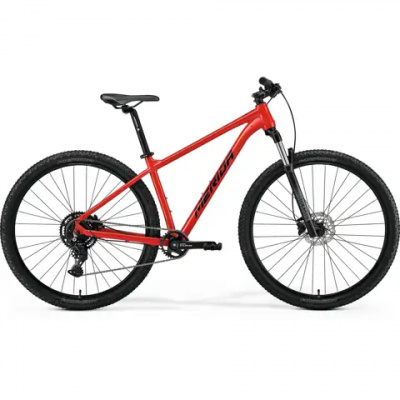
Merida BIG.NINE 80
A capable, comfortable hardtail that climbs efficiently, descends with poise, and handles trail rides to commutes without fuss.
- TFS aluminium frame: modern shapes, double-butted strength
- 100mm RockShox fork smooths trail chatter
- Shimano CUES 1x9: reliable shifts, wide range
- 29er wheels roll over roots, hold momentum
- Clearance for 2.4" tyres: grip and comfort
- Dropper-ready, internal routing, mudguard mounts
Merida BIG.NINE 80 Deals
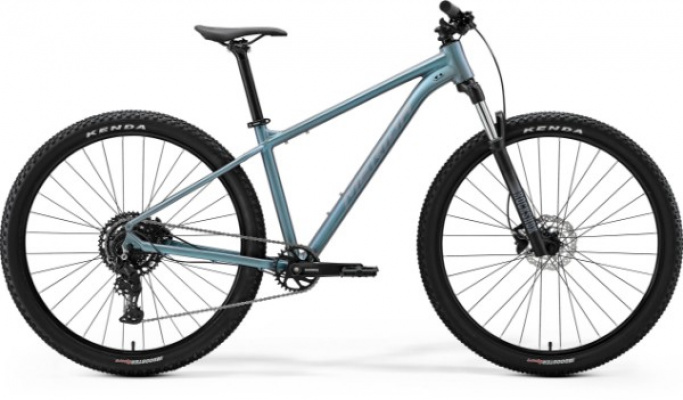

Prices and availability can change quickly. Delivery charges are not always included in listed prices.
Final price, stock status and delivery terms are set by retailer. We may receive a commission on purchases made.
Bikesy's Verdict
The Merida BIG.NINE 80 is the sort of hardtail that makes sense for a lot of riders: capable enough to handle proper trail rides, practical enough for everyday use, and built with enough attention to detail that it doesn't feel like a compromise. The modern geometry brings confidence and comfort, the Shimano CUES drivetrain and hydraulic brakes are dependable and low-fuss, and the frame is open to upgrades when your riding outpaces the stock kit.
It's not the lightest or raciest hardtail you can buy, but that's not the point. This is a bike that grows with you, handles varied terrain without drama, and won't punish you for choosing the long route home. If you want a versatile, well-built hardtail that respects both your wallet and your weekends, the BIG.NINE 80 delivers.
Pros
- Modern geometry brings confident handling and all-day comfort
- Shimano CUES 1x9 drivetrain: reliable, wide-range, low-maintenance
- Dropper-ready frame with clearance for 2.4" tyres and practical mounts
- TFS aluminium frame offers refined ride feel and durability
- Hydraulic discs and 29er wheels suit varied terrain and conditions
Cons
- Coil fork is less adjustable than air; upgrade worthwhile if you chase technical descents
- Quick-release rear axle offers less stiffness than thru-axle when you're really leaning on it
- Heavier than race-focused XC hardtails if you're chasing segment times
About the Merida BIG.NINE 80
Merida's BIG.NINE 80 sits right in that sweet spot where capable trail hardtail meets sensible everyday bike. Built around a TFS aluminium frame that borrows shaping tricks from pricier models, it rolls on fast 29-inch hoops and wears a modern geometry that's slacker and longer than the steep-and-nervous hardtails of old. The result? A bike that climbs without complaint, descends with more composure than you'd expect at this price, and won't punish you when the weekend ride stretches into an all-day adventure.
This isn't a race-whippet XC machine stripped to the bone. It's a do-it-all hardtail that acknowledges you might want mudguards for winter lanes, a dropper post for steep descents, or simply a bike that doesn't demand constant fettling. Shimano's CUES drivetrain delivers nine gears with the kind of shift quality that used to cost twice as much, hydraulic discs haul you up reliably, and there's room for proper 2.4-inch rubber when you want more grip or cushion. It's the sort of bike that grows with you - confident enough for singletrack, practical enough for the commute, and open to upgrades when your skills or ambitions outpace the stock kit.
Merida's attention to detail shows in the size-tuned cockpit, the inboard brake mounts that protect your caliper from trail furniture, and the double-butted tubing that shaves grams without turning the frame into a flexi. You're looking at a hardtail that respects both your wallet and your weekends, built by a brand with decades of frame-building nous and a knack for squeezing performance out of sensible spec.
Merida BIG.NINE 80 geometry
The BIG.NINE 80 wears the modern hardtail uniform: a head angle that's relaxed enough to inspire confidence when the trail tips down, a seat angle steep enough to plant you over the pedals on climbs, and a reach that's grown up compared to older designs. You sit more upright than on a full-race XC rig, which takes the sting out of long days and gives you better command of the front wheel when roots and rocks arrive in quick succession.
That longer front centre means the bike doesn't pivot around the headtube like a nervous terrier; instead, it tracks calmly through rough sections and holds a line without constant correction. The wheelbase has stretched too, so high-speed stability improves and you're less likely to loop out on steep climbs. It's not a slack enduro sled - this is still a hardtail with XC manners - but the geometry update brings poise that older, twitchier designs simply can't match.
Merida tunes the cockpit to frame size, so smaller riders get shorter stems and narrower bars, larger riders get longer and wider. It's a small touch that makes a real difference to how planted and controlled you feel, especially when you're learning to read trail at speed or wrestling the bike through tight switchbacks.
Component choices & upgrades
The stock build is already well sorted for the money. Shimano's CUES drivetrain - a nine-speed setup with an 11-46T cassette and 32T chainring - covers fire-road slogs and punchy technical climbs without leaving you spinning out or grinding to a halt. The shifts are crisp, the chain doesn't throw tantrums, and the whole system is built to take a beating. Shimano MT200 hydraulic brakes offer dependable stopping power with minimal fuss; they're not the lightest or most powerful on the market, but they modulate well and require little maintenance.
The RockShox Judy fork - 100mm of coil-sprung travel with a lockout - does the job for trail riding and general off-road exploration. It's not as plush or adjustable as an air fork, but it soaks up the worst of the chatter and keeps the front wheel tracking. If you find yourself chasing faster riders down technical descents or tackling genuinely rough terrain week after week, an air fork with rebound adjustment would be the first sensible upgrade. Similarly, the 25mm-internal-width rims and Kenda tyres are capable, but swapping to a tubeless setup with stickier rubber transforms grip and reduces pinch-flat anxiety.
A dropper post is the other upgrade that pays immediate dividends. The frame is dropper-ready, and being able to drop your saddle on descents without stopping to fumble with a quick-release changes how confidently you can ride steep, technical sections. Beyond that, the stock kit will serve you well until your riding outgrows it - and by then, you'll know exactly which components matter most to your style.
Where the Merida BIG.NINE 80 excels
This bike is outstanding at being a versatile, low-fuss hardtail for riders who want one machine that handles trail rides, fitness loops, and the occasional commute without drama. The 29er wheels and modern geometry make it particularly good on rolling singletrack, fire roads, and moderate technical terrain where momentum and stability matter more than flickable agility. It climbs efficiently, descends with more composure than older hardtails, and the upright position keeps you comfortable when the ride stretches past two hours.
It's also excellent as a first proper mountain bike. The geometry inspires confidence rather than demanding expert bike-handling, the drivetrain and brakes are intuitive and reliable, and the frame is tough enough to survive the inevitable learning-curve mishaps. Because it's dropper-ready and has clearance for wider tyres, you can grow the bike's capability as your skills improve without hitting a ceiling.
Where it's not ideal: this isn't a bike for riders chasing podiums in XC races or those who need the absolute lightest, stiffest platform. The coil fork and entry-level spec add a bit of weight, and the quick-release rear axle doesn't offer the same lateral stiffness as a thru-axle. If your local trails are genuinely rough - think rock gardens, big drops, or sustained technical descents - you'll eventually want more suspension travel and burlier components. And if you're after a nimble, playful ride for tight, twisty singletrack, a 27.5-inch-wheeled hardtail might suit you better.
Merida BIG.NINE 80 FAQs
What is the best beginner mountain bike for trails?
The BIG.NINE 80 is a strong contender: it offers modern geometry that builds confidence, reliable Shimano components that won't let you down, and enough capability to handle varied terrain as your skills develop. It's not the only option, but it ticks the boxes for versatility, durability, and value without locking you into a bike you'll outgrow in six months.
Is Merida a good brand for mountain bikes?
Merida has been building frames for decades - both under its own name and for other major brands - and the quality shows. Their TFS aluminium frames punch above their weight in terms of ride feel and durability, and the brand has a reputation for thoughtful spec choices and solid after-sales support. You're buying from a manufacturer with serious engineering depth, not a badge slapped on a generic frame.
What does TFS mean on a Merida bike frame?
TFS stands for Techno Forming System, Merida's process for shaping aluminium tubes with varied wall thicknesses and complex profiles. It allows them to create modern frame shapes - longer, lower, slacker - while optimising strength and weight distribution. In practice, it means the frame feels more refined and less harsh than basic straight-gauge tubing, with better stiffness where you need it and more compliance where you don't.
How much travel should a beginner mountain bike have?
For general trail riding and learning the ropes, 100mm is a sensible starting point - it smooths out bumps and roots without adding excessive weight or complexity. The BIG.NINE 80's 100mm fork is enough to keep you comfortable and in control on moderate trails, and it won't mask poor technique the way a long-travel bike can. As your riding gets more aggressive or your local terrain gets rougher, you can always upgrade the fork or move to a bike with more travel.
Can I fit wider tyres on a Merida Big Nine 80?
Yes, the frame clears up to 2.4-inch tyres, which gives you plenty of room to experiment with grip, cushion, and rolling resistance. You could run a fast-rolling 2.25-inch tyre for dry conditions and swap to a wider, knobbier 2.4-inch option when the trails get muddy or rough. Going tubeless opens up even more options for lower pressures and better traction without the pinch-flat risk.
What is the difference between Merida Big Nine and Big Seven?
The BIG.NINE rolls on 29-inch wheels, the BIG.SEVEN on 27.5-inch. The 29er wheels roll over obstacles more easily, hold momentum better, and offer more stability at speed, making them ideal for taller riders and longer, flowing trails. The 27.5-inch wheels are more nimble and playful, better suited to shorter riders or tight, technical singletrack where quick direction changes matter more than outright speed. Both share similar frame design and geometry philosophy, just scaled to wheel size.
Is a 1x9 drivetrain good for mountain biking?
For trail riding, fitness loops, and general off-road exploration, a 1x9 setup with an 11-46T cassette is more than adequate. You lose the absolute top-end speed of a 2x system, but you gain simplicity, lighter weight, and fewer things to go wrong. The gear range covers steep climbs and fast descents without leaving you spinning out or grinding, and the single chainring means no front mech to adjust or chain to drop. It's a smart choice for this type of bike and this level of riding.
What is the best tyre pressure for a 29er mountain bike?
It depends on your weight, the terrain, and whether you're running tubeless, but a good starting point for a rider around 75kg on 2.4-inch tyres is 25 - 28 psi. Lighter riders can drop a few psi for more grip and comfort, heavier riders might need 30 psi or more to avoid pinch flats and maintain support. Tubeless lets you run lower pressures safely, which improves traction and smooths out rough trails. Experiment in small increments - too low and you'll feel sluggish and risk burping the tyre, too high and you'll bounce off roots and lose grip.
Key Features & Benefits
- TFS double-butted aluminium frame: Modern shaping and varied wall thickness deliver a refined ride feel, lower weight, and durability that lasts beyond the first season
- Updated geometry with slacker head angle and longer reach: Inspires confidence on descents, tracks calmly through rough sections, and keeps you comfortable on long rides without feeling twitchy
- Shimano CUES 1x9 drivetrain with 11-46T cassette: Wide gear range covers steep climbs and fast descents with crisp, reliable shifts and minimal maintenance faff
- Clearance for 2.4" tyres and dropper-post routing: Lets you upgrade grip, cushion, and descending confidence as your riding progresses, without hitting a frame limitation
- 29-inch wheels with 25mm-internal-width rims: Roll over roots and rocks smoothly, hold momentum on climbs, and offer stable, predictable handling at speed
Merida BIG.NINE 80 2025 differences
The 2025 model featured the same TFS aluminium frame with updated geometry - longer reach, slacker head angle, and steeper seat angle - that brought the BIG.NINE range into line with modern trail hardtail standards. It wore a Shimano CUES 1x9 drivetrain, Shimano MT200 hydraulic brakes, and a 100mm RockShox Judy TK Coil fork, making it very similar in spec to the 2026 version. The key difference for 2026 appears to be the potential upgrade to a RockShox Judy Gold air fork with 120mm travel on some regional models, offering more adjustability and a slightly plusher ride. Tyre spec may also vary slightly between model years, with some listings showing Kenda Booster 2.4-inch rubber and others showing Merida-branded 2.25-inch tyres. Otherwise, the 2025 and 2026 models are closely aligned in capability and intent.
Earlier iterations - 2024 and before - featured the same frame platform but with older geometry that was steeper and shorter, making them less stable on descents and less comfortable on long rides. Component spec on those older models varied, with some wearing 2x drivetrains and mechanical disc brakes at the entry level. The move to 1x drivetrains and hydraulic brakes across the range, along with the geometry update, represents the most significant evolution in the BIG.NINE 80's recent history.
Alternatives to Consider
Within Merida's own range, the BIG.SEVEN 80 offers the same frame quality and spec level but rolls on 27.5-inch wheels, making it more nimble and better suited to shorter riders or tight, twisty trails where playfulness trumps outright speed. If you want to step up within the BIG.NINE family, the BIG.NINE 200 brings a RockShox air fork with more adjustability, a Shimano Deore 1x10 drivetrain, and often a dropper post as standard - worthwhile if your local terrain is rougher or you're confident you'll ride harder, more often.
Cross-brand, the Specialized Rockhopper Elite 29 sits in similar territory with a capable aluminium frame, Shimano drivetrain, and hydraulic brakes, though it often leans slightly more towards XC speed than all-day comfort. The Trek Marlin 8 offers a similar blend of trail capability and practical features, with a RockShox fork and Shimano 1x drivetrain; it's a close match in intent and price. The Giant Fathom 2 brings a slightly more aggressive trail focus with a longer-travel fork and wider tyres as standard, making it a better choice if your rides skew towards technical descents. Finally, the Cannondale Trail SE 3 offers a lightweight aluminium frame and modern geometry, though component spec can vary by region and it sometimes trades a bit of comfort for outright stiffness.
Each of these bikes shares the BIG.NINE 80's do-it-all hardtail philosophy, but they differ in how they balance speed, comfort, and capability. The Merida stands out for its refined frame feel, size-tuned cockpit, and practical features like mudguard mounts and generous tyre clearance - details that matter when you're using the bike for more than just weekend trail rides.
Reviews
Geometry that's been dragged into the modern era makes a tangible difference. Longer reach and a calmer head angle mean the bike doesn't dart nervously through rock gardens or demand constant steering corrections on fast, rough descents. Instead, it holds a line, tracks predictably, and lets you focus on picking the smoothest route rather than wrestling the front wheel. When the trail tips up, the steep seat angle plants you over the pedals so your weight stays centred and traction stays consistent, even on loose climbs where older hardtails would have you sliding backwards.
Shimano's CUES drivetrain shifts with the kind of precision that used to be reserved for mid-tier groupsets. The nine-speed range covers everything from fire-road slogs to punchy technical climbs without leaving you hunting for gears, and the single chainring setup means one less thing to think about when you're trying to read trail at speed. Hydraulic brakes modulate smoothly and haul you up reliably in all conditions, though they're not the most powerful on the market - fine for trail riding, less ideal if you're regularly descending long, steep runs with a heavy pack.
The 100mm coil fork does its job without fuss. It's not plush or infinitely adjustable, but it takes the edge off roots and rocks and keeps the front wheel tracking through chatter. Because it's a coil spring rather than air, it can feel a touch harsh on small, fast bumps compared to pricier forks, and there's no rebound adjustment to fine-tune how quickly it recovers. That said, it's reliable, low-maintenance, and perfectly adequate for the riding this bike is designed to do.
We appreciate the practical touches: internal cable routing that keeps things tidy, inboard brake mounts that protect the caliper from trail furniture, and clearance for proper 2.4-inch tyres when you want more grip or cushion. The frame feels stiff enough to handle hard pedalling and rough descents without flexing noticeably, yet it doesn't beat you up the way some budget aluminium hardtails can. Ride quality is surprisingly refined for the price, with the double-butted tubing doing a better job of filtering trail buzz than basic straight-gauge frames.
Where it shines brightest is versatility. This is a bike that climbs efficiently, descends with composure, and doesn't punish you when the ride stretches past three hours. It's equally at home on rolling singletrack, gravel byways, or the daily commute, and the dropper-ready frame means you can add descending confidence without needing a new bike. The 29er wheels roll over obstacles smoothly and hold momentum on climbs, though they're not as flickable or playful as 27.5-inch hoops in tight, technical sections.
Full Specification
| Spec | Value |
|---|---|
| Frame Material | TFS (Techno Forming System) aluminum, Racelite 61, double-butted |
| Frame Construction | Technoformed tubing |
| Frame Features | Internal cable routing; tapered headtube; inboard disc brake mounts; mudguard mounts; kickstand mounts; dropper post ready; tyre clearance up to 2.4 inches |
| Bottom Bracket | BSA threaded, Shimano BB-UN101 |
| Rear Axle | 135x9mm quick-release |
| Fork | RockShox Judy TK Coil |
| Fork Travel | 100mm |
| Fork Adjustments | Lockout; coil spring |
| Drivetrain | 1x9-speed |
| Shifters | Shimano CUES U4000-9R |
| Rear Derailleur | Shimano CUES U4000 GS |
| Crankset | Shimano CUES UT400-1, 32T |
| Crank Length | S: 165mm; M/L/XL/XXL: 170mm |
| Cassette | SunRace U9 CS-U980 9AZ 11-46T or Shimano CS-LG300-9 11-46T |
| Chain | KMC xGlide |
| Brakes | Hydraulic disc |
| Brake Levers | Shimano MT200 |
| Brake Calipers | Shimano MT200 |
| Rotors | Shimano RT10 |
| Wheels | 29 inch |
| Rims | MERIDA COMP CC II, 25mm internal width |
| Spokes | 32 holes (front and rear) |
| Hubs (Front) | Shimano HB-TX505, Centerlock, 100x9mm |
| Hubs (Rear) | Shimano FH-TX505, Centerlock, 135x9mm |
| Tyres (Front) | Kenda Booster 29x2.4 inch or MERIDA K1080 29x2.25 inch |
| Tyres (Rear) | Kenda Booster 29x2.4 inch or MERIDA K1080 29x2.25 inch |
| Handlebar | MERIDA CC, size-tuned |
| Stem | MERIDA CC; S: 70mm, M: 80mm, L: 90mm, XL: 100mm, XXL: 110mm |
| Grips | MERIDA EC |
| Headset | MERIDA M2345 |
| Seatpost | MERIDA CC |
| Saddle | MERIDA Sport comfort |
| Pedals | VP VPE-891 |
| Frame Sizes | S, M, L, XL, XXL |