
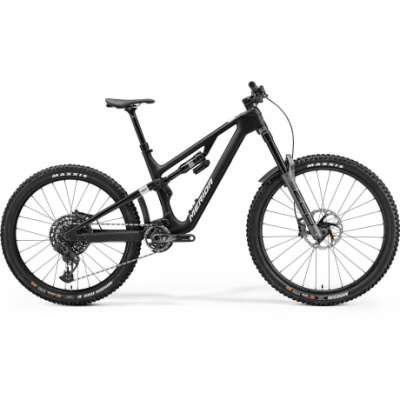
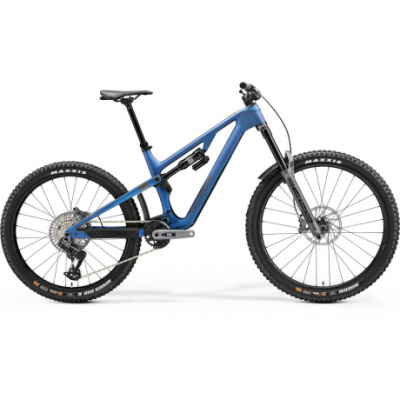
Merida ONE-SIXTY 8000
Smash enduro stages and bike-park laps with radical geometry that still climbs without complaint.
- FAST flexstay suspension: no rear pivot, less faff
- Agilometer sizing: pick reach by riding style, not height
- Vivid Ultimate shock and Zeb fork: 160/170mm plush
- GX Eagle Transmission AXS: wireless shifting precision
- Mullet or 29er flip-chip: tune wheel size on the fly
- 230mm dropper travel: massive saddle range for steep lines
Merida ONE-SIXTY 8000 Deals
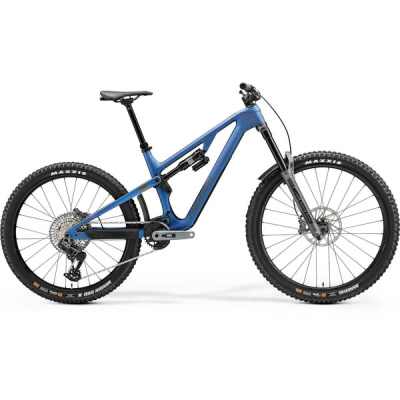
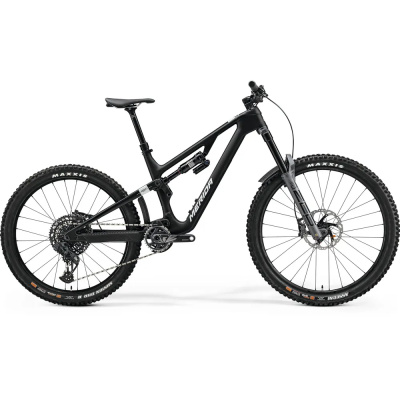
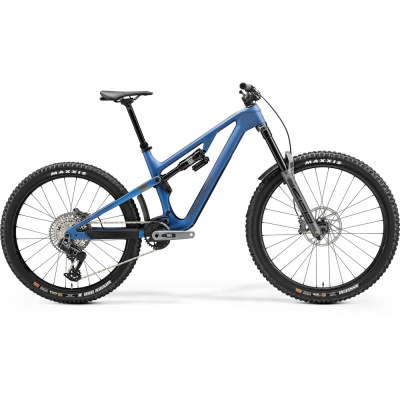

Prices and availability can change quickly. Delivery charges are not always included in listed prices.
Final price, stock status and delivery terms are set by retailer. We may receive a commission on purchases made.
Bikesy's Verdict
The ONE-SIXTY 8000 is Merida's statement enduro machine, and it backs up the bold geometry with a suspension platform that feels alive under you. That flexstay rear end - no pivot, just engineered carbon flex - keeps things simple, light, and surprisingly plush when you're hammering through rock gardens or landing flat off a drop. The Agilometer sizing lets you dial reach to match how you ride rather than forcing you into a box based on your inseam, which means shorter riders can grab a longer front centre for stability, and taller riders can size down for snap.
Spec is thoughtful: the Vivid Ultimate shock and Zeb fork are proper enduro kit, GX Transmission AXS means you're shifting wirelessly with the kind of precision that used to cost twice as much, and those Continental Kryptotals grip like they're angry. The 230mm dropper gives you room to get behind the saddle on the steepest chutes, and the flip-chip means you can run full 29er or mullet without wrecking the geometry. It's not the lightest bike on the hill, but when you're pointing it downhill and the trail gets properly grim, you'll appreciate every gram of that planted, confidence-building heft. If your weekends involve chairlifts, stage races, or just chasing mates down gnarly descents, this is a bike that'll keep pace - and still pedal back up for another lap without making you hate life.
Pros
- Flexstay rear end: no pivot to service, progressive feel, lighter
- Agilometer sizing: choose reach by riding style, not just height
- Vivid Ultimate shock and Zeb fork: plush, supportive, enduro-ready
- GX Transmission AXS: wireless shifting, bombproof durability
- 230mm dropper: massive travel range for steep descents
- Climbs well for an enduro bike thanks to steep seat angle
Cons
- Over 15kg, so heavier than racier trail bikes if you chase climb times
- Limited geometry adjustment beyond the flip-chip for wheel size
- Overkill on mellow, rolling trails where the travel feels excessive
About the Merida ONE-SIXTY 8000
Merida's ONE-SIXTY 8000 lands as the brand's full-commitment enduro weapon, and it's built around ideas that sound radical on paper but make immediate sense the moment you see the bike in the metal. The flexstay rear end ditches the traditional upper pivot - carbon does the flexing instead - so you lose a bearing, a bolt, and a maintenance headache while gaining a rear end that's both lighter and more progressive. The FAST kinematic name isn't marketing fluff; it's a suspension platform tuned by frame size, so the progression curve matches the leverage you're actually putting through it. Pair that with geometry that's long, low, and steep in all the right places, and you've got a bike that feels like it was designed by people who actually ride enduro, not just draw it on CAD.
The 8000 sits at the sharp end of the ONE-SIXTY range, and the spec reflects that ambition. RockShox's Vivid Ultimate shock replaces the Super Deluxe from earlier builds, bringing coil-like suppleness in an air package, while the Zeb Ultimate fork up front offers 170mm of travel with Charger 3 damping that you can actually feel working. SRAM's GX Eagle Transmission AXS drivetrain is the headline upgrade for this model year - wireless, robust, and with that satisfying clunk of a proper mechanical shift even though there's no cable. DT Swiss EX1700 wheels are a sensible choice for enduro abuse, wide enough for proper tyre support and tough enough to survive repeated flat landings. Continental Kryptotal rubber front and rear is a confident pairing, the soft compound gripping even when the trail's gone greasy, though you'll wear through it faster than a harder mix if you're riding year-round.
What makes the ONE-SIXTY 8000 interesting isn't just the parts list - it's the way Merida's approached the whole package. The Agilometer sizing system lets you choose frame size by reach and riding style rather than strict height brackets, so you can size up for stability or down for agility depending on whether you're racing stages or sessioning jumps. The 230mm-travel dropper post is one of the longest-travel units you'll find as stock, giving you massive room to move when the trail pitches over. Integrated tool storage, a FidLock magnetic bottle mount, and proper frame protection show that someone thought about what happens after you leave the showroom. It's not a bike that's trying to be everything to everyone - it's an enduro rig that climbs well enough to make the descents worth it, and descends well enough to make you forget about the climbs.
Merida ONE-SIXTY 8000 geometry
The geometry here is what Merida calls radical, and they're not overselling it. Reach is generous across the size range, pushing you forward over the front wheel in a way that loads the tyre and keeps the bike tracking through rough sections rather than skittering off line. The head angle is slack enough to inspire confidence at speed but not so slack that you're wrestling the bike through tight switchbacks - it's that sweet spot where stability doesn't cost you manoeuvrability. The seat tube is steep, properly steep, which plants you over the bottom bracket when you're climbing and stops the front wheel wandering skyward on technical ascents. You'll feel that steep angle immediately: it puts your weight where it needs to be, and it means you can stay seated longer on climbs that would have you out of the saddle on slacker bikes.
Chainstays are on the shorter side for an enduro bike, which gives the rear end a lively, playful feel when you're pumping through compressions or snapping the bike into corners. That shorter rear centre also helps with manuals and getting the front wheel up over obstacles, so the bike doesn't feel like a freight train despite the long front centre. The bottom bracket sits low enough to give you a stable, planted feel in corners but not so low that you're smacking rocks on every pedal stroke - it's a compromise that works. Wheelbase stretches out as you go up the sizes, and that length is what gives the bike its high-speed composure; it's not nervous, it's not twitchy, it just tracks where you point it and soaks up the chaos underneath.
The Agilometer sizing is worth understanding because it changes how you think about frame choice. Instead of defaulting to a size based on your height, you're picking a reach number based on how you want the bike to behave. Shorter reach (XShort, Short) gives you a more flickable, agile ride that's easier to throw around in tight trees or technical sections. Longer reach (Long, XLong) stretches you out for stability at speed and confidence on steep, fast descents. Mid sits in between, offering a balanced feel that works for most riders most of the time. It's a system that rewards thinking about your riding style rather than just measuring your inseam, and it means the bike can suit a wider range of riders without forcing compromises.
Component choices & upgrades
The stock build on the ONE-SIXTY 8000 is already well sorted, and for most riders it'll be more than capable straight out of the box. The Vivid Ultimate shock and Zeb Ultimate fork are top-tier suspension components, offering the kind of adjustability and performance that used to be reserved for custom builds. GX Transmission AXS gives you wireless shifting with the durability of a mechanical system, and while it's not the lightest option, it's bombproof in a way that matters more on an enduro bike. The DT Swiss EX1700 wheels are solid, reliable, and wide enough to support aggressive tyre choices without adding unnecessary weight. Continental Kryptotal tyres are confidence-inspiring in the soft compound, though if you're riding drier, harder-packed trails year-round, you might consider swapping to a harder compound rear to extend tread life without sacrificing too much grip.
If you're the kind of rider who's already pushing the limits of the stock spec - racing enduro, spending every weekend at the bike park, or just riding at a pace that's hard on equipment - there are sensible upgrade paths that'll sharpen the bike's performance. A coil shock is an obvious consideration if you're heavier, ride aggressively, or just prefer the feel of a coil's consistent damping through the stroke; the frame's designed to accommodate one, and the extra weight is negligible when you're pointing downhill. Wheels are another area where an upgrade makes sense if you're regularly denting rims or want to shave a bit of rotating weight - something like a carbon wheelset with a wider internal width will give you better tyre support and a touch more compliance, though you'll pay for it. Tyres are the easiest and most cost-effective upgrade: if the Kryptotals don't suit your local terrain, there's a world of enduro rubber out there, from Maxxis Assegai and DHR II combos to Schwalbe Magic Mary and Big Betty pairings, each with their own balance of grip, rolling speed, and durability.
Cockpit tweaks are personal and often free if you're swapping parts you already own. The stock 780mm bar is wide enough for most riders, but if you're in tight trees or prefer a narrower stance, cutting it down to 760mm or even 740mm is a quick fix. Grips, saddle, and pedals are always rider-specific - what works for one person is torture for another - so don't be afraid to swap those out to match your preferences. The 230mm dropper is already one of the longest-travel posts available, but if you're shorter and finding you can't get the saddle low enough even with it fully dropped, a shorter-travel post might be necessary. For most riders, though, the stock build is the sweet spot: it's thoughtful, it's capable, and it's specced to handle the kind of riding this bike was designed for without needing immediate upgrades.
Where the Merida ONE-SIXTY 8000 excels
This bike is built for enduro racing and aggressive trail riding where the descents are long, rough, and fast, and the climbs are just the price you pay to get there. It's outstanding on demanding descents - rock gardens, root sections, steep chutes, off-camber turns - where the suspension soaks up the chaos and the geometry keeps you planted and in control. The Vivid Ultimate shock and Zeb fork work together to give you a plush, supportive feel that doesn't wallow or pack up, even when you're hammering through repeated hits. The long front centre and slack head angle mean the bike is stable at speed, tracking confidently through rough sections without deflecting off line, and the steep seat angle keeps your weight centred so you're not fighting the bike to stay balanced. It's the kind of bike that makes you faster on descents not because it's doing the work for you, but because it gives you the confidence to commit harder and brake later.
Climbing performance is surprisingly good for a bike with this much travel and this much capability. The steep seat tube angle puts you in an efficient pedalling position, and the FAST kinematic suspension platform is progressive enough that it doesn't bob excessively under power. You're not going to out-climb a 120mm trail bike, but you're also not going to dread the fire-road slogs or technical climbs that get you to the top of the descent. The bike pedals well enough that you can session laps at the bike park without feeling like you're dragging an anchor, and it's composed enough on technical climbs that you can stay seated and keep momentum rather than having to muscle your way up. The 230mm dropper gives you massive range to get the saddle high for efficient climbing and then slam it out of the way when the trail tips over, which is a bigger advantage than it sounds when you're transitioning between steep climbs and steeper descents.
Where the ONE-SIXTY 8000 is less ideal is on mellow, rolling trails where the extra travel and weight feel like overkill. If your local riding is mostly smooth singletrack with gentle climbs and flowy descents, this bike will feel like you've brought a sledgehammer to hang a picture frame. It's also not the bike for riders who prioritise weight above all else - at over 15kg, it's not light, and you'll feel that on long climbs or when you're trying to accelerate out of tight corners. The flexstay rear end, while clever and low-maintenance, doesn't offer the same level of geometry adjustment as bikes with flip-chips or adjustable headsets, so if you like to tinker with your setup, you're more limited here. But if your riding involves bike parks, enduro stages, or just chasing mates down the gnarliest trails you can find, the ONE-SIXTY 8000 is built for exactly that, and it'll reward you with a ride that's planted, confident, and genuinely fun even when the trail gets properly rough.
Merida ONE-SIXTY 8000 FAQs
What is the suspension travel on the Merida ONE-SIXTY 8000?
The fork offers 170mm of travel, while the rear shock delivers 160mm in the 29er configuration or 171mm when you flip the chip to run a mullet setup with a 27.5-inch rear wheel. That's a proper enduro spread, giving you the travel to handle big hits and rough descents without feeling like you're riding a downhill sled on the climbs.
How does the AGILOMETER sizing system work on Merida bikes?
Instead of sizing by height alone, the Agilometer system lets you choose frame size based on reach and your preferred riding style. Shorter reach sizes (XShort, Short) give you a more agile, playful feel that's easier to manoeuvre in tight sections, while longer reach sizes (Long, XLong) stretch you out for stability and confidence at speed. It's about matching the bike's behaviour to how you ride, not just how tall you are.
Can the Merida ONE-SIXTY 8000 be run as a mullet bike?
Yes, the flip-chip in the shock mount lets you switch between a full 29er setup and a mullet configuration with a 27.5-inch rear wheel. The geometry adjusts slightly to keep the bike balanced, so you're not compromising handling when you make the change. It's a useful feature if you want to experiment with wheel size or if your local trails favour the snappier rear end of a mullet setup.
What is the frame material of the Merida ONE-SIXTY 8000?
The frame is full carbon fibre, using Merida's CF4 III or CF3 layup depending on the specific model and year. It's a robust, well-protected frame with internal cable routing, integrated tool storage, and a five-year warranty that covers enduro racing, bike park use, and downhill riding, so Merida's confident it'll hold up to serious abuse.
Is the Merida ONE-SIXTY 8000 good for climbing?
For an enduro bike with this much travel, it climbs surprisingly well. The steep seat tube angle puts your weight over the bottom bracket in an efficient pedalling position, and the FAST suspension platform is progressive enough that it doesn't bob excessively when you're out of the saddle. You're not going to love long fire-road climbs, but technical ascents and shorter punchy climbs are manageable, and the bike doesn't feel like a burden getting to the top of the descent.
What are the key technologies used in the Merida ONE-SIXTY 8000?
The FAST kinematic suspension uses a flexstay rear end that eliminates the upper pivot, reducing weight and maintenance while delivering a progressive suspension feel that's tuned by frame size. The Agilometer sizing system lets you choose reach based on riding style rather than height, and the flip-chip in the shock mount allows you to switch between 29er and mullet configurations. Integrated tool storage, a 230mm-travel dropper post, and a FidLock magnetic bottle mount round out the practical features.
What is the warranty on the Merida ONE-SIXTY 8000 frame?
Merida offers a five-year warranty on the carbon frame, and it covers Category 5 use, which includes bike park riding, downhill, and enduro racing. That's a strong statement of confidence in the frame's durability, and it means you're covered even if you're using the bike exactly as it was intended - hard and fast on demanding terrain.
What are the main differences between the 2025 and 2026 Merida ONE-SIXTY 8000 models?
The 2026 model upgrades to a RockShox Vivid Ultimate shock, replacing the Super Deluxe from earlier years, and switches to SRAM's GX Eagle Transmission AXS drivetrain for wireless shifting with improved durability. The wheelset moves to DT Swiss EX1700 hoops, and the brakes are now SRAM Maven Bronze four-piston calipers with larger 220mm front and 200mm rear rotors. Continental Kryptotal tyres replace the Maxxis rubber, and Stan's tubeless rim tape is now standard, making setup easier out of the box.
Key Features & Benefits
- FAST flexstay suspension with no upper pivot: Less maintenance, lighter rear end, and a progressive feel that ramps up support when you need it most
- Agilometer sizing system based on reach and riding style: Pick a frame size that matches how you ride - agile and playful or stable and fast - not just your height
- RockShox Vivid Ultimate shock and Zeb Ultimate fork: Plush, controlled suspension that soaks up big hits and keeps you planted on rough, fast descents
- SRAM GX Eagle Transmission AXS wireless drivetrain: Precise, reliable shifting without cables, built to survive enduro abuse and bike-park landings
- 230mm-travel dropper post and flip-chip for 29er or mullet setup: Massive saddle range for steep lines, plus the flexibility to tune wheel size and handling to your trails
Merida ONE-SIXTY 8000 2025 and 2024 differences
The 2025 model carried forward the major redesign introduced in 2023, retaining the FAST flexstay suspension, radical geometry, and Agilometer sizing. Suspension was typically RockShox Zeb Ultimate fork paired with a Super Deluxe Ultimate shock, and the drivetrain was SRAM GX Eagle AXS wireless. Wheels were Race Face Turbine R30 with 28mm internal width, and brakes were Shimano XT four-piston units with 203mm rotors front and rear. Tyres were Maxxis Assegai front and DHR II rear, both in dual-compound casings. The 230mm-travel dropper post, integrated tool storage, and FidLock bottle mount were already present.
For 2026, Merida upgraded the shock to the RockShox Vivid Ultimate, which brings a more supple feel and better control through the travel compared to the Super Deluxe. The drivetrain moved to SRAM's GX Eagle Transmission AXS, offering improved durability and shifting precision with the same wireless convenience. Wheels were upgraded to DT Swiss EX1700 with a wider 30mm internal width, providing better tyre support and a touch more compliance. Brakes switched to SRAM Maven Bronze four-piston calipers with larger 220mm front and 200mm rear rotors, increasing power and heat management. Tyres changed to Continental Kryptotal front and rear in soft compound with Enduro casing, and Stan's tubeless rim tape became standard. The overall geometry and frame design remained consistent, so the 2026 updates are primarily component refinements rather than a fundamental platform change.
Alternatives to Consider
Within Merida's own range, the ONE-FORTY 7000 shares the same FAST flexstay platform but dials back travel to 140mm rear and 150mm front, making it a lighter, more playful trail bike that's better suited to all-day rides with less gnarly descending. If you want more capability and don't mind the weight penalty, the eONE-SIXTY 8000 adds a Shimano EP801 motor and battery, turning the platform into a proper enduro e-bike that'll let you session laps all day without the leg-burn.
Cross-brand, the Specialized Enduro Expert is the obvious peer - similar travel, similar intent, but with Specialized's own suspension kinematics and a slightly more refined (and pricier) component spec. The Santa Cruz Nomad C S offers a more rearward axle path and a plusher feel in the mid-stroke, though it's heavier and less efficient on climbs. For a more aggressive option, the YT Capra Core 3 pushes travel to 180mm front and 170mm rear, making it a bike-park weapon that's less happy on long pedally days. The Transition Spire Carbon GX sits in a similar travel bracket but with a more playful, poppy rear end that rewards active riding, and the Orbea Rallon M10 offers adjustable geometry and a slightly lighter build if you want more tunability. Each of these bikes has its own character - some are plusher, some are lighter, some are more adjustable - but the ONE-SIXTY 8000 stands out for its combination of radical geometry, low-maintenance flexstay design, and a spec that's thoughtful rather than flashy.
Reviews
Radical geometry and a pivotless rear end sound like engineering experiments, but the ONE-SIXTY 8000 proves both ideas work brilliantly in practice. That flexstay rear triangle flexes exactly where it's supposed to, delivering a progressive ramp-up that supports you through the travel without feeling harsh or wooden. The Vivid Ultimate shock is a revelation - supple off the top, controlled in the mid-stroke, and with enough bottom-out resistance that you can push hard into compressions without clanging through the travel. Up front, the Zeb fork tracks beautifully, holding its line through rough sections and giving you the confidence to commit harder into corners and off drops.
Climbing is where the bike surprises. Steep seat tube angle plants you over the cranks, and the suspension platform is efficient enough that you're not fighting bob on fire roads or losing momentum on technical ascents. When the trail pitches up and gets rocky, the bike stays composed, letting you pick lines and keep the front wheel weighted rather than looping out. Because the rear end is progressive, you can stay seated longer without the suspension sagging or feeling vague, which makes a real difference on longer climbs. The 230mm dropper is a game-changer here - you can run the saddle high for efficient pedalling, then slam it completely out of the way when the descent starts, and that range means you're never compromising on either end.
Descending is where the bike truly shines. Long front centre and slack head angle give you stability at speed, and the shorter chainstays keep the rear end lively enough that you can pump through compressions and snap the bike into tight corners. The Kryptotal tyres grip tenaciously in the soft compound, even when the trail's gone greasy or loose, and the wide DT Swiss rims support the casing well enough that you can run lower pressures without burping or folding the tyre. GX Transmission AXS shifts cleanly and reliably, even under load, and the wireless setup means one less cable to snag or fray. SRAM Maven Bronze brakes offer serious power with good modulation, and the 220mm front rotor gives you the leverage to scrub speed without overheating on long descents.
Agilometer sizing is more than a gimmick. Choosing reach by riding style rather than height means the bike can suit a wider range of riders, and it rewards thinking about how you want the bike to behave rather than just defaulting to a size chart. Integrated tool storage and the FidLock bottle mount are practical touches that matter on long rides or bike-park days, and the frame protection is comprehensive enough that you're not immediately shredding the carbon on the first rock strike. While the bike's weight is noticeable on long climbs, and the lack of geometry adjustment beyond the flip-chip limits tunability, the overall package is cohesive, capable, and genuinely fun to ride hard. If your riding involves enduro stages, bike-park laps, or just chasing mates down the gnarliest trails you can find, the ONE-SIXTY 8000 delivers the goods without drama or compromise.
Full Specification
| Spec | Value |
|---|---|
| Frame Material | Carbon fibre |
| Frame Design | Full carbon with FAST kinematic suspension system and flexstay design |
| Frame Features | Internal cable routing (Wire Port), threaded bottom bracket, integrated tool storage, FidLock magnetic bottle cage mount, mudguard between seat tube and seat stays, frame protection on downtube/seat stays/chainstays, flip chip in shock mount for geometry adjustment and wheel size compatibility |
| Available Sizes | XShort, Short, Mid, Long, XLong (AGILOMETER sizing) |
| Tyre Clearance | Up to 2.5" (front), up to 2.4" (rear) on 29" wheels; max 29x2.5" (front) and 29x2.8" (fork) |
| Bottom Bracket | BSA threaded |
| Rear Axle | 148x12mm Boost |
| Fork | RockShox Zeb Ultimate |
| Fork Travel | 170mm |
| Fork Offset | 42mm |
| Fork Adjustments | Air, Charger 3 damper, adjustable high and low-speed compression, rebound |
| Rear Shock | RockShox Super Deluxe Ultimate |
| Rear Travel | 160mm (29er configuration) / 171mm (mullet configuration) |
| Rear Shock Adjustments | Adjustable low-speed compression |
| Suspension Platform | FAST (Flexstay-Adjustable-Size-Tuned) kinematic system with flexstay design |
| Drivetrain | 1x12 speed |
| Shifters | SRAM GX Eagle AXS Controller (wireless) |
| Rear Derailleur | SRAM GX Eagle AXS |
| Crankset | SRAM X1 Carbon |
| Cassette | SRAM XG-1275 Eagle, 10 - 52 teeth |
| Chain | SRAM Eagle |
| Brakes | Hydraulic disc |
| Brake Calipers | Shimano XT, 4-piston |
| Rotors (Front) | 203mm |
| Rotors (Rear) | 203mm |
| Rims | Race Face Turbine R30, 28mm internal width |
| Hubs (Front) | Race Face Turbine R30, 110x15mm |
| Hubs (Rear) | Race Face Turbine R30, 148x12mm |
| Tyres (Front) | Maxxis Assegai, 29x2.5" TR DD 3C MaxxGrip |
| Tyres (Rear) | Maxxis DHR II, 27.5x2.4" (XS/S/M) / 29x2.4" (L/XL), TR DD 3C MaxxTerra |
| Handlebar | MERIDA TEAM TR, 780mm width; XS/S: 18mm rise; M/L/XL: 30mm rise |
| Stem | MERIDA EXPERT eTRII, 40mm length, 35mm clamp diameter |
| Headset | Acros ICR MERIDA INTEGRATED with Blocklock |
| Seatpost | MERIDA TEAM TR, 34.9mm diameter, 0mm setback, 30 - 230mm adjustable travel |
| Saddle | MERIDA EXPERT SL, V-mount |
| Weight (Approx) | 15.3 kg |