
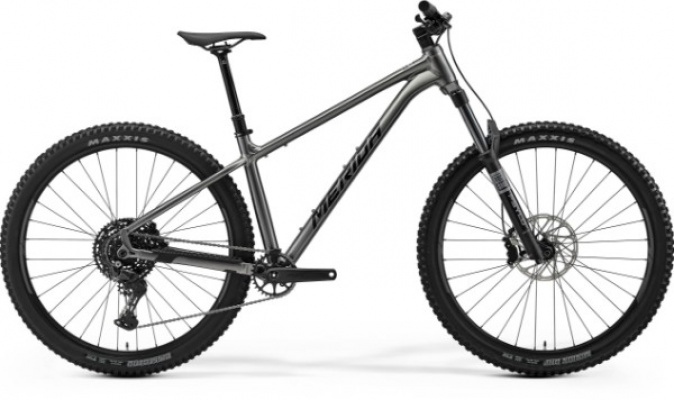
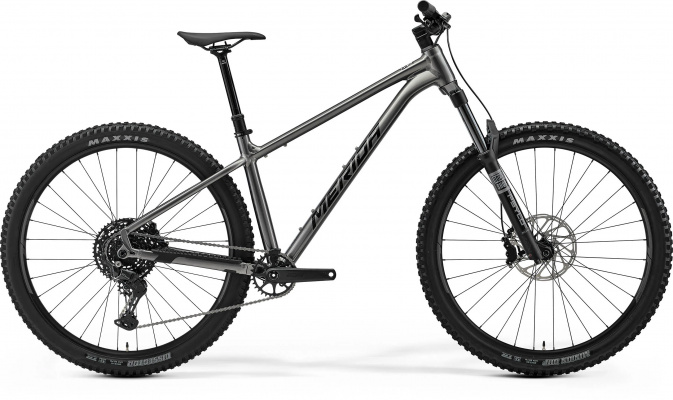
Merida BIG.TRAIL 500
Slack hardtail geometry meets proper trail kit for confident descending and all-day riding without the full-suspension price tag.
- Progressive 64° head angle: calm on steep descents
- 140mm RockShox Psylo fork smooths rough trails
- Dropper post included: instant saddle drop for descents
- Maxxis Minion DHF 2.5" front: grip when it counts
- SRAM DB4 4-piston front brake: confident stopping power
- Clearance for 2.5" front, 2.4" rear tyres
Merida BIG.TRAIL 500 Deals

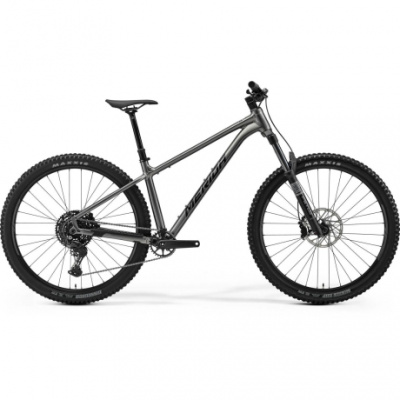
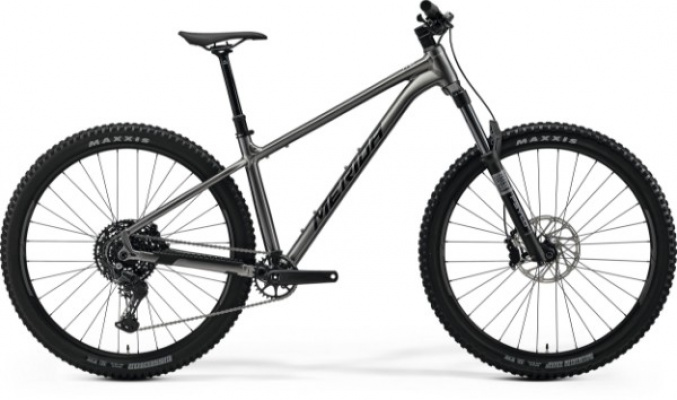
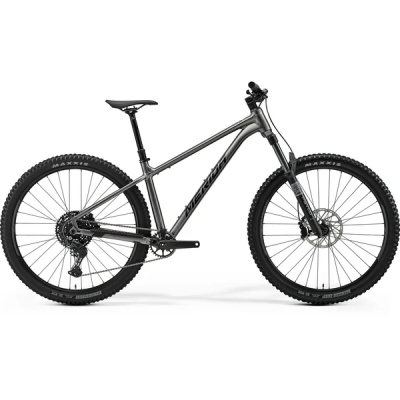
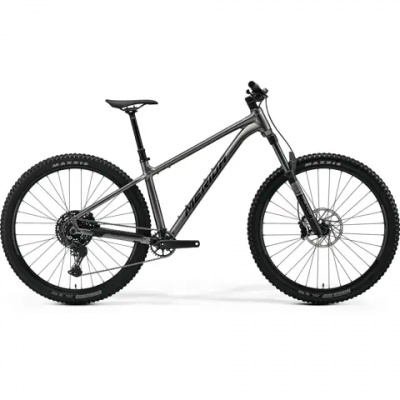
Prices and availability can change quickly. Delivery charges are not always included in listed prices.
Final price, stock status and delivery terms are set by retailer. We may receive a commission on purchases made.
Bikesy's Verdict
The BIG.TRAIL 500 delivers hardtail thrills with full-suspension attitude. That 64° head angle and long front centre plant you firmly over technical terrain, while the steep seat tube keeps your weight forward when the gradient kicks up. You're getting a dropper post, four-piston front brake, and a Minion DHF up front - kit that matters when the trail gets rowdy.
It's not trying to be an XC whippet. This is a bike for riders who want to session descents, explore rough trails, and ride with mates who've spent twice as much on dual-suspension rigs. The aluminium frame shrugs off impacts, the 140mm fork has enough travel to flatten out the chatter, and the whole package weighs in light enough that you won't curse it on the climbs. If your idea of fun involves rocks, roots, and the occasional moment of airtime, the BIG.TRAIL 500 is ready.
Pros
- Progressive 64° head angle delivers calm, confident descending on technical trails
- Dropper post included across all sizes - essential kit for varied terrain
- SRAM DB4 four-piston front brake offers strong, reliable stopping power
- Maxxis Minion DHF 2.5" front tyre: proven grip and predictable cornering
- Generous tyre clearance (2.5" front, 2.4" rear) for mud and rough conditions
- Steep 76.5° seat angle keeps climbing efficient and centred
Cons
- Low bottom bracket invites pedal strikes when picking through rock gardens
- Heavier than XC-focused hardtails if you're chasing race times or long fire-road climbs
- Rear Dissector tyre can lack ultimate grip in wet, loose conditions - worth swapping for muddier months
About the Merida BIG.TRAIL 500
Merida's BIG.TRAIL 500 sits in that sweet spot where hardtail simplicity meets trail-bike ambition. The frame's progressive geometry - slack head angle, long reach, steep seat tube - borrows from the enduro playbook, but you're spared the weight, complexity, and maintenance schedule of a rear shock. What you get instead is a bike that descends with poise, climbs without drama, and rewards commitment on technical ground.
The 2026 model continues the philosophy established in recent years: pair a capable aluminium frame with components that punch above their price point. SRAM's four-piston DB4 brake up front, a RockShox Psylo fork with 140mm travel, and Maxxis rubber front and rear signal intent. This isn't a bike for fire-road fitness loops; it's built for riders who want to explore the gnarly end of the trail map without needing a second mortgage.
Merida's Agilometer sizing principle lets you tune the ride character by choosing frame length. Go longer for stability and confidence at speed; size down if you prefer a more flickable, playful feel. Either way, you're piloting a hardtail that's happier pointing downhill than most bikes costing twice as much.
Merida BIG.TRAIL 500 geometry
That 64-degree head angle is the headline act. It's slack enough to keep the front wheel tracking calmly over root lattices and rock gardens, resisting the twitchy nervousness that plagues steeper hardtails when the trail tilts down. Pair it with a long front centre and you've got a bike that feels planted, not skittish, when you commit to a line.
The steep seat tube angle - 76.5 degrees - puts your hips over the bottom bracket when you're seated, so climbing doesn't feel like you're pushing a wheelbarrow uphill. You'll stay centred and efficient even when the gradient ramps. Combined with the dropper post, you can snap between climbing posture and descending stance without stopping to fiddle with a quick-release.
Reach is generous across the size range, encouraging a forward, aggressive riding position that suits technical terrain. The low bottom bracket drops your centre of gravity, adding stability, though it does mean you'll need to pick your pedal strokes carefully through rock gardens - catch a crank on a boulder and you'll know about it. The long wheelbase and ample front centre smooth out the bike's behaviour at speed, turning what could be a nervous hardtail into something that feels composed and predictable when you're pushing hard.
Component choices & upgrades
The stock build is well sorted. SRAM's DB4 four-piston brake up front delivers confident stopping power - more bite than the two-piston units you'll find on cheaper trail hardtails. The rear gets a two-piston calliper, which is fine for modulation and rear-wheel control. Shimano's CUES U6000 ten-speed drivetrain offers a sensible 11-48T range; it's not the widest cassette out there, but it's enough for most UK trails and keeps shifts crisp.
The RockShox Psylo Silver fork brings 140mm of travel and a 35mm chassis for stiffness. It's not a high-end damper, but it's tuneable via air pressure and rebound, and it'll handle the majority of trail abuse without complaint. Maxxis rubber is a highlight: the Minion DHF 2.5-inch front tyre is a proven trail weapon, offering predictable grip in corners and confidence over loose ground. The Dissector rear is faster-rolling but slightly less aggressive; if you're riding wet, muddy trails regularly, you might swap it for a grippier option.
Wheels are tubeless-ready with a 29mm internal width - wide enough to support trail tyres without adding unnecessary weight. If you're chasing upgrades, start with contact points: a wider bar (the stock 780mm is decent, but some riders prefer 800mm for more leverage) or a shorter stem can fine-tune handling. Dropper travel varies by frame size, so if you're between sizes and want maximum drop, that's worth considering. Beyond that, the bike's already equipped to handle serious trail riding; save your money for tyres, grips, and pedals that suit your style.
Where the Merida BIG.TRAIL 500 excels
This bike is outstanding on technical descents. The slack head angle, long wheelbase, and 140mm fork combine to create a hardtail that feels calm and composed when the trail gets rough. You can point it down steep, rocky chutes and trust the front end to track cleanly, without the nervous chatter that makes lesser hardtails feel like hard work. It's also excellent for all-day trail rides where you're mixing climbs, descents, and varied terrain - the geometry keeps you comfortable and efficient on the ups, then rewards you with confidence and control on the downs.
It handles UK trail centres brilliantly: rooty singletrack, rock gardens, off-camber corners, and the occasional drop or jump. The bike's robust build and ample tyre clearance mean you can run wider, grippier rubber for winter conditions, or dial it back for drier months. It's also a solid choice for riders who want to dip into bike park laps without committing to a full enduro rig - the progressive geometry and decent fork travel give you enough capability to session jump lines and steep berms.
Where it's less ideal: pure XC racing. The slack geometry and trail-focused build prioritise descending over outright climbing speed, so if you're chasing podiums on smooth, fast courses, you'll want something steeper and lighter. It's also not a bike for mellow gravel rides or commuting - the knobby tyres and suspension fork add rolling resistance, and the aggressive geometry feels overkill on tame terrain. If your riding is mostly fire roads and gentle byways, there are better tools for the job.
Merida BIG.TRAIL 500 FAQs
What is the head angle of the Merida BIG.TRAIL 500?
The head angle sits at 64 degrees, which is slack by hardtail standards and firmly in trail-bike territory. It's designed to keep the front wheel calm and predictable on steep, technical descents, giving you confidence when the gradient tilts down and the rocks pile up.
Is the Merida BIG.TRAIL 500 a good bike for beginners?
It depends on the beginner. If you're new to mountain biking but keen to tackle proper trails - roots, rocks, descents - the progressive geometry and capable components will inspire confidence and help you progress quickly. If you're after something for gentle rides and learning the basics, a less aggressive hardtail might feel more approachable. The BIG.TRAIL 500 rewards commitment.
What is the maximum tyre clearance on the Merida BIG.TRAIL 500?
You can fit up to 2.5 inches up front and 2.4 inches at the rear. That's generous for a hardtail and gives you room to run proper trail rubber - wide, grippy tyres that'll handle mud, loose rock, and everything in between without rubbing the frame or fork.
Does the Merida BIG.TRAIL 500 come with a dropper post?
Yes. The bike ships with a Merida Expert TR II dropper post, and travel varies by frame size: 150mm on the smallest, up to 230mm on the largest. It's a key feature for technical riding, letting you drop the saddle out of the way on descents and snap it back up for climbs without stopping.
What is the intended use of the Merida BIG.TRAIL 500?
Trail riding with an emphasis on descending. It's built for technical singletrack, rocky descents, UK trail centres, and the occasional bike park session. The geometry and components are tuned for riders who want hardtail simplicity but full-suspension capability on the downs, without sacrificing climbing efficiency.
How much does the Merida BIG.TRAIL 500 weigh?
Around 13.9 to 14.5 kilograms, depending on size and spec year. That's competitive for a trail hardtail with this level of kit - light enough to pedal uphill without suffering, heavy enough to feel planted and stable when you're charging downhill.
What are the main differences between Merida BIG.TRAIL and BIG.NINE?
The BIG.NINE is Merida's XC-focused hardtail: steeper head angle, shorter fork travel, lighter build, and geometry tuned for climbing speed and efficiency. The BIG.TRAIL is slacker, longer, and more capable on descents, with more suspension travel and a build that prioritises confidence on technical terrain over outright speed.
What are some common upgrades for the Merida BIG.TRAIL 500?
Tyres are the first port of call - swap the rear Dissector for something grippier if you ride wet, muddy trails. A wider handlebar (800mm) or shorter stem can sharpen handling. Pedals are a personal choice and not included, so budget for a decent set. Beyond that, the stock build is solid; focus on consumables like grips, brake pads, and drivetrain components as they wear.
Key Features & Benefits
- Progressive trail geometry (64° head angle, long reach): Keeps the front wheel calm and planted on steep, technical descents, inspiring confidence when the trail gets rowdy
- RockShox Psylo Silver 140mm fork with 35mm chassis: Smooths out rough trails and rock gardens while maintaining stiffness for precise steering
- SRAM DB4 four-piston front brake: Delivers confident, controlled stopping power on long descents and technical terrain
- Maxxis Minion DHF 2.5" front tyre: Proven trail grip and predictable cornering, even on loose or off-camber ground
- Included dropper seatpost (travel varies by size): Instant saddle-height adjustment lets you switch between climbing and descending posture without stopping
Merida BIG.TRAIL 500 2025 & 2024 differences
The 2025 model introduced Shimano MT410 hydraulic brakes with a four-piston front calliper and two-piston rear, replacing the Tektro M275 two-piston units found on earlier versions. The drivetrain shifted to Shimano CUES U6000 ten-speed, down from the eleven-speed Shimano Deore M5100 groupset used in 2024. Fork choice also changed: the 2025 bike featured the RockShox Psylo Silver RC, while 2024 models often came with the RockShox Recon Silver RL, both offering 140mm travel.
Geometry evolved slightly between years. The 2024 model ran a 65.5-degree head angle, while the 2025 and 2026 versions slackened to 64 degrees, pushing the bike further into progressive trail-hardtail territory. Brake rotors grew from 180mm front and rear in 2024 to 200mm front and 180mm rear in 2025, improving stopping power and heat management on long descents.
The 2026 model continues the 2025 geometry and fork choice but swaps the Shimano MT410 brakes for SRAM DB4 units - still four-piston up front, two-piston at the rear. Hubs changed from Shimano MT400-B in earlier years to Shimano TC500 models in 2025 and 2026. Across all recent years, the frame remains Merida's TFS II double-butted aluminium with internal cable routing, Boost spacing, and generous tyre clearance, maintaining the core trail-hardtail philosophy while refining components and geometry to sharpen descending capability.
Alternatives to Consider
Within Merida's own range, the BIG.NINE 600 offers a more XC-focused hardtail with a steeper head angle, shorter fork travel, and lighter build - better for climbing speed and smoother trails, less capable when the descents get technical. If you want to step up within the BIG.TRAIL family, the BIG.TRAIL 700 brings a higher-spec fork, better brakes, and a wider-range drivetrain, though the frame and geometry philosophy remain similar.
Cross-brand, the Nukeproof Scout 290 Comp shares the BIG.TRAIL's progressive geometry and trail-hardtail ethos, with a similar slack head angle and robust build. The Vitus Sentier 29 VR is another close rival, offering comparable geometry and component choices at a competitive price. The Commencal Meta HT AM Essential leans even more aggressive, with slacker angles and a burlier build for riders who prioritise descending over climbing efficiency. For a slightly different flavour, the Marin San Quentin 2 delivers playful, jump-friendly geometry with a shorter wheelbase, while the Ragley Big Al offers steel-frame character and a similarly slack, confidence-inspiring front end. Each of these bikes targets the same rider: someone who wants hardtail simplicity with trail-bike capability, but the differences lie in geometry nuance, component spec, and frame material.
Reviews
Progressive geometry and capable components combine to deliver a hardtail that punches well above its price point. The 64-degree head angle and long front centre create a bike that feels composed and predictable on steep, technical descents - terrain that would leave steeper hardtails feeling nervous and hard to control. When the trail tilts down and the rocks pile up, the BIG.TRAIL 500 tracks calmly, letting you focus on line choice rather than wrestling the front end.
Climbing is efficient thanks to the steep seat tube angle, which keeps your weight centred over the bottom bracket. You're not fighting the geometry on long fire-road slogs, and the 140mm fork doesn't bob or wallow under pedalling loads. The Shimano CUES ten-speed drivetrain offers a sensible range - not the widest cassette available, but enough for most UK trails without feeling like you're spinning out or grinding to a halt.
That four-piston SRAM DB4 front brake delivers confident stopping power, a noticeable step up from the two-piston units found on cheaper trail hardtails. Modulation is good, and you've got plenty of bite when you need it. The Maxxis Minion DHF front tyre is a highlight: predictable grip in corners, confidence over loose ground, and enough tread to handle wet roots without washing out. The rear Dissector is faster-rolling but slightly less aggressive; in muddy conditions, you might want something grippier back there.
Because the bottom bracket sits low, pedal strikes are a real possibility when you're picking through rock gardens or tight, technical sections. You'll learn to time your pedal strokes, but it's a trade-off for the stability that low centre of gravity brings. The dropper post is a key feature, with travel that varies by frame size - enough drop to get the saddle out of the way on descents, then snap it back up for climbs without stopping. Occasionally it might need a manual nudge to fully extend, but it's a minor niggle in an otherwise solid package.
On rough trails, the bike feels robust and planted. The aluminium frame shrugs off impacts, the 35mm fork chassis resists flex, and the wide tyres smooth out the chatter. It's a bike that rewards commitment: point it down something steep and technical, and it'll track cleanly and inspire confidence. If your riding mixes long climbs with rowdy descents, or you're exploring UK trail centres and want a hardtail that can handle the rough stuff, the BIG.TRAIL 500 delivers.
Full Specification
| Specification | Detail |
|---|---|
| Frame Material | Double butted aluminium (TFS II) |
| Frame Design | Progressive trail geometry with slack head angle (64°) and long reach |
| Bottom Bracket | BSA, 73mm, threaded |
| Rear Axle Spacing | 148x12mm Boost |
| Fork Model | RockShox Psylo Silver RC, 140mm travel, air sprung, 35mm chassis |
| Drivetrain | Shimano CUES U6000, 1x10 speed |
| Cassette | Shimano LG300, 11 - 48T, 10-speed |
| Crankset | Merida Expert TR II, 165mm arm length |
| Chain | KMC xGlide |
| Brakes | SRAM DB4 hydraulic disc, 4-piston front / 2-piston rear |
| Brake Rotors | Shimano RT30, 200mm front / 180mm rear |
| Rims | Merida Comp TR, 29mm internal width, tubeless ready |
| Hubs | Shimano TC500-B (front) / Shimano TC500-HM-B (rear) |
| Spokes | Black stainless steel |
| Front Tyre | Maxxis Minion DHF, 2.5 inch |
| Rear Tyre | Maxxis Dissector, 2.4 inch |
| Handlebar | Merida Comp TR II, 780mm width |
| Stem | Merida Expert eTRII, 40mm length, 0° angle |
| Grips | Merida Comp EC lock-on |
| Headset | Acros ICR Merida external neck |
| Dropper Seatpost | Merida Expert TR II (travel varies by size: 150 - 230mm) |
| Saddle | Merida Comp SL, 25% recycled material, V-mount |
| Approximate Weight | 13.9 kg |
| Tyre Clearance | Up to 2.5 inch (front) / 2.4 inch (rear) |
| Frame Features | Internal cable routing, Boost hub spacing, ISCG05 chain guide mount, UDH, mudguard and rack mounts, trail mount under top tube |