
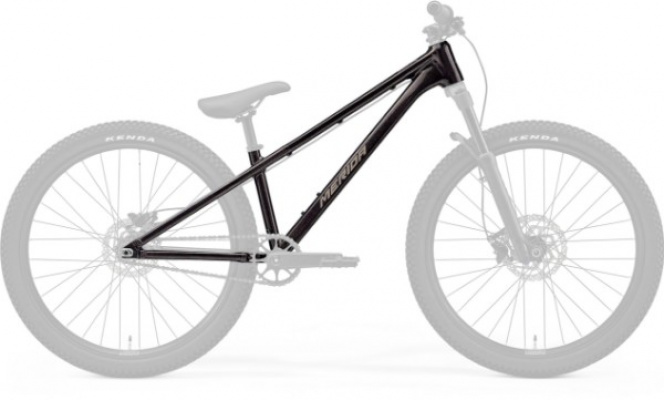
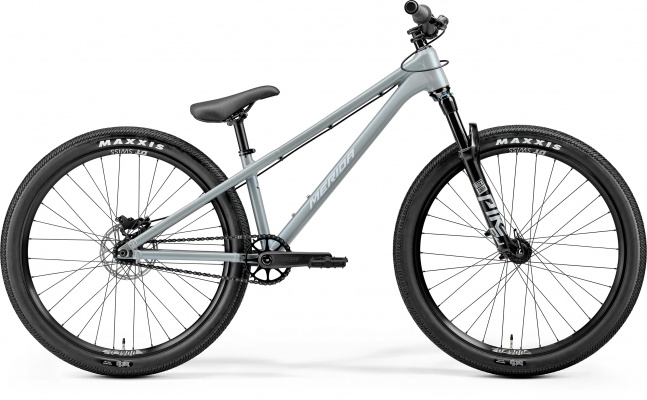
Merida DIRT 700
Send bigger jumps and dial in tricks with a bombproof hardtail that rewards progression and shrugs off punishment.
- RockShox Pike DJ fork: benchmark 100mm travel for big landings
- Singlespeed simplicity: bombproof reliability, zero derailleur faff
- DT Swiss D1900 wheels: built to take a beating
- Gyro-compatible for barspins and tailwhips
- 26" wheels: flickable, precise, perfect for tricks
- 4-piston rear brake: serious stopping power when you need it
Merida DIRT 700 Deals

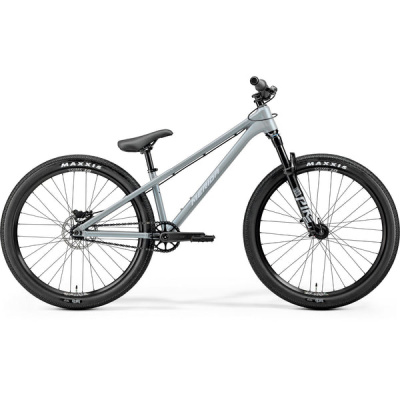
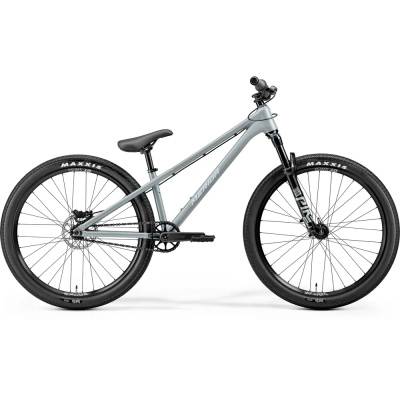
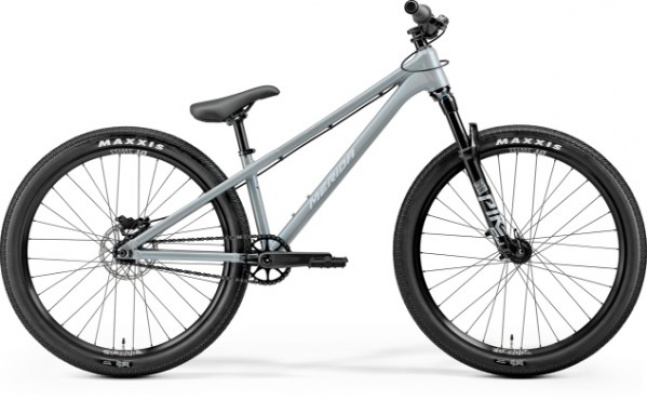
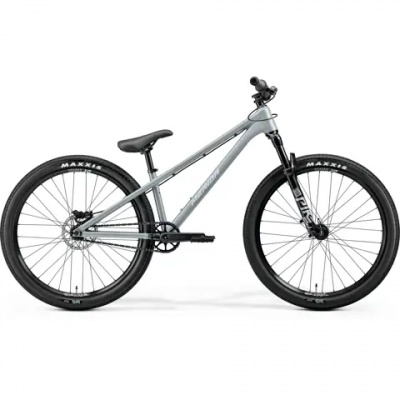
Prices and availability can change quickly. Delivery charges are not always included in listed prices.
Final price, stock status and delivery terms are set by retailer. We may receive a commission on purchases made.
Bikesy's Verdict
The Merida DIRT 700 is a serious dirt jump hardtail that doesn't compromise. RockShox Pike DJ suspension, DT Swiss wheels, and a bombproof singlespeed drivetrain give you the tools to progress quickly and ride hard without second-guessing whether the bike will hold together. It's built for riders who've moved beyond entry-level bikes and want something that'll support bigger jumps, harder landings, and more ambitious tricks.
Gyro compatibility and practical touches like bottle bosses make it versatile enough for street and park riding, but the geometry and component choices are laser-focused on dirt jumps and pump tracks. If that's where you spend your time, the DIRT 700 delivers the precision, durability, and performance to match your ambition. It's a bike that grows with you, from your first clean doubles to the day you're spinning bars and styling tabletops.
Pros
- RockShox Pike DJ fork and DT Swiss wheels are proven at the highest level
- Singlespeed drivetrain is bombproof and maintenance-free
- Gyro-compatible frame for cable-free barspins and tailwhips
- Short chainstays and tight geometry reward precise, playful riding
- Category 5 warranty acknowledges aggressive use
Cons
- Mechanical front brake is less powerful than hydraulic if you plan to keep it
- Singlespeed limits versatility if you want to ride longer trails with climbs
- Only two frame sizes may not suit riders at the extremes of the height range
About the Merida DIRT 700
The Merida DIRT 700 is a hardtail built for one thing: getting airborne and staying in one piece when you land. Whether you're threading pump-track berms at speed, styling out tabletops, or learning your first tailwhip, this bike's 6061 aluminium frame and RockShox Pike DJ fork deliver the toughness and precision serious dirt riders demand. It's not trying to be a trail bike or a commuter - though it'll handle both if you ask nicely - it's a purpose-built tool for progression, designed to absorb punishment and reward commitment.
Merida's DIRT TFS frame pairs modern geometry with old-school simplicity: a singlespeed drivetrain, gyro mounts for cable-free spins, and a Category 5 warranty that acknowledges you're going to push it hard. The Pike DJ fork is the gold standard in this discipline, offering 100 millimetres of controlled travel that soaks up flat landings without wallowing or packing down. DT Swiss D1900 wheels bring the strength to match, and the dual-brake setup - four-piston hydraulic at the rear, mechanical two-piston up front - gives you options: run both for learning, ditch the front when you're ready to commit to pure style.
At eleven kilograms for a medium frame, the DIRT 700 sits in that sweet spot where it's light enough to flick into manuals and whips but hefty enough to inspire confidence when you're sending it off a lip. It's a bike that grows with you, from your first pump-track session to the day you're spinning bars over doubles.
Merida DIRT 700 geometry
The DIRT 700's geometry is tuned for control in the air and precision on transition. A 68.5-degree head angle keeps the front end stable during take-offs and landings without feeling sluggish when you're pumping through rollers or setting up for the next feature. The 76.2-degree seat angle puts you forward enough to weight the front wheel when you need grip, though in practice you'll spend more time out of the saddle than on it.
Reach grows from 415 millimetres in medium to 440 in large, giving you room to move your weight fore and aft without feeling cramped or overextended. Stack stays consistent at 564 millimetres across both sizes, so bar height remains predictable - you're choosing length, not cockpit feel. Short 385-millimetre chainstays are non-negotiable for a bike like this: they let you snap the rear wheel up for manuals, tuck tight into spins, and generally throw the bike around like it weighs nothing.
The 25-millimetre bottom-bracket drop keeps your centre of gravity low without dragging pedals on pump-track transitions, and the 1054-millimetre wheelbase (medium) or 1079 (large) strikes a balance between nimble and planted. When you're in the air, the bike feels compact and responsive; when you land, it tracks straight and absorbs the hit without kicking you forward. It's geometry that rewards smooth technique but forgives the occasional scrub or case.
Component choices & upgrades
The stock build on the DIRT 700 is already well sorted for serious riding. RockShox's Pike DJ fork is the benchmark in this category - reliable, tuneable, and proven on everything from World Cup slopestyle runs to your local dirt jumps. The DT Swiss D1900 wheelset is similarly robust, with a 30-millimetre internal width that supports the Maxxis DTH tyres without adding unnecessary weight. The singlespeed drivetrain - 32-tooth chainring, 13-tooth cog, KMC Z1 chain - is as simple as it gets, and that's the point: fewer parts to break, less time wrenching, more time riding.
The rear SRAM DB4 four-piston brake delivers plenty of stopping power, and the mechanical Tektro front brake does its job if you're learning or riding trails. Many riders will eventually remove the front brake entirely once they're confident in the air - it's one less cable to snag, one less lever to grab by mistake - but there's no rush. If you do upgrade, consider a hydraulic front brake for better modulation, or invest in a gyro system to enable cable-free barspins and tailwhips without compromising braking.
Beyond that, upgrades should follow your riding. Lighter pedals - whether flats or clips - can shave a few hundred grams and improve feel. A shorter stem or wider bars might suit your style if you prefer a more upright position or extra leverage for whips. Tyres are the easiest tweak: drop pressure for more grip on hardpack, or swap to a stickier compound if you're riding skateparks and concrete transitions. The frame's bottle-boss mounts are a practical touch if you're sessioning all day, and the gyro compatibility means you can add that feature when your trick repertoire demands it.
Where the Merida DIRT 700 excels
The DIRT 700 is outstanding on dirt jumps and pump tracks. It's built for riders who want to progress their aerial skills, dial in tricks, and ride hard without worrying whether the bike will hold together. The Pike DJ fork and DT Swiss wheels are proven at the highest level, and the singlespeed drivetrain means you can focus on line choice and timing rather than gear selection. If your weekends revolve around sessions at the local jumps or laps of the pump track, this bike will keep up with your ambition.
It's also very capable in skateparks and urban environments. The robust frame, gyro mounts, and short rear end make it a natural for street riding, wall rides, and creative lines through the city. The 26-inch wheels are more manoeuvrable than 27.5 or 29ers, and the low standover height makes it easy to hop on and off. You'll appreciate the bottle bosses if you're riding to spots or spending hours at the park.
Where it's less ideal: long trail rides and technical singletrack. The singlespeed drivetrain and 100-millimetre fork travel are fine for mellow trails and flow tracks, but you'll miss gears on sustained climbs and feel underbiked on rough descents. The geometry is optimised for jumps and transitions, not rock gardens or root-choked descents. If you want a bike that does both dirt jumping and proper trail riding, you're looking at a compromise neither discipline will love. The DIRT 700 knows what it is, and it's brilliant at it.
Merida DIRT 700 FAQs
What is the best bike for dirt jumping?
The best dirt jump bike depends on your skill level and budget, but the Merida DIRT 700 sits at the serious end of the spectrum with its RockShox Pike DJ fork, DT Swiss wheels, and proven frame geometry. It's built for progression and durability, making it a strong choice for riders who've moved beyond entry-level bikes and want something that'll handle bigger jumps and harder landings. If you're just starting out, Merida's DIRT 500 offers a more accessible entry point with similar DNA.
How much travel should a dirt jump bike have?
Most dirt jump bikes run 80 to 100 millimetres of fork travel, and the DIRT 700's 100-millimetre Pike DJ sits at the upper end of that range. More travel helps absorb bigger landings and rough transitions, but it can feel less direct and precise on smaller jumps or pump tracks. The Pike's damping and spring curve are tuned specifically for the sharp, repetitive impacts of dirt jumping, so it's not just about the number - it's how the fork uses that travel.
Can you use a regular mountain bike for dirt jumping?
You can, but it's not ideal. Trail and enduro bikes have longer wheelbases, slacker geometry, and suspension designed for descending, not the tight, snappy movements dirt jumping demands. You'll also risk damaging components - derailleurs, rear shocks, and wheels - that aren't built for repeated hard landings. A dedicated dirt jump hardtail like the DIRT 700 is simpler, tougher, and far more rewarding to ride when you're learning tricks or pushing your limits.
What is the difference between a dirt jump bike and a slopestyle bike?
The line is blurry, but slopestyle bikes often have slightly longer travel (100 to 120 millimetres), more relaxed geometry, and are built to handle bigger features and more technical tricks on competition-style courses. Dirt jump bikes like the DIRT 700 are typically lighter, more compact, and optimised for tighter transitions and quicker movements. In practice, many riders use the same bike for both disciplines - the DIRT 700's gyro compatibility and robust build make it versatile enough for slopestyle if you're inclined.
What tyre pressure is best for dirt jump tyres?
Start around 40 to 50 psi and adjust based on your weight, riding style, and surface. Lower pressure gives more grip and cushioning on hardpack or sketchy landings, but too soft and you risk pinch flats or a vague feel in the air. Higher pressure makes the bike feel snappier and more responsive but can reduce traction. The Maxxis DTH tyres on the DIRT 700 are forgiving across a wide range, so experiment until you find what feels right.
How do I maintain a singlespeed bike?
Singlespeed maintenance is refreshingly simple: keep the chain clean and lubricated, check the rear cog and chainring for wear, and ensure the chain tension is correct - too loose and it'll drop, too tight and it'll bind. The DIRT 700's bolt-on rear axle makes wheel removal straightforward, and without a derailleur to adjust or cables to stretch, there's very little to go wrong. Check brake pads and rotor condition regularly, especially if you're riding hard, and keep an eye on spoke tension after big sessions.
Is the Merida DIRT 700 good for beginners?
It depends on your definition of beginner. If you're new to dirt jumping but committed to learning and progressing quickly, the DIRT 700 is a bike you won't outgrow. Its high-quality components and robust frame will support you as your skills develop. However, if you're unsure whether dirt jumping is for you, or if budget is a concern, starting with Merida's DIRT 500 or a similar entry-level model makes more sense - you can always upgrade later once you know what you want from the bike.
What size Merida DIRT 700 should I get?
Medium suits riders roughly 165 to 178 centimetres tall, while large fits those between 175 and 188 centimetres, though personal preference and riding style matter more than strict height ranges. If you're between sizes, consider how you ride: medium will feel more compact and flickable, better for tight tricks and quick movements, while large offers more stability in the air and room to move around. If possible, stand over both sizes and see which feels more natural - you want enough standover clearance and a reach that lets you weight the front wheel without stretching.
Key Features & Benefits
- RockShox Pike DJ fork with 100mm travel: Absorbs hard landings and rough transitions without packing down, giving you confidence to send bigger jumps and progress faster.
- Singlespeed drivetrain with 32t chainring and 13t cog: Eliminates derailleur damage and cable faff, so you spend more time riding and less time wrenching or worrying about breakages.
- DT Swiss D1900 wheelset with 30mm internal width: Built to withstand repeated hard impacts and high-speed pump-track sessions without going out of true or losing tension.
- Gyro-compatible frame with extra-long brake lines: Lets you add a gyro system for cable-free barspins and tailwhips when your trick repertoire demands it, without compromising braking power.
- Short 385mm chainstays and 26-inch wheels: Makes the bike feel compact and responsive in the air, easy to manual, and quick to flick into whips or spins.
Merida DIRT 700 2025 and earlier differences
The 2026 DIRT 700 continues Merida's established platform with no significant changes reported from the 2025 model year. The core specification - RockShox Pike DJ fork, DT Swiss D1900 wheels, singlespeed drivetrain, and DIRT TFS aluminium frame - remains consistent, reflecting a stable and well-received design. Earlier iterations of the DIRT series have maintained similar geometry and component philosophy, with incremental updates to brake models and finishing kit rather than wholesale redesigns. If you're considering a previous model year, expect the same robust performance and proven spec, though availability and condition will vary depending on the source.
Alternatives to Consider
Within Merida's DIRT range, the DIRT 500 offers a more accessible entry point with a Manitou Circus DJ fork, Shimano brakes, and a similar frame philosophy at a lower price. It's a solid choice if you're new to dirt jumping or want to test the waters before committing to a higher-spec build. Step up from the DIRT 700 and you're into custom territory or boutique brands, though Merida's top model already delivers components that'll satisfy most riders.
Cross-brand, the Specialized P.3 is a direct peer with a chromoly frame, RockShox fork, and a reputation for durability and style. The Commencal Absolut brings French flair and a choice of aluminium or steel frames, often spec'd with similar Pike DJ forks and robust wheels. The NS Bikes Metropolis 3 leans into street and park riding with a slightly more relaxed geometry and versatile build, while the YT Industries Dirt Love offers aggressive styling and a component package that rivals the DIRT 700's spec. The Dartmoor Two6Player Pro is another strong contender, favoured by riders who want a bike that handles both dirt jumps and slopestyle courses with equal confidence. Each brings subtle differences in geometry, component choices, and frame material, but the DIRT 700's combination of proven Pike DJ suspension, DT Swiss wheels, and gyro compatibility keeps it competitive at this level.
Reviews
Robust aluminium construction and a legendary fork define the ride. RockShox's Pike DJ handles drops and flat landings with composed damping, never harsh but always controlled when you're pushing the lip harder. Short rear end and tight wheelbase make manuals feel effortless, whips snap around with minimal effort. When you're threading pump-track berms or setting up for the next double, the bike tracks predictably and rewards smooth inputs.
Singlespeed simplicity proves its worth after a few sessions. No derailleur to taco, no cables to snag mid-spin, just chain tension and a direct connection between pedal stroke and rear wheel. The DT Swiss wheels stay true through repeated impacts, and the four-piston rear brake offers serious stopping power without fade. Front brake works fine for learning, though many will remove it once confidence builds - one less thing to think about in the air.
Gyro mounts and bottle bosses add versatility without compromising the frame's core mission. You can run it as a pure dirt jumper or adapt it for street and park riding when the mood strikes. Weight sits around eleven kilograms, light enough to feel playful but substantial enough to inspire commitment on bigger features. Geometry strikes that balance between flickable and stable, so you're never fighting the bike whether you're pumping transitions or floating over a tabletop.
Full Specification
| Spec | Value |
|---|---|
| Frame Material | 6061 Aluminium (DIRT TFS) |
| Frame Design | Hardtail, dirt jump |
| Frame Features | Gyro compatible, bottle bosses, extra-long rear brake lines |
| Tyre Clearance | 26 x 2.5" |
| Bottom Bracket | Samox BSA 24mm |
| Rear Axle | 135x10mm bolt-on |
| Front Axle | 110x15mm |
| Fork | RockShox Pike DJ |
| Fork Travel | 100mm |
| Fork Offset | 40mm |
| Drivetrain | Singlespeed |
| Crankset | Merida Expert TR II, 160mm cranks |
| Chainring | 32t |
| Cog | 13t singlespeed |
| Chain | KMC Z1 wide |
| Brakes | Hydraulic disc rear, mechanical disc front |
| Brake Levers / Calipers (Front) | Tektro MD-M280 (2-piston mechanical) |
| Brake Levers / Calipers (Rear) | SRAM DB4 (4-piston hydraulic) |
| Rotors (Front) | 160mm |
| Rotors (Rear) | 160mm |
| Rims | DT Swiss D1900, 30mm internal width |
| Hubs (Front) | DT Swiss D1900, 110x15mm |
| Hubs (Rear) | DT Swiss D1900, 135x10mm bolt-on |
| Tyres (Front) | Maxxis DTH, 26x2.3" |
| Tyres (Rear) | Maxxis DTH, 26x2.3" |
| Handlebar | Merida Comp TR, aluminium, 780mm width, 20mm rise |
| Stem | Merida Expert TR II, aluminium, 35mm diameter, 40mm length, 0° rise |
| Grips | Merida Comp DR |
| Headset | FSA NO.57 |
| Seatpost | Merida Comp DR, aluminium, 27.2mm diameter, 250mm length |
| Saddle | Merida Comp DR |
| Available Sizes | M, L |
| Weight (Approx) | 11 kg (size M) |