
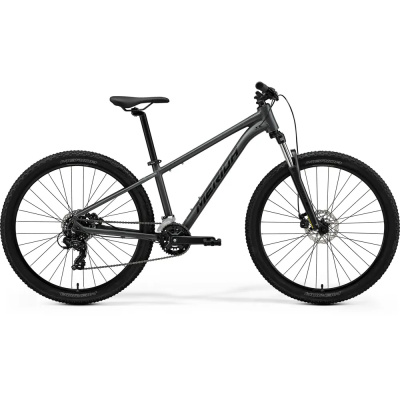
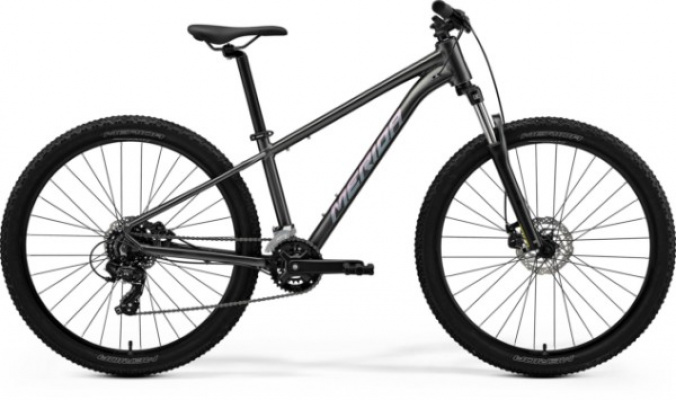
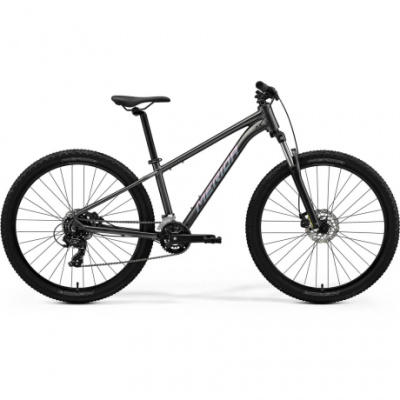
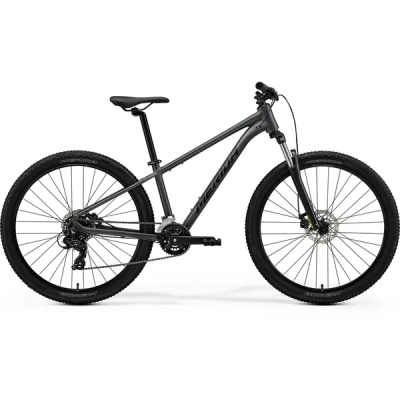
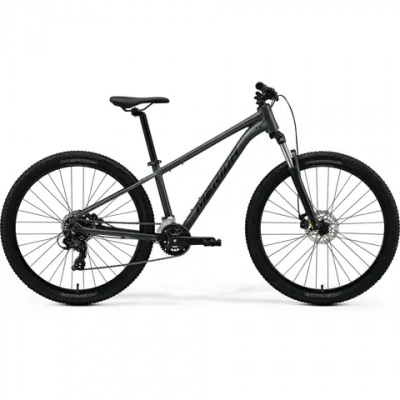
Merida BIG.SEVEN 15
Modern trail geometry and 27.5-inch agility meet practical versatility in an entry-level hardtail that grows with your skills.
- 27.5" wheels: nimble handling, suits shorter riders
- Updated TFS frame: longer reach, slacker head angle
- Mudguard, rack and kickstand mounts for versatility
- 100mm SR Suntour fork smooths trail chatter
- Shimano hydraulic disc brakes: reliable stopping power
- Tapered headtube: future upgrade potential
Merida BIG.SEVEN 15 Deals
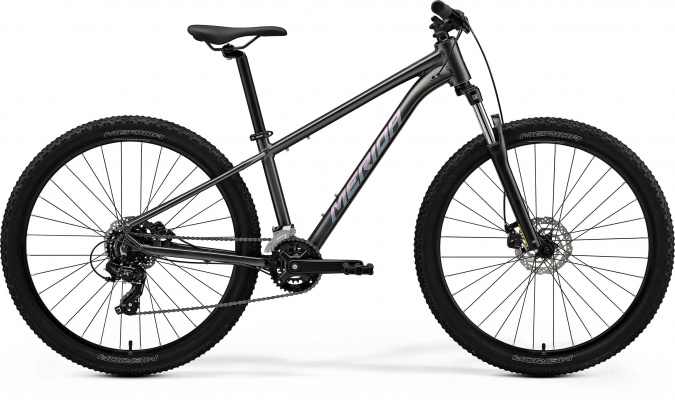

Prices and availability can change quickly. Delivery charges are not always included in listed prices.
Final price, stock status and delivery terms are set by retailer. We may receive a commission on purchases made.
Bikesy's Verdict
The Merida BIG.SEVEN 15 delivers modern trail geometry and genuine versatility at a price that won't make you wince. It's not trying to be a race bike or a mini-enduro rig; instead it offers a practical, confidence-inspiring platform for riders stepping into proper off-road riding or those who want a single machine that handles trail centres, commutes, and weekend adventures without compromise.
The 27.5-inch wheels bring agility and suit shorter riders brilliantly, while the updated frame geometry - longer reach, slacker head angle, steeper seat tube - means you're planted on climbs and composed on descents. The component spec is honest about its entry-level status, but it's functional and reliable, and the frame leaves room to grow with dropper and fork upgrades when your skills demand more.
If you're after a hardtail that gets you riding now and adapts as your ambitions grow, this is where you start. It's a bike that earns its keep year-round, and that's worth more than a spec sheet full of flashy names.
Pros
- Modern trail geometry brings confidence and control at an accessible price
- 27.5-inch wheels suit shorter riders and tighter trails brilliantly
- Mudguard, rack and kickstand mounts make it genuinely versatile
- Shimano hydraulic brakes offer reliable, predictable stopping power
- Tapered headtube and dropper-ready seatpost leave room to grow
Cons
- Entry-level fork and drivetrain will feel their limits if you ride aggressively every weekend
- Quick-release rear axle can flex under hard efforts compared to through-axle designs
- Stock tyres lack bite in wet or loose conditions; a tread upgrade pays quick dividends
About the Merida BIG.SEVEN 15
Merida's BIG.SEVEN 15 sits squarely in that sweet spot where modern trail geometry meets accessible pricing. The 2026 frame brings a longer reach, a slacker head angle and a steeper seat tube than older iterations, so you're not stuck with the twitchy, cramped posture that used to define budget hardtails. It's built around 27.5-inch wheels - chosen for their agility and suitability to shorter riders - and wrapped in Merida's TFS aluminium, which mechanically forms the tubes into contemporary profiles without the price tag of hydroforming or carbon.
This isn't a bike that pretends to be a race weapon. Instead it offers a practical platform for riders stepping into proper off-road riding or those who want a single machine that'll handle trail centres on Saturday and a rack-laden commute on Monday. Mudguard eyes, kickstand mounts and bottle-cage bosses all signal that intent. The geometry update means you'll sit more centred over the bottom bracket on climbs and enjoy a calmer front end when the trail tilts down, yet the bike remains light enough to hoist onto a car rack or lug up a flight of stairs.
We've spent time examining the frame at expos and poring over trusted test coverage, and the consensus is clear: the BIG.SEVEN 15 delivers a modern ride feel at an entry-level price. It won't match the stiffness or refinement of pricier alloy frames, and the component spec is firmly budget-conscious, but the bones are sound. If you're after a hardtail that grows with your skills without demanding a second mortgage, this is where you start looking.
Merida BIG.SEVEN 15 geometry
The 2026 geometry pivots around a longer reach and a head angle that's slackened to around seventy degrees, depending on frame size. That translates to a more planted feel when you're picking lines through rock gardens or leaning into off-camber corners. You're not perched over the front wheel like a nervous sparrow; instead your weight sits further back, which inspires confidence when the trail gets steep or loose.
Seat-tube angle has steepened to around seventy-three degrees, pushing your hips forward and keeping your weight over the pedals on climbs. You'll feel the difference immediately if you've ridden older hardtails: less shuffling forward on the saddle, more power straight into the cranks. The longer reach also means you can size down if you prefer a more playful, flickable ride, or stick with the recommended size for stability and a roomier cockpit.
Chainstays hold steady at 430 millimetres across the range, short enough to keep the rear end lively without making the bike feel nervous. Wheelbase grows with frame size, so larger riders get the stability they need without the bike feeling like a barge. Bottom-bracket drop is modest - around 53 millimetres - which keeps pedal strikes in check on technical climbs while still offering enough clearance for confident cornering. The tapered headtube adds front-end stiffness and opens the door to fork upgrades down the line, should your ambitions outgrow the stock Suntour unit.
Stack grows progressively with size, so taller riders won't feel cramped, and the XXS frame - new for 2026 - brings proper mountain-bike geometry to younger or shorter riders who've historically been stuck with compromised proportions. It's a thoughtful spread of sizes that acknowledges not everyone fits the industry's traditional medium mould.
Component choices & upgrades
The stock build is honest about its place in the market. Shimano's entry-level drivetrain - typically a two- or three-chainring setup paired with a seven- or eight-speed cassette - offers a wide enough range for steep climbs and flat fire roads, though the shifts won't be as crisp as Deore or SLX. The Shimano MT200 hydraulic brakes deliver reliable stopping power with 160-millimetre rotors front and rear, and they're easy to bleed when the time comes. You'll notice more lever travel than pricier systems, but modulation is predictable and the power is there when you need it.
The SR Suntour XCE28 or XCT30 fork provides a hundred millimetres of coil-sprung travel. It's basic - no damping adjustments, no lockout on some variants - but it takes the sting out of roots and rocks well enough for trail-centre blues and greens. If you find yourself riding reds and blacks regularly, a fork upgrade to something like a RockShox Judy or a Marzocchi Z2 will transform the front end, offering better small-bump sensitivity and more control at speed. Just be mindful that a new fork can cost as much as the bike itself, so weigh that investment against your riding frequency and ambitions.
Tyres are Merida's own K1080 or Kenda K18 rubber in 2.2-inch width. They're fine for dry hardpack and light gravel, but if you're tackling wet roots or loose corners, a swap to something with more aggressive tread - Maxxis Ardent, Schwalbe Nobby Nic, or Continental Mountain King - will pay immediate dividends in grip and confidence. The rims clear up to 2.4-inch rubber, so you've got headroom to experiment.
The cockpit is straightforward: a 690-millimetre-wide aluminium bar with fifteen millimetres of rise, paired with a stem that varies from seventy to a hundred and ten millimetres depending on frame size. If you want a more upright position or snappier steering, a shorter stem and wider bar are cheap tweaks that can dial in the feel. The 27.2-millimetre seatpost is dropper-ready, and adding one - even a budget model with sixty or eighty millimetres of travel - will unlock a new dimension of control on descents. It's the single best upgrade you can make if your riding includes any meaningful downhill sections.
The beauty of the BIG.SEVEN 15 is that the stock build is already well-sorted for its intended use. Upgrades should be driven by your terrain and skill progression, not by a sense that the bike is inadequate out of the box. Ride it as it comes, identify what's holding you back, then spend your money where it'll make the biggest difference.
Where the Merida BIG.SEVEN 15 excels
This bike is outstanding at introducing riders to proper off-road riding without overwhelming them with complexity or cost. The 27.5-inch wheels are nimble enough to thread through tight singletrack, yet stable enough to hold a line on faster, open trails. The updated geometry means you're not fighting the bike on climbs or feeling sketchy on descents - it just gets on with the job. If you're stepping up from a hybrid or an older, more upright hardtail, the difference in poise and control will be immediately apparent.
It also excels at versatility. The mudguard and rack mounts mean you can transform it into a commuter or light tourer without compromise, and the kickstand mount is a practical touch for errands or café stops. The frame clears wide-enough tyres to handle gravel byways and bridleways, so weekend adventures aren't limited to manicured trail centres. It's a bike that adapts to your life rather than demanding you adapt to it.
Where it's less ideal is aggressive, high-speed riding or sustained technical terrain. The entry-level fork and drivetrain will feel their limits if you're charging down black-graded descents or hammering long, rocky climbs week after week. The quick-release rear axle can allow a bit of flex under hard pedalling or heavy braking, which more experienced riders will notice. And while the geometry is modern, the frame stiffness and component durability aren't built for the punishment of enduro-style riding or bike-park laps.
If your riding is mostly trail-centre greens and blues, local woodland loops, or mixed-surface adventures with the occasional technical section, the BIG.SEVEN 15 will serve you brilliantly. If you're eyeing red and black trails every weekend or planning to race, you'll outgrow it quickly and should consider stepping up the range or looking at mid-tier options from the outset.
Merida BIG.SEVEN 15 FAQs
What is the best Merida BIG.SEVEN 15 size for my height?
Merida offers XXS for riders around 140 - 150 centimetres, XS for 151 - 164, S for 159 - 170, M for 165 - 177, and L for 171 - 184. If you're between sizes, go smaller for a more playful feel or larger for stability and a roomier cockpit. The XXS frame is a welcome addition for younger or shorter riders who've historically been underserved.
Is the Merida BIG.SEVEN 15 good for beginner mountain biking?
Absolutely. The modern geometry inspires confidence without being intimidating, the hydraulic brakes are easy to modulate, and the wide gear range helps you tackle climbs without grinding to a halt. It's also robust enough to handle the inevitable knocks and scrapes that come with learning. The versatility means it won't sit idle if you're not riding trails every weekend.
What upgrades are recommended for the Merida BIG.SEVEN 15?
Start with tyres if you're riding wet or loose terrain - something with more aggressive tread will transform grip and confidence. A dropper post is the next logical step if you're tackling descents regularly. Beyond that, consider a fork upgrade if you're riding technical trails frequently, but only after you've ridden the stock setup enough to know what you're missing.
What is the maximum tyre clearance for the Merida BIG.SEVEN 15?
The frame clears up to 27.5 by 2.4 inches, though some sources cite 2.25 as the safe maximum. Either way, you've got room to fit wider, more aggressive rubber for better traction and comfort without worrying about mud clearance in typical UK conditions.
How does the Merida BIG.SEVEN 15 compare to the Merida BIG.NINE 15?
The BIG.NINE uses 29-inch wheels, which roll faster over obstacles and hold momentum better on open trails, but feel less nimble in tight corners and suit taller riders. The BIG.SEVEN's 27.5-inch wheels are more playful and better suited to shorter riders or those who prioritise agility over outright speed. Frame geometry and component spec are otherwise very similar.
What is the typical weight of the Merida BIG.SEVEN 15?
A medium frame weighs around 14.5 kilograms without pedals. That's competitive for an entry-level aluminium hardtail with a suspension fork and puts it in the ballpark of peers from Trek, Specialized, and Cube. It's light enough to lift onto a car rack without a struggle but not so feathery that you'll worry about durability.
Can I fit a dropper post to the Merida BIG.SEVEN 15?
Yes. The 27.2-millimetre seatpost diameter is a common standard, and the frame design accommodates internal or external cable routing for a dropper. Even a budget model with sixty or eighty millimetres of travel will make a noticeable difference to your control and confidence on descents, and it's one of the best value upgrades you can make.
What is the difference between the 2025 and 2026 Merida BIG.SEVEN 15?
The 2026 model introduces an XXS frame size and refines the TFS frame with fully internal cable routing and a tapered headtube across the range. Tyre clearance has been confirmed at up to 2.4 inches, and there are hints that some TFS models may see fork travel increase to 120 millimetres, though this isn't confirmed for the 15 specifically. Component spec remains broadly similar, with Shimano hydraulic brakes and entry-level drivetrains.
Key Features & Benefits
- Updated TFS aluminium frame with longer reach and slacker head angle: You sit more centred and planted, so climbs feel efficient and descents inspire confidence without the twitchy, cramped feel of older budget hardtails
- 27.5-inch wheels with clearance for up to 2.4-inch tyres: Nimble handling through tight singletrack and room to fit wider, grippier rubber for varied terrain and UK weather
- Shimano MT200 hydraulic disc brakes with 160mm rotors: Reliable, predictable stopping power in all conditions, with easy maintenance and consistent modulation for new riders
- Mudguard, rack and kickstand mounts: Transform the bike from weekend trail machine to practical commuter or light tourer without compromise, so it earns its keep year-round
- Tapered headtube and dropper-ready 27.2mm seatpost: Future-proofs the frame for fork and dropper upgrades as your skills and ambitions grow, without needing a whole new bike
Merida BIG.SEVEN 15 2025 and 2024 differences
The 2025 and 2024 models shared the TFS III aluminium frame with updated geometry - longer reach, slacker head angle, steeper seat tube - that brought modern trail manners to the entry-level platform. Both years ran a hundred-millimetre SR Suntour fork (XCE28 or XCT30), Shimano hydraulic disc brakes (typically MT200), and a two- or three-chainring drivetrain with seven or eight speeds at the rear. Mudguard, rack and kickstand mounts were present, and tyre clearance was cited as up to 2.25 inches.
The 2026 model refines the TFS frame with fully internal cable routing (rather than side-entry on some earlier variants) and confirms clearance for up to 2.4-inch tyres. The tapered headtube is now standard across all sizes, and Merida has introduced an XXS frame to accommodate younger or shorter riders - a size that wasn't available in 2025 or 2024. There are hints that some 2026 TFS models may see fork travel increase to 120 millimetres, though this isn't confirmed specifically for the BIG.SEVEN 15. Component spec remains broadly similar, with Shimano hydraulic brakes and entry-level drivetrains carrying over, though the potential introduction of Shimano Cues groupsets on higher-spec models suggests the range is evolving.
In practical terms, the 2026 bike is a refinement rather than a revolution: cleaner cable routing, confirmed wider tyre clearance, and better sizing options, but the core ride character and component tier remain consistent with the previous two years.
Alternatives to Consider
Within Merida's own range, the BIG.NINE 15 offers near-identical spec and geometry but swaps to 29-inch wheels, which roll faster over obstacles and suit taller riders or those chasing momentum on open trails. If you want more capability without leaving the brand, the BIG.SEVEN 200 steps up to a Shimano Cues drivetrain and potentially a better fork, though you'll pay a bit more for the privilege.
Cross-brand, the Specialized Rockhopper Sport 27.5 is a direct peer, with similar aluminium construction, a hundred-millimetre fork, and Shimano hydraulic brakes; it's slightly more refined in the cockpit but otherwise plays in the same sandbox. The Trek Marlin 7 brings a RockShox fork and a wider gear range, making it a strong choice if you prioritise smoother suspension and climbing versatility. The Cube Aim Race offers comparable geometry and spec, often with a slightly more aggressive tyre choice out of the box, while the Giant Talon 3 leans into value with a robust frame and dependable Shimano components. The Vitus Nucleus 27 VR is worth a look if you want a touch more travel - 120 millimetres - and a slightly more trail-focused build at a similar price point.
All these bikes share the same mission: get you riding proper off-road trails without demanding expert-level skills or a four-figure budget. The Merida distinguishes itself with its versatile mounts, modern geometry, and the agility of 27.5-inch wheels, but any of these alternatives will serve you well if the fit or availability tips the balance.
Reviews
Agility and composure define the ride. Those 27.5-inch wheels thread through tight woodland singletrack with a nimbleness that 29ers can't quite match, yet the longer reach and slacker head angle keep the front end calm when the trail opens up or tilts down. When you're picking lines through rock gardens or leaning into off-camber corners, the bike holds its trajectory without the nervous, darty feel that used to plague budget hardtails.
Climbs reveal the benefit of the steeper seat angle. Your weight sits over the pedals rather than behind them, so traction holds on loose or steep pitches and you're not constantly shuffling forward on the saddle. The wide gear range from the two- or three-chainring setup means you can spin up technical climbs without grinding, though the shifts lack the crispness of mid-tier Shimano groups. Descents are where the geometry update really pays off: you're centred and balanced, not pitched over the bars, and the bike tracks predictably through ruts and braking bumps.
The SR Suntour fork does its job on trail-centre blues and greens, absorbing the worst of roots and rocks, but it runs out of composure on faster, rougher descents. Small-bump sensitivity is adequate rather than impressive, and there's a bit of dive under hard braking. Shimano's MT200 brakes offer predictable modulation and enough power for the bike's intended use, though lever travel is longer than pricier systems and you'll notice some fade on long descents if you're heavy on the anchors.
Stock tyres are the weak link in mixed or wet conditions. Grip fades quickly on damp roots or loose corners, and you'll find yourself scrubbing speed earlier than you'd like. A tread upgrade transforms confidence and lets you carry more speed into technical sections. The frame itself feels lively without being harsh, though the quick-release rear axle allows a touch of flex under hard pedalling or heavy braking - nothing alarming, but noticeable if you're used to through-axle stiffness.
Versatility is a genuine strength. Mudguard and rack mounts mean the bike transitions seamlessly from weekend trail rides to weekday commutes, and the kickstand mount is a practical touch that more expensive bikes overlook. It's a machine that adapts to your life rather than sitting idle between trail-centre visits.
Full Specification
| Spec | Value |
|---|---|
| Frame Material | 6061 Aluminium (TFS) |
| Frame Construction | Techno Forming System |
| Frame Features | Tapered headtube, internal cable routing, mudguard mounts, kickstand mount, rack mount |
| Tyre Clearance | 27.5" x 2.4" |
| Bottom Bracket | BSA threaded |
| Rear Axle | 135x9mm Quick Release |
| Fork | SR Suntour XCE28 or SR Suntour XCT30 |
| Fork Travel | 100mm |
| Fork Type | Coil spring |
| Shifters | Shimano SL-M315-3 / SL-M315-8 or Shimano ST-EF505 |
| Rear Derailleur | Shimano RD-M310 or Shimano Tourney TY300 |
| Front Derailleur | Shimano FD-TY700 or Shimano Altus FD-M315 |
| Crankset | Shimano TY301, 42-34-24 teeth |
| Crank Length | 170mm (S), 175mm (M and up) |
| Cassette | Sunrace CSM55.8 or Sunrace CSM668, 11-32 teeth, 8-speed |
| Chain | Sunrace CNM84 or KMC Z7 or KMC Z8.1 |
| Brakes | Hydraulic disc |
| Brake Calipers | Shimano MT200 or Tektro M275 or Power DS100 |
| Rotors | 160mm front and rear |
| Rims | Merida CC, 17mm internal width |
| Hubs | Shimano TX505, Centerlock, 100x9mm front, 135x9mm rear |
| Spokes | Black steel |
| Tyres | Merida K1080 or Kenda K18, 27.5" x 2.2" |
| Handlebar | Merida CC, 690mm width, 15mm rise |
| Stem | Merida CC aluminium, 6° rise, 70mm (S), 80mm (M), 90mm (L), 100mm (XL), 110mm (XXL) |
| Headset | Merida M2345 or FSA NO.10P |
| Seatpost | Merida CC, 27.2mm diameter, 15mm setback, aluminium |
| Saddle | Merida Sport comfort |
| Pedals | VP VPE-891 |
| Weight (Approx) | 14.48 kg (M size, without pedals) |