
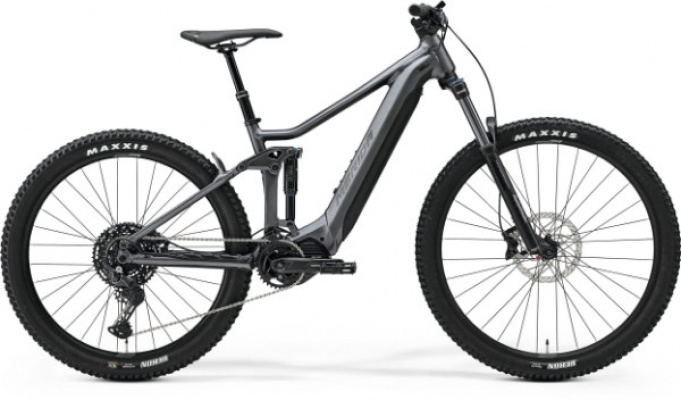
Merida eONE-FORTY 400 SE
Climb faster, ride longer, and keep the back end playful with mixed wheels and smooth Shimano torque.
- Shimano EP6 motor: 85Nm torque climbs anything
- 630Wh battery: removable, charges off-bike easily
- Mullet wheels: 29" front rolls, 27.5" rear snaps
- 140mm front, 130mm rear: trail-ready suspension
- Shimano CUES 1x10: simple, reliable shifting
- Tubeless-ready rims: 28mm internal width
Merida eONE-FORTY 400 SE Deals

Prices and availability can change quickly. Delivery charges are not always included in listed prices.
Final price, stock status and delivery terms are set by retailer. We may receive a commission on purchases made.
Bikesy's Verdict
The Merida eONE-FORTY 400 SE is a bike that gets the fundamentals right. It pairs a robust, well-designed aluminium frame with a powerful Shimano motor, a sensible mixed-wheel setup, and a component spec that's been chosen to work rather than to impress on a spreadsheet. You're getting genuine trail capability at a price that doesn't require selling a kidney, and that makes it a strong choice for riders who want to explore new terrain, tackle climbs that used to feel impossible, or simply ride longer and harder without arriving home completely spent.
The mixed-wheel setup is the star of the show here. That 29-inch front wheel gives you the calm, planted feel of a bigger hoop, rolling over obstacles and holding lines with confidence, while the 27.5-inch rear keeps the bike feeling lively and responsive when you need to change direction or pop off a feature. The Shimano motor delivers its torque with a smooth, natural ramp-up that makes technical climbs feel manageable, and the 630Wh battery provides enough range for most full-day rides. The geometry is well-judged for trail riding - stable enough to inspire confidence on descents but not so slack that it feels sluggish on climbs or in tight sections.
Yes, the suspension is entry-level, and yes, you'll want to upgrade it if you're charging hard or riding very rough terrain. But the frame and geometry are solid enough that most riders will outgrow the suspension before they outgrow the bike itself, and that makes the 400 SE a smart investment. It's a bike that rewards commitment, extends your range, and makes trail riding more fun. If that's what you're after, you'll struggle to find better value.
Pros
- Powerful Shimano EP6 motor makes climbs feel effortless and extends ride range significantly
- Mullet wheel setup balances rollover confidence with playful, responsive handling
- Robust aluminium frame with integrated, removable battery and clean internal cable routing
- Well-judged trail geometry inspires confidence on descents without sacrificing climbing efficiency
- Strong value proposition with reliable Shimano CUES drivetrain and four-piston brakes
Cons
- Entry-level Suntour suspension feels overwhelmed on rough or aggressive descents if you're charging hard
- Maxxis Rekon tyres are better suited to hardpack than loose or wet technical terrain
- Heavier than non-assisted trail bikes if you're used to lifting or manhandling your bike regularly
About the Merida eONE-FORTY 400 SE
Merida's eONE-FORTY 400 SE lands squarely in the sweet spot where trail ambition meets sensible money. Built around the brand's third-generation aluminium e-MTB frame, it pairs a Shimano EP6 motor with a 630Wh battery and a mixed-wheel setup that's become the go-to formula for riders who want to climb faster, descend sharper, and still have enough charge left for another lap. The SE badge here signals value rather than compromise - you're getting a bike that's been specced to work straight out of the box, with internal cable routing, a user-removable battery, and a geometry that balances confidence on the way down with efficiency on the way up.
This isn't a bike that shouts about itself. Instead, it gets on with the job: the 29-inch front wheel rolls over roots and rocks with the calm authority of a bigger hoop, while the 27.5-inch rear keeps the back end lively and responsive when you need to change direction or pop off a lip. The Shimano motor delivers its 85 newton-metres of torque with the smooth, intuitive ramp-up that makes technical climbs feel less like a battle and more like a conversation. You'll find yourself taking lines you'd normally walk, not because the bike's doing all the work, but because it's giving you the headroom to focus on balance and grip rather than gasping for air.
The 400 SE sits in the middle of Merida's eONE-FORTY range, which means it's aimed at riders who want proper trail capability without the price tag of the higher-spec models. The frame is the same robust Lite III or Lite IV alloy unit you'll find further up the ladder, and the geometry is trail-focused rather than XC-twitchy or enduro-slack. It's a bike that rewards commitment on descents but doesn't punish you on the climbs, and that balance makes it a strong choice for riders stepping up from hardtails or looking for their first e-MTB that can handle real terrain.
Merida eONE-FORTY 400 SE geometry
The eONE-FORTY 400 SE's geometry is drawn with trail riding in mind, which means it's neither too steep to feel nervous on fast descents nor too slack to feel sluggish when you're threading through tight trees. The head angle is calm enough to inspire confidence when the trail pitches down, and the reach is long enough to keep your weight centred over the bike when you're leaning into corners or braking hard into compressions. You're not perched on top of the bike; you're in it, with a cockpit position that feels natural whether you're seated and spinning or standing and driving through rough sections.
The mixed-wheel setup shifts the bike's character in subtle but meaningful ways. That 29-inch front wheel gives you a longer front centre, which translates to stability at speed and a reluctance to get knocked off line by roots or rocks. The 27.5-inch rear wheel shortens the chainstays relative to a full 29er, so the back end feels more playful and easier to lift or shift when you're navigating tight switchbacks or hopping over obstacles. The result is a bike that feels planted and predictable on open trails but still nimble enough to enjoy when the terrain gets technical or twisty.
The bottom bracket sits low enough to keep your centre of gravity grounded, which is especially useful when you're carrying the extra weight of the motor and battery. You'll notice it most on off-camber sections or when you're leaning the bike over in berms - there's a reassuring sense of connection to the ground that makes it easier to trust your tyres. The seat tube angle is steep enough to keep your weight forward on climbs, so you're not fighting the front wheel for traction, and the reach across the size range scales sensibly, so most riders will find a frame that fits without needing to make major cockpit adjustments.
Component choices & upgrades
The stock build on the 400 SE is thoughtfully chosen to deliver a reliable, rideable package without unnecessary frills. The Shimano CUES 1x10 drivetrain is simple, robust, and wide-ranging enough for most trail riding - you've got the gears you need to spin up steep climbs and still have something left for flat sections or fire roads. The Shimano MT420 four-piston brakes offer strong, consistent stopping power with 203mm rotors front and rear, and they're easy to bleed and maintain. The Maxxis Rekon tyres are a sensible all-rounder choice: they roll quickly, grip well on hardpack, and don't weigh a ton. The Merida Comp TR II rims are tubeless-ready with a 28mm internal width, so you can drop pressures for better traction and compliance without worrying about pinch flats.
Where the 400 SE makes its biggest compromise is in the suspension. The SR Suntour XCR34 LOR DS fork and Edge shock are entry-level to mid-range units that do the job for general trail riding but won't keep up if you're charging hard or riding very rough terrain. The fork offers 140mm of travel with a lockout and basic air-spring adjustment, while the rear shock gives you 130mm of travel with a platform damping mode. They're both adequate for learning the ropes or riding mellow trails, but if you're progressing quickly or tackling more aggressive descents, you'll start to notice the limits - harsh bottom-outs, a lack of mid-stroke support, and a tendency to feel overwhelmed when things get fast and rough.
If your riding is outgrowing the stock suspension, a fork upgrade is the most impactful change you can make. A mid-range air fork from RockShox or Fox - something like a Pike Select or a 36 Rhythm - will transform the front end, giving you better small-bump sensitivity, more consistent damping, and the ability to tune the fork to your weight and riding style. A rear shock upgrade is also worth considering if you're riding hard, though the gains are less dramatic than at the front. Beyond suspension, the Rekon tyres are a sensible swap if you're riding looser or wetter terrain - something like a Minion DHF up front will give you more confidence on descents, though you'll sacrifice a bit of rolling speed. The stock drivetrain and brakes are solid enough that most riders won't need to touch them unless they're chasing specific performance gains or personal preferences.
Where the Merida eONE-FORTY 400 SE excels
The eONE-FORTY 400 SE is outstanding at making trail riding more accessible and more fun. If you're the kind of rider who wants to explore new trails, tackle climbs that used to feel impossible, or simply ride longer and harder without arriving home completely spent, this bike delivers. The Shimano motor is smooth, powerful, and intuitive - it amplifies your effort rather than replacing it, so you still feel like you're riding a bike rather than piloting a moped. The mixed-wheel setup gives you the best of both worlds: the front wheel rolls over obstacles and holds a line with the calm authority of a 29er, while the rear wheel keeps the bike feeling lively and responsive when you need to change direction or pop off a feature.
It's also a bike that punches above its price point in terms of frame quality and overall capability. The aluminium frame is robust, well-finished, and features internal cable routing that keeps things tidy and protected. The geometry is well-judged for trail riding - it's stable enough to inspire confidence on descents but not so slack that it feels sluggish on climbs or in tight sections. The integrated battery is user-removable, so you can charge it indoors or swap in a spare if you're planning a big day out. The bike feels like it's been designed by people who actually ride trails, rather than by a marketing team trying to tick boxes.
Where the 400 SE is less ideal is at the extremes. If you're a strong, aggressive rider who wants to charge hard on rough descents or ride bike-park laps all day, the entry-level suspension will start to feel overwhelmed, and you'll be better served by a higher-spec model with a burlier fork and shock. Similarly, if you're chasing the lightest possible weight or the most refined ride quality, the aluminium frame and mid-range components won't compete with carbon-framed bikes or top-tier builds. The Rekon tyres are also more suited to hardpack and dry conditions - if you're riding loose, wet, or very technical terrain, you'll want something with more aggressive tread. But for riders who want a capable, confidence-inspiring trail bike that extends their range and makes climbing less of a chore, the 400 SE is hard to fault.
Merida eONE-FORTY 400 SE FAQs
What is the range of the Merida eONE-FORTY 400 SE?
Range depends on terrain, rider weight, assist mode, and how much climbing you're doing, but the 630Wh battery typically delivers between 40 and 80 kilometres of riding. If you're using Eco mode on rolling trails, you'll be closer to the upper end; if you're hammering climbs in Boost mode, expect the lower end. The Shimano E-Tube app lets you customise power delivery to stretch range further if needed.
Is the Merida eONE-FORTY 400 SE good for climbing?
Yes, it's excellent for climbing. The Shimano EP6 motor delivers 85 newton-metres of torque with a smooth, natural ramp-up that makes technical climbs feel manageable. The steep seat tube angle keeps your weight forward for traction, and the mixed-wheel setup helps the front wheel track cleanly over roots and rocks. You'll find yourself riding climbs you used to walk.
What is the best size Merida eONE-FORTY 400 SE for my height?
Merida offers the 400 SE in sizes from small to extra-extra-large, covering riders from around 160 centimetres to well over 190 centimetres. As a rough guide, small suits 160 - 175cm, medium 168 - 180cm, large 178 - 188cm, extra-large 185 - 196cm, and extra-extra-large 190cm and up. If you're between sizes, consider whether you prefer a more compact, nimble feel (size down) or more stability and reach (size up).
How much does the Merida eONE-FORTY 400 SE weigh?
The 400 SE weighs around 24 kilograms, which is typical for a full-suspension e-MTB with a 630Wh battery and aluminium frame. It's not a light bike by traditional mountain bike standards, but the motor more than compensates on climbs, and the extra weight actually helps with traction and stability on descents.
What type of riding is the Merida eONE-FORTY 400 SE best suited for?
It's best suited for trail riding - think singletrack climbs, flowing descents, forest loops, and all-day adventures where you want to cover more ground without arriving home completely spent. It's capable enough for moderate technical terrain but isn't designed for bike-park laps or enduro racing. If your riding is mostly XC or light trail, it'll feel overbuilt; if you're charging hard on very rough descents, you'll want more suspension travel and burlier components.
What are the key differences between the eONE-FORTY 400 SE and other Merida e-bikes?
The 400 SE sits in the middle of the eONE-FORTY range, sharing the same frame and geometry as higher-spec models but with more affordable components. Compared to the eONE-SIXTY series, the 400 SE has less travel and a more trail-focused geometry rather than enduro-aggressive. Higher-numbered eONE-FORTY models (like the 675 or 875) get better suspension, lighter wheels, and sometimes a larger 750Wh battery, but the core ride character is similar.
Can I fit wider tyres on the Merida eONE-FORTY 400 SE?
Yes, the frame and fork have clearance for up to 29x2.6-inch tyres at the front and 27.5x2.8-inch tyres at the rear, so you've got room to experiment with wider or more aggressive rubber if your terrain demands it. Just be mindful that wider tyres will add a bit of weight and rolling resistance, though the motor makes that less of an issue than on a non-assisted bike.
Key Features & Benefits
- Shimano EP6 motor with 85Nm torque: Smooth, powerful assistance that makes technical climbs rideable and extends your range without feeling artificial
- 630Wh user-removable battery: Charge indoors or swap in a spare for longer rides; no need to haul the whole bike to a plug socket
- Mixed 29"/27.5" wheel setup: Front wheel rolls over obstacles and holds lines confidently; rear wheel keeps the bike nimble and playful in tight sections
- 140mm front, 130mm rear suspension travel: Enough cushion to absorb trail chatter and moderate hits without feeling overbuilt or sluggish on climbs
- Shimano CUES 1x10 drivetrain and MT420 four-piston brakes: Simple, reliable shifting and strong, consistent stopping power with minimal maintenance fuss
Merida eONE-FORTY 400 SE 2024 differences
The 2024 eONE-FORTY 400 SE was built around Merida's Lite III aluminium frame, while the 2025 model uses the updated Lite IV frame with minor refinements to cable routing and internal layout. Both years share the same Shimano EP6 motor with 85 newton-metres of torque and the 630Wh battery, though some 2024 SE variants were equipped with the newer EP801 motor depending on region and batch. Suspension remained consistent across both years, with the SR Suntour XCR34 LOR DS fork and Edge shock handling duties at the front and rear.
The Shimano CUES 1x10 drivetrain and MT420 four-piston brakes carried over unchanged from 2024 to 2025, as did the Maxxis Rekon tyres and Merida Comp TR II tubeless-ready rims. The mixed-wheel setup - 29-inch front, 27.5-inch rear - remained a defining feature of the bike across both model years. Geometry and sizing were also consistent, with the same reach, stack, and angles across the range. The 2025 model represents an evolution rather than a revolution, with the main differences being frame-level refinements and potential motor variations depending on when and where the bike was built.
Alternatives to Consider
Within Merida's own stable, the eONE-FORTY 675 steps up with a RockShox fork, better shock, and a more refined build that's worth considering if your budget stretches and you're riding harder terrain. If you want more travel and enduro capability, the eONE-SIXTY 575 offers 160mm of suspension and burlier components, though it's heavier and less playful on mellower trails. For a lighter, more XC-focused option, Merida's eONE-TWENTY series trades some descending composure for quicker climbing and nimbler handling.
Cross-brand, the Cube Stereo Hybrid 120 Race sits in a similar price bracket with comparable Shimano motor and battery but leans slightly more XC in its geometry and component choices. The Trek Rail 5 offers a touch more travel and a more aggressive stance, making it a better pick if you're riding rougher descents but still want trail-bike versatility. The Specialized Turbo Levo Alloy brings Specialized's own motor and a slightly more refined ride feel, though it's often priced higher for similar spec. The Giant Trance X E+ 2 is another strong contender, with Giant's Maestro suspension platform and a reputation for excellent value, while the Haibike AllMtn 6 offers a more enduro-leaning geometry and burlier tyres if you're prioritising descending over climbing efficiency.
Reviews
Riders consistently praise the bike's ability to make trail riding more accessible and more fun. The Shimano motor delivers its torque with a smooth, intuitive ramp-up that feels natural rather than intrusive, and the 630Wh battery provides enough range for most full-day rides without needing a mid-ride recharge. The mixed-wheel setup earns particular approval: the 29-inch front wheel inspires confidence on rough descents and holds lines cleanly, while the 27.5-inch rear keeps the bike feeling lively and responsive when the trail gets tight or technical.
Handling strikes a balance that suits a wide range of riders. On climbs, the steep seat tube angle and stable geometry keep your weight centred and the front wheel tracking cleanly, even on loose or technical ascents. When the trail points down, the bike feels composed and predictable, with enough stability to carry speed but not so much that it feels sluggish or reluctant to change direction. The aluminium frame is robust and well-finished, with internal cable routing that keeps things tidy and a user-removable battery that's easy to charge or swap.
Where the bike shows its price point is in the suspension. The Suntour fork and shock are adequate for general trail riding and learning the ropes, but they lack the small-bump sensitivity and mid-stroke support of higher-end units. If you're progressing quickly or riding rough terrain at speed, you'll notice harsh bottom-outs and a tendency for the suspension to feel overwhelmed. The Maxxis Rekon tyres are also more suited to hardpack and dry conditions - riders tackling loose, wet, or very technical terrain often swap them for something with more aggressive tread. Because the motor compensates for weight and rolling resistance, tyre upgrades are less of a compromise than on a non-assisted bike.
Overall, the 400 SE delivers strong value and genuine trail capability. It's a bike that rewards commitment on descents, makes climbs feel manageable, and extends your range without feeling like a cheat. The frame and geometry are solid enough that most riders will outgrow the suspension before they outgrow the bike itself, and that makes it a smart choice for riders stepping up to e-MTBs or looking for a capable trail bike that doesn't demand a second mortgage.