
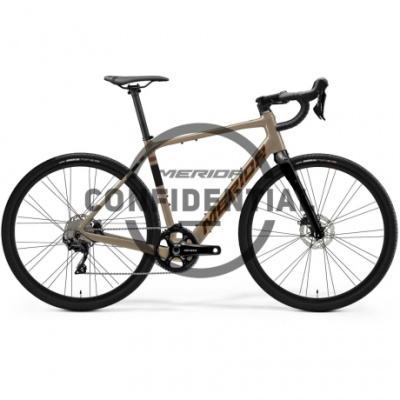
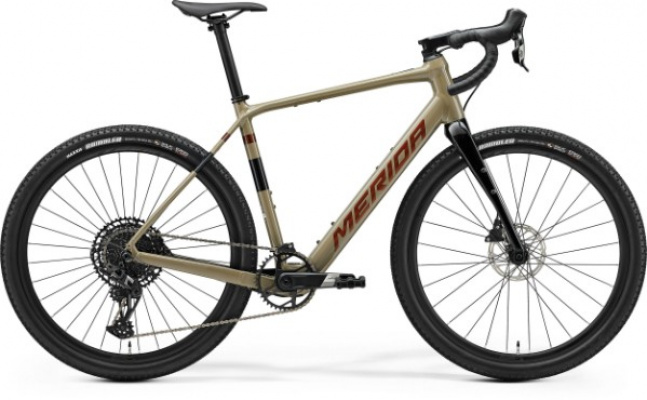
Merida eSILEX+ 600
Subtle electric assist for long gravel days, bikepacking adventures, and comfortable all-road cruising.
- Mahle hub motor: whisper-quiet assist to 25 km/h
- 250Wh integrated battery; range extender available
- 650b×47mm tyres smooth out rough lanes
- Carbon fork and triple-butted alloy frame
- Three bottle mounts plus fork cages for bikepacking
- Upright geometry for all-day comfort
Merida eSILEX+ 600 Deals


Prices and availability can change quickly. Delivery charges are not always included in listed prices.
Final price, stock status and delivery terms are set by retailer. We may receive a commission on purchases made.
Bikesy's Verdict
The Merida eSILEX+ 600 nails the brief for riders who want to go further, carry more, and arrive fresher without turning their gravel bike into a moped. The Mahle hub motor whispers rather than shouts, the frame bristles with practical mounts, and the upright geometry keeps you comfortable over the kind of distances that would leave you wrecked on a racier machine. It's not a bike for chasing Strava segments or hammering technical singletrack, but if your idea of a perfect ride involves loading up for a weekend adventure, cruising through rolling countryside, or simply making your daily commute less of a slog, this bike will feel like a revelation.
At around 14.4 kg it's light enough to handle like a real bike rather than a motorised barge, and when the battery runs dry the hub motor freewheels without dragging you backwards. The option to bolt on a range extender opens up genuinely ambitious touring possibilities, and the frame's extensive carrying capacity means you can leave the backpack at home. It's a bike that rewards patience and planning over aggression, and if that sounds like your kind of riding, you'll struggle to find a more capable, more comfortable, or better-value package.
Pros
- Discreet, quiet Mahle hub motor with natural-feeling assist
- Upright, comfortable geometry ideal for long days
- Extensive mounts for bottles, racks, and bikepacking gear
- Light for an e-bike at around 14.4 kg
- Range extender option doubles battery capacity
- Carbon fork smooths rough roads effectively
Cons
- 40 Nm motor can feel underpowered on steep climbs if you're fit
- Relaxed handling less confident on technical, aggressive terrain
- Stock handlebar narrower than some riders prefer for rough gravel
About the Merida eSILEX+ 600
Merida's eSILEX+ 600 slips electric assistance into a gravel frame so discreetly that you'd walk past it in a café without a second glance. The 250Wh battery hides inside the down tube, the Mahle hub motor tucks into the rear wheel, and the whole package weighs around 14.4 kg - light enough that you'll forget it's an e-bike until you thumb the iWoc button and feel that gentle tailwind kick in. This is assistance as a whisper rather than a shout, designed for riders who want a little help on the long haul without sacrificing the natural feel of a traditional gravel bike.
Built around a triple-butted, hydro-formed 6066 aluminium frame and a full-carbon fork, the eSILEX+ 600 rolls on 650b wheels shod with 47mm rubber. The geometry leans upright and relaxed - think touring posture rather than race crouch - and the frame bristles with mounts: three bottle bosses on the main triangle, two more on the fork, plus eyelets for mudguards, racks, and a kickstand. There's even Merida's Trail Mount system tucked under the top tube for a pump, multi-tool, and spare tube. It's a bike that invites you to load up and disappear for a weekend, confident that the motor will smooth out the miles and the frame will carry whatever you throw at it.
The Mahle system delivers 40 Nm of torque through three assist modes, controlled via a simple handlebar button or the ebikemotion smartphone app. Range depends on terrain and how hard you lean on the motor, but Merida quotes around 100 km on the internal battery alone; bolt on the optional 250Wh range extender and you're looking at serious all-day capability. When the battery runs dry or you switch off assistance, the hub motor freewheels with minimal drag, so you're not hauling dead weight. It's this blend of subtlety, practicality, and genuine versatility that sets the eSILEX+ 600 apart from heavier, more overtly electric rivals.
Merida eSILEX+ 600 geometry
The eSILEX+ 600's geometry prioritises comfort and stability over outright speed. Reach figures are modest - 355 mm on the XS, climbing to 416 mm on the XL - while stack numbers run tall, putting you in an upright, shoulders-back position that takes pressure off your wrists and opens your chest for easier breathing on long days. The head angle sits between 70 and 72 degrees depending on size, slacker than a road bike but not as slack as a mountain bike, which translates to calm, predictable steering that won't dart around when you hit a pothole or a patch of loose gravel.
Chainstays are a uniform 431 mm across all sizes, short enough to keep the bike feeling nimble when you need to thread through tight singletrack or navigate a crowded bike path, but not so short that the rear end feels twitchy. The wheelbase stretches from 1040 mm on the XS to 1130 mm on the XL, giving the bike a planted, confidence-inspiring feel at speed and on descents. Bottom bracket drop is a modest 66 mm, which keeps your centre of gravity low without making pedal strikes a constant worry on rougher trails.
What does all this mean when you're actually riding? You sit tall and relaxed, with plenty of room to shift your weight back on descents or lean forward into a headwind. The front end tracks smoothly through corners and over ruts, and the bike feels stable rather than nervous when you're loaded with panniers or a frame bag. It's not a geometry that rewards aggressive, elbows-out riding - you won't be carving tight switchbacks or sprinting out of the saddle for town signs - but if your idea of a good ride involves covering ground steadily, comfortably, and without drama, this setup delivers exactly that.
Component choices & upgrades
The eSILEX+ 600 arrives with a well-judged spec that balances cost and capability. SRAM Apex Eagle 1×12 gearing gives you an 11 - 50-tooth cassette paired with a 40-tooth chainring, offering a wide enough range for steep climbs and fast flats without the complexity of a front derailleur. Shimano GRX hydraulic disc brakes with 160 mm rotors front and rear provide reliable, progressive stopping power in all conditions. The Merida Expert CX wheels are sensibly wide at 19 mm internal, and they're wrapped in either Maxxis Rambler or Continental Terra Trail 650b×47mm tyres, both tubeless-ready and capable of handling everything from tarmac to chunky gravel.
The carbon fork is a genuine highlight - it's light, absorbs road chatter effectively, and features mounts for extra bottle cages or a lightweight rack. The cockpit is straightforward: an aluminium Merida Expert GRII handlebar (400 - 440 mm depending on frame size), a short 80 mm stem, and a carbon seatpost with zero setback. It's all functional rather than flashy, and for most riders it'll do the job without complaint.
That said, there's room to tailor the bike if your riding demands it. The stock handlebar runs narrower than some riders prefer for gravel, so swapping to a wider bar with more flare can improve control on rough descents and give you extra leverage when you're wrestling the bike through deep gravel or mud. If you're planning serious bikepacking trips, consider upgrading to a more supportive saddle - comfort is subjective, and what works for a two-hour ride might not cut it over a full day. The tyres are a solid all-rounder choice, but if you're spending most of your time on hardpack or tarmac, a faster-rolling tyre like a Schwalbe G-One Speed will shave watts; if you're heading into proper mud or loose conditions, something with more aggressive tread will give you better bite.
The drivetrain and brakes are robust enough that you shouldn't need to touch them unless you're chasing marginal gains or have very specific preferences. The Mahle motor system is sealed and low-maintenance, and the battery is integrated, so there's no scope for aftermarket upgrades there. Focus your budget on contact points - bar, saddle, grips - and tyres, and you'll get the most noticeable improvement in ride quality.
Where the Merida eSILEX+ 600 excels
The eSILEX+ 600 is outstanding at one thing above all: long, steady rides over mixed terrain where comfort and carrying capacity matter more than outright speed. If your weekends involve multi-hour gravel loops, overnight bikepacking trips, or commutes that string together canal paths, back lanes, and the occasional stretch of singletrack, this bike will feel like it was built for you. The motor's gentle assist smooths out the effort on climbs and into headwinds, the upright position keeps you fresh, and the frame's extensive mounts mean you can carry everything you need without resorting to a backpack.
It also excels as a do-everything bike for riders who want one machine that can handle commuting during the week, a Saturday sportive, and a Sunday adventure ride without needing to swap bikes. The mudguard and rack mounts make it practical for year-round use, and the 650b tyres strike a sweet balance between speed and comfort. You're not going to set any Strava records, but you'll arrive at your destination feeling good rather than beaten up.
Where it's less ideal: technical, aggressive terrain. The relaxed geometry and rear hub motor mean the bike doesn't inspire the same confidence on steep, loose descents or tight, twisty singletrack as a more aggressive gravel bike or a mountain bike. The motor's 40 Nm of torque is enough to take the sting out of moderate climbs, but if you're tackling sustained steep gradients or riding with stronger, unassisted partners, you'll find yourself wishing for more grunt. And while the bike handles rough gravel and hardpack well, it's not designed for full-on off-road trail riding - think fire roads and byways rather than rooty, rocky mountain bike trails.
If you're after a race-ready gravel bike or something that can double as a mountain bike on the weekends, look elsewhere. But if you value comfort, versatility, and the ability to go further without suffering, the eSILEX+ 600 is hard to beat.
Merida eSILEX+ 600 FAQs
What is the range of the Merida eSILEX+ 600?
Merida quotes around 100 km on the internal 250Wh battery, though real-world range depends heavily on terrain, rider weight, assist level, and wind. If you're using eco mode on flat roads, you'll stretch that figure; lean hard on the motor up steep climbs and you'll drain it faster. The optional 250Wh range extender effectively doubles your range, making multi-day tours or very long rides feasible without needing to hunt for a charging point.
Is the Merida eSILEX+ 600 good for bikepacking?
Yes, it's one of the bike's core strengths. Three bottle mounts on the frame, two on the fork, plus eyelets for racks, mudguards, and the Trail Mount system under the top tube give you plenty of options for carrying gear. The upright geometry and comfortable ride quality make it well-suited to long days in the saddle, and the motor assistance means you can carry more weight without feeling like you're grinding to a halt on every climb.
What motor does the Merida eSILEX+ 600 use?
The bike uses a Mahle X30 rear hub motor, which delivers 40 Nm of torque and assists up to 25 km/h. It's a quiet, lightweight system that provides a natural-feeling boost rather than an aggressive shove. When you're riding unassisted or the battery runs out, the motor freewheels with minimal drag, so the bike still feels rideable without power.
Can I fit wider tyres on the Merida eSILEX+ 600?
The frame and fork will clear 650b tyres up to 47 mm without mudguards, or 42 mm with guards fitted. If you swap to 700c wheels, you can fit up to 45 mm without guards or 42 mm with. That's generous enough for most gravel riding, though it's not as roomy as some dedicated adventure bikes that'll swallow 50 mm or wider rubber.
How heavy is the Merida eSILEX+ 600?
A size medium weighs around 14.4 kg, which is light for an e-bike but heavier than a traditional gravel bike. The Mahle system keeps weight down compared to mid-drive motor setups, and the aluminium frame is reasonably light for its strength. You'll notice the extra kilos when you're lifting the bike onto a car rack, but on the road the motor more than compensates.
What is the difference between the Merida eSILEX+ and the regular Silex?
The eSILEX+ adds the Mahle hub motor and integrated battery to the standard Silex frame, along with a slightly beefed-up rear end to handle the motor's torque. The geometry and frame design are otherwise very similar, so if you like the Silex's ride character but want a bit of assistance on longer rides or hillier terrain, the eSILEX+ is a natural step up.
Can the battery on the Merida eSILEX+ 600 be removed?
Yes, the 250Wh battery is integrated into the down tube but can be removed for charging or replacement. You'll need to access it via a port on the frame, and it's a straightforward process once you know where the release mechanism is. The optional range extender battery mounts externally, typically on a bottle cage boss, and can be swapped in and out easily.
Key Features & Benefits
- Mahle X30 rear hub motor with 250Wh integrated battery: Whisper-quiet assistance up to 25 km/h that feels natural, with minimal drag when you ride unassisted or the battery runs out
- Triple-butted aluminium frame with carbon fork and 650b×47mm tyres: Absorbs road chatter and rough gravel effectively, keeping you comfortable over long distances without adding unnecessary weight
- Three bottle mounts on frame, two on fork, plus rack and mudguard eyelets: Carry everything you need for bikepacking, touring, or commuting without resorting to a backpack, and stay practical in all weather
- SRAM Apex Eagle 1×12 drivetrain with 11 - 50T cassette: Wide gear range handles steep climbs and fast flats without the complexity or weight of a front derailleur
- Optional 250Wh range extender battery: Doubles your range for multi-day tours or very long rides, giving you the confidence to explore without worrying about running out of charge
Merida eSILEX+ 600 2024 and 2021 differences
The 2024 model shared much of the 2025 bike's DNA, featuring the same Mahle hub motor system and aluminium frame with carbon fork. Some 2024 builds came with a 237Wh battery rather than the 250Wh unit now standard, and drivetrain options varied between SRAM Apex and Shimano GRX depending on region and spec level. Weight and geometry remained consistent across both years.
The 2021 version ran a Shimano GRX RX600 1×11 drivetrain paired with the earlier Mahle Ebikemotion X35+ motor and a 252Wh battery. The overall character and frame design were similar, but the move to 12-speed gearing and the updated X30 motor in later models brought smoother shifting and slightly more refined assistance. Component choices and paint schemes evolved, but the core ride experience - comfortable, upright, and subtly assisted - has remained unchanged since the bike's introduction.
Alternatives to Consider
Within Merida's own range, the standard Merida Silex 600 offers the same frame geometry and versatile character without the motor, saving you weight and cost if you're happy to rely on leg power alone. Step up to the Merida eSILEX+ 800 and you'll gain a carbon frame and a higher-spec drivetrain, though the motor system remains the same Mahle hub setup.
Cross-brand, the Specialized Turbo Creo SL EVO delivers more powerful mid-drive assistance and a carbon frame, but it's a pricier proposition and the motor's character is less subtle. The Cannondale Topstone Neo Carbon 3 pairs a Bosch mid-drive motor with a carbon frame and more aggressive geometry, making it a better choice if you want to tackle technical terrain but still enjoy electric assist. For a more budget-conscious option, the Cube Nuroad Hybrid Pro 625 offers a Bosch motor and a larger battery in an aluminium frame, though it's heavier and less refined. The Ribble CGR AL e provides a similar hub-motor experience with a focus on road-plus riding, while the Scott Addict eRIDE 20 leans more towards fast tarmac with gravel capability as a secondary skill. Each of these bikes trades off motor power, weight, frame material, or handling character differently, so your choice hinges on whether you prioritise subtlety and natural feel (Merida, Ribble), outright assistance (Specialized, Cannondale, Cube), or a blend of road speed and gravel versatility (Scott).
Reviews
Extensive cargo capacity and the option for an extra battery make this bike ideal for long-distance cruising and bikepacking. The clean, non-bike-like silhouette and smooth, quiet power delivery of the Mahle system mean the rear-mounted motor doesn't massively upset handling or ride feel. Comfortable and upright riding position, combined with robust mounting points, makes it a versatile choice for touring and commuting.
When you're rolling along fire roads or linking up gravel byways, the motor's gentle assist takes the sting out of climbs without making you feel like you're cheating. The carbon fork and voluminous tyres absorb road vibrations effectively, and the bike's stable geometry encourages a cruising rather than aggressive riding style. Descents are surprisingly smooth, with the motor offering little to no drag when you're not leaning on assistance.
That said, the motor's 40 Nm torque can be easily overpowered on steeper climbs, and its performance on more demanding, rough terrain is limited compared to dedicated mountain bikes or more aggressive gravel bikes. The narrower stock handlebars may limit steering leverage on rough terrain, and while handling isn't drastically compromised by the rear hub motor, it can feel less confident on very technical or chunky surfaces. Value for money is frequently highlighted, especially for a shop-bought bike with included assistance.
Full Specification
| Spec | Value |
|---|---|
| Frame Material | Triple butted, hydro-formed 6066 aluminium alloy (Lite II frame) |
| Frame Construction | Sleek silhouette with integrated battery in down tube |
| Frame Features | Internal cable routing; mounts for three frame bottles, two fork bottles, mudguards, rack, kickstand; Trail Mount system under top tube |
| Tyre Clearance (700c) | 45mm without fenders; 42mm with fenders |
| Tyre Clearance (650b) | 47mm with fenders; 50mm maximum on fork |
| Bottom Bracket | SRAM DUB BSA 68 Road Wide |
| Rear Axle | 135×9mm QR |
| Front Axle | 100×12mm thru-axle |
| Fork | Merida Silex CF2 carbon, rigid, tapered steerer |
| Drivetrain | 1×12 speed SRAM Apex Eagle or 1×11 speed Shimano GRX RX600 |
| Shifters | SRAM Apex or Shimano GRX RX600 |
| Rear Derailleur | SRAM Apex Eagle or Shimano GRX 810 |
| Crankset | SRAM Apex 1 Wide, 40 teeth |
| Crank Length | 170mm (XS - S/SM/ML); 175mm (L/XL) |
| Cassette | SRAM PG-1210 Eagle 11 - 50T or Shimano M5100 11 - 42T |
| Chain | KMC e11S (11-speed) or SRAM SX Eagle (12-speed) |
| Brakes | Hydraulic disc |
| Brake Levers | SRAM Apex or Shimano GRX 600 |
| Brake Calipers | SRAM Apex or Shimano GRX 600 |
| Rotors (Front) | 160mm SRAM Centerline or Shimano RT66 |
| Rotors (Rear) | 160mm SRAM Centerline or Shimano RT66 |
| Rims | Merida Expert CX, 19mm internal width |
| Hubs (Front) | Shimano TC500, 100×12mm thru-axle |
| Hubs (Rear) | Mahle X30 Drive Unit or Mahle X35+ hub motor |
| Spokes | Black stainless |
| Tyres (Front) | Maxxis Rambler 650B×47mm ShieldWall TLR or Continental Terra Trail 650×47B |
| Tyres (Rear) | Maxxis Rambler 650B×47mm ShieldWall TLR or Continental Terra Trail 650×47B |
| Tubeless Ready | Yes |
| Handlebar | Merida Expert GRII aluminium; 400mm (XS - S), 420mm (M), 440mm (L/XL) |
| Stem | Merida Team CC III, 80mm, −6° angle |
| Headset | Merida 8158 |
| Seatpost | Merida Expert CC carbon, 30.9mm diameter, 0mm setback |
| Saddle | Merida Comp SL or Merida Comp CC |
| Pedals | VP VPE-891 or VP VPE-892 |
| Motor | Mahle Ebikemotion hub motor, 40Nm torque, 25 km/h assist limit |
| Battery | Mahle ix250, 250Wh integrated in down tube |
| Range Extender Option | 208Wh or 250Wh external battery compatible |
| Weight (Approx) | 14.14 kg (size M) |
| Available Sizes | XS, S, M, L, XL |