
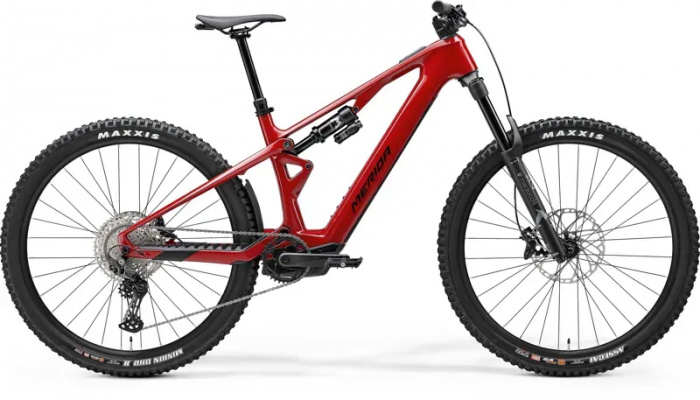
Merida eONE-SIXTY SL 6000
Pedal like a trail bike, climb like you're cheating, descend with enduro confidence and none of the bulk.
- Bosch SX motor: natural feel, high-cadence power
- Full carbon CF4 frame keeps weight near 20 kg
- 160 mm travel front and rear, mullet-ready
- Flex-stay design cuts pivots, adds compliance
- Reach-based sizing: pick agility or stability
- Marzocchi suspension punches above its price
Merida eONE-SIXTY SL 6000 Deals

Prices and availability can change quickly. Delivery charges are not always included in listed prices.
Final price, stock status and delivery terms are set by retailer. We may receive a commission on purchases made.
Bikesy's Verdict
The Merida eONE-SIXTY SL 6000 is one of those rare bikes that doesn't ask you to choose between assistance and agility. You get a lightweight carbon chassis, a motor that feels natural rather than overbearing, and suspension that's plush enough to keep your hands happy on rough trails yet supportive enough that you're not hunting for tokens after the first ride. It climbs with poise, descends with confidence, and rewards an active riding style in ways that heavier e-bikes simply can't match.
If your rides mix long climbs with technical descents, rooty singletrack with rocky chutes, and you want a bike that feels playful rather than planted, this is it. The spec is honest, the geometry is progressive without being extreme, and the price reflects a brand willing to deliver performance without the boutique tax. It's not a gravity sled and it's not a pure XC racer, but for all-mountain riding where you're pedalling as much as you're descending, the eONE-SIXTY SL 6000 is hard to fault.
Pros
- Agile, playful handling that feels closer to a trail bike than most e-MTBs
- Lightweight carbon frame and Bosch SX motor keep weight near 20 kg
- Steep seat angle and smooth motor assistance make climbing efficient and natural
- Marzocchi suspension delivers plush, supportive travel well above its price point
- Reach-based sizing lets you choose agility or stability to suit your style
- Mullet-ready via flip-chip if you want more rear travel or a snappier feel
Cons
- Front end sits lower than some rivals, which can feel steep on very loose descents if you're not weighting your hands
- Bosch SX motor offers less torque than full-power units when you're grinding at low cadence or on sustained technical climbs
- Heavier than pure trail bikes if you're chasing KOMs on unassisted rides
About the Merida eONE-SIXTY SL 6000
Merida's eONE-SIXTY SL 6000 sits in that sweet spot where assistance feels less like a crutch and more like a co-conspirator. Built around Bosch's compact Performance Line SX motor - 55 Nm of torque, 600 W peak - and wrapped in a full CF4 carbon chassis, it tips the scales around 20.4 kg, light enough that you'll forget you're aboard an e-bike until you thumb the mode button and the trail tilts upward. The frame hides its 400 Wh battery inside the downtube, keeps cables threaded through the headset, and uses a flex-stay rear end to ditch one pivot and shave grams while adding a dose of rear-wheel compliance. It's an enduro platform that doesn't punish you on the climb or bore you on the descent.
Where many lightweight e-MTBs feel like they're tiptoeing around capability, the eONE-SIXTY SL leans in. You get 160 mm of Marzocchi Z1 fork up front and a Marzocchi Bomber Air shock out back - suspension that's plush enough to keep your hands happy on chatter and supportive enough that you're not hunting for tokens after the first ride. The geometry is progressive without being extreme: a 64-degree head angle, a steep 78.5-degree effective seat angle (on the Long), and a reach-based sizing system Merida calls AGILOMETER, which lets you pick your frame by how you want the bike to steer rather than just your inseam. Flip the rocker chip and you can run a mullet setup, bumping rear travel to 174 mm if you're chasing gravity days.
Shimano Deore drivetrain and four-piston brakes keep the spec honest, while Maxxis Assegai and Minion DHR II rubber - both EXO+ casing - give you grip that doesn't quit when the trail gets loose. It's a build that works straight out of the box, and the price reflects a brand willing to deliver performance without the boutique tax. If you've been eyeing lightweight e-MTBs but worried they'd feel like compromised trail bikes with a motor bolted on, the eONE-SIXTY SL 6000 makes a compelling case that you can have agility, assistance, and proper descending chops in one package.
Merida eONE-SIXTY SL 6000 geometry
The numbers translate to a bike that climbs with your chest over the bar and descends with your weight centred and low. That 78.5-degree effective seat angle plants you forward, so even when the Bosch motor is humming and the gradient kicks past twenty per cent, you're driving through the pedals rather than spinning them. Reach on the Long sits at 489 mm - not radically stretched, but long enough that you're not cramped when the trail pitches down and you need room to move. The 64-degree head angle is calm without being slack; it tracks true through rock gardens and holds a line in ruts, but it won't feel like you're wrestling a chopper when the trail tightens.
Chainstays measure 450 mm, short enough to let the rear wheel snap around switchbacks and manual over roots, yet stable enough that high-speed chunder doesn't rattle your composure. The wheelbase stretches to 1278 mm on the Long, a length that inspires confidence when you're carrying speed into compressions or threading through off-camber sections. Bottom bracket drop is 27.5 mm, a figure that keeps your centre of gravity planted without dragging pedals through every berm. When you add it all up, you get a posture that's active rather than passive - you'll be weighting the front wheel on climbs, shifting your hips back on descents, and using your body to steer as much as the bars.
Merida's AGILOMETER sizing philosophy means you're not locked into a single frame based on height alone. If you're 175 cm and like a flickable, playful feel, you might size down to the Mid; if you prefer stability and straight-line speed, the Long will suit. It's a refreshing approach that acknowledges riding style matters as much as leg length, and it gives you permission to test a couple of sizes before committing.
Component choices & upgrades
The stock build is well sorted. Shimano Deore twelve-speed shifting is crisp and reliable, the 10 - 51T cassette offers enough range that you're not hunting for gears on steep pitches, and the four-piston Deore brakes haul you down with 220 mm and 203 mm rotors front and rear. Marzocchi suspension - often dismissed as budget kit - delivers plush, supportive travel that belies its price; both the Z1 fork and Bomber Air shock respond well to tuning, and you'll find plenty of adjustment to dial in sag and rebound. The Maxxis rubber is a highlight: Assegai up front for cornering bite, Minion DHR II out back for braking traction, both in EXO+ casings that balance weight and puncture protection.
If you're chasing marginal gains or your local trails demand more, a few thoughtful upgrades will sharpen the package. Swapping the 780 mm Merida handlebar for something with a touch more rise or sweep can open up your chest position on long descents, especially if you find the front end feels low on steep chutes. The 200 mm dropper post (on the Long) is generous, but if you're tall and ride aggressive terrain, an aftermarket post with more travel might be worth the investment. Brake pads are always a personal choice - sintered compounds will give you more bite in the wet if you're riding year-round in the UK. Tyres are another easy win: if you're on drier, hardpack trails, a faster-rolling rear like a Minion DHF or Dissector will save watts without sacrificing too much grip.
Suspension tuning is free and often overlooked. Spend an afternoon with a shock pump, a notebook, and a familiar trail; small changes to air pressure, rebound damping, and compression settings can transform how the bike feels under you. The Marzocchi units respond well to this kind of attention, and you'll likely find a setup that suits your weight and riding style without needing to throw money at a fork or shock upgrade. The stock build is already capable - upgrades should be driven by your skill level and the terrain you're riding, not a sense that the bike is lacking out of the box.
Where the Merida eONE-SIXTY SL 6000 excels
This bike is outstanding on technical trail riding where you want to climb efficiently, descend with confidence, and move the bike beneath you rather than just point it downhill. If your weekends mix long fire-road slogs with rocky singletrack descents, rooty switchbacks, and the occasional enduro stage, the eONE-SIXTY SL 6000 will feel like it was built for exactly that. The Bosch SX motor rewards a high cadence and an active pedalling style; spin at 80 rpm or above and the assistance feels natural, almost invisible, letting you carry momentum through technical sections without the on-off surge of a full-power motor. The lightweight chassis and flex-stay rear end mean you can manual, hop, and pump terrain in ways that heavier e-bikes simply won't allow.
It climbs with poise. That steep seat angle and the motor's smooth power delivery let you tackle sustained ascents without feeling like you're fighting the bike's geometry or waiting for the motor to wake up. On descents, the 160 mm of travel and progressive geometry give you enough headroom to push hard without bottoming out or feeling sketchy, though the slightly low front end means you'll need to weight your hands and stay centred on very steep, loose chutes. It's not a full-blown gravity sled - if you're spending most of your time at bike parks or shuttle laps, you'd be better served by something with more travel and a slacker head angle - but for all-mountain riding where you're pedalling as much as you're descending, it's hard to fault.
Where it's less ideal: pure XC racing (it's too heavy and too much bike), bike park days (not enough travel or slack geometry for repeated big hits), and low-cadence grinding (the Bosch SX motor prefers you to spin, not mash). If you ride mostly smooth, flowing trails and rarely encounter technical features, you're carrying suspension and capability you won't use. But if your rides are varied, your trails are rough, and you want a bike that feels playful rather than planted, the eONE-SIXTY SL 6000 delivers.
Merida eONE-SIXTY SL 6000 FAQs
What is the weight of the Merida eONE-SIXTY SL 6000?
The bike weighs around 20.4 kg (roughly 45 lbs) as tested, which is light for an e-MTB with 160 mm of travel and a full carbon frame. Higher-spec models in the SL range claim weights closer to 19.5 kg. It's not featherweight, but it's nimble enough that you'll notice the difference compared to full-power e-bikes that tip the scales past 23 kg.
How does the Bosch SX motor compare to full-power e-bike motors?
The Bosch Performance Line SX delivers 55 Nm of torque and 600 W peak power, which is less than full-power motors like Shimano's EP801 (85 Nm) or Bosch's own Performance Line CX. The trade-off is weight and feel: the SX motor is compact, light, and offers assistance that's smooth and natural, especially at higher cadences. You'll notice the difference on steep, technical climbs where full-power motors can muscle through low-cadence grinds, but for most trail riding the SX provides plenty of support without feeling overbearing.
Is the Merida eONE-SIXTY SL 6000 good for climbing?
Yes, it's excellent. The steep 78.5-degree effective seat angle keeps your weight forward, the Bosch SX motor delivers consistent assistance, and the lightweight frame means you're not hauling unnecessary mass uphill. Spin at a higher cadence and the motor responds with smooth, predictable power that lets you tackle sustained climbs without feeling like you're fighting the bike. It's one of the bike's standout traits.
What is the range of the Merida eONE-SIXTY SL 6000?
The integrated 400 Wh battery will give you roughly 1,000 - 1,500 metres of climbing depending on terrain, rider weight, assist mode, and cadence. If you're riding in Eco or Tour modes and spinning efficiently, you'll stretch that further; if you're hammering Turbo on steep, technical climbs, expect less. Merida offers an optional range extender that mounts to the downtube, adding capacity for longer rides or multi-lap days.
Can I run a mullet setup on the Merida eONE-SIXTY SL 6000?
Yes. The frame features a flip-chip in the rocker link that allows you to swap the rear wheel to 27.5 inches, which increases rear travel to 174 mm and slackens the geometry slightly. It's a straightforward conversion if you want more descending capability or prefer the snappier feel of a smaller rear wheel, and it doesn't require any special tools or frame modifications.
What kind of riding is the Merida eONE-SIXTY SL 6000 best suited for?
Technical trail riding, all-mountain adventures, and enduro-style riding where you're climbing as much as you're descending. It thrives on varied terrain - rooty singletrack, rocky descents, loose switchbacks, and long fire-road climbs - and it rewards an active riding style. If your rides mix elevation gain with technical features and you want a bike that feels playful rather than planted, this is it.
How does the Merida eONE-SIXTY SL 6000 handle on technical descents?
It's stable and capable, with 160 mm of travel and a 64-degree head angle that inspire confidence through rock gardens and compressions. The Marzocchi suspension is plush and supportive, and the geometry keeps you centred over the bike. The front end sits slightly lower than some competitors, which can feel a bit steep on very loose or off-camber descents, but it's not a deal-breaker - weight your hands, stay active, and the bike will hold its line.
What are the key differences between the Merida eONE-SIXTY SL and the eONE-SIXTY?
The SL (Super Light) series uses the Bosch Performance Line SX motor, a full carbon CF4 frame, and a focus on lightweight, agile handling. The standard eONE-SIXTY typically features Shimano's EP801 motor, which offers more torque (85 Nm vs 55 Nm) and a different power delivery, and it's built for riders who prioritise full-power assistance over weight savings. The SL is lighter, more playful, and closer to a traditional trail bike in feel; the standard eONE-SIXTY is burlier and better suited to riders who want maximum motor support.
Key Features & Benefits
- Bosch Performance Line SX motor (55 Nm, 600 W peak): Natural, smooth assistance that rewards high-cadence pedalling and feels less intrusive than full-power motors, letting you ride actively rather than relying on brute torque.
- Full CF4 carbon frame with flex-stay rear end: Keeps weight around 20 kg while adding rear-wheel compliance and eliminating one pivot, so the bike feels lively and responsive without sacrificing durability.
- 160 mm Marzocchi Z1 fork and Bomber Air shock: Plush, supportive suspension that handles rough trails and big hits without the premium price tag, and responds well to tuning for your weight and riding style.
- AGILOMETER reach-based sizing system: Lets you choose your frame size based on whether you want agility or stability, not just your height, so the bike fits how you ride rather than just your inseam.
- Mullet-compatible via flip-chip in rocker link: Swap to a 27.5-inch rear wheel to increase rear travel to 174 mm and adjust geometry for more descending capability or a snappier, more playful feel.
Merida eONE-SIXTY SL 6000 2025 and 2024 differences
The 2025 model year marks the introduction of the eONE-SIXTY SL (Super Light) series, which uses the Bosch Performance Line SX motor and a full CF4 carbon frame. Prior to 2025, the eONE-SIXTY range (non-SL) typically featured Shimano's EP801 motor, which delivers 85 Nm of torque compared to the SX's 55 Nm, and had slightly different component specifications. The SL version represents a shift toward lightweight, agile handling and natural-feeling assistance, whereas the 2024 and earlier eONE-SIXTY models prioritised full-power motor support and a burlier build.
Geometry and suspension travel remain consistent across the transition, with 160 mm front and rear on both generations, though the SL's carbon frame and lighter motor shave roughly 2 - 3 kg off the overall weight. The flex-stay rear end and mullet compatibility via flip-chip are carried over from previous years, but the 2025 SL's focus on high-cadence pedalling and active riding style marks a clear departure from the low-cadence, motor-reliant character of the earlier Shimano-powered models. If you're comparing used 2024 eONE-SIXTY bikes to the 2025 SL 6000, the key trade-off is torque and full-power assistance versus weight savings and a more trail-bike-like ride feel.
Alternatives to Consider
Within Merida's own range, the eONE-EIGHTY series offers more travel and a gravity-focused build with Shimano's EP801 motor if you're chasing bigger descents and don't mind the extra weight. Step down and you're looking at the standard eONE-SIXTY (non-SL), which also uses the EP801 motor and trades some of the SL's lightweight agility for full-power torque and a burlier spec - worth considering if you prefer low-cadence grinding or ride steeper, more technical terrain where motor muscle matters more than nimble handling.
Cross-brand, the Specialized Turbo Kenevo SL is a direct lightweight e-MTB rival, though the eONE-SIXTY SL's geometry is often noted as more progressive and its spec more generous at a similar price point. The Orbea Rise M20 is another strong contender in the lightweight category, praised for its Shimano EP801 motor and climbing prowess, though it sits at a higher price tier. The Whyte E-Lyte 150 RS offers similar travel and a Bosch SX motor, with geometry that's slightly more conservative and a build that leans toward all-mountain versatility. If you're after a livelier, more playful feel and don't mind a different motor character, the Trek Fuel EXe 9.7 uses TQ's compact motor and delivers a ride that's closer to a traditional trail bike, though it sacrifices some of the eONE-SIXTY SL's descending capability. Finally, the Giant Trance X E+ 2 brings Yamaha's motor and a more affordable price, but it's heavier and less agile - better suited to riders who prioritise value and full-power assistance over lightweight handling.
Reviews
Geometry and motor pairing deliver a ride that feels more trail bike than e-bike, especially when you're spinning at 80 rpm or above and the Bosch SX motor is humming along in the background. The steep seat angle keeps your weight forward on climbs, so even when the gradient kicks past twenty per cent you're driving through the pedals rather than spinning them, and the lightweight carbon frame means you're not hauling unnecessary mass uphill. On descents, the 160 mm of Marzocchi suspension is plush and supportive, soaking up chatter and big hits without feeling vague or wallowy, and the 64-degree head angle holds a line through rock gardens and ruts with calm, predictable tracking.
When the trail tightens or you're threading through rooty switchbacks, the 450 mm chainstays and reach-based sizing let you move the bike beneath you - manual over roots, snap the rear wheel around tight corners, and pump terrain in ways that heavier e-bikes simply won't allow. The flex-stay rear end adds a dose of compliance that keeps the rear wheel glued to the ground on rough sections, and the overall balance of the bike means you're steering with your hips and body weight as much as the bars. Because the Bosch SX motor prefers a higher cadence, you'll find yourself spinning more and mashing less, which translates to smoother power delivery and less fatigue on long rides.
The front end sits slightly lower than some rivals, which can feel steep on very loose or off-camber descents if you're not actively weighting your hands and staying centred over the bike. It's not a deal-breaker - adjust your body position and the bike holds its line - but it does demand a bit more rider input than slacker, longer-travel enduro sleds. Braking power from the four-piston Shimano Deore calipers is strong and consistent, and the Maxxis Assegai and Minion DHR II tyres offer grip that doesn't quit when the trail gets loose or wet. Overall, the eONE-SIXTY SL 6000 punches well above its price point, delivering a ride that's engaging, capable, and refreshingly free of the compromises that often plague lightweight e-MTBs.
Full Specification
| Spec | Value |
|---|---|
| Frame | Full carbon fibre CF4 |
| Frame Construction | Linkage-driven single-pivot with flex stay design |
| Frame Features | Integrated battery, internal cable routing via headset, headset steering limiter, chainstay protector, downtube protection, mullet-compatible flip-chip |
| Tyre Clearance | 2.4 inches |
| Bottom Bracket | BSA threaded, 73mm |
| Rear Axle | 148x12mm Boost |
| Fork | Marzocchi Z1 eMTB |
| Fork Travel | 160mm |
| Fork Adjustments | Air spring, adjustable |
| Rear Shock | Marzocchi Bomber Air |
| Rear Travel | 160mm |
| Rear Shock Adjustments | Rebound and compression adjustable |
| Drivetrain | 1x12 speed |
| Shifters | Shimano Deore |
| Rear Derailleur | Shimano Deore M6100 |
| Crankset | FSA CK220 |
| Crank Length | 165mm |
| Cassette | Shimano 10-51T |
| Chain | Shimano Deore M6100 |
| Brakes | Hydraulic disc |
| Brake Levers & Calipers | Shimano Deore M6120, 4-piston |
| Rotors (Front) | 220mm |
| Rotors (Rear) | 203mm |
| Rims | Merida Expert TR II, 28mm internal width |
| Hubs (Front) | Shimano TC500, 110x15mm |
| Hubs (Rear) | Shimano TC500, 148x12mm |
| Tyres (Front) | Maxxis Assegai, 3C MaxxGrip EXO+, 29x2.5 inches |
| Tyres (Rear) | Maxxis Minion DHR II, 3C MaxxTerra EXO+, 29x2.4 inches |
| Handlebar | Merida Expert eTR II, 780mm wide, 30mm rise |
| Stem | Merida Expert eTR II, 35mm length, 0-degree rise, 35mm clamp diameter |
| Grips | Merida Expert EC |
| Headset | Acros ICR Merida Integrated with Blocklock |
| Seatpost | Merida Comp TR III, 34.9mm diameter, 200mm travel (Long size) |
| Saddle | Merida Comp SL |
| Motor | Bosch Performance Line SX |
| Motor Torque | 55 Nm |
| Motor Peak Power | 600W |
| Motor Assist Limit | 25 km/h (15.5 mph) |
| Weight (Approx) | 20.4 kg |