
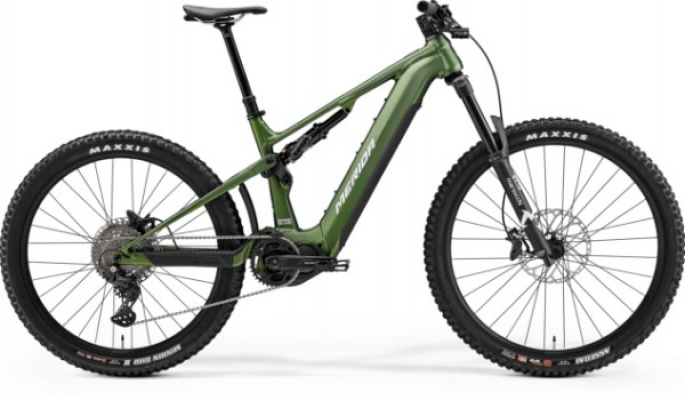
Merida eONE-SIXTY 675
Long-travel e-enduro with all-day battery range, tough aluminium build, and confident geometry for demanding trails.
- Shimano EP801 motor: 85Nm torque, firmware-updatable assist
- 750Wh battery plus optional 360Wh extender
- Marzocchi Z1 fork and Bomber Air shock: 170/174mm travel
- P-Flex stays replace pivots for simpler, lighter suspension
- Mixed 29"/27.5" wheels; flip chip for full 29" setup
- Lifetime aluminium frame warranty from Merida
Merida eONE-SIXTY 675 Deals

Prices and availability can change quickly. Delivery charges are not always included in listed prices.
Final price, stock status and delivery terms are set by retailer. We may receive a commission on purchases made.
Bikesy's Verdict
The Merida eONE-SIXTY 675 is a no-nonsense e-enduro that delivers long-travel capability, all-day range, and tough componentry without asking you to remortgage for carbon. It's built for riders who want to tackle demanding trails, technical climbs, and rowdy descents with confidence, and who value durability and practicality over the lightest possible package. The Shimano EP801 motor and 750-watt-hour battery - plus the optional extender - mean you can go big and go long without range anxiety, whilst the Marzocchi suspension and Linkglide drivetrain shrug off the extra forces that come with motor assistance and heavier frames.
It's not the nimblest or most playful bike in the category, and the weight is noticeable in tight, slow-speed sections. But if you're after a capable, confidence-inspiring machine that'll handle everything from technical climbs to steep, loose descents - and do it day after day without drama - the 675 delivers exceptional value and genuine all-mountain versatility. Merida's lifetime frame warranty and well-sorted spec make it a smart choice for riders who want to ride hard, ride far, and ride often.
Pros
- Sorted Marzocchi suspension and durable Linkglide drivetrain handle e-bike forces without fuss
- 750Wh battery with optional 360Wh extender delivers genuine all-day range
- Confidence-inspiring geometry balances stability and control on steep, technical descents
- Lifetime aluminium frame warranty and tough componentry built to last
- Excellent value for a long-travel e-enduro with this level of capability and spec
Cons
- Hefty 25.6kg weight feels laboured in tight, slow-speed technical sections
- Longer wheelbase and slack head angle demand more input for quick direction changes
- Less playful than shorter-travel e-trail bikes if you prioritise nimbleness over stability
About the Merida eONE-SIXTY 675
Merida's eONE-SIXTY 675 lands squarely in the e-enduro sweet spot - long travel, big battery, aluminium toughness - and wraps it all in a package that punches well above its price point. The 2025 model refines the fourth-generation LITE aluminium chassis with P-Flex stays that ditch the traditional rear pivot for controlled flex, shaving grams and complexity whilst keeping the suspension supple and predictable. Shimano's EP801 motor delivers 85 newton-metres through a 750-watt-hour Trendpower battery, and if that's not enough, slot in the optional 360-watt-hour range extender and you're looking at all-day epics without the range anxiety. It's a bike built to handle demanding trails, technical climbs, and rowdy descents without asking you to remortgage for carbon.
The geometry leans enduro: a 64.4-degree head angle, steep 78.4-degree seat tube, and reach figures that stretch from 419 millimetres in XShort to 499 in XLong. That translates to a planted, confidence-inspiring stance when the trail tilts down, yet the motor's assist carryover firmware keeps momentum flowing through technical climbs where lesser e-bikes bog. Marzocchi Z1 and Bomber Air suspension - 170 millimetres up front, 174 at the rear - soak up the rough stuff with a control that belies their mid-tier billing, whilst Shimano Deore Linkglide gearing and four-piston brakes bring e-bike-specific durability to the party. Maxxis Assegai and Minion DHR II rubber, a travel-adjustable dropper, and integrated mini-fenders round out a spec sheet that's refreshingly complete rather than cynically stripped back.
This isn't a bike for riders chasing the lightest possible package or the snappiest trail manners. At around 25.6 kilograms for a mid-sized frame - before you add the extender - it's a heavyweight, and you'll feel that heft in tight, slow-speed switchbacks where steering takes a touch more input. But point it downhill, let the suspension breathe, and the 675 disguises its mass with poise and composure. It's the SUV of e-MTBs: capable, practical, and built to go the distance without drama.
Merida eONE-SIXTY 675 geometry
Reach-based sizing - Merida calls it the Agilometer system - lets you choose your frame length by preference rather than inseam alone, so shorter riders chasing stability can size up, whilst taller pilots wanting quicker handling can size down. The 64.4-degree head angle and long wheelbase (1,231 millimetres in XShort, stretching to 1,311 in XLong) plant the front wheel firmly ahead of you, delivering calm at speed and confidence when the trail gets loose or steep. That slack front end pairs with a steep 78.4-degree seat tube to keep your weight centred over the pedals on climbs, so you're not fighting the bike when the gradient kicks up.
Chainstays hold steady at 446 millimetres across all sizes, which keeps the rear end snappy enough for manuals and tight turns without sacrificing traction on technical climbs. Stack sits at 633 millimetres regardless of reach, so taller riders get a more stretched-out, aggressive posture, whilst shorter frames feel more upright. The flip chip lets you swap between the stock mixed-wheel setup - 29-inch front, 27.5-inch rear - and a full 29-inch configuration without wrecking the geometry, so you can tailor the bike to your terrain or riding style. Mixed wheels sharpen the handling and make the rear end more playful; full 29 smooths out the rough and holds momentum better.
On trail, this geometry translates to a bike that feels stable and composed rather than darty or nervous. You'll carve through fast, open sections with confidence, and the long front centre keeps the front wheel tracking true over roots and rocks. In tight, technical sections - especially at walking pace - the longer wheelbase and slacker head angle demand a bit more input to change direction, and the weight becomes more noticeable. But once you're moving, the 675 feels poised and predictable, rewarding commitment rather than punishing hesitation.
Component choices & upgrades
The stock build is impressively well sorted for the money. Marzocchi's Z1 fork and Bomber Air shock might not carry the cachet of Fox or RockShox, but they're proven performers in the e-MTB world - damping is controlled, support is ample, and they shrug off the extra forces that come with motor assistance and heavier frames. Shimano Deore Linkglide gearing is purpose-built for e-bikes, with wider, more durable teeth that resist wear under high torque, and the ten-speed range (11 - 43 tooth cassette) covers most terrain without fuss. Four-piston Deore brakes with 220-millimetre front and 203-millimetre rear rotors deliver confident stopping power, even when you're carrying speed or extra battery weight.
Maxxis Assegai up front brings tenacious grip in loose or wet conditions, whilst the Minion DHR II rear balances traction and rolling speed. Both are tubeless-ready on 28-millimetre-internal Merida Expert rims, so you can drop pressures for compliance and grip without worrying about pinch flats. The travel-adjustable dropper - 125 millimetres in XShort, scaling up to 230 in XLong - gives plenty of room to move, and the integrated multi-tool under the saddle is a neat touch that saves you carrying spares.
If you're pushing harder or riding more demanding terrain, a few upgrades make sense. Swapping the Marzocchi fork for a Fox 38 or RockShox Zeb adds more adjustability and a touch more small-bump sensitivity, though the stock Z1 is more than capable for most riders. If you're regularly riding in the wet or tackling long, steep descents, consider upgrading to a four-piston brake with larger rotors - say, 220 millimetres front and rear - for extra power and heat management. Tyres are always personal, but if you're riding drier, harder-pack trails, a faster-rolling rear like a Maxxis Rekon or Schwalbe Hans Dampf will save watts without sacrificing too much grip. And if you're serious about all-day rides, the 360-watt-hour range extender is a no-brainer - it slots into the downtube and nearly doubles your battery capacity, turning the 675 into a true expedition machine.
Where the Merida eONE-SIXTY 675 excels
This bike is outstanding at long, technical trail rides where you want enduro capability without the weight penalty of a full carbon race machine. It thrives on steep, rough descents - the slack head angle, long wheelbase, and controlled suspension let you carry speed through rock gardens and root sections with confidence, and the Shimano motor's smooth power delivery keeps you moving when the trail flattens or kicks back up. The 750-watt-hour battery, combined with the EP801's efficient assist modes, means you can tackle big days without constantly watching the range indicator, and the optional extender pushes that capability even further.
It's also excellent for riders who want a single bike that handles everything from technical climbs to rowdy descents. The steep seat angle and assist carryover firmware - Shimano's clever trick that maintains power through momentary wheel lifts or loss of traction - make it a surprisingly capable climber for a bike with this much travel and weight. The durable Linkglide drivetrain and e-bike-specific components mean it'll shrug off the extra forces and mileage that come with motor assistance, so you're not constantly replacing chains and cassettes.
Where it's less ideal: tight, twisty singletrack at low speeds, where the weight and longer wheelbase make quick direction changes feel more laboured. If you're chasing the most playful, flickable ride or you prioritise nimbleness over stability, the eONE-SIXTY SL series or a shorter-travel e-trail bike will suit you better. And if you're primarily riding smoother, less technical trails or you don't need the extra battery capacity, you're carrying weight and capability you won't fully use. This is a bike for riders who want to go big, go long, and go hard - not for those chasing the lightest possible package or the snappiest trail manners.
Merida eONE-SIXTY 675 FAQs
What is the weight of the Merida eONE-SIXTY 675?
A mid-sized frame weighs approximately 25.6 kilograms without the range extender. That's hefty by any measure, but the bike disguises its mass well once you're moving, and the motor assistance offsets much of the penalty on climbs. Add the 360-watt-hour extender and you're looking at closer to 27 kilograms, but the trade-off is significantly extended range for all-day rides.
What is the range of the Merida eONE-SIXTY 675 with the 750Wh battery?
Range depends heavily on terrain, rider weight, assist mode, and how much climbing you're doing, but expect anywhere from 1,200 to 2,000 metres of elevation gain on a full charge in typical trail conditions. The optional 360-watt-hour extender can nearly double that, making multi-hour epics or back-to-back ride days entirely feasible without needing to recharge.
Is the Merida eONE-SIXTY 675 suitable for beginners?
It's capable enough to flatter less experienced riders - the motor smooths out climbs, the suspension soaks up mistakes, and the stable geometry inspires confidence - but the weight and enduro-focused handling might feel overwhelming if you're just starting out. A shorter-travel e-trail bike or the eONE-FORTY series would be more forgiving and easier to manage whilst you're building skills.
What are the key differences between the Merida eONE-SIXTY 675 and the carbon models?
The carbon eONE-SIXTY models save significant weight - typically two to three kilograms - and often come with higher-spec suspension and components, but they cost considerably more. The 675's LITE aluminium frame is tougher and more forgiving of impacts, and Merida backs it with a lifetime warranty, so if you're prioritising durability and value over outright weight savings, the alloy option makes a lot of sense.
Can I fit a different size rear wheel on the Merida eONE-SIXTY 675?
Yes - the bike ships with a mixed-wheel setup (29-inch front, 27.5-inch rear) but includes a flip chip that lets you run full 29-inch wheels without compromising the geometry. Mixed wheels make the rear end more playful and sharpen handling; full 29 smooths out rough terrain and holds momentum better. Tyre clearance maxes out at 29 by 2.6 inches, so you've got room to experiment with wider rubber if you want more grip or cushion.
What is the warranty on the Merida eONE-SIXTY 675 frame?
Merida offers a lifetime warranty on the aluminium frame, which is a strong vote of confidence in the durability of the LITE construction and P-Flex design. That covers manufacturing defects and structural failures, though normal wear, crashes, and improper maintenance aren't included - so treat it well and it'll last.
How does the Marzocchi suspension compare to Fox on the Merida eONE-SIXTY 675?
Marzocchi - owned by Fox - shares much of the same damper technology but strips away some of the external adjustments and premium finishes to hit a lower price point. The Z1 fork and Bomber Air shock are proven, reliable performers with controlled damping and ample support, and they're more than capable for most riders. Fox 38 or RockShox Zeb forks offer more tunability and a touch more small-bump sensitivity, but the Marzocchi kit is impressively sorted for the money and well-suited to the 675's enduro intentions.
Is the Merida eONE-SIXTY 675 good for climbing technical terrain?
Yes - the steep 78.4-degree seat angle keeps your weight centred over the pedals, and the Shimano EP801's assist carryover firmware maintains power through momentary traction loss or wheel lifts, which is a huge help on rocky, rooty climbs. The weight is noticeable at very low speeds, but once you've got momentum the bike climbs with confidence and traction, and the motor's smooth delivery makes it easy to modulate power through technical sections.
Key Features & Benefits
- Shimano EP801 motor with assist carryover firmware: Maintains power through traction loss or wheel lifts, so technical climbs flow smoothly without bogging or stalling
- 750Wh Trendpower battery plus optional 360Wh extender: Genuine all-day range for long trail rides or multi-hour epics without range anxiety or mid-ride recharges
- P-Flex stays replace traditional rear pivot: Simpler, lighter suspension design with fewer moving parts to maintain, whilst keeping the rear end supple and controlled
- Flip chip for mixed or full 29-inch wheel setups: Tailor handling to your terrain - mixed wheels for playfulness, full 29 for momentum and rough-trail composure - without wrecking geometry
- Shimano Deore Linkglide 1×10 drivetrain: Wider, more durable teeth resist wear under high motor torque, so you're not constantly replacing chains and cassettes
Merida eONE-SIXTY 675 2025 and 2024 differences
The 2025 model carries over the core fourth-generation LITE aluminium frame and P-Flex stay design introduced in 2024, which replaced the traditional rear pivot with controlled flex in the chainstays for a simpler, lighter suspension system. Both years feature the Shimano EP801 motor with 85 newton-metres of torque and a 750-watt-hour Trendpower battery, along with 170-millimetre Marzocchi Z1 fork and 174-millimetre Bomber Air shock travel. Geometry remains consistent across both model years, with the slack 64.4-degree head angle, steep 78.4-degree seat angle, and reach-based Agilometer sizing system unchanged.
Key updates for 2025 are subtle rather than revolutionary. Merida refined the size-tuned suspension progression to better suit larger frames and heavier riders, and the flip chip system for switching between mixed and full 29-inch wheel setups was optimised for easier adjustment. Component choices remain largely the same, with Shimano Deore Linkglide gearing, four-piston Deore brakes, and Maxxis Assegai and Minion DHR II tyres carrying over. The 2025 model benefits from updated Shimano firmware that includes assist carryover for technical climbs, though this feature can also be retrofitted to 2024 bikes via a dealer update. Overall, the 2025 eONE-SIXTY 675 is an evolution rather than a revolution, refining an already capable platform without major changes to frame, geometry, or spec.
Alternatives to Consider
Within Merida's own range, the eONE-SIXTY 900E steps up to carbon construction, saving around two kilograms and gaining Fox suspension and a higher-spec drivetrain, though it costs considerably more. If you want less travel and a nimbler ride, the eONE-FORTY 8000 offers 150-millimetre suspension and a more trail-focused geometry, making it quicker in tight sections whilst still delivering capable descending. For riders chasing the lightest possible e-enduro package, the eONE-SIXTY SL 8000 pairs a Bosch SX motor with a smaller battery and carbon frame, prioritising agility over all-day range.
Cross-brand, the Specialized Turbo Levo Comp Alloy offers similar travel and a proven Brose motor, though it typically costs more and leans slightly more towards trail manners than pure enduro capability. The Trek Rail 7 delivers comparable geometry and Bosch motor assistance with a focus on all-mountain versatility, whilst the Santa Cruz Heckler 9 CC brings carbon construction and VPP suspension for riders willing to pay a premium for lighter weight and Santa Cruz's renowned descending poise. The YT Capra MX Core 3 offers a burlier, gravity-focused alternative with longer travel and a more aggressive stance, though it sacrifices some of the 675's climbing efficiency. Finally, the Norco Sight VLT C2 balances trail and enduro intentions with a slightly shorter wheelbase and more playful handling, making it a strong choice if you want a touch more nimbleness without giving up descending capability.
Reviews
Marzocchi's Z1 fork and Bomber Air shock deliver controlled, composed suspension that flatters the 675's enduro intentions. Small-bump sensitivity is good, mid-stroke support is ample, and the damping stays calm through fast, rough sections without feeling harsh or spikey. Progression is well-tuned across the size range - larger frames get a more progressive curve to handle heavier riders and bigger hits - and the platform adjustment on the shock lets you firm things up for climbs or smoother trails without feeling like you're riding a pogo stick.
Geometry strikes a confident balance between stability and control. The slack 64.4-degree head angle and long wheelbase plant the front wheel firmly ahead of you, so steep, loose descents feel composed rather than nervous, and the bike tracks true through rock gardens and root sections without deflecting or wandering. When the trail tilts up, the steep seat angle keeps your weight centred over the pedals, and the Shimano EP801's assist carryover firmware - which maintains power through momentary traction loss or wheel lifts - makes technical climbs flow smoothly. Steering is predictable and calm at speed, though it feels a touch heavier in tight, slow-speed switchbacks where the weight and longer wheelbase demand more input to change direction.
Shimano's Deore Linkglide drivetrain is a smart choice for e-bike duty. Shifts are clean and reliable, the wider teeth resist wear under high motor torque, and the ten-speed range (11 - 43 tooth cassette) covers most terrain without leaving you hunting for gears. Four-piston Deore brakes with 220-millimetre front and 203-millimetre rear rotors deliver confident stopping power, even when you're carrying speed or the extra weight of the range extender, and modulation is good enough to feather speed through technical sections without grabbing or fading. Maxxis Assegai and Minion DHR II rubber bring tenacious grip in loose or wet conditions, and the 28-millimetre-internal rims let you drop pressures for compliance without worrying about pinch flats.
Weight is the trade-off. At around 25.6 kilograms for a mid-sized frame, the 675 is a heavyweight, and you'll feel that heft in tight, low-speed technical sections where quick direction changes take more effort. But once you're moving, the bike disguises its mass with poise and composure - it feels planted and stable rather than sluggish, and the motor assistance offsets much of the penalty on climbs. The 750-watt-hour battery delivers genuine all-day range, and the optional 360-watt-hour extender turns the 675 into a true expedition machine, capable of multi-hour epics or back-to-back ride days without needing to recharge. Integrated features like the multi-tool under the saddle, mini-fenders, and flip chip for mixed or full 29-inch wheel setups add practical value without feeling gimmicky.