
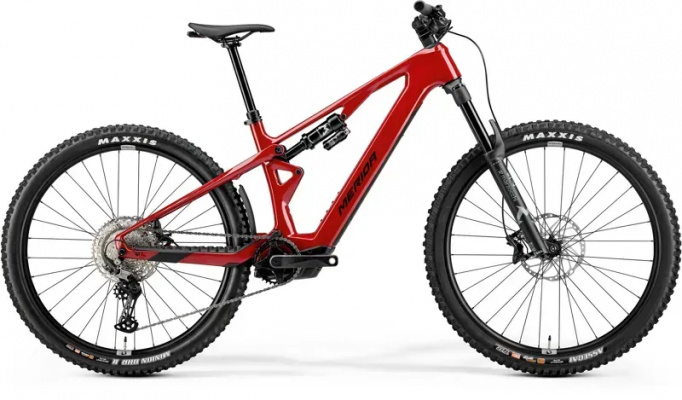
Merida eONE-SIXTY 6000
Lightweight e-enduro that rides like a proper trail bike, with agile handling and natural assist.
- Bosch SX motor: 55Nm torque, natural pedal feel
- Flexstay rear end cuts weight, sharpens response
- Marzocchi Z1 fork and Bomber Air shock: 160mm travel
- Flip chip lets you run full 29er or mullet setup
- 400Wh battery with optional 250Wh range extender
- Shimano Deore 12-speed and four-piston brakes
Merida eONE-SIXTY 6000 Deals
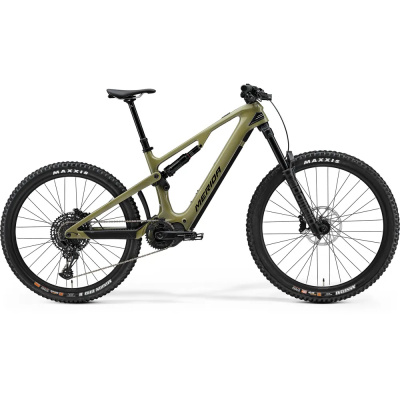

Prices and availability can change quickly. Delivery charges are not always included in listed prices.
Final price, stock status and delivery terms are set by retailer. We may receive a commission on purchases made.
Bikesy's Verdict
The Merida eONE-SIXTY SL 6000 is a rare thing: an e-bike that rides like a proper trail bike. The Bosch SX motor's natural assist, the lightweight carbon frame, and the lively flexstay rear end combine to deliver agile, playful handling that's closer to a traditional mountain bike than a heavy e-enduro sled. You're not hauling dead weight when the motor cuts out; you're riding something that feels responsive and engaging, with enough suspension travel and grip to handle technical terrain with confidence.
The stock build is well sorted - Marzocchi suspension punches above its price point, Shimano Deore drivetrain and brakes are dependable, and Maxxis rubber gives you grip where it counts. The flip chip lets you tailor wheel size to your local trails, and the option to add a range extender means you can tackle bigger missions without permanent weight penalty. It's not the most powerful e-bike, and the lower front end might take some getting used to on very steep descents, but for riders who want e-assist without sacrificing trail feel, the 6000 delivers.
Pros
- Agile, playful handling that feels closer to a traditional trail bike than a heavy e-enduro
- Lightweight carbon frame and Bosch SX motor deliver natural, human-scaled assist
- Marzocchi suspension is plush and controlled, punching above its price point
- Flip chip lets you run full 29er or mullet setup without compromising geometry
- Shimano Deore drivetrain and four-piston brakes are dependable and low-maintenance
Cons
- Bosch SX motor's 55Nm torque feels underpowered compared to full-power systems if you're a heavier rider or tackling the steepest climbs
- Lower front end can reduce confidence on very steep descents if you're not used to enduro geometry
- No dedicated mudguard or rack mounts if you're planning bikepacking or year-round commuting
About the Merida eONE-SIXTY 6000
Merida's eONE-SIXTY SL 6000 sits in that sweet spot where e-assist meets proper trail manners. Built around the compact Bosch Performance Line SX motor and a full carbon frame, it's lighter and livelier than the full-power e-enduro crowd, yet it still packs 160mm of travel front and rear. The result is a bike that climbs with poise, descends with confidence, and changes direction like you're riding something half its weight.
The SL designation signals Merida's intent: this isn't about brute-force motor grunt or maximum battery capacity. Instead, the 55Nm SX motor delivers a more human-scaled boost - enough to flatten steep pitches and extend your range, but calibrated to feel like an amplified version of your own legs rather than a moped with pedals. Paired with a 400Wh internal battery (and the option to bolt on a 250Wh extender), you're looking at serious trail time without the heft that usually comes with bigger cells.
What really sets the 6000 apart is how Merida has spec'd it. Marzocchi suspension front and rear keeps the price sensible while delivering plush, controlled travel. Shimano Deore drivetrain and four-piston brakes offer dependable performance ride after ride. Maxxis rubber - Assegai up front, Minion DHR II out back - gives you grip where it counts. And the flexstay rear end, which ditches traditional pivots in favour of engineered flex, shaves grams and adds a lively, responsive feel that's rare in this category.
Merida eONE-SIXTY 6000 geometry
Merida's Agilometer sizing system is reach-based, so you're choosing frame size by how you want the bike to handle rather than just your inseam. Longer reach options plant you further forward, opening up the cockpit for aggressive descending and high-speed stability. Shorter reaches tighten the wheelbase, quickening steering response and making the bike feel more playful in tight, technical sections.
The head angle is slack enough to inspire confidence when the trail tilts down, but not so laid-back that you're wrestling the front end through switchbacks. Seat angle is steep, positioning you over the bottom bracket for efficient climbing - critical when you're managing motor assist and battery range on long ascents. Chainstays are on the shorter side for an enduro bike, which sharpens cornering and keeps the rear wheel tucked in close when you're pumping through compressions or snapping the bike sideways.
The flip chip at the rear axle lets you toggle between a full 29er setup and a mullet configuration (29-inch front, 27.5-inch rear). Full 29er rolls faster and holds momentum over rough ground; mullet quickens the steering and drops the rear end slightly, making the bike feel more flickable. Both setups maintain the geometry, so you're not compromising handling when you swap wheels.
Bottom bracket drop is calibrated to balance pedal clearance with cornering stability. You'll feel planted through fast, off-camber turns, but you won't be clipping rocks on technical climbs if you're mindful of your line choice. Stack height puts the bars at a comfortable reach without forcing you into an overly upright position - important for maintaining control when the trail gets rowdy.
Component choices & upgrades
The stock build on the 6000 is well sorted. Marzocchi's Z1 fork and Bomber Air shock deliver 160mm of supple, controlled travel that handles everything from root-strewn singletrack to rock gardens. The air spring is easy to tune, and the damping offers enough adjustment to dial in your preferred feel without needing a degree in suspension kinematics. For most riders, this suspension will be more than adequate - plush on the small stuff, supportive on the big hits.
Shimano Deore drivetrain is dependable and shifts cleanly under load. The 10-51T cassette gives you a wide enough range to spin up steep climbs and still have gears left for flat sections. If you're chasing faster shifts or lighter weight, a move to Shimano XT or SRAM GX would sharpen things up, but it's not a necessity unless you're racing or riding at a level where every gram and every tenth of a second matters.
Four-piston Shimano Deore brakes offer strong, consistent stopping power with 220mm front and 203mm rear rotors. They're confidence-inspiring on long descents and modulate well when you need to feather speed through technical sections. If you're a heavier rider or you're regularly descending steep, sustained gradients, upgrading to Shimano XT or SRAM Code brakes would add a bit more power and heat management, but the stock setup is rarely the limiting factor.
Maxxis Assegai and Minion DHR II tyres are a proven pairing - grippy, predictable, and durable. The Assegai's ramped centre knobs roll reasonably well, while the side knobs hook up hard in corners. The DHR II out back balances traction with rolling efficiency. If you're riding drier, hardpack trails, you might swap the Assegai for a faster-rolling front tyre like a Maxxis Rekon or Schwalbe Nobby Nic, but for mixed or wet conditions, the stock rubber is spot on.
The Merida Expert eTR handlebar at 780mm width is a good starting point, though taller riders or those who prefer a wider stance might add another 20mm. The 40mm stem length is short enough to keep steering responsive without feeling twitchy. If you want to fine-tune cockpit feel, a stem swap is cheap and effective - go shorter for quicker steering, longer for more stability at speed.
The dropper post offers 125mm to 230mm of travel depending on frame size, which is generous. If you're on the cusp between sizes and you want maximum drop, size up. The saddle is functional but not plush; if you're doing long days in the saddle, a swap to something with more padding or a shape that suits your sit bones will pay dividends.
Where the Merida eONE-SIXTY 6000 excels
This bike is outstanding for riders who want e-assist without sacrificing trail feel. If your weekends involve long climbs followed by technical descents - think steep, rooty singletrack, rock gardens, and tight switchbacks - the 6000 delivers the agility and suspension performance to handle it all. The Bosch SX motor's natural assist means you're not fighting a heavy, sluggish bike when the motor cuts out at 25 km/h; instead, you're riding something that feels lively and responsive, closer to a traditional trail bike than a full-power e-enduro sled.
It's also excellent for riders who want to extend their range without adding a second battery. The 400Wh internal cell is enough for most day rides, and the option to bolt on a 250Wh extender means you can tackle bigger missions without range anxiety. The lightweight build - under 24kg for a full-carbon e-bike with 160mm travel - means you're not hauling unnecessary mass up every climb, which translates to better battery efficiency and less fatigue over long days.
The bike handles mixed terrain with ease. Fire roads, loose gravel, hardpack singletrack, wet roots, rock slabs - it's composed and predictable across the lot. The flexstay rear end adds a lively, active feel that makes it fun to pump through compressions and snap the bike sideways in corners. The flip chip lets you tailor wheel size to your local trails: full 29er for speed and momentum, mullet for tighter, more playful handling.
Where it's not ideal: if you're after maximum motor power for the steepest, longest climbs or you're a heavier rider who needs more grunt, the 55Nm SX motor will feel underpowered compared to full-power systems like Shimano's EP801 or Bosch's Performance Line CX. The lower front end - a consequence of the slack head angle and enduro geometry - can feel a bit low on very steep descents, which might affect confidence if you're not used to that position. And if you're planning to ride in extremely muddy conditions or you want full fenders and racks for bikepacking, the lack of dedicated mounts will limit your options.
Merida eONE-SIXTY 6000 FAQs
What is the range of the Merida eONE-SIXTY 6000?
The 400Wh internal battery typically delivers 40 - 60km of trail riding, depending on terrain, rider weight, and assist mode. Add the optional 250Wh range extender and you're looking at 60 - 90km or more. Eco mode stretches range; Turbo drains it faster.
Is the Merida eONE-SIXTY 6000 good for climbing?
Yes. The steep seat angle positions you over the bottom bracket for efficient pedalling, and the Bosch SX motor's 55Nm torque is enough to flatten most climbs. It won't match the brute force of full-power motors, but the lightweight build and natural assist make it a capable climber.
What is the difference between the Merida eONE-SIXTY SL and the regular eONE-SIXTY?
The SL models use the lighter, lower-power Bosch SX motor (55Nm) and smaller batteries (400Wh), resulting in a lighter, more agile bike. Regular eONE-SIXTY models use Shimano's EP801 motor (85Nm) with larger 600Wh batteries, offering more power and range but at the cost of added weight and a less natural ride feel.
What motor does the Merida eONE-SIXTY 6000 use?
The 2025 SL 6000 uses the Bosch Performance Line SX motor, which delivers 55Nm of torque and up to 600W peak power. It's designed for a more natural, human-scaled assist rather than maximum grunt.
Can I fit different wheel sizes on the Merida eONE-SIXTY 6000?
Yes. The flip chip at the rear axle lets you run either a full 29er setup or a mullet configuration (29-inch front, 27.5-inch rear) while maintaining the geometry. Maximum tyre clearance is 29×2.6 inches on the frame and 29×3.0 inches on the fork.
How much does the Merida eONE-SIXTY 6000 weigh?
The SL 6000 weighs approximately 23.6kg. That's light for a full-suspension e-bike with 160mm travel and a carbon frame, contributing to its agile, responsive handling.
What is the Merida eONE-SIXTY 6000 best used for?
Enduro and aggressive trail riding. It's built for long climbs, technical descents, and mixed terrain where you want e-assist without sacrificing agility or natural ride feel. It's not a race bike, but it's fast and capable enough for most riders tackling demanding off-road trails.
Key Features & Benefits
- Bosch Performance Line SX motor (55Nm): Natural, human-scaled assist that feels like amplified pedalling rather than a moped, keeping the ride lively and engaging
- Flexstay rear suspension design: Eliminates traditional pivots to cut weight and maintenance while adding a responsive, active feel through compressions and corners
- Marzocchi Z1 fork and Bomber Air shock (160mm travel): Plush, controlled suspension that handles technical terrain and big hits without the cost or complexity of top-tier components
- Flip chip for 29er or mullet wheel setup: Tailor handling to your local trails - full 29er for speed and momentum, mullet for tighter, more playful steering
- 400Wh battery with optional 250Wh extender: Enough range for most day rides, with the flexibility to add capacity for bigger missions without permanent weight penalty
Merida eONE-SIXTY 6000 2024 differences
The 2024 eONE-SIXTY 6000 (non-SL) used Shimano's EP801 motor delivering 85Nm of torque paired with a larger 600Wh integrated battery, offering significantly more power and range than the 2025 SL model's Bosch SX setup. Suspension was upgraded to RockShox Domain Gold RC fork with 170mm travel and RockShox Super Deluxe Select shock, compared to the 2025 model's Marzocchi Z1 (160mm) and Bomber Air. The drivetrain was SRAM NX Eagle 12-speed rather than Shimano Deore, and brakes were SRAM DB8 hydraulic discs instead of Shimano four-piston units.
The 2024 model was heavier - closer to 24 - 25kg - due to the larger motor, bigger battery, and beefier suspension. It was aimed squarely at riders who wanted maximum motor power and battery capacity for the longest, steepest climbs, whereas the 2025 SL 6000 prioritises lighter weight, more natural assist, and agile handling. The frame design and geometry remained broadly similar, with the same flexstay rear end and flip-chip wheel-size versatility, but the 2024 model's extra power and weight shifted the character towards full-power e-enduro rather than lightweight trail bike.
Alternatives to Consider
Within Merida's own lineup, the eONE-SIXTY SL 8000 steps up with SRAM GX Eagle Transmission AXS wireless shifting, RockShox suspension, and lighter wheels - worth considering if you want sharper components and don't mind the price jump. The eONE-SIXTY SL 10K goes further still with top-tier Fox suspension and SRAM X0 drivetrain, but you're paying a premium for marginal gains unless you're racing or riding at a very high level. If you want more motor power and battery capacity, Merida's non-SL eONE-SIXTY 875 uses Shimano's EP801 motor (85Nm) and a 600Wh battery, but it's heavier and less agile - better for riders who prioritise grunt over nimble handling.
Cross-brand, the Specialized Turbo Levo SL is the closest peer: similar lightweight philosophy, natural assist, and trail-focused geometry. The Levo SL uses Specialized's own SL 1.1 motor (35Nm), which is even lighter but less powerful than the Bosch SX - choose it if you want the lightest possible e-bike and you're happy with minimal assist. The Trek Fuel EXe 9.7 offers a TQ motor (50Nm) and carbon frame with similar travel, but it's pricier and the motor's power delivery is slightly less refined. The Orbea Rise M20 uses Shimano's EP801-RS motor (60Nm) and sits between the SL and full-power camps - more power than the Bosch SX, but still lighter and more agile than traditional e-enduros. Finally, the Giant Trance X E+ 2 delivers Yamaha's PW-X3 motor (85Nm) and a 500Wh battery at a competitive price, but it's heavier and less playful - better if you want maximum power and don't mind the trade-off in handling.
Reviews
Marzocchi suspension delivers a plush, controlled ride that handles technical terrain with composure. The Z1 fork and Bomber Air shock soak up roots, rocks, and compressions without feeling harsh or wallowy, and the air spring is easy to tune for rider weight and trail conditions. Damping adjustments are straightforward - low-speed compression and rebound dials let you dial in support and control without needing a suspension degree.
Bosch SX motor's 55Nm torque feels natural and human-scaled. It amplifies your pedalling rather than overpowering it, which keeps the ride engaging and responsive. When the assist cuts out at 25 km/h, you're not suddenly hauling a dead weight - the bike still feels lively and easy to pedal. Turbo mode flattens steep climbs; Eco mode stretches battery range on longer rides. Peak power of 600W is enough for most trail situations, though heavier riders or those tackling the steepest, longest climbs might wish for more grunt.
Flexstay rear end adds a lively, active feel that's rare in this category. Because there are no traditional pivots, the rear triangle flexes slightly under load, which translates to a responsive, playful character through compressions and corners. You can pump the bike through undulations and snap it sideways in tight sections without fighting inertia or sluggish suspension. It's a subtle but noticeable difference that makes the bike feel more like a traditional trail bike than a heavy e-enduro sled.
Geometry strikes a balance between climbing efficiency and descending confidence. The steep seat angle positions you over the bottom bracket for efficient pedalling, which is critical when you're managing motor assist and battery range on long ascents. Head angle is slack enough to inspire confidence when the trail tilts down, but not so laid-back that you're wrestling the front end through switchbacks. Shorter chainstays sharpen cornering and keep the rear wheel tucked in close, making the bike feel nimble and responsive.
When you're climbing, the bike feels balanced and composed. Weight distribution is neutral, so the front wheel stays planted on steep, technical pitches. The Bosch SX motor's assist is smooth and predictable, ramping up power as you increase cadence. You're not fighting the bike or the motor - it just feels like you've got stronger legs. On long fire-road climbs, the lightweight build and efficient geometry mean you're not hauling unnecessary mass, which translates to better battery efficiency and less fatigue.
Descending, the bike is confident and stable. The slack head angle and generous front-centre measurement keep the front wheel tracking predictably through rough sections. Maxxis Assegai up front hooks up hard in corners, and the Minion DHR II out back balances traction with rolling efficiency. The lower front end - a consequence of the enduro geometry - can feel a bit low on very steep descents, which might affect confidence if you're not used to that position. But for most trail riding, the bike is composed and predictable, letting you carry speed through technical sections without feeling sketchy.
Flip chip at the rear axle lets you toggle between full 29er and mullet setups. Full 29er rolls faster and holds momentum over rough ground, which is ideal for longer rides and varied terrain. Mullet quickens the steering and drops the rear end slightly, making the bike feel more flickable and playful in tight, technical sections. Both setups maintain the geometry, so you're not compromising handling when you swap wheels. It's a useful feature if your local trails vary or you want to experiment with different ride characteristics.
Shimano Deore drivetrain shifts cleanly under load and requires minimal maintenance. The 10-51T cassette gives you a wide enough range to spin up steep climbs and still have gears left for flat sections. Four-piston Deore brakes offer strong, consistent stopping power with good modulation - you can feather speed through technical sections or haul the bike to a stop on steep descents without feeling like you're fighting the levers. The 220mm front and 203mm rear rotors provide plenty of heat management for long descents.
Full Specification
| Frame Material | Full Carbon Fibre (CF4) |
| Motor | Bosch Performance Line SX, 55Nm torque, 600W peak power |
| Battery | 400Wh integrated |
| Fork | Marzocchi Z1 eMTB, 160mm travel, air spring, 44mm offset |
| Rear Shock | Marzocchi Bomber Air, 160mm travel, air spring with platform damping |
| Drivetrain | Shimano Deore, 12-speed |
| Cassette | 10-51T |
| Crankset | FSA CK-220, 165mm |
| Brakes | Shimano Deore M6120, 4-piston hydraulic disc |
| Brake Rotors | 220mm front, 203mm rear |
| Rims | Merida Expert TR II, 28mm internal width, tubeless ready |
| Hubs | Merida Expert TR, front 110x15mm, rear 148x12mm Boost |
| Front Tyre | Maxxis Assegai, 29×2.5", 3C MaxxGrip EXO+ |
| Rear Tyre | Maxxis Minion DHR II, 29×2.4", 3C MaxxTerra EXO+ |
| Handlebar | Merida Expert eTR, 780mm width |
| Stem | Merida Expert eTR II, 35mm diameter, 40mm length |
| Seatpost | Merida Expert TR II, adjustable travel (125 - 230mm depending on size) |
| Saddle | Merida Comp SL |
| Headset | Acros ICR Merida Integrated with Blocklock |
| Bottom Bracket | BSA threaded, 73mm |
| Rear Axle | 148×12mm Boost |
| Maximum Tyre Clearance | 29" × 2.6" (frame), 29" × 3.0" (fork) |
| Approximate Weight | 20.9 kg |