

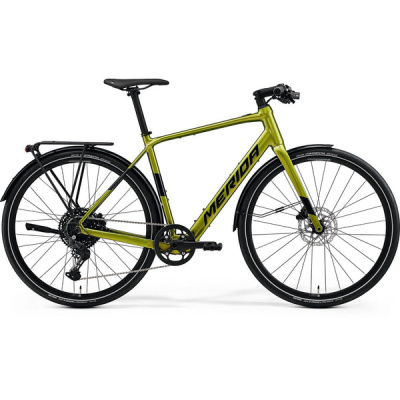
Merida eSPEEDER 400 EQ
Flatten your commute and extend your fitness rides with natural, intuitive assist and practical urban equipment.
- Mahle X35+ hub motor: whisper-quiet, natural pedal feel
- Integrated 250Wh battery keeps the silhouette sleek
- Mudguards, rack and lights fitted as standard
- Carbon fork and triple-butted aluminium frame
- Continental Contact Urban 40c tyres: grip and comfort
- Weighs around 14 - 15.5 kg depending on size
Merida eSPEEDER 400 EQ Deals

Prices and availability can change quickly. Delivery charges are not always included in listed prices.
Final price, stock status and delivery terms are set by retailer. We may receive a commission on purchases made.
Bikesy's Verdict
The Merida eSPEEDER 400 EQ nails the brief for riders who want electric assistance that feels like a tailwind rather than a motor. The Mahle X35+ system rewards smooth pedalling and higher cadence, so if you're the sort who spins rather than mashes, you'll find the assist intuitive and unobtrusive. The integrated battery and discreet hub motor mean you can lock the bike outside a café without advertising that it's electric, and the relatively low weight makes it manageable when you're hauling it up stairs or onto a train.
Mudguards, rack and lights arrive fitted, which means you can ride straight out of the shop and get on with your commute or weekend loop without hunting for accessories. The stable geometry and comfortable position suit longer rides without tipping into sit-up-and-beg territory, and the 40c tyres handle mixed surfaces with confidence. It's not a do-everything adventure rig or a high-torque mountain climber, but for the rider who values style, practicality and a connected pedal feel, the eSPEEDER 400 EQ hits the mark.
Pros
- Light for an e-bike at 14 - 15.5 kg, easy to manoeuvre and lift
- Mahle X35+ motor delivers natural, intuitive assist that rewards your effort
- Mudguards, rack and lights fitted as standard - ready to ride
- Sleek, integrated design hides the battery and motor
- Stable, comfortable geometry suits commuting and fitness rides
Cons
- 250 Wh battery offers modest range if you're planning very long rides without a range extender
- Rigid fork and firm tyres transmit rough surfaces more directly than a suspension setup
- Mahle motor favours higher cadence; less low-end torque than mid-drive systems if you're grinding steep, slow climbs
About the Merida eSPEEDER 400 EQ
The Merida eSPEEDER 400 EQ slots into that sweet spot where fitness bike meets practical commuter, with just enough electric assistance to flatten your morning hills without turning the ride into a moped impression. Built around Mahle's discreet X35+ rear hub motor and a downtube-integrated 250 Wh battery, it delivers a natural pedal feel that rewards your effort rather than replacing it. The hydroformed triple-butted aluminium frame and carbon fork keep weight sensible - around 14 to 15.5 kg depending on size - so you're not wrestling a barge when the battery runs dry or you simply fancy a workout.
What sets the eSPEEDER 400 EQ apart is the EQ suffix: mudguards, rear rack and lights arrive fitted, which means you can ride straight out of the shop without hunting for bolts or bodging zip-ties. The silhouette stays clean thanks to internal cable routing and that hidden battery, so passers-by won't clock you're riding electric until you ghost past them on the climb. It's aimed squarely at commuters who want to arrive fresh, fitness riders chasing a bit more range, and anyone who values a bike that looks fast standing still but doesn't demand lycra or a support vehicle.
We've spent time examining the eSPEEDER 400 EQ at shows and in showrooms, poring over trusted test coverage, and comparing it against the broader fitness e-bike field. The consensus is clear: this is a bike that prioritises a connected, rider-led experience over brute torque or maximum battery capacity. If you want to pedal harder and feel the road, rather than twist a throttle and zone out, the eSPEEDER 400 EQ speaks your language.
Merida eSPEEDER 400 EQ geometry
The eSPEEDER 400 EQ's geometry leans towards upright comfort without tipping into sit-up-and-beg territory. Head angles progress from 69.5° on the XS to 71.5° on the L, which translates to stable, predictable steering that won't dart into traffic gaps you didn't intend. Reach figures climb steadily from 374 mm to 416 mm across the size run, paired with generous stack that puts your hands higher than a pure road position but lower than a Dutch city bike. The result is a posture that keeps your back happy over longer rides while still letting you lean into effort when the road tilts up.
Chainstays hold steady at 431 mm across all sizes, anchoring the rear end and giving you a planted feel when you're out of the saddle or carrying a loaded rack. The wheelbase stretches from just over a metre on the XS to nearly 1.08 m on the L, which smooths out high-speed stability and prevents the front wheel feeling twitchy when you're threading through urban obstacles. Bottom bracket drop sits at 70 mm, a middle-ground figure that balances cornering clearance with a low centre of gravity - useful when the motor's extra weight lives in the rear hub.
In practice, this geometry delivers a ride that feels composed rather than nervous, with enough length to absorb road imperfections and enough height to keep your neck from cramping on longer commutes. You're not crouched for aero gains, but you're not bolt upright either; it's a Goldilocks position that works whether you're chasing a personal best on your favourite loop or simply trying to beat the rain home.
Component choices & upgrades
The stock build on the eSPEEDER 400 EQ is already well sorted for its intended use. Shimano's Deore or CUES ten-speed drivetrain - depending on model year - offers a sensible 42T chainring paired with an 11-46T or 11-48T cassette, which covers most urban gradients and rolling countryside without leaving you spinning out or grinding to a halt. The Mahle motor favours a higher cadence anyway, so the gearing suits the system's character. Shimano MT-200 hydraulic disc brakes with 180 mm rotors front and rear deliver reliable stopping power in all weathers, and the two-piston callipers are easy to service when pads wear down.
Continental Contact Urban tyres in 700×40c strike a practical balance between grip, comfort and rolling resistance. They're not the lightest or fastest, but they're durable and confidence-inspiring on wet tarmac or the occasional towpath detour. The carbon seatpost adds a touch of compliance without the weight penalty of a suspension post, and the Merida-branded aluminium cockpit is stiff enough to feel direct without transmitting every paving slab joint into your palms.
If you're chasing upgrades, start with tyres: a lighter, suppler 40c or even a 42c slick will sharpen the ride feel and drop a bit of rotating weight. When the stock saddle doesn't suit your sit bones, swap it - comfort is personal, and a good perch transforms long rides. Pedals are basic platforms, so if you're clipping in, budget for your preferred system. Beyond that, the eSPEEDER 400 EQ doesn't cry out for immediate changes; the spec is pitched to work well together, and throwing money at marginal gains makes less sense than simply riding the bike as intended.
Where the Merida eSPEEDER 400 EQ excels
The eSPEEDER 400 EQ is outstanding at urban commuting and fitness rides where you want electric assistance that feels like a tailwind rather than a motor. The Mahle X35+ system rewards smooth pedalling and higher cadence, so if you're the sort of rider who spins rather than mashes, you'll find the assist intuitive and unobtrusive. The integrated battery and discreet hub motor mean you can lock the bike outside a café without advertising that it's electric, and the relatively low weight makes it manageable when you're hauling it up stairs or onto a train.
It also shines on mixed-surface rides - think canal towpaths, gravel tracks and quiet lanes - where the 40c tyres and stable geometry keep you comfortable and confident. The rack and mudguards mean you can carry a change of clothes, a laptop or a week's shopping without resorting to a rucksack, and the lights let you extend your ride into dusk without fumbling for batteries. If your typical ride involves a mix of tarmac, hardpack and the occasional potholed side street, the eSPEEDER 400 EQ handles it all without drama.
Where it's less ideal is on very long, hilly rides or aggressive off-road terrain. The 250 Wh battery offers enough range for most commutes and weekend loops - typically 40 to 80 km depending on assist level and terrain - but if you're planning all-day epics, you'll want the optional 208 Wh range extender or a charging stop. The rigid carbon fork and firm tyres mean rough, broken surfaces get transmitted straight to your hands and backside; this isn't a bike for sustained gravel racing or technical singletrack. And if you're after maximum low-end torque for steep, slow climbs, the Mahle motor's 40 Nm and preference for higher cadence might leave you wanting more grunt than a mid-drive system would deliver.
In short, the eSPEEDER 400 EQ excels when you want a bike that looks, feels and rides like a traditional fitness machine, with just enough electric help to extend your range, flatten your commute or keep you fresh for the ride home. It's not a do-everything adventure rig or a high-torque mountain climber, but for the rider who values style, practicality and a connected pedal feel, it hits the mark.
Merida eSPEEDER 400 EQ FAQs
What is the range of the Merida eSPEEDER 400 EQ?
Expect around 40 to 80 km on a full charge, depending on assist level, terrain and your own effort. The Mahle system rewards efficient pedalling, so if you're spinning smoothly and using lower assist modes, you'll stretch the battery further. For longer rides, Merida offers an optional 208 Wh range extender that clips into a bottle-cage mount.
Is the Merida eSPEEDER 400 EQ good for hills?
It handles moderate climbs well, especially if you maintain a higher cadence to match the motor's character. The 40 Nm of torque and ten-speed gearing cope with urban hills and rolling countryside without fuss. Very steep, sustained climbs might expose the motor's preference for cadence over brute force, but for most riders and most gradients, it's more than adequate.
What type of riding is the Merida eSPEEDER 400 EQ best suited for?
Urban commuting, fitness rides, light touring and mixed-surface exploration are its sweet spots. The upright geometry, practical equipment and natural assist make it ideal for daily use, weekend loops and anything that involves a bit of tarmac, a bit of gravel and perhaps a café stop. It's less suited to aggressive off-road riding or ultra-long, unsupported adventures.
How much does the Merida eSPEEDER 400 EQ weigh?
Around 14 to 15.5 kg depending on frame size and exact specification. That's light for an e-bike, which makes it easier to manoeuvre, lift and pedal when the battery's flat or you simply want a workout.
Can I fit wider tyres on the Merida eSPEEDER 400 EQ?
The frame clears up to 700×45c without mudguards, or 700×42c with guards fitted. That gives you a bit of room to experiment with volume and tread pattern, though you won't be squeezing in full-on gravel tyres. A 42c or 45c slick or light-tread option would add comfort and grip without compromising the bike's character.
What is the motor power and torque of the Merida eSPEEDER 400 EQ?
The Mahle ebikemotion X35+ rear hub motor is rated at 250 W nominal power and delivers up to 40 Nm of torque. It's designed for a natural, rider-amplified feel rather than maximum grunt, and it favours higher cadence over low-speed slogging. Assistance cuts out at the legal 25 km/h limit.
Is the battery on the Merida eSPEEDER 400 EQ removable?
The 250 Wh battery is integrated into the downtube and can be removed for charging or security, though it's designed to stay in place for most riders. You charge it via a port on the frame, so there's no need to wrestle it out every time unless you prefer to charge indoors or want to lighten the bike for storage.
What are the main differences between the Merida Speeder and eSPEEDER?
The Speeder is a purely pedal-powered fitness bike, lighter and simpler, aimed at riders who don't want or need electric assistance. The eSPEEDER adds the Mahle motor system, integrated battery and a bit of extra weight, but retains a similar geometry and ride character. If you want the option to extend your range or flatten hills without changing your pedalling style, the eSPEEDER is the one; if you're chasing outright lightness and simplicity, stick with the Speeder.
Key Features & Benefits
- Mahle ebikemotion X35+ rear hub motor (40 Nm, 250 W): Whisper-quiet, natural pedal assist that amplifies your effort without feeling like a moped - ideal for riders who want to stay connected to the ride.
- Integrated 250 Wh downtube battery: Keeps the silhouette clean and the weight balanced, so the bike looks and handles like a traditional fitness machine.
- EQ package: mudguards, rear rack, integrated lights: Ride straight out of the shop with everything you need for commuting and practical transport - no hunting for accessories or bodging mounts.
- Hydroformed triple-butted aluminium frame and carbon fork: Light, stiff and durable construction that keeps overall weight sensible and delivers responsive handling without harshness.
- Continental Contact Urban 700×40c tyres: Durable, grippy rubber that handles wet tarmac, towpaths and light gravel with confidence, plus enough volume for a comfortable ride.
Merida eSPEEDER 400 EQ 2023 and 2021 differences
The 2024 model introduced Shimano CUES U6000 shifters and CUES 6000 rear derailleur on some specifications, replacing the Deore M4100 and M5120 components found on 2023 builds. The cassette range also expanded slightly, with some 2024 versions offering an 11-48T spread compared to the 11-46T on earlier models. Core frame design, motor system and battery capacity remained consistent across 2023 and 2024.
The 2021 model established the eSPEEDER 400 EQ's formula: Mahle X35+ motor, 250 Wh integrated battery, hydroformed aluminium frame with carbon fork, Shimano Deore ten-speed drivetrain and Shimano MT-200 hydraulic disc brakes. Weight was cited around 15.5 kg, slightly higher than later iterations as Merida refined the frame layup and component choices. The EQ package - mudguards, rack and lights - has been a constant across all model years, underscoring the bike's practical, ready-to-ride ethos.
Alternatives to Consider
Within Merida's own range, the standard Merida Speeder 400 offers a purely pedal-powered option if you want to shed the motor and battery for outright lightness and simplicity. It shares similar geometry and practical features but weighs less and costs less, making it a strong choice for riders who don't need electric assistance. Step up to the Merida eSPEEDER 600 EQ and you'll find a higher-spec drivetrain, better brakes and often a more refined finishing kit, though the core motor system and frame remain closely related.
Cross-brand, the Specialized Turbo Vado SL 4.0 EQ is a direct rival, built around Specialized's own lightweight motor system and offering a similar blend of fitness-bike handling and practical urban equipment. The Trek FX+ 2 pitches slightly more towards comfort and utility, with a more upright position and a Bosch motor system that delivers stronger low-end torque if you're tackling steeper climbs. The Cube Kathmandu Hybrid One 500 leans into light touring and all-day comfort, with a larger battery and more relaxed geometry, while the Orbea Vibe H30 EQ offers a similar Mahle-powered experience with Orbea's own frame design and component choices. Each brings a slightly different balance of weight, assist character and intended use, so your choice hinges on whether you prioritise natural pedal feel, maximum range or outright practicality.
Reviews
Stable geometry and a planted rear end inspire confidence when you're threading through traffic or carrying a loaded rack. The Mahle motor's smooth, intuitive assist rewards efficient pedalling, making it feel less like you're riding an e-bike and more like you've caught a helpful tailwind. Hydraulic disc brakes deliver reliable stopping power in all weathers, and the two-piston callipers are straightforward to service when pads wear down.
Continental Contact Urban tyres strike a practical balance between grip, durability and rolling resistance, handling wet tarmac and the occasional towpath detour without drama. The carbon fork and triple-butted aluminium frame keep weight sensible for an e-bike, which makes the eSPEEDER 400 EQ easier to manoeuvre, lift and pedal when the battery's flat or you simply want a workout. Internal cable routing and the integrated battery keep the silhouette clean, so passers-by won't clock you're riding electric until you ghost past them on the climb.
When the road turns rough or broken, the rigid fork and firm tyres transmit imperfections more directly than a suspension setup would. The 250 Wh battery offers enough range for most commutes and weekend loops, but very long, hilly rides might require careful assist management or the optional range extender. Because the Mahle system favours higher cadence over brute torque, steep, slow climbs can feel less effortless than they would on a mid-drive e-bike with more low-end grunt.
Shimano's ten-speed drivetrain - whether Deore or CUES depending on model year - covers most urban gradients and rolling countryside without leaving you spinning out or grinding to a halt. The rack, mudguards and lights arrive fitted as standard, which means you can ride straight out of the shop without hunting for bolts or bodging zip-ties. Overall, the eSPEEDER 400 EQ delivers a connected, rider-led experience that prioritises natural pedal feel and practical equipment over maximum battery capacity or brute-force assist.
Full Specification
| Spec | Value |
|---|---|
| Frame Material | Hydroformed 6066 triple-butted aluminium |
| Frame Design | eSPEEDER LITE II, integrated battery chamber in downtube, internal cable routing |
| Frame Features | Mounts for mudguards, rack, and kickstand |
| Tyre Clearance | 700x45C without fenders; 700x42C with fenders |
| Available Sizes | XS, S, M, L, XL |
| Bottom Bracket | BSA |
| Rear Axle | 135x9mm QR |
| Fork | Merida Mission CX CF3 carbon, rigid |
| Drivetrain | 1x10 speed |
| Shifters | Shimano Deore M4100 or Shimano CUES U6000 |
| Rear Derailleur | Shimano Deore M5120 or Shimano CUES 6000 |
| Crankset | Merida Comp TK, 42T chainring |
| Crank Length | 165mm (XS); 170mm (S/M/L/XL) |
| Cassette | Shimano CS-M4100 11-46T or Shimano LG300 11-48T |
| Chain | KMC e10S or Shimano LG500 |
| Brakes | Hydraulic disc |
| Brake Calipers | Shimano MT-200 / UR300, 2-piston |
| Rotors (Front) | 180mm, Shimano RT10 or RT26 |
| Rotors (Rear) | 180mm, Shimano RT10 or RT26 |
| Rims | Merida Comp SL, 17mm internal width, 22mm height |
| Hubs (Front) | VP CLK170F or Shimano HB-TC500, 100x12mm thru-axle |
| Hubs (Rear) | Mahle X35+ integrated motor hub |
| Spokes | Black stainless steel |
| Tyres (Front) | Continental Contact Urban, 700x40c |
| Tyres (Rear) | Continental Contact Urban, 700x40c |
| Handlebar | Merida Expert CC, aluminium, 620mm width, flat |
| Stem | Merida Expert IR II, aluminium, 31.8mm diameter, 5° rise |
| Stem Length | 80mm (XS); 90mm (S); 100mm (SM/ML); 110mm (L/XL) |
| Headset | VP MH-P16 or Merida 8158 |
| Seatpost | Merida Expert CC, carbon, 30.9mm diameter, 0mm setback |
| Saddle | Merida Comp SL |
| Pedals | VP VPE-891 |
| Motor System | Mahle ebikemotion X35+ hub motor, 40 Nm torque |
| Battery | Integrated 250Wh Mahle battery in downtube |
| Motor Assist Limit | 25 km/h (15.5 mph) |
| Weight (Approx) | 14.0 - 15.5 kg |