
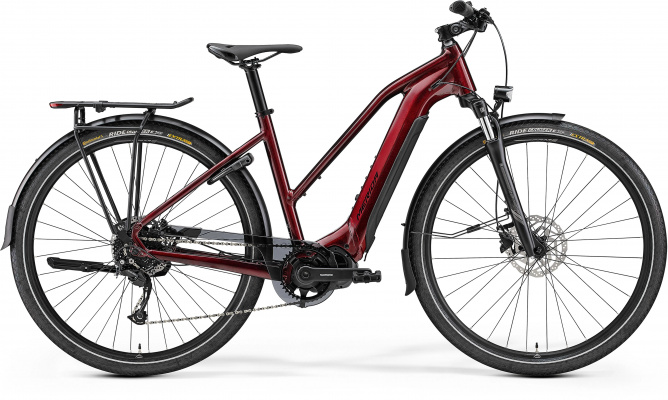
Merida eSPRESSO 400 EQ
Flatten urban hills, carry the shopping, and cruise gravel paths with smooth motor assistance and practical, everyday comfort.
- Shimano EP6 motor: 85Nm torque for effortless climbs
- 504Wh integrated battery keeps centre of gravity low
- Low step-through frame for easy mounting and dismounting
- Fully equipped: mudguards, lights, rack, lock, kickstand included
- Wide tyres and suspension fork smooth rough surfaces
- 150 kg system weight capacity for commuting and touring
Merida eSPRESSO 400 EQ Deals



Prices and availability can change quickly. Delivery charges are not always included in listed prices.
Final price, stock status and delivery terms are set by retailer. We may receive a commission on purchases made.
Bikesy's Verdict
The Merida eSPRESSO 400 EQ is a practical, well-equipped city e-bike that makes daily riding easier, more comfortable, and genuinely enjoyable. Shimano's punchy EP6 motor flattens hills and headwinds, the low step-through frame makes hopping on and off effortless, and the full EQ package means you're ready to ride straight out of the box. It's stable, forgiving, and capable enough to handle light trails and gravel paths without feeling out of its depth, while the generous system weight capacity and robust rear rack make it a solid choice for commuting, touring, or simply getting around town with shopping and gear in tow.
It's not a performance bike, and it's not trying to be. The weight and upright geometry mean it's not going to keep pace with lighter, racier hybrids once the motor cuts out, and the relaxed handling won't suit riders chasing technical singletrack thrills. But if you're after a versatile, accessible, and thoroughly practical e-bike that works as a daily tool rather than a weekend toy, the eSPRESSO 400 EQ delivers exactly what it promises. It's a bike that makes cycling feel less like a chore and more like the sensible, enjoyable choice it should be.
Pros
- Shimano EP6 motor delivers 85Nm of torque for strong, smooth assistance
- Fully equipped with mudguards, lights, rack, lock, and kickstand straight out of the box
- Low step-through frame and upright geometry make mounting, dismounting, and riding comfortable and accessible
- Stable, planted handling with low centre of gravity suits urban riding and light touring
- 150 kg system weight capacity accommodates heavier riders and loaded panniers
Cons
- Heavier than non-assisted hybrids if you're chasing speed beyond the 25 km/h assist limit
- Suspension fork can feel soft on smooth tarmac when you're not dealing with rough surfaces
- Relaxed geometry and modest fork travel aren't suited to technical mountain bike trails
About the Merida eSPRESSO 400 EQ
The eSPRESSO 400 EQ is Merida's answer to the question nobody quite asked but everyone needed answering: what if your daily commute didn't feel like a chore? Built around Shimano's punchy EP6 motor and a 504Wh battery tucked neatly into the downtube, this aluminium city bike delivers 85 Newton-metres of torque through a low step-through frame that makes hopping on and off at traffic lights feel less like gymnastics and more like, well, just riding a bike. The EQ badge isn't marketing fluff - it means you're getting mudguards, lights front and rear, a sturdy rack, a lock mount, and a kickstand straight out of the box. No hunting for accessories, no compatibility headaches, just turn the key and go.
Merida's Energy Cradle frame design wraps around that integrated battery to keep the centre of gravity planted low, which translates to stable, confidence-inspiring handling even when you're threading through rush-hour traffic or navigating a potholed cycle path with a week's shopping strapped to the back. The geometry is relaxed without being sluggish, the wide tyres soak up the worst of Britain's crumbling tarmac, and the suspension fork takes the sting out of kerb drops and cobbled shortcuts. It's not trying to be a mountain bike or a road racer - it's a practical, versatile tool for getting places without arriving sweaty, stressed, or late.
What sets the eSPRESSO 400 EQ apart is how it balances capability with accessibility. The low step-through frame suits riders who value ease of use over aggressive positioning, while the 150-kilogram system weight capacity means you can load it up for a weekend away or a big shop without worrying about bending the rack. The Shimano motor's assistance cuts off at the legal 25 km/h limit, but that's plenty fast enough for urban riding, and the smooth power delivery means you're not lurching forward every time you twist the throttle - sorry, pedal. It's a bike that works with you, not against you, and that's worth more than any spec sheet can convey.
Merida eSPRESSO 400 EQ geometry
The eSPRESSO 400 EQ's geometry is drawn with comfort and stability in mind, not speed records. The head angle sits around 69.5 to 70 degrees depending on size, which is slack enough to inspire confidence when you're navigating uneven surfaces or carrying a load, but not so laid-back that the steering feels vague. The reach figures are modest - 410 mm on the XS, stretching to 436 mm on the L - so you're sitting more upright than you would on a drop-bar tourer or a sporty hybrid. That upright posture opens up your chest, makes shoulder-checking easier in traffic, and reduces strain on your lower back over longer rides.
Stack heights are generous, climbing from 649 mm on the XS to 712 mm on the L, which pairs with the low step-through design to create a riding position that's accessible and relaxed. You're not hunched over the bars, you're surveying the road ahead with a clear line of sight. The chainstays are a consistent 478 mm across the size range, which keeps the rear end planted and predictable, especially when you've got panniers loaded or you're climbing a steep urban gradient. The wheelbase stretches out to around 1144 mm on the smallest frame and 1187 mm on the L, lending the bike a stable, planted feel that's particularly reassuring when you're riding at lower speeds or manoeuvring through tight spaces.
That low bottom bracket drop - 75 mm - keeps your weight centred and low, which is crucial when you're dealing with the extra mass of the motor and battery. It's not a bike that wants to be thrown into tight switchbacks or railed through corners at speed, but it's supremely composed when you're threading through bollards, navigating a crowded bike lane, or simply cruising along a canal towpath. The geometry works in concert with the wide tyres and suspension fork to deliver a ride that feels solid, predictable, and forgiving, which is exactly what you want when you're using a bike as a daily tool rather than a weekend toy.
Component choices & upgrades
The stock build on the eSPRESSO 400 EQ is already well sorted for its intended use. Shimano's CUES U4000 drivetrain offers nine speeds with an 11-46T cassette, which is more than enough range for urban riding and light trail excursions. The Shimano MT-200 hydraulic disc brakes with 180 mm rotors front and rear deliver reliable stopping power in all conditions, and the two-piston callipers are easy to maintain. The SR Suntour NEX E25 fork with 63 mm of coil-sprung travel isn't going to win any awards for sensitivity, but it does a solid job of smoothing out rough roads and taking the edge off kerb drops. The Merida-branded aluminium cockpit - 660 mm or 680 mm bars, adjustable stem, comfortable grips - is functional and durable, and the saddle is designed with comfort in mind, using recycled materials to boot.
If you're planning to rack up serious miles or venture onto rougher terrain more regularly, there are a few sensible upgrades worth considering. Swapping the stock tyres for something with a bit more grip or puncture protection - perhaps a Schwalbe Marathon Plus or a Continental Contact Urban - can make a noticeable difference if you're dealing with glass-strewn cycle lanes or gravel paths. The saddle is a personal thing; if the stock perch doesn't suit your sit bones after a few longer rides, a Brooks B17 or a Selle Royal Lookin offer more tailored comfort. The fork is adequate, but if you're regularly riding rougher surfaces, a fork with adjustable preload or a bit more travel could improve compliance without adding much weight.
For riders who want to maximise the bike's utility, consider upgrading the lighting to something brighter if you're riding in poorly lit areas, or adding a set of Ortlieb panniers to take full advantage of that robust rear rack. The stock pedals are basic flats; if you're comfortable with clipless, a set of Shimano SPD pedals and shoes will improve pedalling efficiency, though the motor's assistance means you're not losing much by sticking with flats and trainers. The key is not to overthink it - the eSPRESSO 400 EQ is designed to work straight out of the box, and most riders will find the stock spec more than capable for daily use. Upgrades should be driven by your specific needs and terrain, not by a sense that the bike is lacking.
Where the Merida eSPRESSO 400 EQ excels
The eSPRESSO 400 EQ is outstanding at urban commuting and practical, everyday riding. If your typical journey involves a mix of cycle lanes, shared paths, and the occasional stretch of rough tarmac or gravel, this bike will handle it all with minimal fuss. The low step-through frame makes it ideal for riders who value ease of access - whether you're wearing work clothes, carrying shopping, or simply prefer not to swing a leg over a high top tube. The integrated battery and motor deliver smooth, predictable assistance that flattens hills and makes headwinds less of a battle, while the full EQ package means you're not scrambling to fit mudguards or lights before the weather turns.
It also does well on light off-road trails and gravel paths. The wide tyres and suspension fork provide enough cushioning and grip to handle canal towpaths, forest tracks, and bridleways without feeling out of its depth. The stable geometry and low centre of gravity inspire confidence when the surface gets loose or uneven, and the motor's torque means you're not grinding to a halt on steep, loose climbs. It's a capable tourer, too - that 150 kg system weight capacity and robust rear rack make it a solid choice for weekend trips or longer adventures where you're carrying camping gear or panniers full of supplies.
Where it's not ideal is on fast, smooth road rides or technical mountain bike trails. The weight - around 25 to 27 kilograms - and the upright geometry mean it's not going to keep pace with lighter, racier hybrids or road bikes once the motor cuts out at 25 km/h. The suspension fork can feel a bit soft and vague on smooth tarmac, and the wide tyres create more rolling resistance than slick road rubber. On technical singletrack, the relaxed geometry and modest fork travel will leave you wanting more precision and control. It's a bike built for practicality and versatility, not performance, and it excels when you judge it on those terms.
Merida eSPRESSO 400 EQ FAQs
What is the range of the Merida eSPRESSO 400 EQ?
Range depends on terrain, rider weight, assistance level, and conditions, but you can expect around 60 to 100 kilometres from the 504Wh battery in typical mixed use. Use Eco mode on the flats and you'll stretch that further; lean on Boost mode for every climb and you'll drain it faster. Shimano's system is efficient, and the battery's integration keeps the weight low and centred, which helps overall efficiency.
Is the Merida eSPRESSO 400 EQ good for off-road use?
It handles light off-road trails, gravel paths, and bridleways comfortably, thanks to the wide tyres, suspension fork, and stable geometry. It's not a mountain bike, so don't expect it to tackle technical singletrack or aggressive descents with confidence. For canal towpaths, forest tracks, and unpaved lanes, it's more than capable and surprisingly composed.
What motor does the Merida eSPRESSO 400 EQ use?
The current model uses Shimano's EP6 motor, which delivers 85 Newton-metres of torque. That's punchy enough to flatten most urban hills and provide strong assistance when you're loaded up or riding into a headwind. The motor is smooth, quiet, and well-integrated into the frame, and it cuts assistance at the legal 25 km/h limit.
How much does the Merida eSPRESSO 400 EQ weigh?
Complete bike weight is around 25 to 27 kilograms, depending on size and exact specification. That's typical for a well-equipped city e-bike with a mid-drive motor and integrated battery. It's not light, but the low centre of gravity and stable handling mean the weight doesn't feel cumbersome when you're riding.
What is the maximum system weight for the Merida eSPRESSO 400 EQ?
The bike is rated for a maximum system weight of 150 kilograms, which includes the rider and any luggage or cargo. That's a generous capacity, making it suitable for heavier riders, touring with panniers, or carrying shopping and gear without worrying about stressing the frame or components.
Is the Merida eSPRESSO 400 EQ comfortable for long rides?
Yes, the upright geometry, suspension fork, wide tyres, and comfortable saddle all contribute to a ride that's easy on your back, wrists, and sit bones over longer distances. The motor's assistance means you're not grinding yourself into the ground on climbs, and the stable handling reduces fatigue. It's a bike you can ride all day without arriving sore.
What type of brakes does the Merida eSPRESSO 400 EQ have?
It's equipped with Shimano MT-200 hydraulic disc brakes with 180 mm rotors front and rear. They offer reliable, consistent stopping power in all weather conditions, and the two-piston callipers are straightforward to maintain and service. Hydraulic discs are a significant upgrade over rim brakes, especially on a heavier e-bike.
Can I fit wider tyres to the Merida eSPRESSO 400 EQ?
The frame and fork offer clearance for up to 700x50C tyres with mudguards fitted, or 27.5x2.25 to 2.4-inch tyres on the fork. That's already generous, and the stock tyres make good use of that space. You could experiment with slightly wider or more aggressive tread patterns if you're venturing onto rougher terrain more regularly, but you're unlikely to need more width for typical use.
Key Features & Benefits
- Shimano EP6 motor with 85Nm torque: Flattens urban hills and provides strong assistance when loaded or riding into headwinds, making commutes effortless
- 504Wh integrated battery in Energy Cradle frame: Lowers centre of gravity for stable handling and delivers 60 - 100 km range in typical mixed use
- Low step-through aluminium frame: Makes mounting and dismounting easy in work clothes or when carrying shopping, improving everyday practicality
- Full EQ package: mudguards, lights, rack, lock, kickstand: Ready to ride immediately with no need to source or fit accessories, saving time and hassle
- Wide tyres and suspension fork with 63mm travel: Smooths rough tarmac, kerb drops, and gravel paths for a comfortable, forgiving ride
Merida eSPRESSO 400 EQ 2025, 2024 & 2023 differences
The 2025 model introduced the Shimano EP6 motor with 85 Newton-metres of torque across the eSPRESSO 400 EQ range, replacing the older Shimano E6100 motor (60Nm) that featured on some 2024 and earlier models. The 2025 spec also brought the Shimano CUES U4000 Linkglide drivetrain to certain variants, offering improved durability and smoother shifting under load compared to the Shimano Alivio or Altus setups found on 2024 bikes. Battery capacity remained consistent at 504Wh across 2023, 2024, and 2025 models, though the integration and frame design saw minor refinements to improve cable routing and accessory mounting.
The 2024 model year saw a mix of motor options depending on the specific sub-variant: some eSPRESSO 400 EQ models retained the E6100 motor, while others began the transition to the EP6. Component choices also varied, with some 2024 bikes speccing Shimano Alivio or Altus derailleurs rather than the CUES system. The 2023 model was predominantly equipped with the E6100 motor and a more basic component package, including slightly narrower tyres and less refined finishing kit. Geometry remained largely consistent across these model years, with only minor tweaks to stack and reach figures as frame sizes were refined.
Earlier models from 2021 and 2022 featured Shimano STePS motors, including the EP8 on some variants, and offered battery capacities up to 630Wh or even 745Wh on premium builds. The 2020 model used a 504Wh battery and had a lower system weight rating of 140 kilograms compared to the current 150 kg capacity. Frame design and accessory integration have improved incrementally over the years, with the Energy Cradle frame becoming more refined and the EQ package expanding to include better lighting and more robust rack systems.
Alternatives to Consider
Within Merida's own range, the eSPRESSO CC models swap the 700c wheels for 27.5-inch rubber and often feature slightly more aggressive tyre treads, making them better suited to rougher trails and gravel riding if you're planning more off-road excursions. For a step up in battery capacity or componentry, the eSPRESSO 600 EQ offers a more premium build with refined finishing kit, though the core ride character remains similar. If you're after a lighter, more road-focused option, the Merida eSpeeder range drops the suspension and step-through frame in favour of a sportier hybrid geometry, though you'll sacrifice some of the utility and comfort that makes the eSPRESSO 400 EQ so practical.
Cross-brand, the Giant Explore E+ 2 is a direct competitor, offering a similar mid-drive motor setup, integrated battery, and full equipment package with a slightly more road-biased geometry. The Trek Verve+ 2 Lowstep delivers comparable comfort and practicality with Bosch motor assistance and a similarly upright riding position, though component choices and frame design differ in detail. The Specialized Turbo Vado 3.0 Step-Through brings a more refined aesthetic and Specialized's own motor system, with a focus on urban style and smooth power delivery. The Cube Kathmandu Hybrid One 500 leans more towards touring and adventure, with a robust build and generous tyre clearance for rougher terrain. Finally, the Riese & Müller Nevo3 GT Vario offers a premium alternative with belt drive, continuously variable gearing, and exceptional build quality, though it commands a significantly higher price for those refinements.
Reviews
Shimano's EP6 motor transforms the urban grind into something genuinely enjoyable. Torque arrives smoothly and predictably, with none of the lurching or lag that plagues cheaper systems, and the 85 Newton-metres on tap mean even steep urban climbs feel manageable when you're carrying a week's shopping or riding into a stiff headwind. The motor's integration into the Energy Cradle frame keeps the weight low and centred, which translates to handling that feels stable and composed rather than top-heavy or unwieldy.
Comfort is a standout strength. The upright geometry opens up your chest and takes pressure off your wrists and lower back, while the suspension fork and wide tyres soak up the worst of Britain's potholed cycle lanes and cobbled shortcuts. When you're threading through traffic or navigating a crowded bike lane, the low step-through frame and stable wheelbase inspire confidence, and the generous system weight capacity means you're not worrying about overloading the rack or stressing the frame. It's a bike that works with you, not against you, and that's a rare quality in a practical commuter.
Because the full EQ package is included, you're not hunting for compatible mudguards or wiring up lights before the first ride. Everything's fitted, tested, and ready to go, which is a significant advantage if you're using the bike as a daily tool rather than a weekend project. The Shimano CUES drivetrain offers enough range for urban riding and light trails, and the hydraulic disc brakes deliver reliable stopping power in all conditions. We'd swap the stock tyres for something with more puncture protection if you're dealing with glass-strewn streets, but that's a minor tweak rather than a fundamental flaw.
While the eSPRESSO 400 EQ isn't built for speed or technical trails, it excels at the practical, everyday riding most people actually do. The motor cuts out at 25 km/h, which is plenty fast enough for urban environments, and the stable geometry and forgiving suspension make it a composed, confidence-inspiring ride over rough surfaces and when loaded with cargo. It's not trying to be a mountain bike or a road racer, and judging it on those terms misses the point entirely.
Full Specification
| Spec | Value |
|---|---|
| Frame Material | Aluminium |
| Frame Design | Low step-through, ENERGY CRADLE design, internal cable routing |
| Frame Features | Mounts for fenders, rack, lights, mudguard, lock, kickstand |
| Tyre Clearance | 700x50C with fenders; 27.5x2.25" or 27.5x2.4" max (fork) |
| Bottom Bracket | BSA threaded, integrated with Shimano STEPS motor |
| Rear Axle | 142x12mm thru-axle (700c models); 135x9mm QR (CC models) |
| Fork Model | SR Suntour NEX E25 (63mm travel) or SR Suntour NVX30 DS (80mm travel, CC models) |
| Fork Type | Coil spring, basic damping |
| Drivetrain | 1x9 speed |
| Shifters | Shimano CUES U4000 or Shimano Altus M3100 |
| Rear Derailleur | Shimano CUES U4000 or Shimano ALIVIO M3100/M3000 |
| Crankset | Samox NWP203 or MERIDA EXPERT TK, 165mm crank length |
| Cassette | Shimano LG300, 11-46T, 9-speed |
| Chain | KMC e9S or Shimano LG500 |
| Brakes | Hydraulic disc |
| Brake Calipers | Shimano MT-200, 2-piston |
| Rotors | 180mm front and rear |
| Rims | MERIDA COMP TK, 20mm internal width, aluminium |
| Hubs (Front) | Shimano QC300, 100x9mm QR, Centerlock rotor mount |
| Hubs (Rear) | Shimano TC500-HM or QC300, 142x12mm thru-axle (700c) or 135x9mm QR (CC), Centerlock rotor mount |
| Spokes | Black stainless steel |
| Tyres (Front) | Continental Ride Cruiser 622-50 (700x50mm) or Maxxis Metropass 28x2.0 (700c); Maxxis Crossmark II 27.5x2.25" (650b) |
| Tyres (Rear) | Continental Ride Cruiser 622-50 (700x50mm) or Maxxis Metropass 28x2.0 (700c); Maxxis Crossmark II 27.5x2.25" (650b) |
| Tyre Features | Reflective sidewall strips |
| Handlebar | MERIDA EXPERT, aluminium, 660mm or 680mm width, 15mm rise |
| Stem | MERIDA EXPERT CT, aluminium, adjustable, 90mm (XS-M) or 110mm (L-XL) |
| Grips | MERIDA EXPERT TK |
| Headset | MERIDA-8254 or MERIDA-8156 |
| Seatpost | MERIDA EXPERT CC or TK, aluminium, 34.9mm diameter, 0mm setback |
| Saddle | MERIDA EXPERT TK II |
| Pedals | VP VPE-891 or similar flat pedals |
| Motor | Shimano EP6, 85Nm torque |
| Battery | Shimano integrated, 504Wh |
| System Weight Capacity | 150kg (rider + luggage) |
| Approximate Weight | 25.3kg to 27.3kg |