
Wolf Tooth Pedals
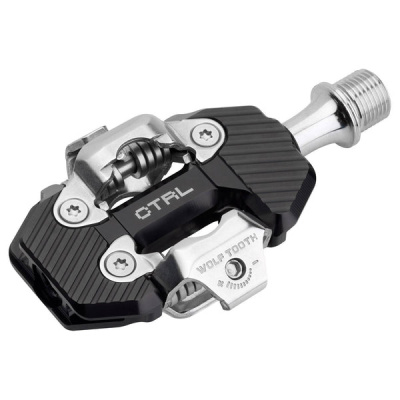
Wolf Tooth Pedals bring Minnesota-machined precision to the shoe-pedal interface, and it shows the moment you weight the platform. The brand's signature Wolf Tooth Waveform pedals use a dual-concave profile that cradles your foot front-to-back and side-to-side, locking you in mechanically rather than relying on pin height alone. Milled from 6061-T6 aluminum in the USA, these CNC aluminum flat pedals come in two distinct sizes - Small and Large - each optimized for specific shoe dimensions to maximize control without dragging unnecessary grams or width. Every axle, bushing, and seal is rebuildable; Wolf Tooth's Right to Repair philosophy means you can refresh internals rather than bin the whole pedal when winter grit takes its toll. If you've been chasing grip on technical descents or simply want a platform that feels dialled from the first pedal stroke, the Waveform design offers a tangible step up from cast alternatives. It's engineered contact, not marketing spin.
Prices and availability can change quickly. Delivery charges are not always included in listed prices.
Final price, stock status and delivery terms are set by retailer. We may receive a commission on purchases made.
The Engineering Behind Waveform Technology
The dual-concave profile is where Wolf Tooth separates itself from flat slabs of aluminum. The center of each platform sits at 12.5 mm thick, while the perimeter edges measure 14 mm - creating a subtle dish that matches the natural curve of your sole. Your foot settles into the concavity rather than perching on top, and that mechanical lock reduces the need for aggressive pin heights that chew through shoe rubber in a fortnight. Each side carries 11 stainless steel rear-loading pins arranged to maximize traction around the perimeter, where your foot applies the most pressure during hard cornering or steep climbs. Rear-loading means you can swap or replace pins without removing the pedal from the crank, a small detail that saves faff in the workshop.
The leading edges are tapered to deflect rock strikes rather than gouge into granite. If you've ridden the Peak District's loose stone gardens or the Welsh trail centres where embedded roots hide sharp edges, you'll appreciate bodywork that shrugs off impacts without deforming. The 6061-T6 aluminum stock is CNC-machined to tight tolerances - no casting voids, no inconsistent wall thickness. That precision translates to predictable flex characteristics and a platform that doesn't feel dead underfoot. Compared to Hope pedals or Burgtec pedals, the Waveform's concavity is more pronounced, which some riders find more secure in wet conditions but others might feel overly sculpted if they prefer to shift foot position mid-descent.
Sizing and Shoe Compatibility
Wolf Tooth offers the Waveform in two footprints: Small measures 105 mm × 99 mm, Large spans 112 mm × 106 mm. The split typically falls at US Men's size 10 (EU 43). Smaller feet benefit from the reduced platform - less overhang, fewer pedal strikes on tight switchbacks, and a lower swing weight that becomes noticeable over a long ride. Larger feet gain the support they need without hunting for the sweet spot every time you unweight and reposition.
Q-factor remains consistent across both sizes, so you won't alter your stance width when sizing up or down. The dual-concave shape works best with flat-pedal shoes that have a defined sole pattern - think Five Ten Freeriders, Ride Concepts, or similar rubber compounds designed to mesh with pins. If you're running skate shoes or casual trainers, the concavity might feel odd at first; the pedal expects a sole with some structure to lock into the dish. For UK riders tackling Surrey Hills singletrack or Scottish wet roots, the Large platform offers more margin for error when your foot shifts mid-line, while the Small keeps things nimble on technical climbs where every millimeter of clearance counts.
How many pins do Wolf Tooth pedals have? Eleven per side, twenty-two total. That's fewer than some competitors like Nukeproof pedals or Deity pedals, but the dual-concave profile compensates by creating mechanical grip through shape rather than sheer pin density. You'll still chew through sole rubber over time, but the wear pattern tends to be more even across the footprint.
Durability and Serviceability
The internals reveal Wolf Tooth's obsession with longevity. Each axle is stainless steel, spinning on a combination of Igus bushings and radial seal bearings - the brand calls this the Igus Power Plant. Igus bushings are self-lubricating and handle lateral loads without the play that develops in cheaper needle bearings after a season of mud. The radial seal is custom-designed to keep freezing water and grit out, a nod to Wolf Tooth's Minnesota origins where winter riding means slush, salt, and sub-zero temperatures.
Are Wolf Tooth pedals rebuildable? Completely. Replacement axles, bearings, bushings, and pin kits are all available individually, and the service procedure is straightforward enough for a home mechanic with a socket set. Service intervals depend on conditions - if you're riding year-round in the Lakes or the Peaks, expect to crack them open every six months. Dry summer miles in the South Downs might stretch that to a year. The cold-weather seal performs well in Scottish sleet and Welsh winter squalls, but no seal is perfect; regular inspection and a fresh grease pack will keep spin smooth.
The rear-loading pins are stainless steel, so they resist corrosion better than alloy alternatives. You'll still lose the odd pin to a rock strike, but replacements thread in from the back without dismounting the pedal. Compared to DMR pedals or Crank Brothers pedals, Wolf Tooth's serviceability is more granular - you're not buying a whole axle assembly when a single bearing wears out.
Precision Machining from Minnesota
Wolf Tooth started with chainrings and drivetrain components before expanding into contact points, and that background in tight-tolerance machining shows. Every Waveform pedal is milled in Minnesota, where the brand controls quality from raw stock to final anodizing. Domestic manufacturing allows tighter tolerances than offshore casting - you won't find flash lines, porosity, or inconsistent wall thickness. The machined finish also means each pedal can be serviced repeatedly without the structural fatigue that develops in cast platforms after multiple rebuilds.
The USA-made tag carries weight for riders who prioritize repairability and supply-chain transparency, but it also reflects in the pedal's consistency. If you've ridden cast platforms from brands like HT Components or e*thirteen, you'll notice the Waveform's edges are sharper, the anodizing more even, and the spin smoother out of the box. That precision doesn't guarantee invincibility - aluminum still dents, seals still wear - but it does mean the pedal behaves predictably over its lifespan. For UK trail riders who value long-term value over initial outlay, the combination of rebuildable internals and tight machining makes these serviceable mountain bike pedals a practical choice.
The Wolf Tooth Ripsaw variant offers a similar dual-concave profile with a slightly different pin layout, suited to riders who prefer more aggressive bite. Both models share the same Igus Power Plant internals and machined-in-USA construction, so the choice comes down to preferred grip character rather than fundamental durability differences. If you're completing a contact-point refresh, pairing Waveform pedals with grips and saddles from Bontrager or Giant will give you a cohesive cockpit, though Wolf Tooth's focus remains squarely on the shoe-pedal interface rather than full-bike integration.