
E Thirteen Pedals
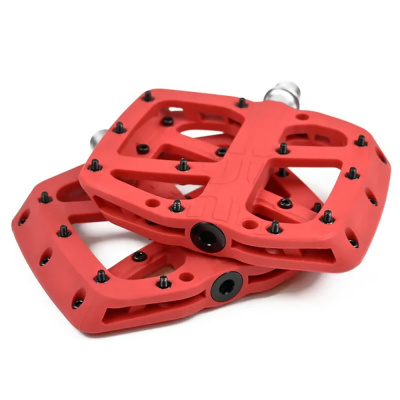
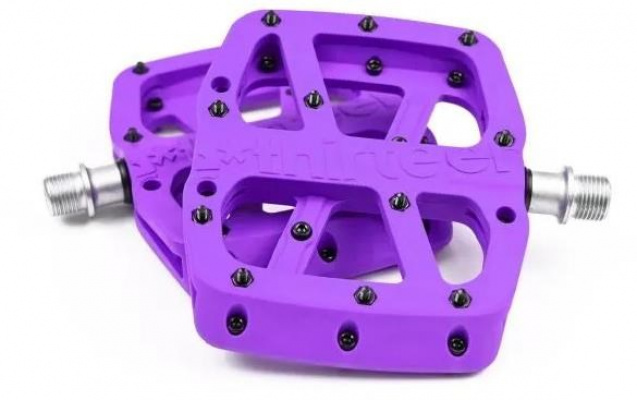
E Thirteen pedals are built around one idea: keeping your feet exactly where you put them, whether you're threading wet limestone slabs in the Dales or dropping into a bike park jump line with your heart in your mouth. Coming from a gravity racing background, e*thirteen has always sweated the details that matter on heavy, fast riding - and that focus shows up clearly in how these pedals are designed and built.
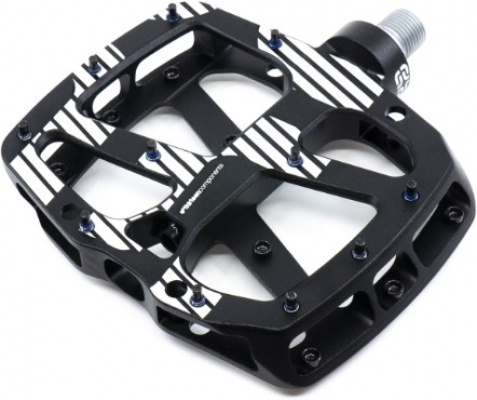
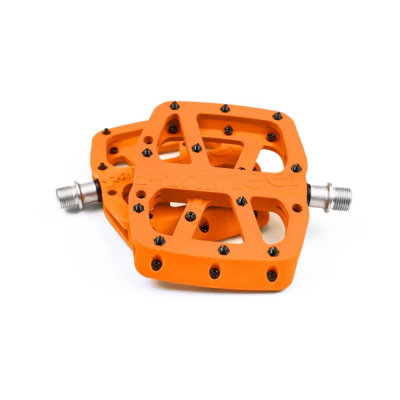
Both the Base and Plus models run a 100x110mm platform with a 22-pin traction layout, eleven pins per side, that digs into your shoe's rubber with real intent. You get a chromoly spindle in both tiers, paired with dual-sealed outboard bearings and an inboard PTFE bushing - an architecture that handles big lateral loads without folding under pressure. The key choice is body material: high-impact nylon composite on the Base, CNC-machined aluminum on the Plus. Both are fully rebuildable, which matters more than most people realise once a UK winter gets into the bearings. If you're weighing them against something like Burgtec pedals or DMR pedals, the rebuildability and pin count put e*thirteen right in the conversation.
Prices and availability can change quickly. Delivery charges are not always included in listed prices.
Final price, stock status and delivery terms are set by retailer. We may receive a commission on purchases made.
Fitting These to Your Cranks - What to Check First
Both Base and Plus pedals use a standard 9/16-inch thread chromoly spindle, so they'll fit every modern MTB crank on the market without adapters or fuss. Left pedal is reverse-threaded - righty-tighty doesn't apply on the drive side, which catches people out more than it should. Torque them to around 35Nm and you're sorted.
The one thing worth flagging before you start: e*thirteen pedals have a notably wide inboard profile where the spindle meets the body. If you're running thick rubber crank boot protectors - common on carbon cranks - check that the pedal axle seats flush against the crank arm face without the boot bunching up between them. A boot that prevents full seating will work the threads unevenly and eventually cause damage. If there's any doubt, a thin pedal washer on the axle will space things out cleanly and protect the crank face from scoring. It's a five-second check that saves a much more expensive conversation later. Pairing these with e*thirteen chainsets and cranks removes the guesswork entirely, since the clearances are already matched.
Base or Plus - Breaking Down the Two Tiers
The e*thirteen pedal range splits cleanly into two tiers, and the difference is more nuanced than just price.
The Base pedal uses a high-impact nylon composite body. That's not a budget compromise - composite has a genuine advantage on rocky trails. When a pedal clips a root or a stone, composite deflects and slides rather than biting in and stopping dead. That smoother impact behaviour reduces the kick through your foot and keeps your line more predictable. It's also lighter than aluminum, which matters if you're conscious of rotating weight. The Base comes in under the Plus on price without giving up anything in the bearing architecture or pin count.
The Plus pedal steps up to an extruded and CNC-machined aluminum body. You get a stiffer platform underfoot - noticeable in hard cornering or when you're weighting the outside pedal through a berm - and a precision feel that composite simply can't match. The machined finish also gives you clean, consistent pin-thread inserts that hold torque reliably over time. If aesthetics matter to you, the Plus looks the part. Both models run an identical 100x110mm platform size, the same 22-pin traction layout, and exactly the same internal spindle assembly. You're not getting more grip with the Plus; you're getting more rigidity and a different material feel underfoot.
Riders looking at the Plus against alternatives like Hope pedals or Nukeproof pedals will find the platform dimensions and pin density competitive - the difference usually comes down to personal preference on body feel and brand ecosystem.
Surviving a UK Winter Without Wrecking Your Investment
British winters are genuinely hostile to pedal internals. The grit that coats every trail from October onwards acts like grinding paste inside a bearing, and most pedals that aren't serviced regularly will feel notchy by February. e*thirteen's internal architecture is designed with this in mind.
The outboard sealed cartridge bearing handles the rotational load and keeps grit out of the race surfaces. The inboard PTFE bushing sits closer to the crank, where lateral loads and impacts are highest - PTFE is self-lubricating and handles the shear stress better than a second bearing would. Together they give you a smooth, stable platform that doesn't degrade as fast as a single-bearing design.
That said, no pedal survives a Welsh winter indefinitely without attention. Strip, clean, and regrease every six months if you're riding through the cold months - every three if you're putting serious hours in on gritty trails. e*thirteen offers dedicated rebuild kits covering bearings, bushings, and seals, so a gritty pedal doesn't automatically mean a replaced pedal. Rebuild kits cost a fraction of a new pair and keep the same platform running for years. Keeping an eye on your e*thirteen bottom bracket on the same service schedule makes sense - they're exposed to the same conditions.
One thing that catches people out: the traction pins seize into the body over winter if you don't treat them first. Before the season turns, back each pin out, put a small amount of anti-seize or waterproof grease on the threads, and reinstall. When you inevitably clip a rock and a pin gets damaged or bent, you'll be able to extract it cleanly with a hex key rather than drilling it out. Replacing pins is simple - thread them in finger-tight, then snug with a hex key, and you're back to a fresh contact surface. Matching your grip levels to fresh e*thirteen MTB tyres at the same time is worth considering if your rubber is looking tired.
If you want a comparison that's more budget-focused, Crank Brothers pedals offer a different approach to flat pedal design, but the rebuild support and pin system on the e*thirteen range tends to suit riders who prefer a more workshop-friendly product.
E Thirteen Pedals FAQs
Are E Thirteen pedals fully rebuildable?
Yes. Both the Base and Plus models are fully rebuildable using e*thirteen's dedicated service kits. You can replace the inboard PTFE bushing, outboard sealed bearing, and seals independently, which means a winter's worth of grit doesn't write off a good pair of pedals - just strip, clean, and fit fresh internals.
What is the difference between E Thirteen Base and Plus pedals?
The Base uses a high-impact nylon composite body - lighter, more affordable, and better at sliding over rock strikes. The Plus uses a CNC-machined aluminum body for a stiffer, more precise platform feel. Both share the same 100x110mm platform, 22-pin layout, chromoly spindle, and internal bearing and bushing architecture.
How do you replace the pins on E Thirteen flat pedals?
The traction pins are threaded into the pedal body and come out with a standard hex key. If a pin has seized after a wet season, heat from a heat gun can help free it. Always apply anti-seize or waterproof grease to the threads before fitting new pins - it's the one prep step that makes future replacements straightforward rather than a workshop headache.