
Hope Pedals
Hope pedals are made in Barnoldswick, Lancashire - not assembled from a parts catalogue, but fully CNC machined in-house from 2014 T6 aluminium billet. That matters the moment you're scraping Peak District grit off your drivetrain and your pedals are still spinning cleanly after three winters of abuse.
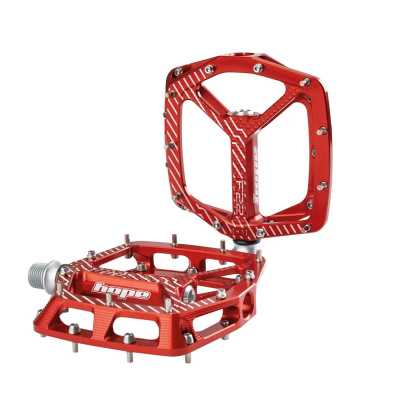
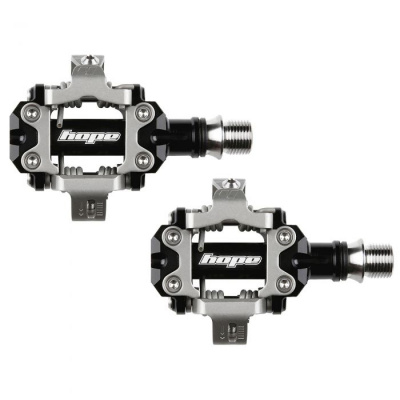
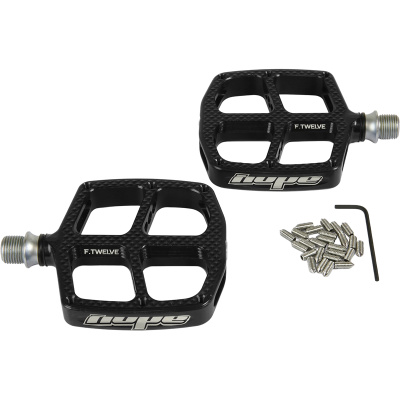
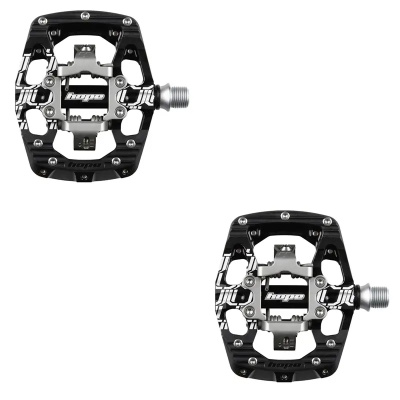
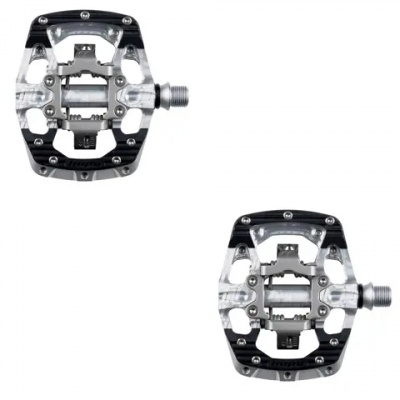
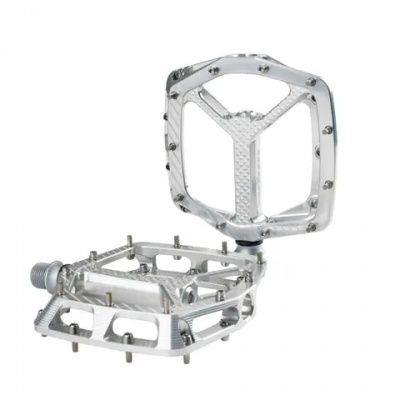
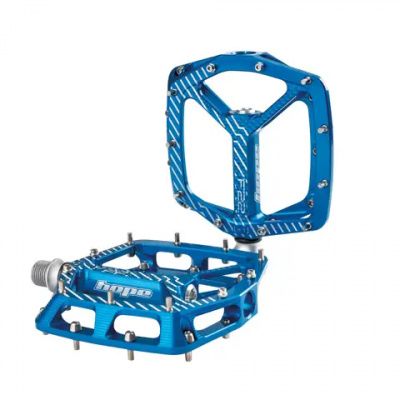
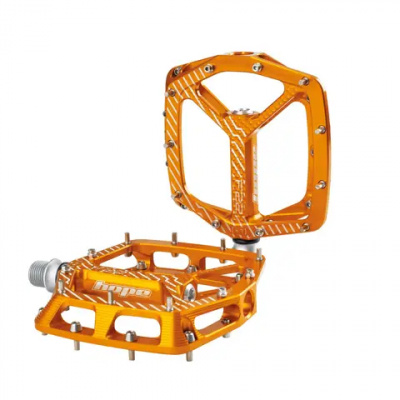
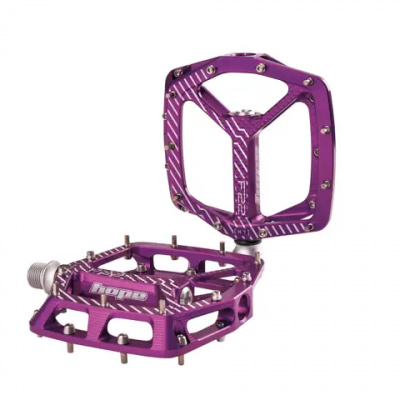
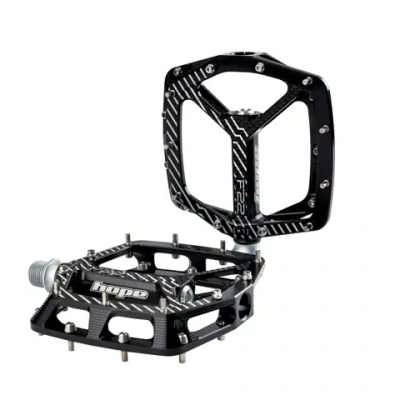
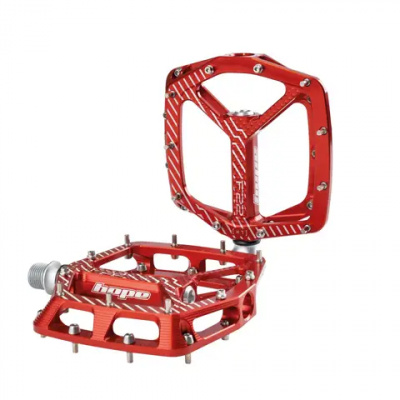
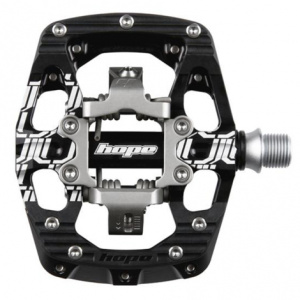
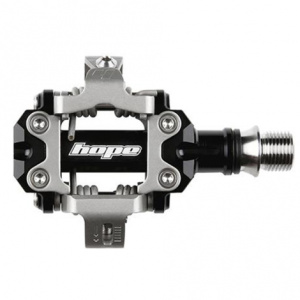
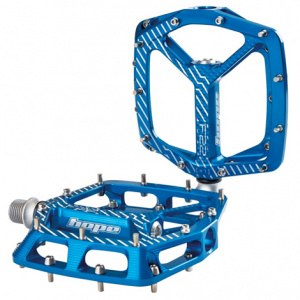
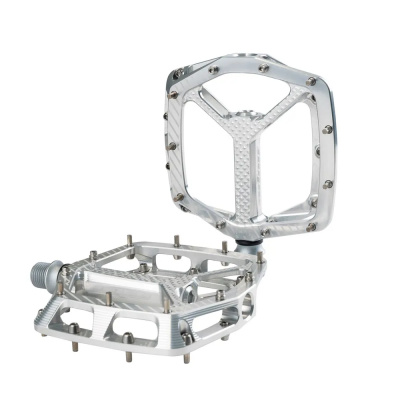
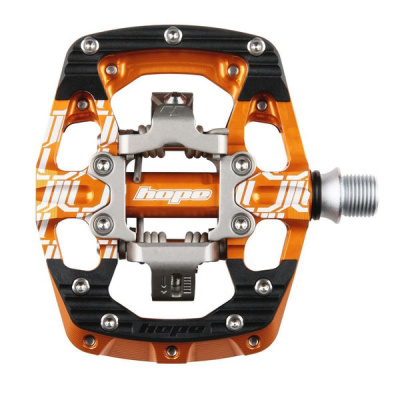
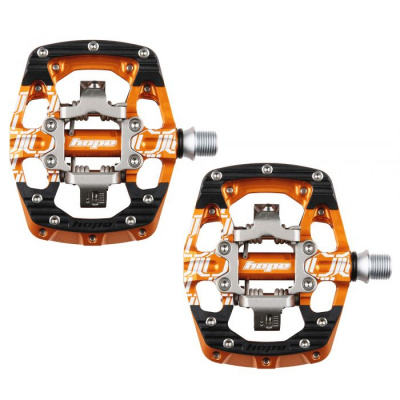
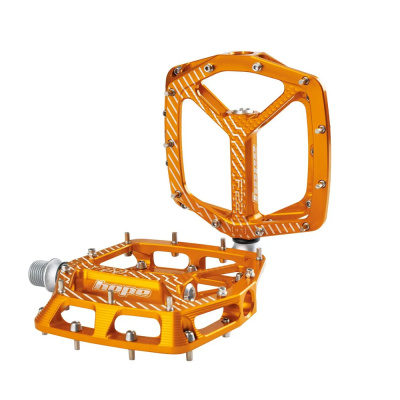
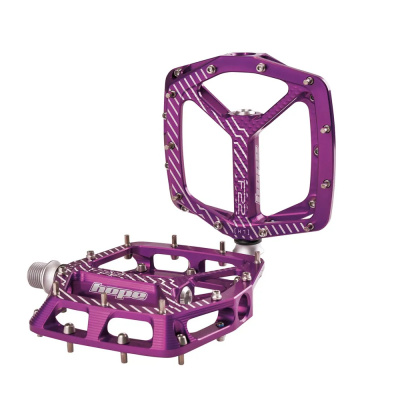
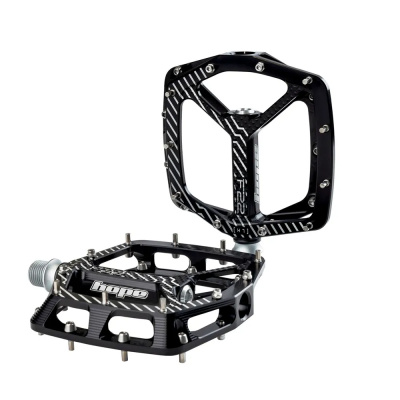
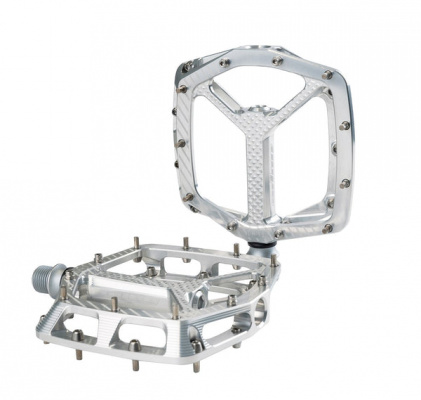
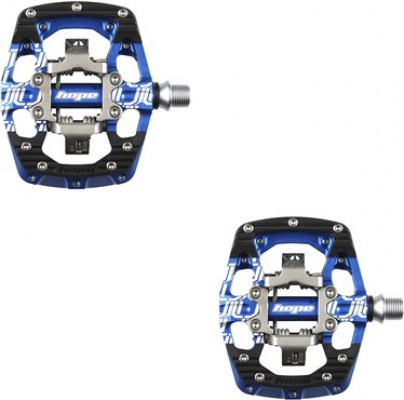
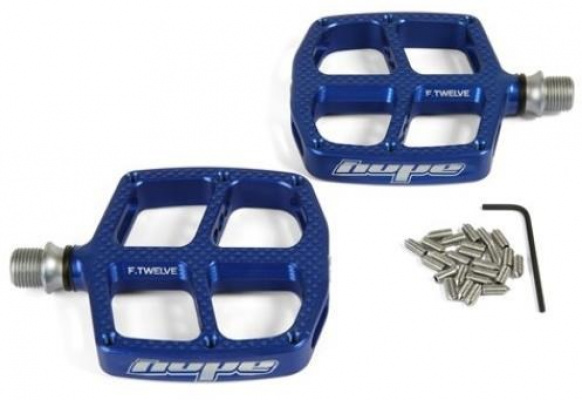
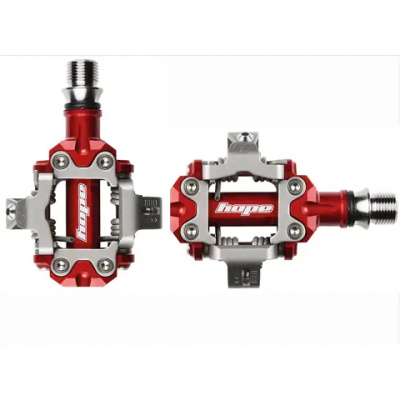
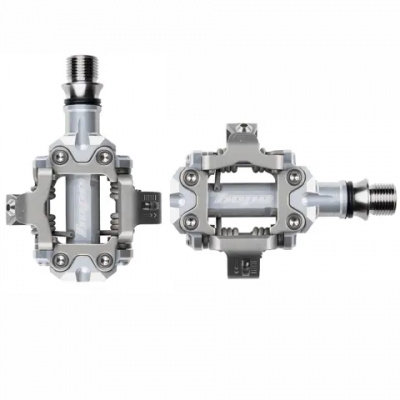
The range splits into two clear camps. The F22 flat pedals offer a broad, concave platform with adjustable pins for riders who want direct contact and the freedom to move their feet mid-corner. The Hope Union clipless pedals bring a proprietary dual mechanism that snaps in predictably and releases without drama - useful when you're dabbing a foot on a greasy Welsh root and your brain's already committed to the next line.
Both families share the same internal philosophy: triple cartridge bearings, an IGUS bushing, and heavy-duty O-ring seals built to outlast the kind of conditions that destroy budget pedals in a season. Replaceable pins, rebuildable axles, and a full spares ecosystem mean you're buying something you actually maintain rather than replace. Across flat and clipless, Hope gives you a genuinely long-term purchase rather than a consumable.


Prices and availability can change quickly. Delivery charges are not always included in listed prices.
Final price, stock status and delivery terms are set by retailer. We may receive a commission on purchases made.
Axle Standards, Shoe Compatibility and Q-Factor
Every Hope pedal in the current range uses a standard 9/16-inch axle thread, so they fit any adult crankset without adapters. No surprises there. Where it gets more specific is Q-factor - the lateral distance between the pedal faces - which affects your knee tracking and overall stance width. The Hope Union RC sits at 55mm, as do the TC and GC variants, keeping your stance consistent whether you're switching between builds or just want predictable biomechanics across your fleet.
Union pedals require Hope's own proprietary cleats, which come in the box. They're not Shimano SPD cleats, but they mount to any standard 2-bolt SPD-compatible shoe - so if you're already riding Shimano-compatible footwear, you're fine. Worth checking your shoe before you buy rather than after.
Looking for replacement cleats or rebuild kits? Hope pedals are fully rebuildable, and we stock the complete range of proprietary hardware. Visit our dedicated Hope Tools page to find the exact match for your setup.
Flats, Clipless, and Where Each One Fits
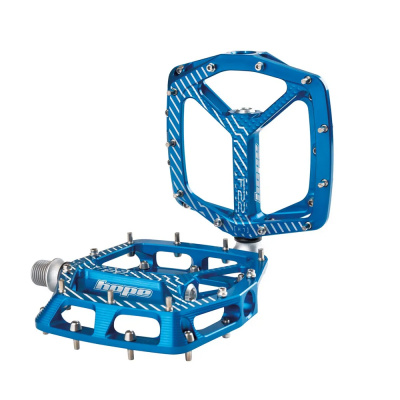
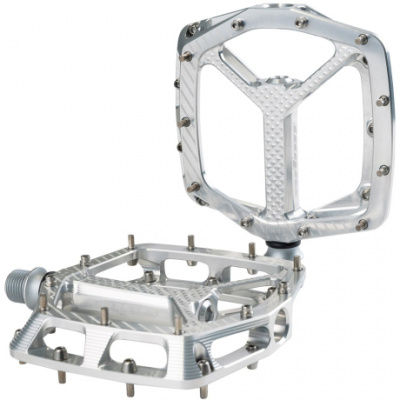
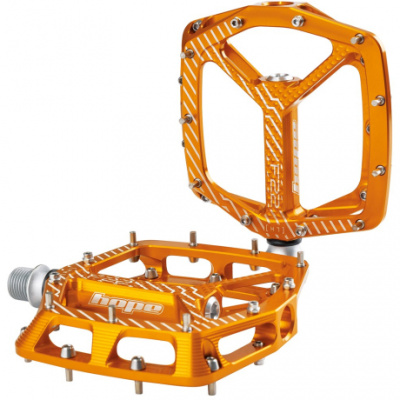
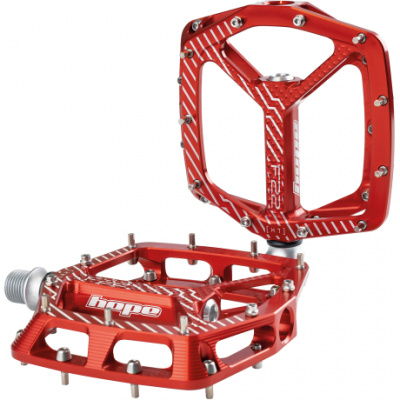
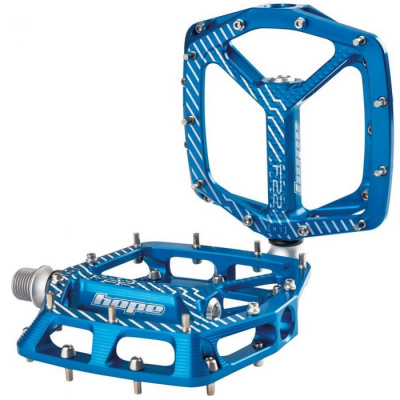
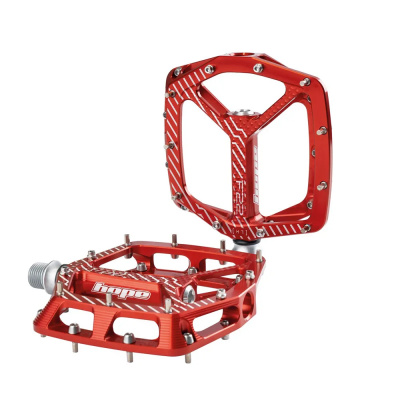
The Hope F22 is the current flat pedal benchmark in the range, and it's a step forward from the older F20 in several ways. The platform is larger and asymmetric - wider where your foot actually sits, rather than symmetrical for symmetry's sake. The concave profile pulls your foot into the pedal rather than letting it skate across the surface, and the hex-key-adjustable pins let you dial in bite to match your shoes and your nerve. The F20 had proven internals, and the F22 keeps those while addressing the platform ergonomics riders had been asking about for years.
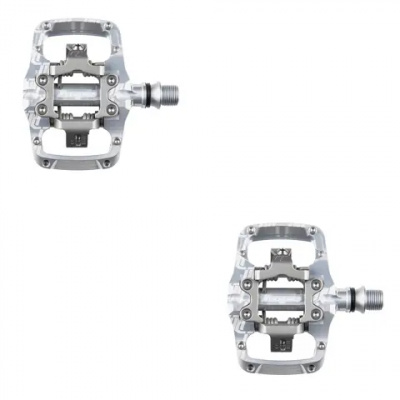
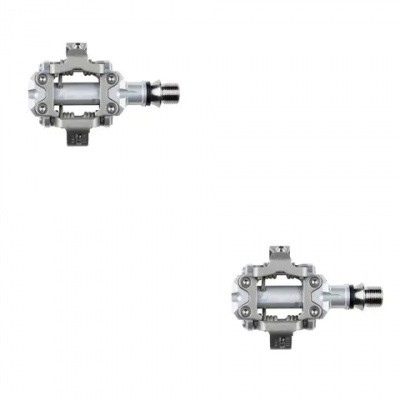
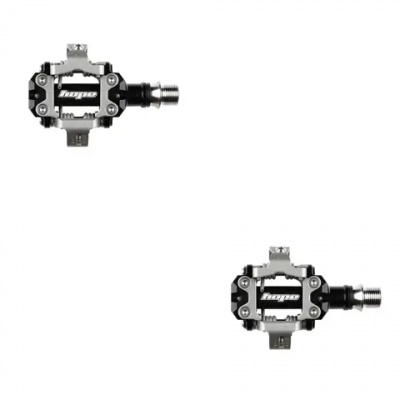
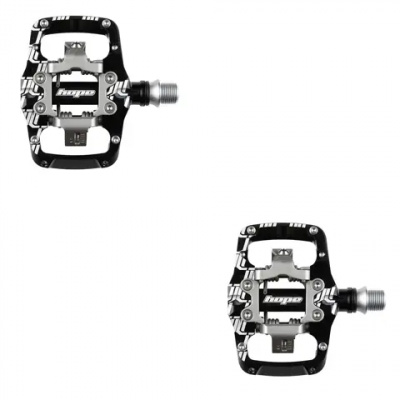
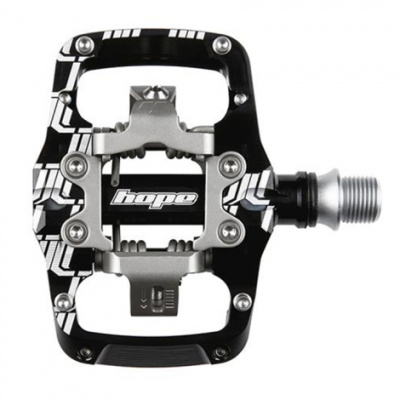
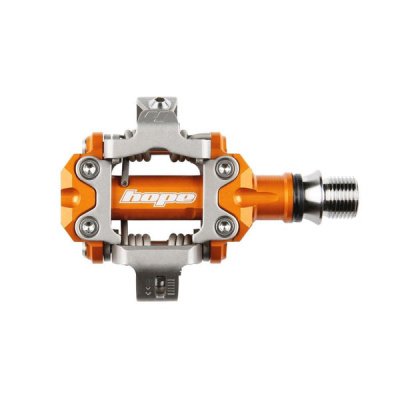
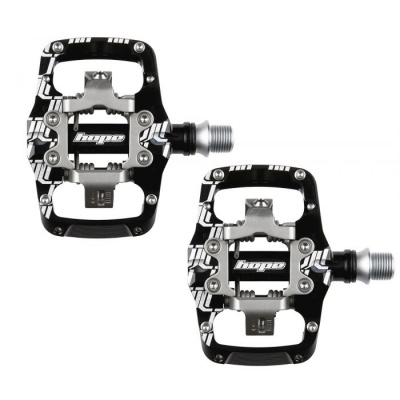
On the clipless side, the Union range has three tiers, each aimed at a different type of riding. The Union RC (Race Clip) is the lightest option - lean, minimal platform, suited to XC and gravel where every gram earns its place. The Union TC (Trail Clip) adds a mid-sized platform that gives your foot somewhere to rest on longer descents and rough trail riding, making it the most versatile of the three. The Union GC (Gravity Clip) goes full platform - chunky, confidence-inspiring, designed for the kind of enduro stages and bike park laps where you're spending serious time on the pedals and want that contact point to feel solid.
All three Union variants are available with a titanium axle upgrade if you're trimming grams. The weight saving is modest but real, and titanium's resistance to bending under lateral load is a practical benefit if you're prone to clipping rocks or stumps on tighter trails. Riders weighing up the GC against something like Crank Brothers pedals or DMR pedals will find Hope's dual mechanism notably more consistent in muddy conditions - it doesn't pack up with clay the way some four-point engagement systems do.
If you're coming from flat pedals and weighing up the switch, the TC is usually the sensible starting point. The GC makes sense if you're already clipped in and want more platform security; the RC makes sense if you're building a light XC or gravel setup and don't need the extra material underfoot. Pairing any of the Union models with matching Hope chainsets and cranks keeps the whole contact-point-to-drivetrain interface consistent, which is worth considering if you're speccing a build from scratch.
Surviving UK Winters: Bearings, Grit and Service Intervals
Most pedal bearings fail the same way: water and fine abrasive grit work past inadequate seals, the grease turns to paste, and the cartridges grind themselves out. Hope's answer is three cartridge bearings combined with an IGUS bushing - a self-lubricating polymer sleeve that handles the radial load the bearings don't cover. The whole assembly sits behind heavy-duty O-ring seals that are sized properly rather than as an afterthought.
In practice, this means a set of Hope pedals ridden through a Pennine winter will still feel tight and smooth by spring, where a cheaper pedal might already be notchy. The Peak District's particular brand of grit-laden mud is especially hard on bearings - it behaves like fine grinding paste once it gets inside a seal - and the Hope internals are genuinely built to resist it rather than just marketed that way.
Service intervals depend on how hard you ride and how enthusiastically you pressure-wash, but a basic clean and re-grease every six months is a reasonable rhythm for regular UK winter use. The axle assembly removes cleanly with a standard cassette lockring tool, which means you don't need specialist kit sitting in the garage. Full bearing replacement is typically a one-to-two-year job rather than a seasonal one. Compare that to Burgtec pedals or Nukeproof pedals - both solid options - and Hope's rebuildability is a genuine differentiator over the long term. Paired with Hope bottom brackets, which share a similar sealed-bearing philosophy, you get a drivetrain that responds well to straightforward periodic maintenance rather than demanding specialist attention.
One thing worth knowing before your first service: don't over-tighten the axle preload. Snug is enough. Over-tightening compresses the bearings and shortens their life - the opposite of what you're trying to achieve.
Hope Pedals FAQs
Are Hope Union pedals compatible with Shimano SPD cleats?
No - Hope Union pedals use their own proprietary cleats, which are included in the box. The good news is those cleats bolt straight onto any standard 2-bolt SPD-compatible mountain bike shoe, so you won't need new footwear if you're already on Shimano-compatible kit.
What is the difference between Hope F20 and F22 flat pedals?
The F22 has a larger, asymmetric platform that better matches how your foot actually sits on the pedal, plus a concave profile for more positive grip. The pins are redesigned and height-adjustable. The proven, durable internal layout from the F20 carries over unchanged - the upgrade is in the contact area, not the guts.
How often should I service my Hope pedals?
For regular UK winter riding, a clean and re-grease every six months keeps things running well. Full bearing replacement is usually only needed every one to two years. How often you pressure-wash and how much grit you ride through will push that schedule earlier - the axle pulls out with a cassette tool, so it's a quick job.