
Rockrider E-Bikes
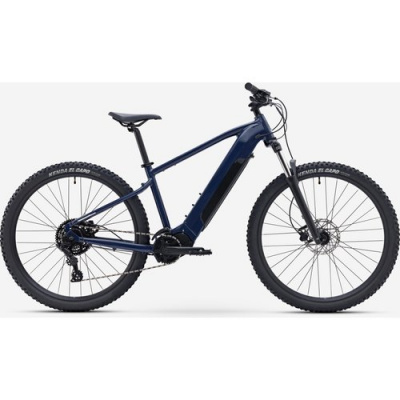
Rockrider E-Bikes have done something the e-MTB market didn't see coming: made trail-capable electric mountain bikes genuinely accessible without gutting the spec sheet to get there. Designed by Decathlon's dedicated MTB division, these bikes are built around what actually moves the needle on a ride - reliable mid-drive motors from Brose and Yamaha, geometry that works on real trails, and components chosen for durability rather than showroom gloss. Whether you're clipping into a red route at Cannock Chase for the first time or pushing deeper into natural bridleways on a weekday evening, there's a Rockrider in the lineup that fits the brief. The range splits into two clear families - the E-ST (Sport Trail) hardtails for riders getting started, and the more capable E-EXPL (Explore) models for those ready to push harder. Both lean on torque-sensing mid-drive motors that respond to how you pedal, not just whether you're pedaling. That distinction matters on steep, punchy UK climbs where a hub motor would simply bog. Compare the latest models below to find the right mix of travel, torque, and battery capacity for the riding you actually do.
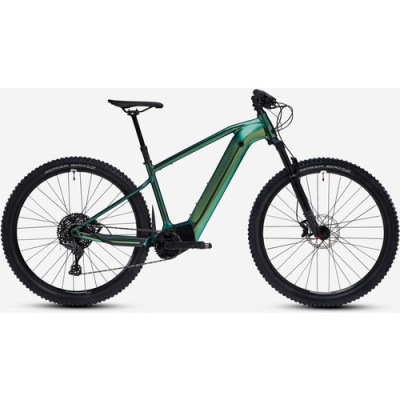
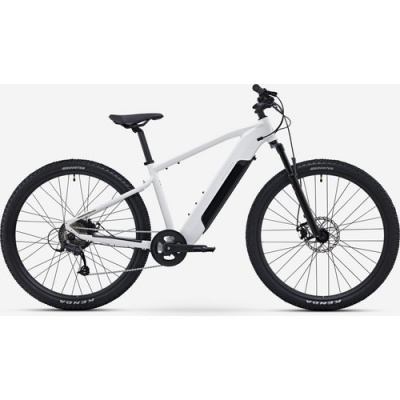
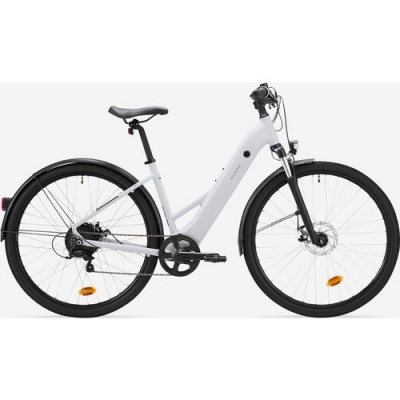
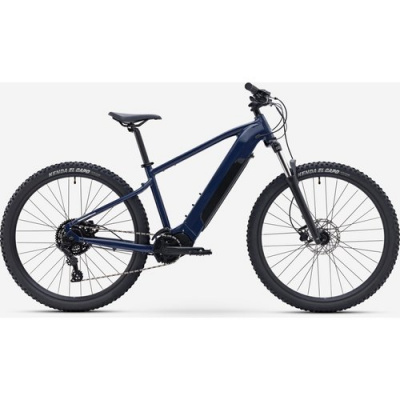
Prices and availability can change quickly. Delivery charges are not always included in listed prices.
Final price, stock status and delivery terms are set by retailer. We may receive a commission on purchases made.
Decoding the Rockrider E-Bike Lineup
Two families, one clear logic. The E-ST (Sport Trail) series is Rockrider's entry point - hardtail e-MTBs aimed at riders building confidence on blue and easier red routes. They're lighter, simpler to maintain, and the geometry stays forgiving without feeling vague. The E-EXPL (Explore) range is where things get more interesting: modern trail geometry, longer travel, and full-suspension platforms on the upper models that are genuinely built for aggressive riding rather than just marketing copy.
The numbering system is straightforward once you know what to look for. Higher numbers - think 520 versus 500, or 900 versus lower variants - signal a meaningful step up. You're getting a larger 500Wh integrated battery, a better-quality fork (RockShox or SR Suntour depending on the tier), and a drivetrain upgrade that typically moves from basic Shimano or Microshift drivetrain options to more refined groupsets with wider range cassettes. It's a logical ladder: buy the number that matches your trails, not the one that just sounds better. If you want context on how the acoustic Rockrider models sit alongside the e-bikes, the Rockrider mountain bikes range gives you a useful reference point for geometry and sizing continuity across the brand.
The 29er wheelset is standard across the mid-to-upper models - the right call for UK trail centres where rolling momentum over roots and rocks is worth more than snappy agility. Lower-spec models may run 27.5 wheels, which suits shorter riders and tighter, more technical loops.
What's Actually Going On Under the Hood
Rockrider's decision to partner with Brose and Yamaha rather than spec cheaper hub motors is the single most important thing about these bikes. Both are mid-drive units with torque sensors that read your pedalling effort in real time and scale the assistance accordingly. The result is a motor that feels like a strong tailwind rather than a moped. On a steep, loose climb in the Peak District - the kind where your rear wheel is hunting for grip and your cadence is all over the place - that responsiveness is the difference between a composed ascent and a frustrating battle.
The custom-tuned Brose T integration on the E-EXPL models sits low and central in the frame, which keeps the centre of gravity where you want it and improves how the bike handles on off-camber sections. Rockrider's engineers have also worked on asymmetric chainstays to create better motor clearance without compromising the frame's structural integrity - a detail that sounds minor until you're trying to clean a drive-side chainstay caked in Welsh mud.
On the suspension kinematics side, the full-suspension E-EXPL models use a linkage design tuned to stay active under motor load - a common weakness in cheaper e-MTBs where the suspension stiffens up as soon as the motor engages. It's not perfect at the lower price points, but the geometry framework holds up well. If you want a direct comparison from a brand with a longer full-suspension pedigree, Cube e-bikes sit at a higher price bracket but offer a useful benchmark for what more developed suspension kinematics feel like.
One thing to be clear about: batteries, chargers, and head units are a separate conversation. For anything relating to replacement packs or display units, head to the dedicated Rockrider e-bike batteries page where those options are listed properly. What we can say here is that the 500Wh integrated battery is the standard across the serious trail models, and the integration is tidy - no bolt-on look, no rattling on rough ground.
Running a Rockrider Through a UK Winter
Let's be honest about what riding in Britain actually involves. Mud. Cold. More mud. The E-EXPL and upper E-ST frames have reasonable clearance for most conditions, but if you're a regular at trail centres in the Brecon Beacons or the Tweed Valley in November, worth pairing the bike with a set of proper chunky rubber - the stock tyres on lower-spec models are competent but not exceptional. A quick look at Rockrider MTB tyres will show you compatible upgrade options without guessing at sizing.
Cold-weather battery performance is a real-world factor that rarely gets mentioned clearly enough. In freezing temperatures - below 5°C, which is most of a British winter on exposed moorland - expect your 500Wh integrated battery to deliver roughly 15 - 20% less range than the quoted figures. That's not a Rockrider-specific issue; it's physics. Store the battery at room temperature overnight and fit it just before you leave. Simple, but it makes a genuine difference to your range on a long day out.
The full-suspension E-EXPL models have pivot bearings that need attention after sustained wet riding. After a muddy day in the Scottish Borders or a soaking at Bike Park Wales, rinse the pivots, check for play, and regrease if you're doing regular mileage through winter. Neglect it and you'll feel the slop inside six months. It's not a design flaw - it's just what full-suspension bikes need. Flat pedals from the Rockrider pedals range are worth considering too if you're still running pins through the cold months; they shed mud better than clipless platforms in genuinely thick conditions.
Compared to brands like Boardman e-bikes, which skew more towards road and hybrid use cases, Rockrider's lineup is clearly built for dirt. The trail geometry on the E-EXPL - slacker head angle, longer reach, lower bottom bracket - reflects a design team that actually thought about how these bikes corner at speed, not just how they look in a catalogue. Don't forget to sort a lid before heading out; the Rockrider helmets range covers MTB-specific options that pair logically with the bikes.
Rockrider E-Bikes FAQs
Are Rockrider e-bikes any good for trail riding?
The short answer is yes, particularly the E-EXPL range and the higher-numbered E-ST models. You get modern trail geometry, reliable mid-drive motors, and suspension that holds up on UK red routes. They're not premium-brand bikes, but they handle blue and red trail centre riding confidently and offer solid value against more expensive alternatives.
What motors do Rockrider electric mountain bikes use?
Rockrider fits mid-drive motors from Brose and Yamaha depending on the model. Both use torque sensors that read your pedalling effort and adjust assistance in real time, giving a natural, responsive feel rather than an on/off surge. The Brose T unit appears on the more capable E-EXPL models and delivers strong, smooth power on technical climbs.
How far can a Rockrider e-bike go on a single charge?
With a 500Wh battery, most riders can expect 25 to 50 miles of off-road riding depending on assistance mode, elevation gain, and rider weight. That range narrows in cold conditions - below freezing you're realistically looking at a 15 - 20% reduction. Eco mode on flatter bridleways will push you closer to the top of that range; Trail or Boost mode on technical loops will eat through it faster.