
Rockrider Mountain Bikes
Rockrider mountain bikes have quietly rewritten what your money can buy in the MTB market - routinely matching component specs you'd expect to pay significantly more for elsewhere. Designed and engineered at Decathlon's B'Twin Village in Lille, the Rockrider range spans everything from approachable entry-level hardtails to carbon-framed cross-country race bikes that are genuinely competitive at club level. Whether you're after a reliable weekend trail bike for the Peaks or something faster and lighter for lap racing, there's a model pitched squarely at you.
The lineup splits into three clear families - ST, XC, and AM - each with trim levels that climb sensibly from budget-friendly to enthusiast-grade. Every alloy frame, stem, and handlebar in the range carries a lifetime warranty, which is a serious statement of confidence and removes a lot of the risk from buying at this price point. Hydraulic disc brakes and decent suspension forks come as standard earlier in the range than you'd find from most comparable brands. Browse the price comparison below to find current UK deals across the full Rockrider MTB range.
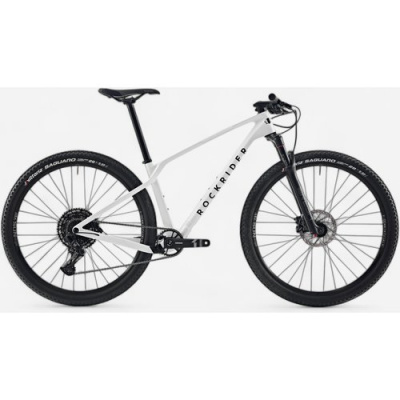

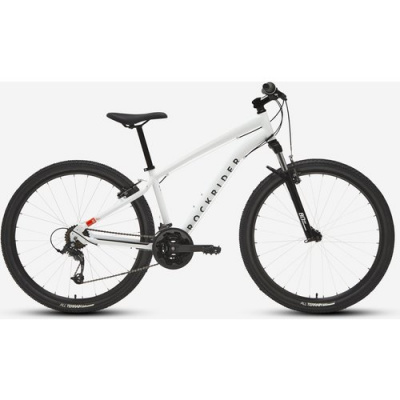
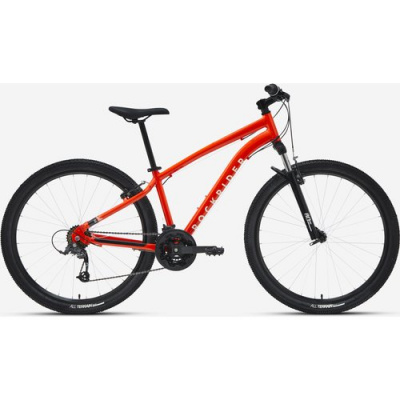
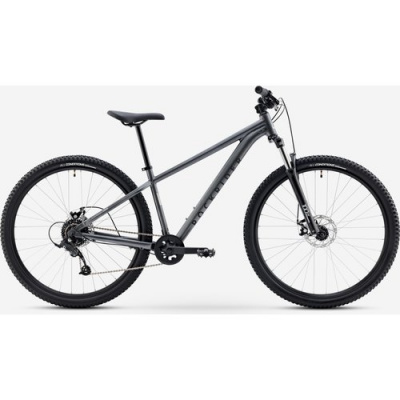
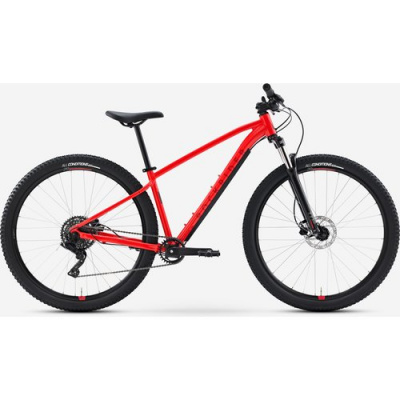
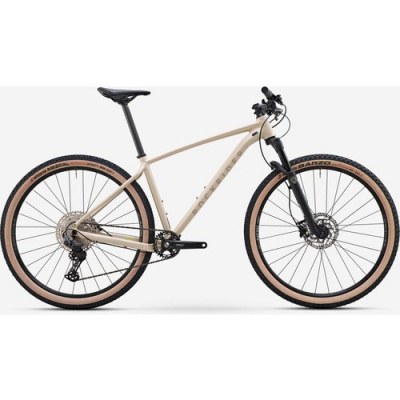
Prices and availability can change quickly. Delivery charges are not always included in listed prices.
Final price, stock status and delivery terms are set by retailer. We may receive a commission on purchases made.
Decoding the Rockrider MTB Lineup
Rockrider MTB models are organised into three families, and once you know the naming logic, picking the right bike gets straightforward. The ST (Sport Trail) range is aimed at riders who want a solid, confidence-building hardtail for towpaths, green trails, and the occasional blue-grade trail centre run. These are no-fuss bikes with reliable components - good starting points for newer riders or those who want something robust without overthinking spec.
Step up to the XC (Cross Country) family and the focus shifts to weight, speed, and efficiency. The XC range includes both hardtails and full-suspension frames, with the top-tier XC 900 series using carbon layups to keep weight competitive with bikes costing considerably more. These are bikes for riders who measure effort in watts and enjoy a fast, flowing loop over something like the red routes at Glentress. The AM (All Mountain) bikes are a different proposition - longer travel, slacker geometry, and the confidence to commit on steep, technical descents. Think Afan Argoed or the chunkier lines at Cannock Chase rather than a cross-country lap.
Within each family, the number tells you where you sit in the range. 100-series models are entry-level, 500-series is mid-range with noticeably better components, and 900-series represents the enthusiast or near-race end of the spectrum. It's a clean, logical system - no confusing sub-brands or arbitrary naming. If you're weighing up a Rockrider hardtail against something like a Calibre mountain bike or a Carrera mountain bike, the Rockrider spec sheet at the same price point often reads favourably.
Electric and youth models sit outside this guide. For those, head to the Rockrider e-bikes page or the Rockrider kids bikes page where those ranges are covered properly.
The Tech Behind the Bikes
Decathlon doesn't just badge up off-the-shelf frames - there's genuine in-house engineering here. The most distinctive piece of it is the Switch & Ride system, available on select AM and XC models. In short, it lets you run 27.5 inch, 27.5 plus, or 29er wheels on the same frame without any awkward workarounds. Swap wheel sizes to change how the bike handles - 29ers for faster rolling efficiency and momentum on longer rides, 27.5 plus for more grip and cushioning on rougher ground. That kind of flexibility has real-world value, particularly if you want one frame to cover different riding conditions across the year.
The EVO6 geometry is worth knowing about too. It uses an asymmetric rear triangle - the driveside and non-driveside chainstays are shaped differently to account for the lateral forces a drivetrain puts through the frame. The result is a stiffer rear end without adding weight, which translates to more responsive power transfer when you're pushing hard out of a corner or grinding up a loose climb. You feel it as a bike that tracks cleanly rather than flexing unpredictably under load.
At the top of the XC range, Rockrider uses carbon fibre construction in the XC 900 series - not a carbon wrap over alloy, but full carbon layups engineered for the frame's specific stress points. The weight savings over the alloy 500-series are meaningful, and the ride quality sharpens up noticeably. For anyone considering a Boardman mountain bike at a similar price, the Rockrider XC 900 is worth a direct comparison on spec before you commit. The lifetime warranty on alloy frames, stems, and handlebars applies across the range - not just premium models - and that's genuinely unusual at this price bracket.
Running a Rockrider on UK Trails
Rockrider geometry tends to be slightly more conservative than some UK-specific hardtail brands - the reach figures in particular run a touch shorter than you might find on something built with steep British singletrack in mind. If you're between sizes and planning to ride anything technical - think the red and black trails at BikePark Wales - it's worth sizing up rather than down. The extra reach gives you more stability when the gradient kicks up and the trail gets loose. Doesn't cost you anything to check the geometry chart before you order.
On the wheel size question, the Switch & Ride system is genuinely useful across UK seasons. Summer on 27.5 plus tyres is great - confidence-inspiring grip on dry Peak District grit or Surrey Hills hardpack. But in winter, those wider tyres collect mud fast, and UK slop is unforgiving on frame bearings and paintwork. Swapping to standard 29er wheels for the colder months keeps clearances sensible and your bearings lasting longer. It's the kind of thing that makes a real difference over a couple of winters.
Braking spec across the range uses Tektro and Hayes hydraulic disc systems, which handle UK grit and wet-weather riding competently. Not the sharpest bite you'll find on the market, but consistent and easy to service - lever feel holds up well once you've bedded the pads in properly on a couple of descents. Pair the bike with some decent Rockrider MTB tyres suited to your local conditions and you'll get more out of those brakes from day one. Worth picking up a set of Rockrider MTB wheels in a second size if you plan to use the Switch & Ride system seriously - swapping wheels is quick, but only if you've got the second set ready to go.
One last thing on fit - if you're new to MTB or upgrading from a hybrid, Decathlon's size guides are clear, but the numbers can feel slightly snug on reach compared to what progressive UK trail brands publish. Run the geometry numbers against your current bike's reach figure before sizing, and if you're right on the boundary, go longer.
Related searches:
Rockrider Mountain Bikes FAQs
Are Rockrider mountain bikes any good?
Yes - Rockrider bikes consistently punch above their price point, with specs like RockShox forks and SRAM drivetrains appearing earlier in the range than you'd find from most rivals. Every alloy frame also carries a lifetime warranty, which backs up the build quality with something tangible.
Who makes Rockrider bikes?
Rockrider is Decathlon's dedicated MTB brand, designed and engineered at the B'Twin Village in Lille, France. It's a fully in-house operation - Decathlon develops the geometry, frame engineering, and spec themselves rather than buying in generic designs.
What is the difference between Rockrider ST, XC, and AM?
ST (Sport Trail) models are entry-level hardtails for leisure riders and light trails. XC (Cross Country) bikes are built for speed and efficiency, with the top 900 series using carbon frames for race use. AM (All Mountain) bikes run longer travel suspension for aggressive, technical descents where grip and confidence matter more than outright pace.