
Rockrider Pedals
Rockrider pedals cover the full spread - from no-fuss resin flats for riders just getting into trail riding, through to CNC-machined alloy platforms with replaceable steel pins for proper grip when the roots are running wet. Whatever you're after, the range is built around standard 9/16" chromoly axles, so they'll slot straight onto virtually any modern crankset without faff.
If you're after flat pedals, Rockrider gives you options at every level of seriousness. The entry-level resin bodies are light, cheap to replace, and take plenty of abuse before complaining. Step up through the range and you're looking at wider platforms, tougher polyamide construction, and eventually sealed cartridge bearings that can handle a British winter without packing up by February. The clipless models run a dual-sided SPD-compatible mechanism - useful when you're clipping in at the bottom of a Peak District climb with muddy gloves.
Swapping pedals is one of the quickest ways to change how a bike feels underfoot. Better grip, better platform size, better bearing quality - it adds up fast. We've pulled the full Rockrider range together here so you can compare specs, match the right pedal to your riding, and find the best price across UK retailers.
Prices and availability can change quickly. Delivery charges are not always included in listed prices.
Final price, stock status and delivery terms are set by retailer. We may receive a commission on purchases made.
Compatibility and Axle Standards
Every adult Rockrider pedal uses a standard 9/16" x 20 tpi thread. That means they'll fit Shimano cranks, SRAM cranks, and the vast majority of own-brand or generic cranksets you'll find on trail bikes and hybrids across the UK. No adapters, no surprises. The chromoly axle construction keeps things stiff and corrosion-resistant - important when road salt gets into every gap through the winter months.
One thing to sort before you reach for the pedal spanner: the left (non-drive side) pedal is reverse-threaded. Turn it clockwise to remove, anticlockwise to install. It's the most common installation mistake, and cross-threading an alloy crank arm is an expensive way to learn it. Tighten both pedals to the manufacturer's specified torque - usually around 35 Nm - and you're good.
For clipless models, Rockrider uses the standard 2-bolt SPD mounting pattern, so they're directly compatible with the full range of SPD cleats on the market. For replacement cleats, cleat positioning guides, and float options, head over to our Rockrider MTB shoes category where we've covered the cleat hardware side in full.
Rockrider Pedal Hierarchy: 100 vs 500 vs 900 Series
Rockrider structures its pedal range into three clear tiers, and knowing where each sits saves you either overspending or buying the wrong tool for the job.
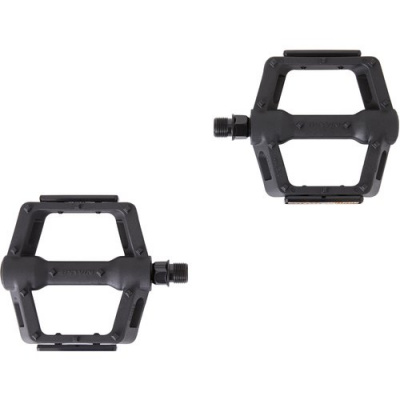
The 100-series uses basic high-impact polyamide resin bodies paired with loose ball bearings. They're not built for aggression - but for casual trail use, hybrid riding, or a beginner who wants to get a feel for flat pedals without committing serious money, they do the job. The platform is narrower than the upper tiers, which some riders find fine and others find limiting once they start riding faster or rougher ground.
The 500-series is where the range starts to make sense for regular trail riders. Platforms get wider, giving your foot more to work with on off-camber sections. The molded traction pins are fixed rather than replaceable, but they grip convincingly on dry and moderately wet surfaces. The tougher polyamide composite construction takes knocks better than the 100-series, and the overall package holds up to a regular diet of Surrey Hills singletrack or Welsh trail centre laps without asking much in return.
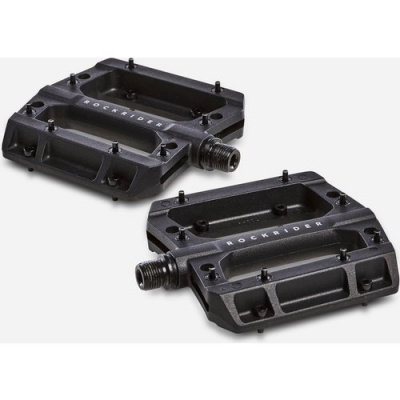
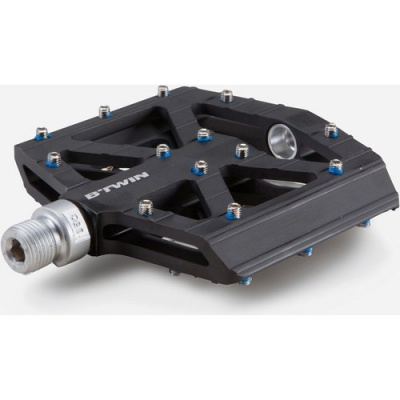
The 900-series is the flagship. CNC-machined aluminium bodies cut weight and add stiffness, and the replaceable steel traction pins mean you're not binning the whole pedal when the pins round off - you just swap them. Sealed cartridge bearings replace the loose ball setup of the lower tiers, which matters enormously when you're riding through the kind of abrasive winter mud that destroys unsealed bearings in a few sessions. If you're running a Rockrider mountain bike at the sharper end of the range, the 900-series pedals are the natural match. Compared to flat pedal specialists like DMR or Burgtec, the 900-series trades some of the ultra-wide platform area for a lower price point - a fair deal for most riders outside of dedicated enduro or downhill use.
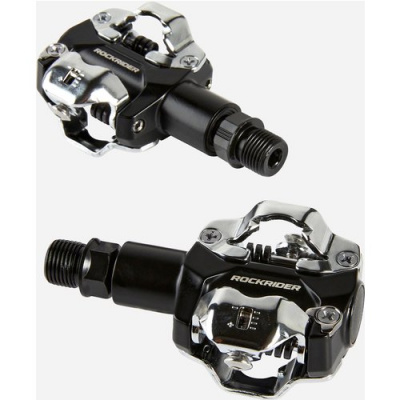
For riders considering clipless, the dual-sided SPD-compatible mechanism on Rockrider's clipless models is a practical feature. Both sides engage, so you're not hunting for the right face of the pedal at the bottom of every climb. Compared to single-sided clipless designs from brands like Crank Brothers, it's a more forgiving setup for riders still building their clipping-in confidence.
Surviving UK Grit: Durability and Bearing Maintenance
Wet, gritty mud is the enemy of pedal bearings. A dry summer's riding won't test them much - a single Scottish winter will expose every weakness. The question isn't whether your bearings will need attention, it's when, and how much work it takes.
On 100 and 500-series pedals with loose ball bearings, plan for periodic stripping and repacking. Pull the axle bolt, remove the axle, clean out the old grease (which will look like grey paste after a few muddy rides), and repack with a marine-grade waterproof grease. It's a half-hour job if you're organised about it. Done twice a season through winter, it keeps play out of the axle and stops that distinctive lateral wobble that tells you the bearings are shot.
The 900-series sealed cartridge bearings need almost no routine maintenance - that's the point. But sealed doesn't mean immortal. Once you feel grittiness or develop noticeable play in the axle, the cartridges need pressing out and replacing. It's a job for a workshop press rather than a home mechanic's bench, so factor that in. Hope pedals offer fully serviceable bearing systems at a higher price point if long-term rebuild-ability is your priority - worth knowing the trade-off exists.
One mechanical rule that applies across every pedal in this range: grease or anti-seize compound on the threads before installation, every time. Skip it on an aluminium crank arm through a wet UK winter and you'll likely be drilling out a seized pedal axle by spring. A thin coat of copper-based anti-seize is cheap insurance.
Pin condition matters too. Replaceable steel pins on the 900-series can be swapped individually when they wear down or snap off on rock strikes - keep a few spares in your pack. On fixed-pin models, once the pins are gone, grip drops noticeably on wet roots, exactly when you need it most. That's the practical argument for spending up to the 900-series if you're riding technical ground regularly.
Frequently Asked Questions
Are Rockrider pedals compatible with Shimano SPD?
Yes. Rockrider's clipless MTB pedals use the standard 2-bolt SPD system, so they work with Shimano SH51 single-release cleats and SH56 multi-release cleats interchangeably. Multi-release cleats are worth considering if you're new to clipless riding - they're more forgiving when you need to bail out quickly.
What size thread do Rockrider pedals use?
All adult Rockrider pedals use a 9/16" x 20 tpi thread, which is the standard across modern mountain, hybrid, and road bike cranks. The left pedal is reverse-threaded - loosen it clockwise, tighten it anticlockwise - so don't force it if it feels wrong at the start.
How do I maintain the bearings on my Rockrider flat pedals?
Entry-level 100 and 500-series pedals use loose ball bearings that need stripping and repacking with waterproof grease periodically - especially through winter riding. On 900-series pedals, the sealed cartridge bearings are low-maintenance day-to-day, but when they develop play or feel gritty, they'll need pressing out and replacing rather than repacking.
Rockrider Pedals FAQs
Are Rockrider pedals compatible with Shimano SPD?
Yes. Rockrider's clipless MTB pedals use the standard 2-bolt SPD system, making them compatible with Shimano SH51 single-release and SH56 multi-release cleats. If you're newer to clipless riding, multi-release cleats give you more exit angles and are easier to pull out of in a hurry.
What size thread do Rockrider pedals use?
All adult Rockrider pedals run a standard 9/16" x 20 tpi thread, compatible with virtually all modern MTB, hybrid, and road cranks. The left pedal is reverse-threaded - anticlockwise to install, clockwise to remove. Don't force it if it's not turning smoothly from the start.
How do I maintain the bearings on my Rockrider flat pedals?
On 100 and 500-series pedals with loose ball bearings, strip, clean, and repack with marine-grade waterproof grease periodically - twice a season through winter is a reasonable interval for UK riding. The 900-series uses sealed cartridge bearings that need no routine maintenance, just replacement when play or grittiness develops.