
Rockrider MTB Tyres
Rockrider MTB tyres punch well above their price point - designed by Decathlon's dedicated mountain bike division in France, often in direct collaboration with Hutchinson, who know a thing or two about rubber. What you get is a tyre range that takes proprietary Grip+ compounds and Protect+ casings seriously, not just as marketing copy but as actual engineering decisions. That matters when you're rolling into a wet Surrey Hills descent or trying to find grip on chalk-slicked roots in the South Downs.
The range spans fast-rolling XC options with tightly packed tread right through to tall, widely-spaced mud spikes built for the kind of conditions that make most tyres wave a white flag. Mid-range and premium models carry Tubeless Ready (TLR) bead designs, which opens up the option of running sealant and dropping your pressures - a genuine game-changer on rough UK trails. Wire-bead versions keep things accessible for riders on a tighter budget. Whether you're replacing worn rubber on a stock build or speccing up a fresh set of Rockrider MTB wheels, there's a tyre here that fits your riding. Check the full range below.
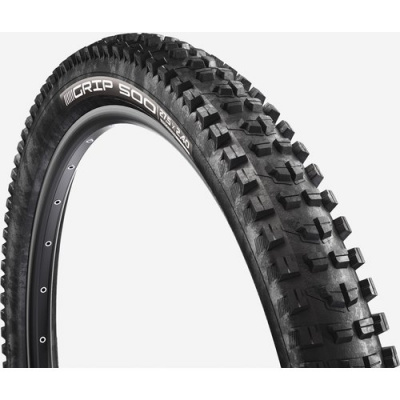
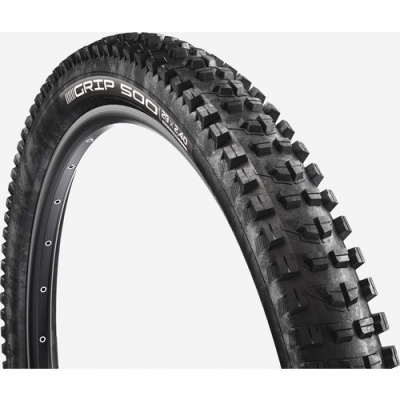
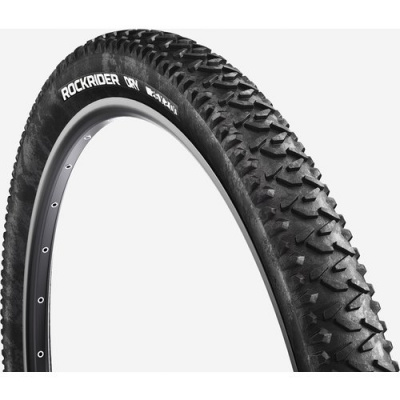
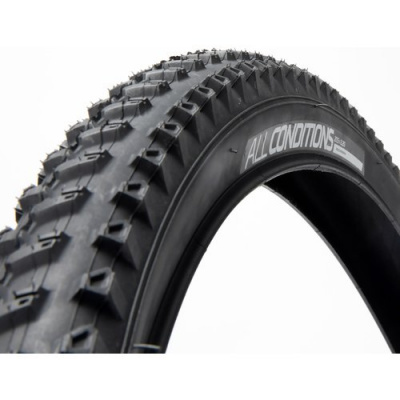
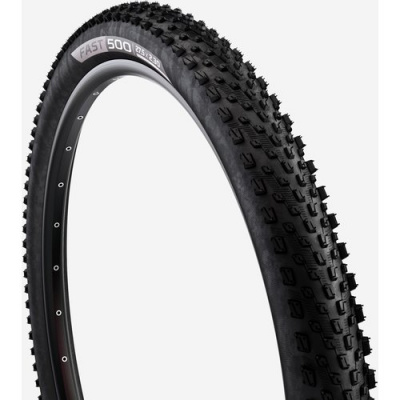
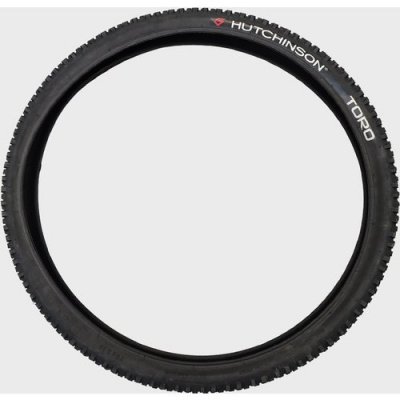
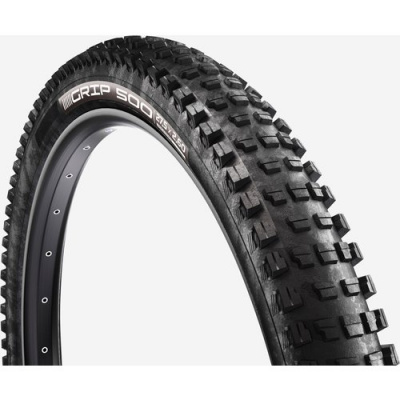
Prices and availability can change quickly. Delivery charges are not always included in listed prices.
Final price, stock status and delivery terms are set by retailer. We may receive a commission on purchases made.
Getting the Size Right: Standards and Clearance
Before anything else, check your ETRTO number - it's the two-figure code printed on your current tyre sidewall, like 57-622 for a 29 x 2.25. The first number is the tyre width in millimetres; the second is the bead seat diameter. A 622 is a 29-inch wheel; a 584 is 27.5. Don't mix them up. Sounds obvious, but it's worth double-checking before you order.
Width is where things get interesting. Running a 2.4-inch-plus tyre on a trail bike gives you a bigger contact patch and more casing volume, which helps absorb trail chatter - but your frame and fork need enough clearance to allow it. Most modern 29er trail frames will clear a 2.4 without drama, but older XC geometry bikes can be tight, especially at the chainstays. Measure the gap with your current tyre fitted, or check the manufacturer's stated max width. A tyre that rubs isn't just annoying; it's a safety issue.
If you're going tubeless - and on UK trails, you probably should - the setup demands a bit more attention. Your rims need to be Tubeless Ready (TLR) compatible, meaning they have a sealed bead channel. You'll also need airtight rim tape, tubeless valves, and a decent volume of sealant. The Rockrider mountain bike range ships with TLR-compatible rims from the ST 520 upwards, so if you're already on one of those builds, you're most of the way there. The bead on Rockrider's TLR tyres seats reliably with a track pump - no compressor drama for most riders.
Which Rockrider Tyre for Which Riding?
Rockrider organises their tyre range around three clear use cases, and it's a sensible split. Dry-condition tyres run low-profile, tightly packed knobs - fast rolling resistance, efficient on hardpack and summer singletrack, good on gravel fire roads. They're not what you want on a greasy November morning in the Peaks, but for summer racing or fast XC loops they're properly quick. Rolling resistance is noticeably lower than a full-on trail tyre; you feel it on the climbs.
All-conditions variants are the workhorse of the range. Medium-height, ramped centre knobs keep things rolling efficiently, while taller shoulder knobs bite when you tip into a corner. These are the tyres that make sense for most UK riders most of the year - versatile enough to handle a wet Wednesday evening ride and still feel composed on drier weekend trails. The dual compound versions are worth the step up in price: harder rubber through the centre cuts rolling resistance, softer rubber on the shoulders digs in when you lean the bike over. You notice the difference in loose corners.
Mud tyres run tall, widely spaced spikes specifically designed to self-clean - packed mud gets thrown clear rather than clogging the tread. If you're riding Scottish trails in January or churning through Glentress in a wet autumn, this is what you need. They're slower on firm ground, but that's the trade-off. Pair them with a faster-rolling front if you want to split the difference.
On the construction side, wire bead tyres are heavier and less supple than folding bead equivalents, but they're a solid choice if budget is the priority and you're running inner tubes. Step up to a folding bead TLR tyre with a Grip+ compound and higher TPI casing, and you get a more flexible, conforming casing that follows the ground better - think of it as the difference between a stiff shoe and one that actually bends with your foot. The Protect+ puncture protection layer sits sub-tread and reinforces the sidewalls, which matters more than people realise on flint-heavy trails. If you're comparing with Maxxis or Continental at similar price points, Rockrider holds its own on casing quality, particularly in the mid-tier TLR options.
Surviving UK Conditions: Pressure, Wear, and Sealant
UK trails are hard on tyres. Flinty chalk paths in the South Downs, exposed gritstone on the Peak District moors, wet roots on every bridleway between October and April - the Protect+ casing earns its keep here. Reinforced sidewalls resist slash damage from sharp rocks; the sub-tread layer adds a buffer against pinch flats when you clip a hidden root edge. It's not indestructible, but it's meaningfully more robust than a standard cross-country casing.
Tyre pressure makes a bigger difference than most riders give it credit for. Drop too low and you risk burping sealant or rolling the tyre off the rim mid-corner. Run too hard and you lose the grip advantage of a softer compound - the tyre skims across wet roots rather than wrapping around them. For tubeless setups on UK trails, 20 - 25 PSI front and rear is a reasonable starting point for a rider around 75 - 80kg. Go a few PSI higher if you're heavier or riding particularly rocky ground; go a little lower up front if grip is the priority. A lightweight XC setup might run higher - closer to 28 - 30 PSI - where rolling speed matters more than maximum traction.
Sealant dries out. It's easy to forget this, especially through summer when you're not getting many flats. Check your sealant volume every two to three months - more frequently in winter when temperature fluctuations accelerate drying. Top up if you can hear it sloshing but the volume feels low; if it's gone fully solid, strip the tyre, clean the bead, and start again. Catching a cracked sidewall early saves you a walk out. Run your thumb around the casing after every few rides - you'll feel a bulge or soft spot well before it becomes a trailside problem. Pair your tyres with a decent set of Rockrider helmets and MTB shorts if you're kitting out for the season - the tyre is only part of the picture. For riders wanting to compare rubber from other respected names, Michelin MTB tyres are worth a look at a similar price tier.
Rockrider MTB Tyres FAQs
Are Rockrider MTB tyres tubeless ready?
Many mid-to-high-end Rockrider tyres are Tubeless Ready (TLR) - check the sidewall for confirmation. To run them without inner tubes you'll need a TLR-compatible rim, airtight rim tape, tubeless valves, and liquid sealant. Without all four, you won't get a reliable airtight seal.
Who makes Rockrider tyres?
Rockrider tyres are designed by Decathlon's mountain bike division in France. A number of their premium folding bead and TLR models are manufactured in partnership with Hutchinson, which explains the strong casing quality relative to the price.
What tyre pressure should I run for UK trails?
On a tubeless setup, 20 - 25 PSI is a good starting point for wet, rooty UK conditions at average rider weight. Heavier riders or those on rocky ground should add 3 - 5 PSI to avoid rim strikes or burping. XC riders prioritising rolling speed can run higher.