
Nukeproof Pedals
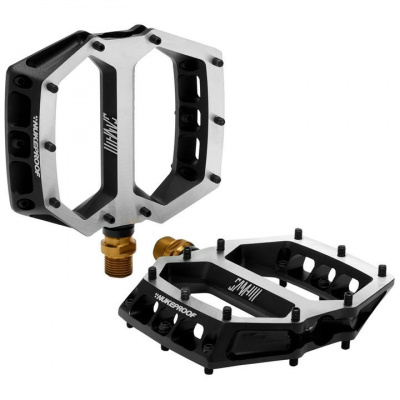
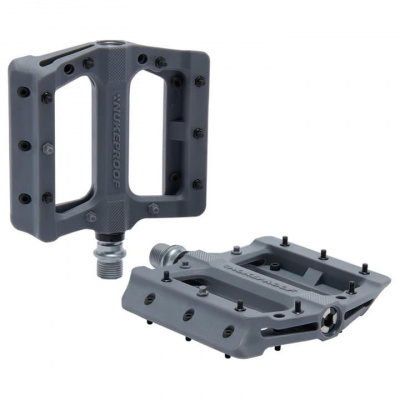
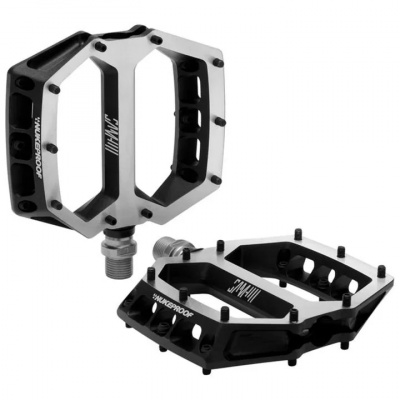
Nukeproof pedals sit at the sharper end of the contact-point conversation - and with good reason. Built around forged 6061-T6 alloy bodies, adjustable traction pins, and fully sealed internals, they're designed to keep your feet locked in when the trails are doing their worst. The lineup runs from the flagship Horizon series, developed in close collaboration with Sam Hill, through to the Neutron EVO composites that punch well above their price band. Clipless riders aren't left out either - the Horizon CS and CL variants bring SPD-compatible mechanisms into the fold for those who prefer to clip in. What ties the range together is an obsessive focus on durability. Dual-sealed bearing and DU bushing architecture means grit, mud, and winter water ingress are slowed right down rather than welcomed in. That matters a lot if you're riding the Peak District in November or threading roots in a Welsh trail centre while rain turns everything to soup. Whether you're after a wide concave platform for maximum confidence on tech descents or a lighter composite option for all-day XC loops, there's a Nukeproof pedal that fits. Chuck a pair on and your feet will thank you before you've hit the first berm.
Prices and availability can change quickly. Delivery charges are not always included in listed prices.
Final price, stock status and delivery terms are set by retailer. We may receive a commission on purchases made.
Fitting Your Nukeproof Pedals: Compatibility and Standards
Every pedal in the Nukeproof range uses the industry-standard 9/16 inch thread, which fits virtually every modern adult crankset on the market - threaded cranks from Shimano, SRAM, Race Face, e*thirteen, and beyond. No adapters, no faff. Left and right sides are marked clearly on the axle flats, so you won't cross-thread the drive side by accident, though it's worth double-checking before you commit any torque.
For clipless riders, the Horizon CS (smaller platform) and Horizon CL (larger platform) both run a Shimano SPD-compatible mechanism. That means your existing SM-SH51 single-release cleats drop straight in - no proprietary hardware needed. The CS suits riders who want a trimmer profile or prefer to walk sections without clonking around like a tap-dancer, while the CL gives more underfoot support if you're spending long days in the saddle on rougher ground. Worth knowing if you're switching from something like Crank Brothers pedals, which use their own cleat standard entirely.
One thing mechanics often skip: apply anti-seize compound or waterproof grease to the axle threads before installation. Aluminium cranks and steel axles cold-weld over time, especially after a wet winter. A minute's prep now saves a lot of grief with a pedal wrench in six months.
Horizon vs Neutron: Which Nukeproof Flat Pedal Is for You?
The Nukeproof Horizon vs Neutron question comes up constantly, and the honest answer is that they serve different riders rather than the same rider at different budgets. The Horizon is the premium tier - larger platform, forged 6061-T6 alloy body with CNC finishing, and pin placement refined alongside Sam Hill across years of World Cup downhill and enduro racing. The concave profile is deliberate: it cups your foot and resists the kind of shift that happens mid-corner when the rear steps out on a greasy rock slab. Adjustable traction pins let you dial grip up or back depending on your shoe sole and how aggressive you want the engagement to feel. The Sam Hill signature editions go a step further with custom pin placement geometry that maps to where your foot actually loads under pressure - less about symmetry, more about function.
The Neutron takes a different approach. The platform is slightly smaller, which some riders actually prefer for ankle clearance on techy trail bikes. The EVO versions swap forged alloy for nylon-reinforced composite bodies - lighter, cheaper, and more resilient to rock strikes than bare alloy (composite flexes rather than denting). They're not as rigid underfoot as the Horizons, and you'll feel that on long steep descents where torsional stiffness starts to matter. But for trail riding, all-day gravel adventures, or anyone getting into the sport, the Neutron EVO is a seriously capable pedal at a fraction of the Horizon's weight on your wallet. Riders crossing from something like DMR pedals will find the Neutron EVO sits in comparable territory - both prioritise accessibility without skimping on pin count.
If you're running a Nukeproof mountain bike and want the full system approach, the Horizon in matching colourway is the obvious pairing - though the Neutron EVO fits the bill on bikes where you'd rather save weight for components that affect speed more directly.
UK Durability and Maintenance: Keeping Your Pedals Running Through the Slop
British riding extracts a toll on pedal internals that warmer, drier climates simply don't replicate. Peak District grit is particularly brutal - fine enough to work past seals but abrasive enough to grind bearing surfaces down quickly once it's inside. Nukeproof's dual-sealed bearing and DU bushing internal architecture addresses this directly: the DU bushings handle radial and axial loads near the pedal body, while the sealed cartridge bearings sit further along the axle where contamination pressure is lower. It's a sensible setup that holds up well, but it's not impervious.
For riders out through autumn and winter - the kind of conditions you get on off-camber roots near any UK trail centre between October and March - a six-month strip, clean, and re-grease cycle is a solid baseline. If you start feeling lateral play when you waggle the platform by hand, or notice a grinding sensation underfoot, don't wait for the interval. That's the bearing telling you it needs attention now. Winter road salt is worth flagging too: if you're commuting or riding lane sections between trail heads, the grub screws holding your traction pins can seize in their threads. A light application of copper grease when you first fit the pedals is cheap insurance.
Compared to open-bearing designs from brands like Hope pedals or Burgtec pedals, the Nukeproof setup is broadly comparable in serviceability - all of them reward riders who actually maintain them rather than ignoring the pedals until something snaps. Pair fresh pedals with Nukeproof trail trousers and you've got the lower half of your kit sorted for whatever the calendar throws at you. And if your current set is already showing wear, need replacement pins, axles, or bearing rebuild kits? Head over to our dedicated Nukeproof Pedal Spares page to keep your current set spinning smoothly. Also consider pairing your pedals with Nukeproof handlebars for a more cohesive cockpit setup that balances feel across all your contact points.
Nukeproof Pedals FAQs
Are Nukeproof clipless pedals compatible with Shimano SPD cleats?
Yes. The Horizon CS and Horizon CL clipless pedals both use a Shimano SPD-compatible mechanism, so standard cleats like the SM-SH51 fit straight on without any adapters. If you're already running SPD cleats on another pedal system, you can transfer them directly.
What is the difference between Nukeproof Horizon and Neutron pedals?
The Horizon is the premium option - larger platform, forged 6061-T6 alloy body, and pin placement developed with Sam Hill for maximum concave engagement. The Neutron runs a slightly smaller platform and includes the EVO composite versions, which are lighter and more affordable while still offering solid grip for trail and XC riding.
How often should I service the bearings on my Nukeproof pedals?
For year-round UK riding, strip, clean, and re-grease the DU bushings and sealed cartridge bearings every six months. If you feel lateral play in the platform or hear grinding before that interval, service them immediately. Catching it early saves the bearing surfaces and avoids a full rebuild.