
E Thirteen MTB Tyres
E Thirteen MTB tyres sit at the sharper end of the gravity spectrum - built for riders who want real bite on steep, technical ground rather than something that merely looks aggressive on a spec sheet. The range splits into two clear personalities: the All-Terrain for mixed-condition riding where rolling speed still matters, and the Grappler for loose, sketchy descents where braking traction and mud clearance take priority. Both are available in tubeless-ready constructions, and both carry the option of e*thirteen's proprietary MoPo compound - a Motion Polymer rubber originally developed for moped drag racing that delivers an almost adhesive grip on wet roots and slick limestone. Casing choices run from a lighter Trail single-ply through to a dual-ply Enduro spec with Apex inserts, and on to a full Downhill build for bike park hammering. On the flinty trails of the Peak District or the slate-scattered descents of Snowdonia, that casing choice is worth thinking about before you buy. Compare the latest UK prices across the range below, and use the sections that follow to work out exactly which compound, casing, and tread pattern suits how and where you ride.
Prices and availability can change quickly. Delivery charges are not always included in listed prices.
Final price, stock status and delivery terms are set by retailer. We may receive a commission on purchases made.
Getting the Fit Right: Rim Width, Beads, and Tubeless Setup
E Thirteen tyres are optimised for internal rim widths in the 27mm to 35mm range. Go narrower than that and the tread profile crowns - you lose the shoulder knobs' intended contact angle and the cornering grip you paid for. Go wider, and the casing squares off awkwardly. If you're running E Thirteen MTB wheels, the pairing is dialled from the off; on third-party rims, just check your internal width before ordering.
All current E Thirteen mountain bike tyres are tubeless ready, and their Aramid folding beads are worth understanding before you set up. The Aramid bead creates a tight, secure seal against the rim hook, which is exactly what you want for tubeless reliability - but it also means the tyre can be stubborn to seat. A track pump won't always cut it. Use a high-volume tubeless inflator or a compressor blast to pop the bead cleanly; once it's seated, it tends to stay put. Pair them with E Thirteen tubeless valves for a compatible, leak-resistant setup. Add your sealant before the final bead goes on if you want less mess - obvious, but worth saying.
Grappler vs. All-Terrain: Picking the Right Tool
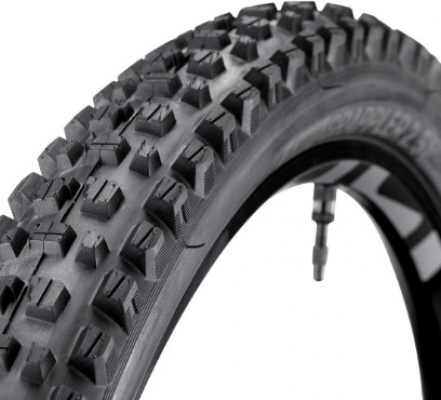
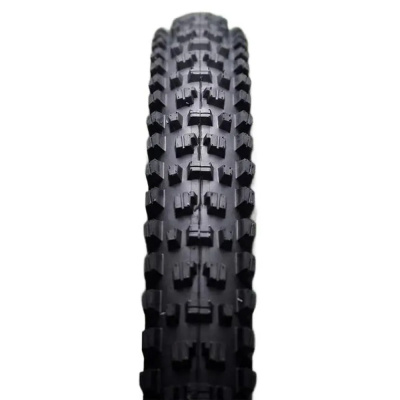
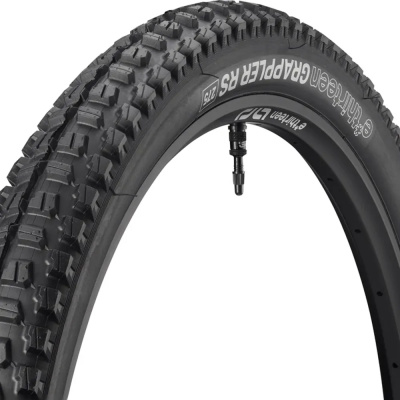
The difference between these two isn't subtle. The Grappler is an aggressive gravity tyre with tall, widely spaced knobs - the gaps between them are doing real work, shedding the deep Welsh winter mud that packs into tighter treads and turns your wheel into a slick. The side knobs are big and robust, designed for braking traction on loose, steep descents rather than rolling efficiency. This is a tyre that suits Bike Park Wales laps or the gnarlier lines in the Tweed Valley; it's not the one for an all-day XC mission with road transfers.
The All-Terrain uses more closely spaced centre knobs, which keeps rolling resistance down on hardpack and mixed-condition trails. It's the more versatile choice - decent on dry gritstone, still capable in the wet, and less punishing on your legs when you're pushing up fireroad climbs. Think of it as your four-seasons workhorse where the Grappler is a specialist descending tool.
Casing tiers cut across both models. The Trail casing is single-ply and the lightest option, suited to riders prioritising weight and efficiency over maximum protection. Step up to the Enduro casing and you get dual-ply construction with Apex inserts - foam strips that sit between the tube and tyre to absorb impacts and dramatically reduce pinch flat risk on sharp-edged flint and slate. The Downhill casing adds maximum sidewall reinforcement for bike park and race use where weight is secondary to durability. If you're split between Enduro and Trail casing, and you ride anywhere with sharp rocks, the Enduro build is the more honest choice for UK conditions.
Compound selection runs parallel to casing choice. MoPo - e*thirteen's Motion Polymer compound - is the tacky, slow-rebound rubber that generates that almost uncomfortable level of grip on wet off-camber roots. It's the compound that makes riders raise an eyebrow the first time they push into a corner on damp ground. The Endurance compound trades some of that peak grip for a harder centre tread that lasts noticeably longer, with softer rubber reserved for the side knobs where cornering adhesion still matters. Compared to what Maxxis MTB tyres call their MaxxGrip and MaxxTerra split, the principle is similar - it's a sensible way to balance longevity and performance across the contact patch.
Wear, Longevity, and Keeping Them Running in UK Conditions
MoPo compound tyres wear faster than standard rubber. That's the trade-off you accept for the grip level, and it's worth being straight about. On tarmac liaisons - the inevitable bridleway-to-car-park connections on most UK rides - the soft compound scrubs away quickly. Keep road sections short or walk them if you want the mileage back.
A practical approach that a lot of enduro riders land on: run MoPo on the front where cornering grip is most critical, and the Endurance compound on the rear where the driven wheel sees more wear. You get the adhesion where it counts on entry and mid-corner, and better rear tyre lifespan across a season. Front MoPo, rear Endurance is a well-worn combination for good reason. WTB MTB tyres and Continental MTB tyres both offer similar front/rear compound matching logic if you're weighing up alternatives.
Tubeless sealant needs more attention with aggressive casings than you might expect. The thicker, more porous casing construction - particularly on Enduro and Downhill builds - can absorb sealant over the first few weeks as it cures into the casing fibres. Check your sealant levels after the first month, then top up every three to four months as a rule. A dry tyre is a punctured tyre waiting to happen, especially once the British autumn sets in and every root turns into a greased rail.
Apex inserts, where fitted, add a layer of complexity to installation and removal but they genuinely earn their keep on rocky ground. If you're wrestling a tyre off trailside, the insert will come out separately - know that before you're kneeling in a puddle in the Peaks. Keep a tyre lever or two in your pack regardless of tubeless setup; sidewall slashes still happen, and no insert saves you from a rip that size.
E Thirteen MTB Tyres FAQs
Are E Thirteen tyres tubeless ready?
Yes, every current E Thirteen MTB tyre in the range is tubeless ready. The Aramid folding bead creates a tight, airtight seal against the rim - though you'll likely need a high-volume inflator rather than a standard track pump to seat it cleanly. Once it's on, it holds well.
What is the difference between E Thirteen All-Terrain and Grappler tyres?
The All-Terrain runs tighter centre knobs for lower rolling resistance across mixed and hardpack trails - it's the more versatile, year-round option. The Grappler uses tall, widely spaced knobs built for mud clearance and braking traction on steep, loose ground. Same casing and compound options apply to both; the tread pattern is what changes the character.
How long do E Thirteen MoPo tyres last?
MoPo is a soft, ultra-tacky compound - it wears faster than standard rubber, particularly if you're covering tarmac between trail sections. Expect a shorter lifespan than a harder compound. Many riders run MoPo on the front and the Endurance compound on the rear to balance cornering grip with rear tyre longevity across a season.