
Wtb MTB Tyres
WTB MTB tyres have been a serious option on trail bikes since mountain biking was still figuring itself out - and the range has only got sharper. Where WTB earns its reputation is in predictable, confidence-building traction rather than flashy marketing claims. The tread patterns are designed around real riding scenarios: wet chalk on the South Downs, claggy mid-winter mud in Wales, sharp flint that chews through sidewalls before you've even noticed. Getting the most from the range means understanding two things upfront - casing and compound. WTB's Light and Tough casings suit very different riders, and the gap between Fast Rolling and High Grip compound is significant once the ground turns slippery. Almost every current WTB tyre runs their TCS (Tubeless Compatible System), so tubeless conversion is straightforward if your rims are up to it. The SG2 puncture protection layer and TriTec three-compound tread are options worth paying attention to if you ride anything technical. Browse the price-compared selection below to match the right tread, casing, and compound to your next build.
Prices and availability can change quickly. Delivery charges are not always included in listed prices.
Final price, stock status and delivery terms are set by retailer. We may receive a commission on purchases made.
Nailing Your TCS Tubeless Setup: Compatibility and Standards
Nearly all current WTB mountain bike tyres are built around TCS (Tubeless Compatible System), WTB's own standardised approach to tubeless fitment that pairs tyre bead geometry with matching rim profiles for a consistent, airtight seal. The idea is to remove the guesswork: a TCS tyre on a TCS-marked rim should seat reliably with a track pump rather than demanding a compressor. That said, the system still requires properly taped rims - non-tubeless rims without conversion tape will not hold air regardless of how good the tyre is.
Rim width matters more than most riders account for. WTB's WT (Wide Trail) tyres are engineered to run on internal rim widths of 30mm or more, where the wider profile opens up the tread correctly and gives the sidewall the support it needs. Run a 2.5" WT tyre on a narrow 25mm internal rim and you'll get a taller, narrower profile than intended - cornering feels vague and the sidewall can roll under load. Check your rim's ETRTO rim width before ordering, especially if you're building up a new wheelset. WTB's own compatibility charts are worth a quick look.
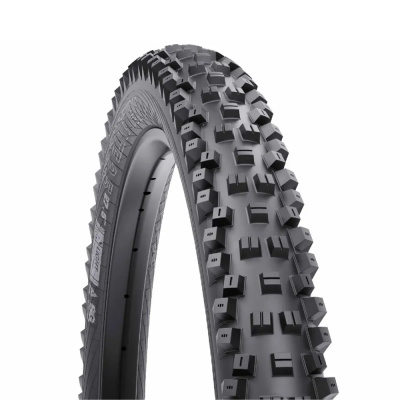
Frame clearance is another thing to sort before you commit, particularly on 29er frames with tighter stays. Aggressive open-knobbed treads like the Verdict measure generously at the shoulder, so what looks like a 2.5" tyre on paper can run wider than that once properly inflated on a wide rim. Mud clearance on 27.5 frames is generally less of an issue, but on older 29er hardtails it can be tight. Measure your clearance with a coin or tyre lever before you ride, not after.
WTB Casings and Compounds: What the Matrix Actually Means
WTB's product range is built on a clear matrix of casings and compounds, and once you understand it the whole catalogue makes sense. Light casing uses single-ply construction - lower rolling resistance, noticeably lighter, and perfectly adequate for trail riding where you're not regularly dropping into chunky rock gardens or shuttling bike parks. Tough casing is dual-ply, built for enduro and aggressive riding where sidewall stiffness and pinch-flat resistance matter more than saving a few grams. If you ride the Peak District's gritstone edges or anything with sharp-edged rock, the step up to Tough is worth it.
Between Light and Tough sits the SG2 protection layer - a bead-to-bead nylon insert that adds puncture resistance without the weight penalty of a full dual-ply casing. It's a sensible middle ground for riders who do long days on sharp ground (think flint-riddled Surrey trails) but don't want the extra rotational weight of a full Tough casing. Worth noting: SG2 doesn't replace Tough for genuine enduro abuse, but for most UK trail riders it's a practical upgrade over Light alone.
On compounds, Fast Rolling uses harder rubber at the centre tread for efficiency on the pedal strokes, with softer rubber at the edges for cornering bite. High Grip runs softer rubber throughout, using WTB's TriTec system - three distinct rubber compounds in one tread addressing support, traction, and durability in different zones. High Grip is noticeably stickier on wet roots and chalk, the kind of conditions that catch you out on a damp October morning in the Surrey Hills. The trade-off is wear rate; High Grip will round off faster on abrasive hardpack.
A practical rule of thumb from time spent in showrooms and with build specs: run High Grip compound in a Light casing on the front, where traction and feel are critical, and Fast Rolling in a Tough casing on the rear, where durability and flat protection take priority. It's a pairing that balances the budget without sacrificing what matters at either end of the bike. If you're comparing against something like Maxxis MTB tyres, the equivalent would be pairing a soft-compound Assegai front with a harder-compound Minion DHR II rear - same logic, different rubber.
For WTB enduro tyres specifically, the Tough casing with SG2 and High Grip compound is the most capable combination in the range. It adds weight but stops you walking out after a sidewall slash. Continental MTB tyres take a similar dual-casing approach with their ProTection layer, and Michelin MTB tyres offer comparable protection tiers if you want to compare across brands before deciding.
UK Durability: Mud, Flint, and What Survives the Winter
UK conditions test tyres in ways that dry-climate ranges simply don't account for. Sealant degrades faster when you're regularly riding through grit, standing water, and cold mud - plan on topping up your TCS tubeless sealant every three to four months through winter rather than the six months you might get away with in summer. A quick squirt through the valve before a big ride costs nothing and saves a long push home.
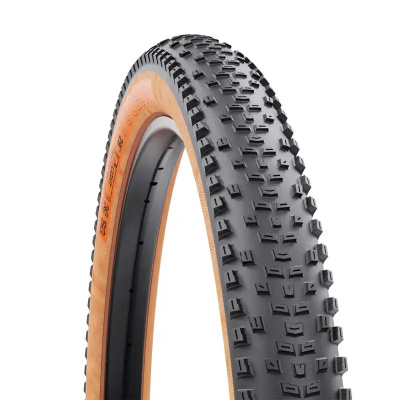
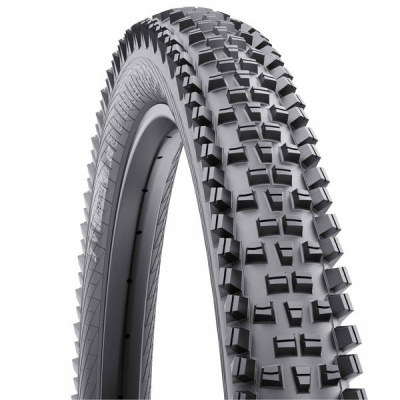
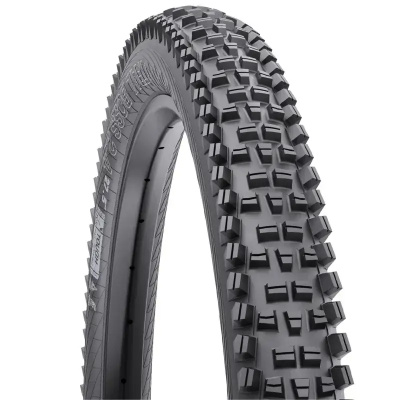
For summer hardpack and dusty singletrack, the Trail Boss is WTB's go-to: an open, versatile tread that rolls efficiently on dry ground without sacrificing too much in light mud. Come November, switch your front tyre at least. The Vigilante is a popular step up for wetter, looser conditions - aggressive shoulder knobs, decent mud clearance, and a tread pattern that cleans itself reasonably well. For genuine deep-winter slop, the Verdict goes further with taller, more widely spaced knobs that cut through the kind of peanut-butter mud you find on Welsh trail centres after three days of rain. It's slower on hardpack but transforms traction when the ground turns soft.
Sidewall inspection matters more than most riders bother with. Flint in particular leaves small, near-invisible cuts that can become blowouts under load. Run your fingers around the sidewall after every muddy ride - if you feel nicks or see threads showing, that tyre needs replacing before it lets go mid-corner. SG2's nylon layer resists cuts better than a standard Light casing, but no tyre is immune to repeated flint strikes. Riders heading into the Peak District's rockier sections should factor this into casing choice before the season starts. If you want to see how WTB compares to another reliable option for gritty UK riding, Vittoria MTB tyres offer their own protection layers worth cross-referencing.
WTB 29er MTB tyres in aggressive treads like the Verdict can be harder to source mid-season, so it's worth grabbing a winter front tyre before October hits and stock runs low. Check the folding bead versions over wire bead if you're building tubeless - they seat more consistently and the weight saving is a bonus. For the best WTB tyres for UK winter riding, the Verdict front and Judge rear in High Grip compound is a combination that comes up repeatedly from experienced UK riders, and for good reason.
Wtb MTB Tyres FAQs
Are WTB tyres tubeless ready?
Yes. Almost all current WTB mountain bike tyres are built around the TCS (Tubeless Compatible System), which standardises bead and rim fitment for a reliable seal. You'll still need properly taped rims and a quality sealant - TCS does the heavy lifting, but it won't compensate for a poorly prepared rim bed.
What is the difference between WTB Light and Tough casings?
Light casing is single-ply - less weight, lower rolling resistance, suited to trail riding where sidewall abuse is limited. Tough casing is dual-ply, giving significantly more sidewall stiffness and resistance to pinch flats and slashes, which makes it the right call for enduro riding or anywhere with sharp rock. SG2 sits between the two if you want puncture protection without the full weight penalty of Tough.
Which WTB tyre combination is best for UK winter riding?
A Verdict front paired with a Judge rear, both in High Grip compound, is a well-proven winter combination for UK conditions. The Verdict's tall, open knobs cut through deep mud and provide front-end bite on wet roots, while the Judge holds braking traction at the rear. High Grip's softer TriTec rubber makes a real difference on chalk and wet rock.