
E Thirteen MTB Wheels
E Thirteen MTB wheels are built around one idea: keeping you rolling when the trail is doing its worst. Hookless rim profiles sit at the heart of the range - drop the tyre pressure for wet Welsh roots or a gritty Peak District descent, and the rim holds the tyre in place without the square-edge pinch flats that plague narrower, hooked designs. That wider, supported bead wall also soaks up impacts that would crack a conventional rim, which is why E Thirteen backs every carbon rim with a lifetime warranty.
The range splits cleanly into disciplines. You've got the LG1 for riders who want maximum armour on enduro stages and bike park laps, the TRS for all-day trail riding where every gram on the climb matters, and the XCX for cross-country and gravel where weight is everything. Each line comes in Base (alloy), Plus (premium alloy), or Race (carbon) builds, so there's a realistic option whether you're protecting a mid-range hardtail or speccing a gravity sled.
Most models ship with rim tape pre-installed and tubeless valves in the box, so you're not hunting round for workshop supplies before your Sunday morning ride. Browse the price-compared selection below and check Boost and SuperBoost spacing before you click.
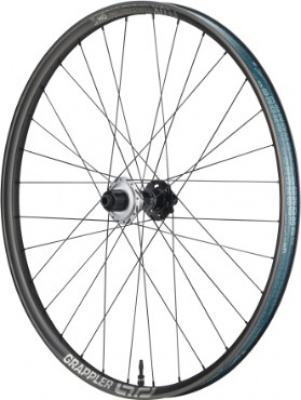
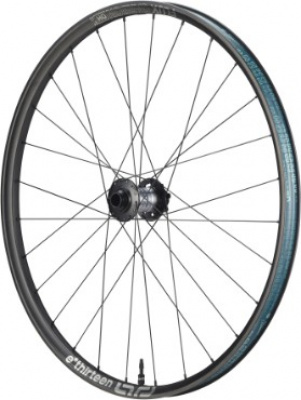
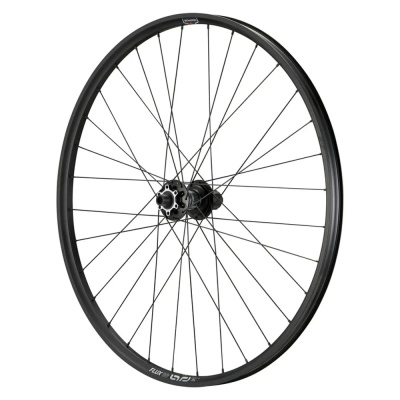
Prices and availability can change quickly. Delivery charges are not always included in listed prices.
Final price, stock status and delivery terms are set by retailer. We may receive a commission on purchases made.
Axle Standards, Spacing, and Freehub Fitment
Get the fitment wrong and you've got a very expensive paperweight, so check this first. E Thirteen wheelsets cover the full spread of modern MTB axle standards. The front runs Boost spacing at 15x110mm across most trail and enduro models, while the rear comes in standard Boost 12x148mm or SuperBoost 157mm - the latter suits many longer-travel enduro and mullet frames where the wider rear axle improves chainline with a large cassette. If your frame is SuperBoost, it's worth double-checking that spec sheet rather than assuming.
Freehub compatibility is genuinely flexible. E Thirteen hubs accept interchangeable bodies covering SRAM XD, Shimano Microspline, and standard HG - so if you're planning a drivetrain upgrade down the line, you won't need a new rear wheel to go with it. That's a practical long-term advantage over some rivals. Rotor mounting is predominantly 6-bolt across the range; Centre-Lock adapters exist but check the individual model listing. If you're comparing fitment flexibility against something like Hope MTB wheels or DT Swiss MTB wheels, E Thirteen's interchangeable freehub system holds up well in that company. Pair the rear wheel with the right E Thirteen 12-speed cassette and the whole drivetrain plays nicely together.
LG1, TRS, and XCX: Choosing the Right Line
The naming structure tells you most of what you need to know, once you've decoded it. LG1 is the gravity-focused line - reinforced rim layup, heavier than TRS but built to survive repeated rock strikes and compressed landings on bike park laps or enduro stages. If you're racing timed segments or riding Gnar at a Welsh trail centre on repeat, this is the one. Rim inner width sits wide to run chunky E Thirteen MTB tyres at low pressures without tyre roll.
TRS is where most UK trail riders will land. It's lighter than LG1 but still built for proper descending - think long ridge rides in the Brecon Beacons where you're grinding up for an hour then bombing back down loose choss. The balance between climbing weight and descending confidence is the whole point of this line, and the hookless rim profile means the tyre support is there when you're committing to a slippery line. Against something like Reserve MTB wheels, TRS Race carbon sits in broadly the same bracket for trail-focused riders who want a lifetime warranty without paying for pure XC weight savings.
XCX targets cross-country and lighter gravel applications - narrower rim inner widths, reduced layup weight, and a focus on rolling efficiency over raw impact resistance. Not the wheel for chunky enduro abuse, but ideal if you're chasing lap times or riding mixed-surface routes.
Each line runs three build tiers: Base (entry-level alloy, solid daily-driver choice), Plus (premium alloy, better bearings and finish), and Race (carbon with that lifetime warranty on the rim). The Race tier is where E Thirteen makes its clearest case - carbon rims with a no-quibble lifetime warranty are still relatively rare, and it removes one of the usual arguments against going carbon on a bike that sees regular UK winter use. Looking to build a custom setup or need to replace individual hub components? Head over to our E Thirteen Hubs page for standalone parts - that's a separate rabbit hole worth exploring before committing to a complete wheelset.
Keeping Them Rolling Through a UK Winter
British riding conditions are their own category. Abrasive grit and liquid mud from October through to April act on bearing seals like grinding paste - slow, relentless, and expensive if you ignore it. After a properly wet ride in the Peak District or on the South Downs, give the hubs a spin by hand and listen for any roughness. If you catch bearing wear early, a set of replacement cartridge bearings costs very little compared to a full hub rebuild. It's the kind of thing worth doing at the same time you're checking tyre sealant.
Speaking of sealant - the integrated tubeless system on most E Thirteen models (pre-installed rim tape, valves included) makes initial setup straightforward, but sealant does dry out. In UK riding conditions, check levels every six to eight weeks through winter; cold temperatures accelerate drying. A quick valve-core removal and a syringe of fresh sealant takes two minutes and saves a trailside puncture on a frozen morning. If you need to top up the hardware side, E Thirteen tubeless valves are available separately.
The hookless rim design earns its keep specifically on the kind of square-edge hits you get on wet Pennine gritstone or rock armour trail features - the kind of impact where a hooked rim and an under-inflated tyre part company messily. Lower tyre pressures mean more grip on slippery roots and wet rocks, and the wider rim inner width is what makes that pressure drop viable without the tyre rolling off under load. It's not magic, just physics working in your favour. For comparison, Crank Brothers MTB wheels take a different approach to rim construction, so if you're weighing up options it's worth looking at both rim profiles against your typical riding style.
E Thirteen MTB Wheels FAQs
Are E Thirteen wheels tubeless ready out of the box?
Most modern E Thirteen wheelsets come pre-taped with tubeless valves already in the box. You mount a tubeless-compatible tyre, pour in your sealant of choice, and inflate. There's no hunting for tape or valves before your ride - it's genuinely plug-and-go for most models.
What is the difference between E Thirteen LG1 and TRS wheels?
LG1 wheels use a heavier, reinforced rim layup designed for downhill and enduro abuse - maximum impact resistance is the priority. TRS wheels are lighter and aimed at trail and all-mountain riding, where you need enough strength for proper descending but don't want to carry unnecessary weight on the climbs.
Can I change the freehub body on an E Thirteen wheelset?
Yes. E Thirteen hubs use interchangeable freehub bodies, so you can swap between SRAM XD, Shimano Microspline, and standard HG without replacing the wheel. It's a straightforward workshop job and means your wheelset can follow a drivetrain upgrade rather than being made redundant by one.