
Ht Components Pedals
HT Components pedals have earned their place on World Cup Downhill and Enduro rigs through sheer mechanical honesty - no gimmicks, just well-engineered contact points that hold up when conditions turn ugly. Whether you're after the locked-in feel of their proprietary clipless system or the raw, adjustable grip of their CNC-machined flat platforms, HT build pedals that take punishment and keep working. The low-profile designs give you genuine ground clearance on rooty, rocky singletrack, and the EVO+ bearing system - combining needle bearings with IGUS bushings - is built to handle the kind of abuse that would reduce cheaper alternatives to rattling scrap. That matters on UK trails, where grit and standing water are as reliable as the weather forecast being wrong. HT offer a clear range from affordable nylon trail-bashers right through to full CNC alloy race platforms, and their clipless range uses a proprietary mechanism with adjustable spring tension - giving you a degree of tuning that Shimano SPD simply doesn't offer. If you've been running the same pedals since they came free with your old bike, it's worth spending five minutes with the options here.
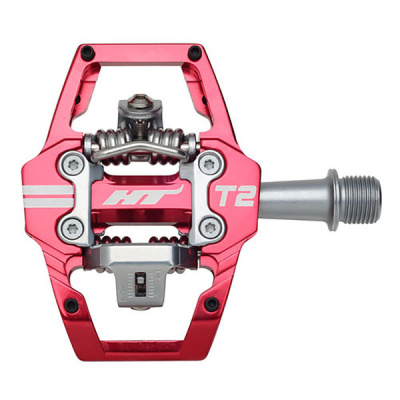
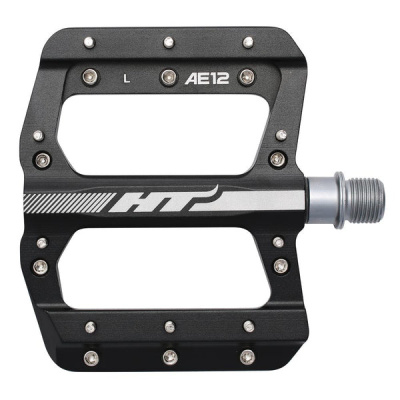
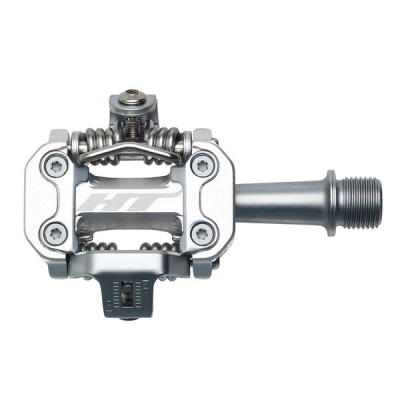
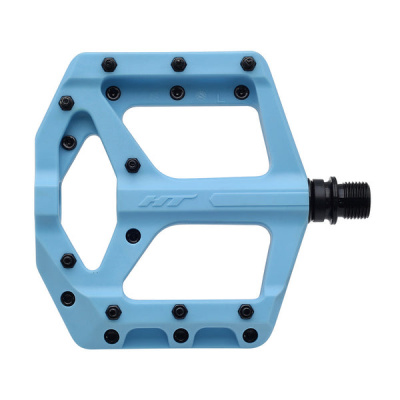
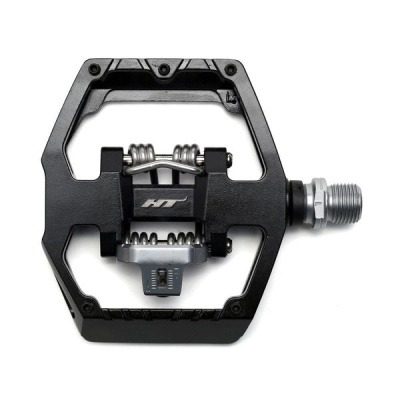
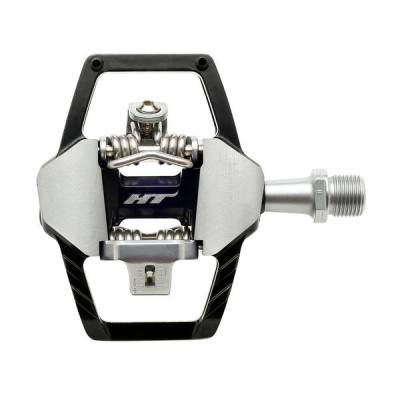
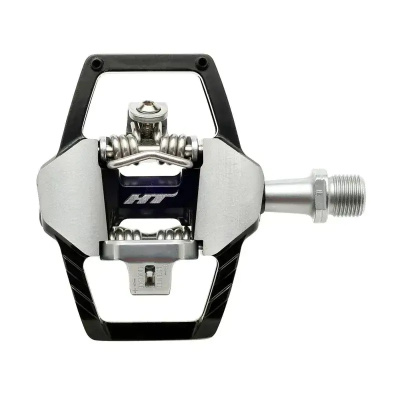
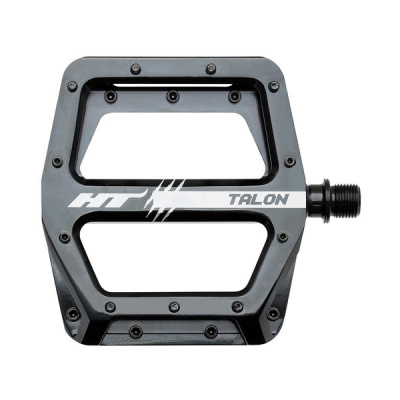
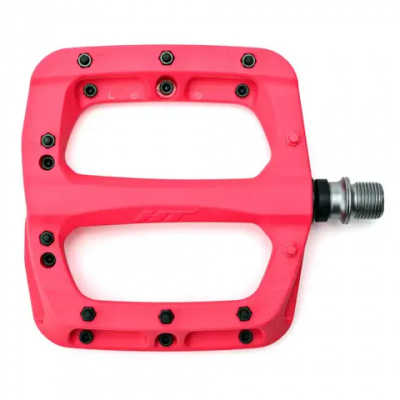
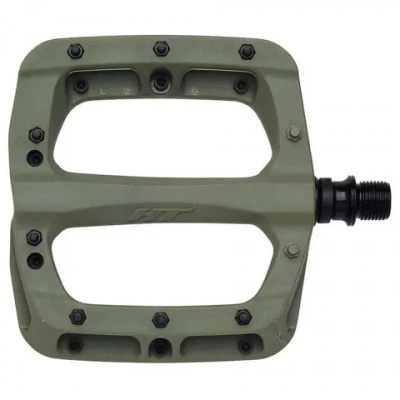
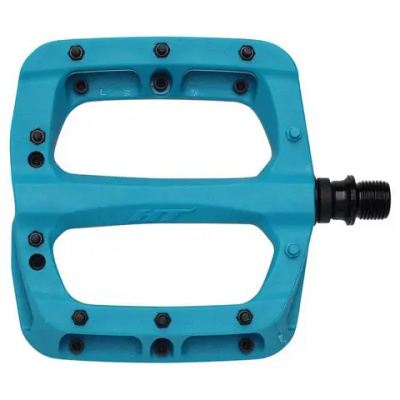
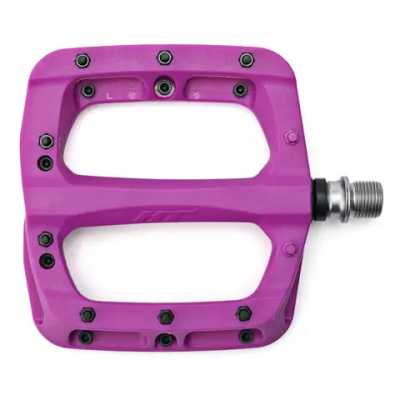
Prices and availability can change quickly. Delivery charges are not always included in listed prices.
Final price, stock status and delivery terms are set by retailer. We may receive a commission on purchases made.
Compatibility and Standards Worth Knowing
Every pedal in the HT range uses a standard 9/16 inch spindle thread, so they'll fit any modern two-piece or three-piece crank without adaptors or faff. That covers the vast majority of trail, enduro and downhill bikes on the market today. One thing to get straight before you buy: HT clipless pedals do not use the Shimano SPD standard. They run a proprietary engagement mechanism - a different cleat shape, different spring geometry, different release feel. You cannot mix SPD cleats with an HT clipless pedal and expect safe engagement. It's not a compromise you want to discover mid-descent.
For replacement cleats with varying float options, visit our HT Components Cleats page. If you need rebuild kits or replacement pins, check out our HT Pedal Spares collection.
Navigating the HT Product Range
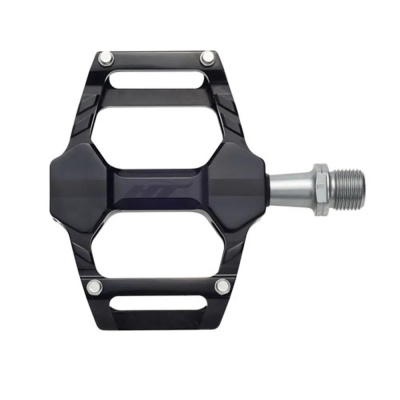
HT split their pedal line into two clear families - flats and clipless - and within each there's a logical tiering based on weight, material quality and intended discipline. Spend a moment working out where you sit before defaulting to the most expensive option.
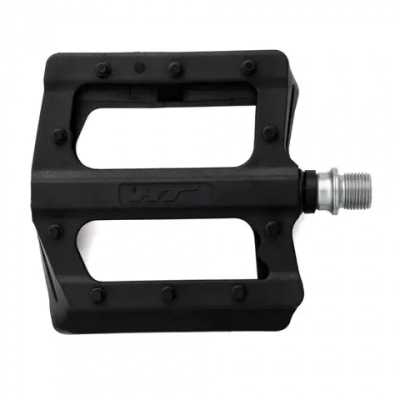
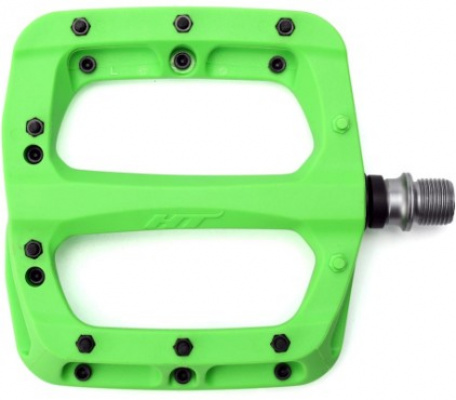
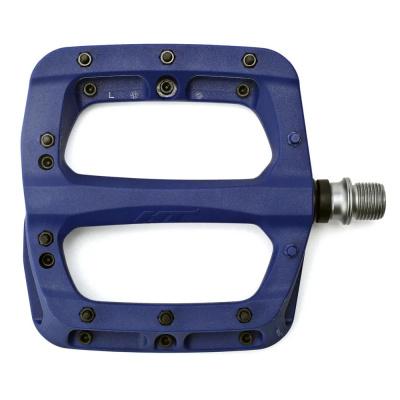
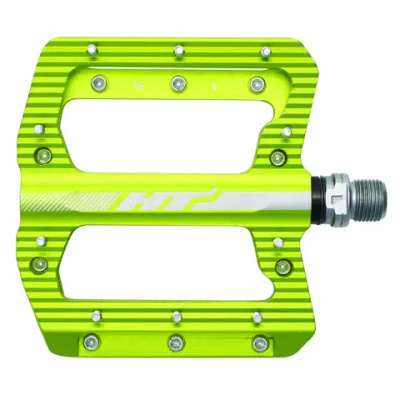
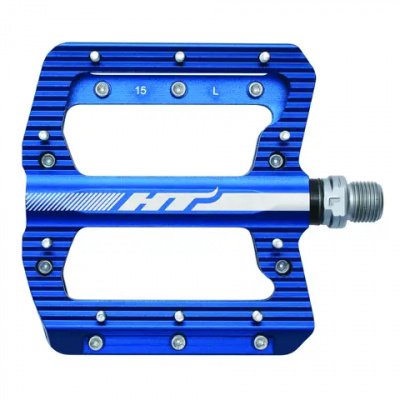
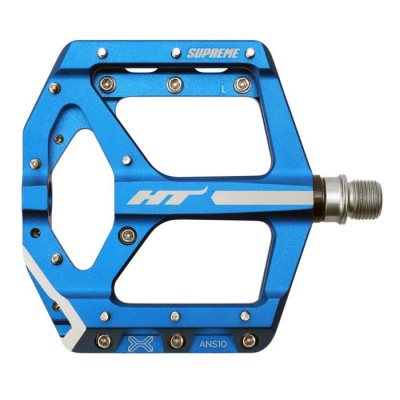
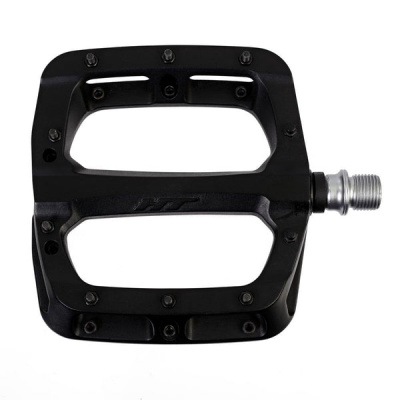
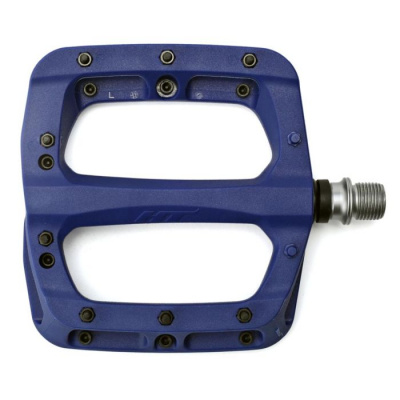
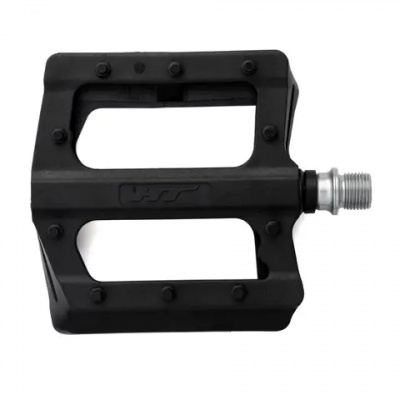
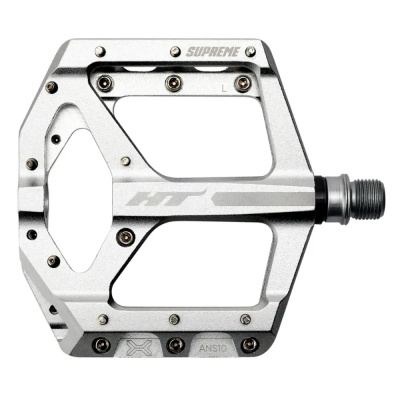
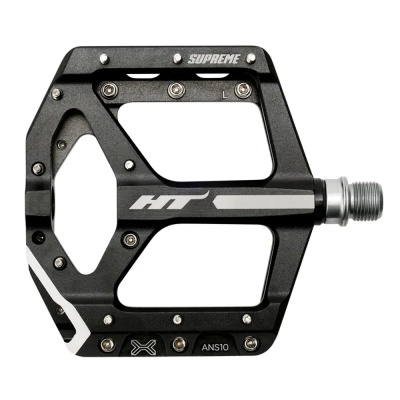
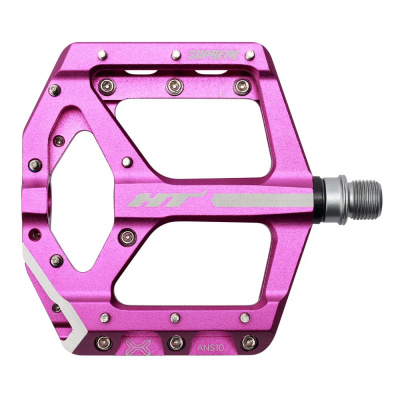
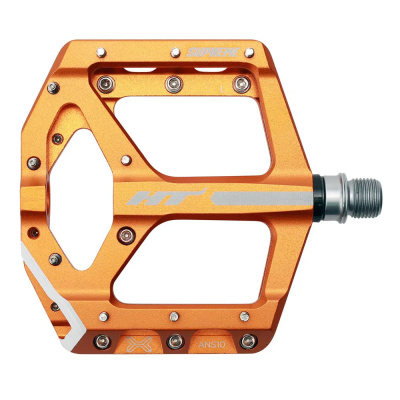
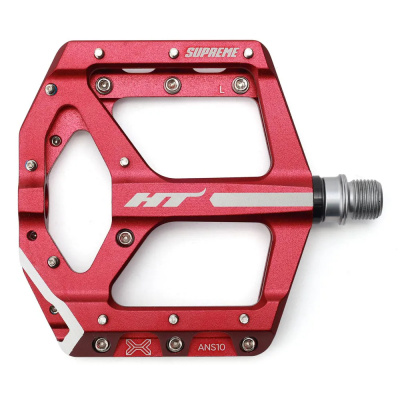
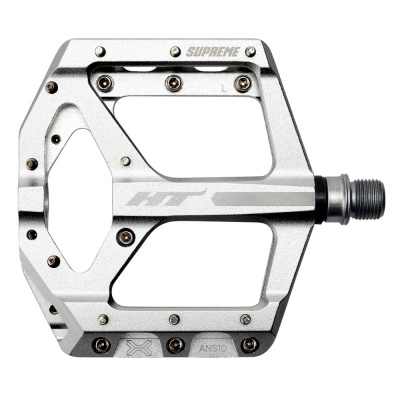
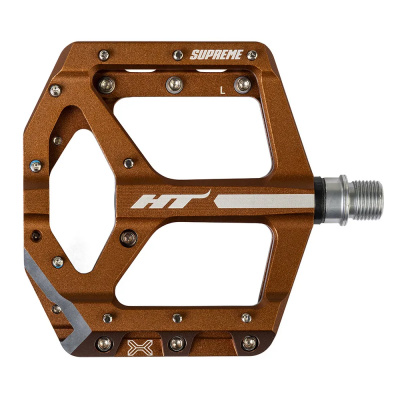
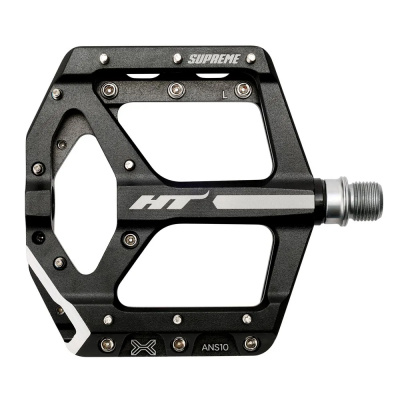
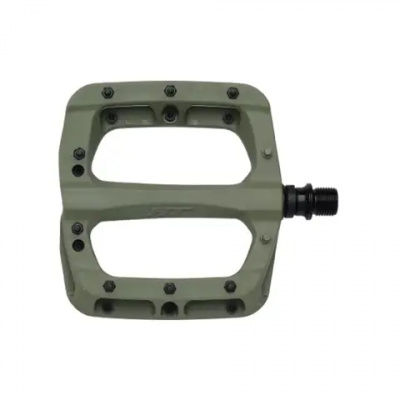
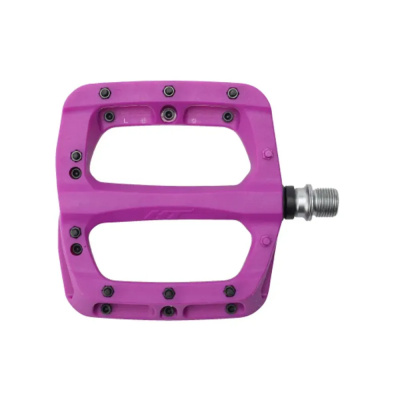
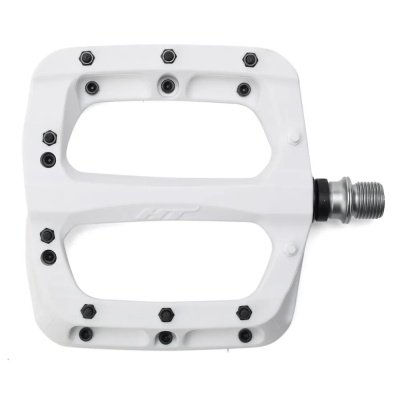
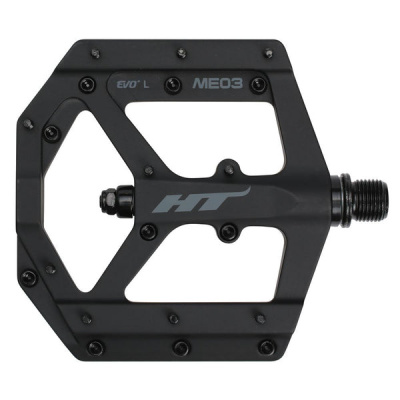
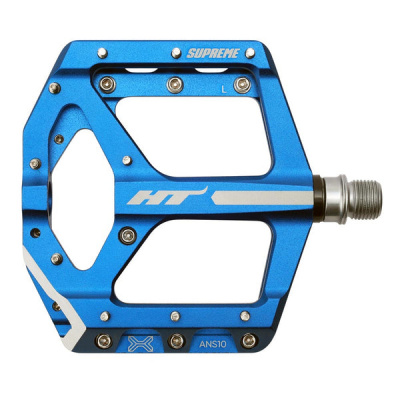
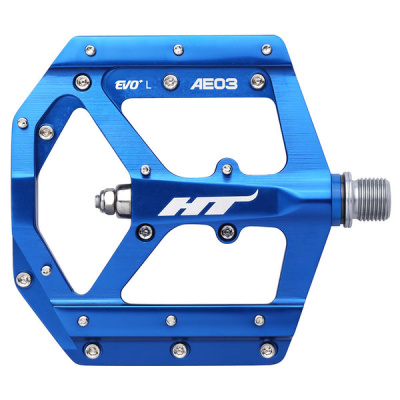
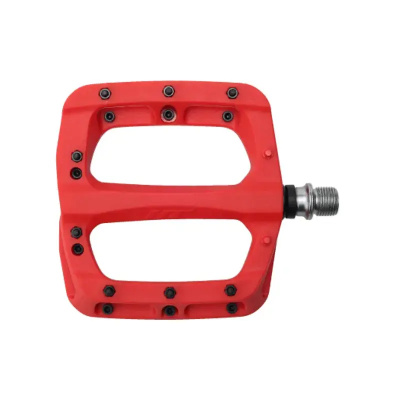
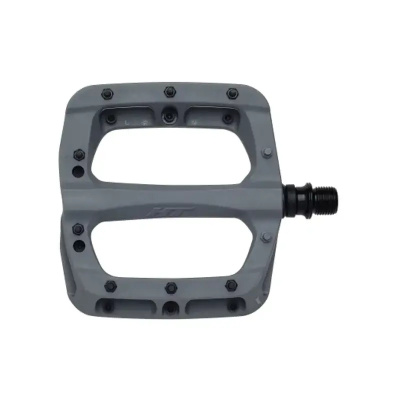
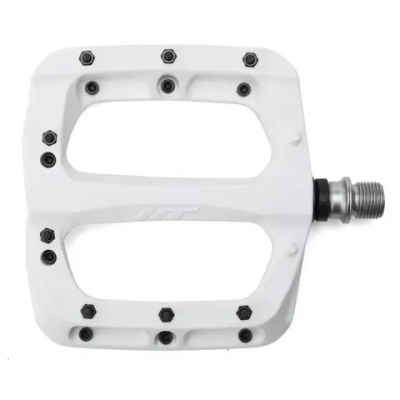
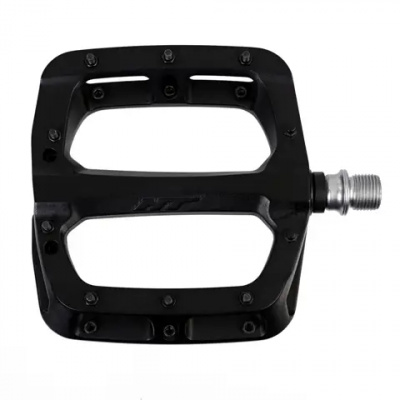
On the flat side, the PA03A is the sensible entry point. Nylon body, straightforward pin layout, tough enough to take a kicking and cheap enough that you won't wince when it clips a rock. It's the kind of pedal that earns its place as a dedicated winter beater - throw it on your mud bike and stop worrying about it. Step up to the ANS10 or the Supreme and the difference is immediate. Both use extruded CNC aluminum bodies, which gives a significantly better strength-to-weight ratio than moulded nylon. The platforms are larger, the pin placement is more aggressive, and you get proper adjustability - so you can tune grip to match your shoe rubber and riding style. The Supreme sits at the sharper end of the range; it's wider, flatter, and designed to put as much foot surface in contact with the pedal as possible. If you're dropping into technical chunk where foot retention is everything, that extra platform area earns its weight penalty. The ANS10 is slightly more compact - still a race-grade flat, but marginally easier to manage on tighter lines where a smaller platform size keeps the pedal from catching. Both are worth comparing against Nukeproof and DMR if you're weighing up the flat pedal market - similar price territory, different shape preferences.
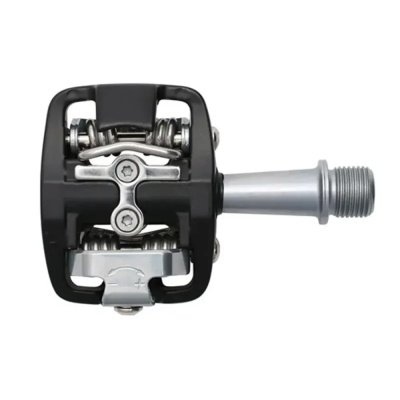
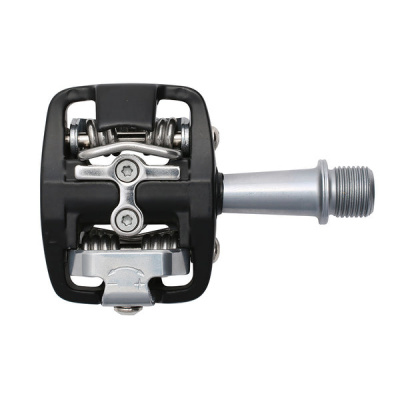
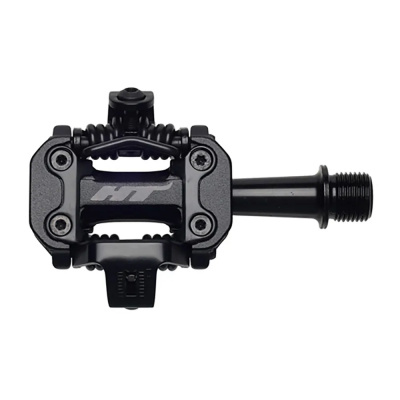
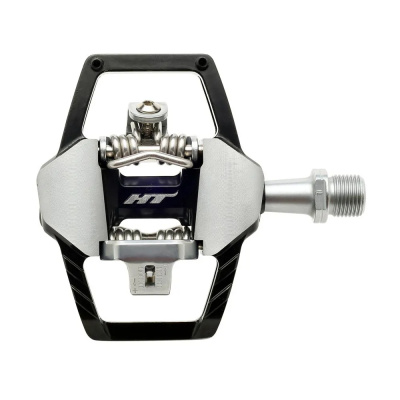
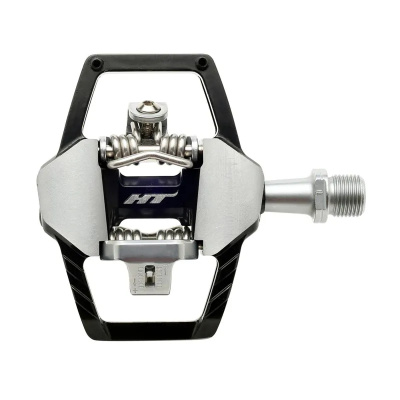
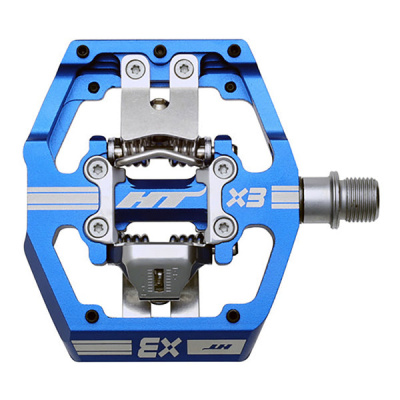
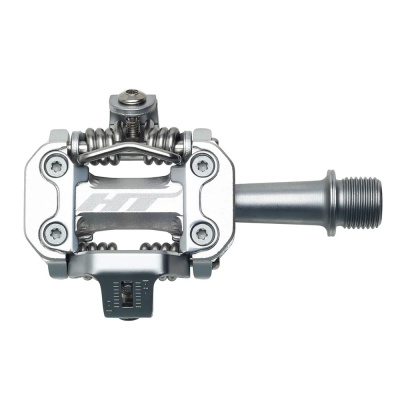
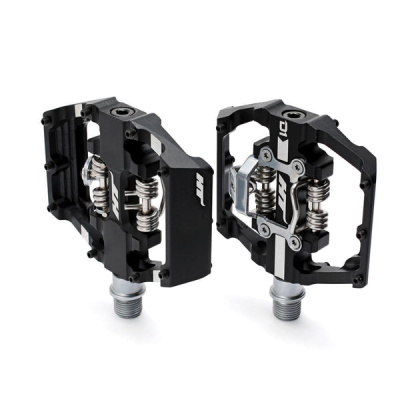
On the clipless side, the T1 is HT's trail and enduro option. It uses the HT PRO cleat system with adjustable spring tension, which lets you dial in release force to suit how aggressive your riding is - looser for long days in the saddle, firmer when you need the connection to feel bombproof. The X2 is the downhill-specific build: heavier-duty, more mud clearance in the body architecture, and designed to engage reliably when your shoes are caked. Q-factor - how far the pedal sits the foot outboard from the crank - is worth checking against your current setup if you're switching from SPD. HT's chromoly spindle options offer good stiffness without the price premium of titanium, though a titanium spindle version is available if you're counting grams. If you're coming from Crankbrothers, the HT engagement feel is firmer and less forgiving on release - which many riders prefer once they've dialled the tension.
Keeping HT Pedals Running Through a UK Winter
Grit is the enemy. Not just mud - actual abrasive grit, the kind the Peak District throws up all year round, which works its way into bushing surfaces and acts like grinding paste over time. HT's EVO+ bearing system uses a combination of needle bearings for load-bearing and IGUS bushings at the outer end to handle the side loads and contamination that straight needle setups struggle with. It's a smart combination, and it genuinely outlasts cheaper sealed cartridge systems when maintained properly. The word there is maintained.
Strip and re-grease these pedals at least once during a wet UK winter - more often if you're riding thick Welsh clay that packs into every gap. The bushing and needle bearing respond well to waterproof grease; don't use light oil and assume it'll cope. When it comes to removing the spindle, use the correct HT socket tool. The alloy end caps are not forgiving if you attack them with an ill-fitting key - you'll round the cap and turn a ten-minute service into a parts order. The tool is cheap and worth keeping in your workshop box alongside your Hope or Burgtec bits if you run a mixed garage. Once you're inside, inspect the IGUS bushing for wear and the needle bearing for play - any lateral wobble in the spindle means it's time for new internals, not just fresh grease.
For the flat pedal range, check your pins while you're at it. Over a season of riding, pins back out or shear off, and grip drops off faster than you'd expect. Replacement pins are easy to source and quick to swap - keep a small bag in your workshop. It takes five minutes and the difference in foot retention is noticeable straight away.
Ht Components Pedals FAQs
Are HT pedals compatible with Shimano SPD cleats?
No - HT clipless pedals use their own proprietary engagement mechanism, not the Shimano SPD standard. You'll need HT-specific cleats to get safe, reliable engagement and release. Using SPD cleats with an HT pedal won't work and isn't safe.
How do you service HT pedal bearings?
Remove the end cap using the HT-specific socket tool - a standard key risks rounding the alloy - then unbolt the spindle to access the EVO+ system. Clean out old grease, check the IGUS bushing and needle bearing for play or wear, pack with fresh waterproof grease, and reassemble carefully.
Which HT flat pedal is best for downhill?
The Supreme and ANS10 are the go-to choices. Both feature large extruded CNC aluminum platforms with adjustable pin layouts that keep your foot locked on through rough, high-speed sections. The Supreme offers the larger platform of the two if maximum foot coverage is the priority.