
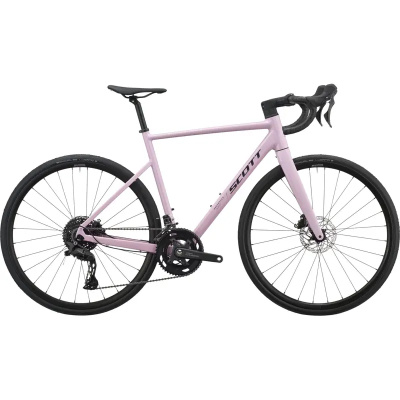
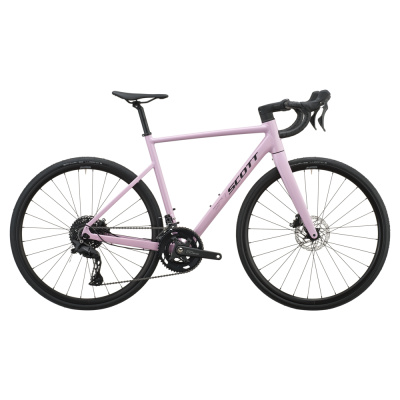
Scott Speedster 20
Comfortable endurance geometry, wide-range gearing and 32mm tyres deliver all-day ease on tarmac and light gravel.
- Shimano Tiagra 2x10: wide-range gearing for hills and flats
- 32mm Schwalbe tyres: smooth over rough tarmac and light gravel
- Endurance geometry: upright comfort for all-day rides
- Integrated cable routing: clean lines, protected cables
- Mechanical disc brakes: reliable all-weather stopping
- HMF carbon fork: damps road chatter without weight penalty
Scott Speedster 20 Deals
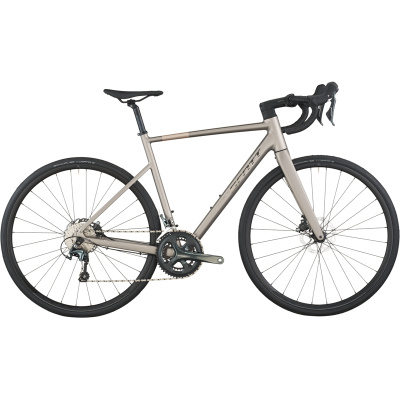
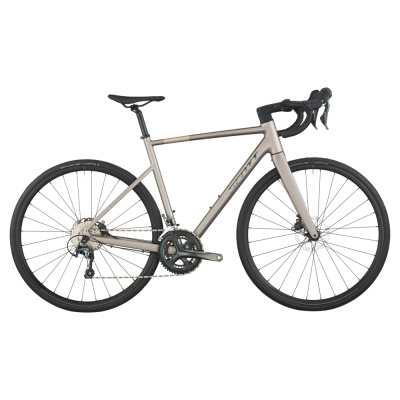

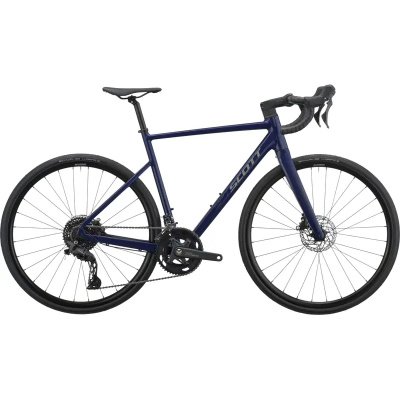
Prices and availability can change quickly. Delivery charges are not always included in listed prices.
Final price, stock status and delivery terms are set by retailer. We may receive a commission on purchases made.
Bikesy's Verdict
The Speedster 20 nails the brief for riders who want a capable, comfortable road bike that doesn't demand compromises. You're getting endurance geometry that keeps you relaxed for hours, 32mm tyres that smooth out rough tarmac and handle light gravel, and a Shimano Tiagra drivetrain that covers the range you need without fuss. The HMF carbon fork damps vibrations, the integrated cables stay clean, and the mechanical disc brakes work in all weather - even if they lack the bite of hydraulics.
It's not a lightweight, and it won't snap to attention like a race bike. But if you're riding club runs, sportives, commutes or weekend loops that mix smooth roads with patchy lanes, the Speedster 20 delivers exactly what you need: a forgiving, stable platform that rewards patience and holds a rhythm for as long as you're willing to pedal. The value proposition is solid, the build is sensible, and the bike will grow with you as your fitness and ambition expand. If you're after a modern alloy road bike that prioritises comfort and versatility over outright speed, this is a very smart choice.
Pros
- Comfortable endurance geometry and 32mm tyres smooth out long rides and rough tarmac
- Wide-range Shimano Tiagra 2x10 drivetrain covers climbs and flats reliably
- Integrated cable routing and HMF carbon fork deliver clean looks and vibration damping
- Stable, predictable handling suits newer riders and varied terrain
- Solid value for a modern alloy road bike with disc brakes and practical features
Cons
- Around 10.4 kg - heavier than racier options if you chase KOMs or fast group rides
- Mechanical disc brakes lack the power and modulation of hydraulics on steep or technical descents
- Firm ride quality on very rough surfaces; consider a tyre upgrade if you ride harsh roads regularly
About the Scott Speedster 20
The Speedster 20 sits squarely in that sweet spot where comfort, capability and value overlap. Built around a double-butted 6061 alloy frame and Scott's HMF carbon fork, it's designed for riders who want a bike that'll handle the club run, the commute and the occasional detour onto gravel without complaint. The endurance geometry keeps you upright enough to spot potholes and relaxed enough to enjoy the scenery, while 32mm Schwalbe Lugano tyres and fully integrated cable routing signal Scott's intent: this is a modern all-rounder that doesn't ask you to choose between practicality and a clean silhouette.
Shimano's Tiagra 2x10 drivetrain anchors the build - a compact 50/34T crankset paired with an 11-32T cassette gives you the range to spin up steep lanes or hold tempo on the flat. Mechanical disc brakes (Shimano BR-RS305 callipers with Tiagra levers) deliver consistent stopping in the wet, though they lack the bite and modulation of hydraulic systems. At around 10.4 kg, the Speedster 20 isn't featherweight, but it's not trying to be; the frame's durability and the fork's compliance matter more here than shaving grams. Syncros cockpit components - Creston 2.0 compact bars, RR2.5 stem and seatpost - keep things tidy, and the Race 24 Disc wheelset on Formula hubs rolls smoothly enough for the price point.
You're looking at a bike that rewards patience rather than aggression. It won't snap to attention like a race machine, but it'll settle into a rhythm and hold it for hours. The slightly taller stack and shorter reach mean you're not folded over the bars, which pays dividends when the road turns rough or the miles stack up. It's the sort of bike that makes sense if you ride more than you race, if you value a forgiving ride over outright speed, and if you'd rather spend your budget on tyres and bar tape than chasing marginal aero gains.
Scott Speedster 20 geometry
The Speedster 20's geometry leans firmly into the endurance camp. Stack heights run tall - from 518 mm on the XXS up to 633 mm on the XXL - while reach figures stay modest, ranging from 376 mm to 406 mm. That combination puts you in a more upright posture than a race bike would, easing pressure on your lower back and opening your hip angle for easier breathing. The head tube angle relaxes slightly on smaller sizes (70.5° on the XXS) and steepens as you go up (73.3° on the XL and XXL), which keeps steering feel consistent across the range: stable at speed, predictable in corners, never twitchy.
Chainstays measure 425 mm on sizes up to the large, then stretch to 427 mm on the XL and XXL. That's short enough to keep the bike feeling responsive when you accelerate out of junctions or chase a wheel, but long enough to prevent toe overlap with the front wheel - a practical consideration if you're fitting mudguards or riding in traffic. The 70 mm bottom bracket drop is standard for a road bike, giving you a low centre of gravity for cornering confidence without dragging pedals through tight bends.
Wheelbase grows from just over a metre on the smallest frame to 1043 mm on the XXL, which translates to planted, drama-free handling. You won't carve switchbacks with the urgency of a crit racer, but you'll descend with calm assurance and track straight lines through crosswinds. The geometry doesn't demand perfect form or race-honed reflexes; it forgives wobbly lines and rewards smooth inputs, which makes it a reassuring choice if you're building confidence or simply prefer a bike that doesn't punish you for glancing at the scenery.
Component choices & upgrades
The Speedster 20 arrives with a sensible, well-sorted build that'll serve most riders without immediate upgrades. Shimano's Tiagra groupset is proven and reliable - 10-speed shifting is crisp enough, the compact chainset and wide-range cassette cover the bases, and the mechanical disc brakes work consistently even if they don't thrill. The Schwalbe Lugano tyres are durable and roll reasonably well, though they're not the grippiest or most supple rubber you'll find. If you're riding mostly smooth tarmac and occasional rough lanes, the stock setup will do the job without fuss.
That said, there are logical upgrade paths if your riding evolves or your terrain demands more. Swapping the Lugano tyres for something like Continental Grand Prix 5000s or Schwalbe Pro Ones in the same 32mm width will sharpen grip, lower rolling resistance and improve ride quality noticeably - it's the single best bang-for-buck upgrade on any bike. If you find yourself venturing onto gravel more often, consider a set of 35mm or even 38mm tyres; the frame's clearance should accommodate them, and the extra volume will smooth out rough surfaces and boost traction on loose stuff.
The mechanical disc brakes are the component most likely to frustrate riders coming from hydraulic systems or those tackling long, steep descents. Upgrading to hydraulic callipers and levers (Shimano RS505 or similar) will transform braking feel - more power, better modulation, less hand fatigue - but it's a significant expense and not strictly necessary unless you're regularly riding in hilly, wet conditions or carrying luggage. The Syncros cockpit is functional rather than fancy; if you're chasing comfort, experiment with bar tape thickness or saddle choice before replacing the bars or stem. The Race 24 Disc wheels are solid training hoops, but if you're chasing speed or lighter weight, a mid-range wheelset upgrade (Hunt or similar) will wake the bike up on climbs and accelerations - though at that point, you're edging towards the cost of a higher-spec bike.
Where the Scott Speedster 20 excels
The Speedster 20 is outstanding at long, steady rides where comfort and reliability matter more than outright speed. Club runs, sportives, audax events, weekend loops that mix smooth tarmac with patchy lanes - this is where it thrives. The endurance geometry keeps you comfortable for hours, the 32mm tyres smooth out rough surfaces, and the wide-range gearing means you can spin up climbs without grinding or hold a tempo on the flat without spinning out. It's also a capable commuter: the disc brakes work in the wet, the integrated cables stay clean, and the frame's durability means it'll shrug off daily abuse.
It handles light gravel and towpath detours without drama. The tyre clearance and stable geometry give you the confidence to explore unpaved shortcuts or link up quiet lanes via bridleways, though it's not a gravel bike - don't expect it to float over deep gravel or tackle technical singletrack. On descents, the relaxed head angle and longer wheelbase keep things calm and predictable; you won't carve corners with race-bike precision, but you'll descend with confidence and control. The bike also suits newer riders or those returning to cycling after a break: the forgiving geometry, predictable handling and upright position make it easy to ride well, and the Tiagra groupset is simple to maintain.
Where it's not ideal: fast group rides with frequent surges, steep climbs where every gram counts, or technical descents that reward aggressive handling. The 10.4 kg weight will hold you back when the pace spikes or the gradient kicks up, and the mechanical disc brakes lack the bite to scrub speed quickly on steep, twisty descents. If you're chasing KOMs, racing crits or riding predominantly smooth, fast roads, you'll want something lighter and more responsive. And if you're planning serious gravel adventures - rough tracks, loaded touring, bikepacking - you'll need wider tyres, lower gearing and more robust wheels than the Speedster 20 offers.
Scott Speedster 20 FAQs
What is the tyre clearance on the Scott Speedster 20?
The Speedster 20 officially fits 700x32c tyres, and the frame's design suggests you could squeeze in 35mm or possibly 38mm rubber depending on rim and tyre combination. That's enough for light gravel and rough tarmac, though it's not gravel-bike territory.
Is the Scott Speedster 20 a good bike for beginners?
Yes, it's an excellent choice for newer riders. The endurance geometry is forgiving and comfortable, the handling is stable and predictable, and the Shimano Tiagra groupset is reliable and easy to maintain. The wide gear range helps on climbs, and the disc brakes inspire confidence in all conditions.
How much does the Scott Speedster 20 weigh?
The complete bike weighs around 10.4 kg (roughly 23 lbs), which is typical for an alloy endurance bike at this price point. It's not a lightweight, but the frame's durability and the fork's compliance are part of that trade-off.
Can I ride gravel on a Scott Speedster 20?
You can handle light gravel - smooth fire roads, hard-packed towpaths, well-maintained bridleways - without issue. The 32mm tyres and stable geometry give you enough grip and control for occasional off-road detours, but deep gravel, loose surfaces or technical trails will push the bike beyond its comfort zone.
What is the difference between the Scott Speedster 20 and the Scott Addict?
The Addict is Scott's performance road bike: lighter frame (carbon on higher models), more aggressive geometry, sharper handling and a focus on speed and climbing. The Speedster 20 prioritises comfort, versatility and value, with a more upright position, wider tyres and a build aimed at all-day riding rather than racing.
Are mechanical disc brakes on the Scott Speedster 20 good enough?
They're reliable and consistent in all weather, which is a big step up from rim brakes. However, they lack the power, modulation and low-effort feel of hydraulic systems, especially on long descents or when you need to scrub speed quickly. For most recreational riding they're adequate; for hilly terrain or loaded touring, you'll notice the limitations.
What is the best size Scott Speedster 20 for someone 5'10"?
At 5'10" (roughly 178 cm), you'll likely fit the large (56 cm) frame, though the medium (54 cm) could also work depending on your proportions and riding style. The large will feel more stretched out and stable; the medium will be slightly more upright and nimble. A proper bike fit is always worth the time.
What year was the Scott Speedster 20 first released?
Scott redesigned the Speedster line in 2018 with a lighter alloy frame and modern features like integrated cable routing. The Speedster 20 model has been part of the range since then, with incremental updates to components and finish each year.
Is the Scott Speedster 20 comfortable for long rides?
Yes, that's one of its core strengths. The endurance geometry keeps you upright and relaxed, the carbon fork damps road vibrations, and the 32mm tyres smooth out rough surfaces. The Syncros saddle and bar tape add to the comfort, though personal preference will dictate whether you swap either out.
Key Features & Benefits
- Shimano Tiagra 2x10 with 11-32T cassette: Wide gear range lets you spin up steep climbs and hold tempo on the flat without running out of ratios
- HMF carbon fork with 1¼" - 1½" steerer: Damps road vibrations for a smoother ride while keeping front-end weight low and steering precise
- 700x32c Schwalbe Lugano tyres: Extra volume cushions rough tarmac and handles light gravel, boosting comfort and versatility
- Endurance geometry with taller stack and shorter reach: Upright position eases back and neck strain, making long rides and all-day events more comfortable
- Fully integrated cable routing: Protects cables from weather and knocks while delivering a clean, modern aesthetic
Scott Speedster 20 2024, 2023 & 2022 differences
The 2024 and 2023 models share the same core specification as the 2025 bike: Shimano Tiagra 2x10 drivetrain, Shimano BR-RS305 mechanical disc brakes, Schwalbe Lugano 700x32c tyres, Syncros Race 24 Disc wheels, and the HMF carbon fork with integrated cable routing. Some 2024 builds featured an FSA crankset (CK-4003ST/WT) instead of the Shimano Tiagra unit, though performance differences are minimal. The 2023 model was noted for a yellowish colourway, while the 2024 and 2025 versions have shifted to darker, more subdued finishes.
The 2022 model year marked a significant update: Scott introduced fully integrated internal cable routing for the first time on the Speedster alloy range, cleaning up the frame's aesthetic and protecting cables from the elements. Prior to 2022, cables ran externally along the down tube. The 2022 bike also standardised the 700x32c tyre clearance and the HMF carbon fork across the range, whereas earlier models (2020 and 2019) sometimes shipped with narrower 28c tyres and had more limited clearance. Weight remained consistent around 10.4 kg across 2022 - 2025 models.
The 2020 and 2019 versions used the same Shimano Tiagra groupset and mechanical disc brakes, but featured quick-release hubs rather than the Formula Team II CL Disc hubs found on newer models. The 2019 bike weighed around 10 kg and had a slightly longer stem (110 mm) on some sizes. The 2018 redesign introduced the current double-butted 6061 alloy frame architecture and carbon fork, replacing the older, heavier frame design; some 2018 models offered hydraulic disc brakes as an option, though this was dropped in favour of mechanical discs on the Speedster 20 from 2019 onwards to keep the price competitive.
Alternatives to Consider
Within Scott's own range, the Speedster Gravel 30 shares the same alloy-frame ethos but adds flared bars, wider tyre clearance and lower gearing for proper off-road capability - worth considering if you're planning more gravel than tarmac. Step up to the Scott Addict 30 and you'll gain a carbon frame, sharper geometry and a lighter build, though you'll sacrifice some comfort and pay a premium for the performance focus.
Cross-brand, the Giant Contend AR 3 offers similar endurance geometry and often includes hydraulic disc brakes at a comparable price, plus wider tyre clearance if gravel appeals. The Specialized Allez Elite leans sportier - more aggressive geometry, lighter weight - but gives up some comfort and versatility. Trek's Domane AL 3 matches the Speedster's comfort-first approach with IsoSpeed compliance tech, though it typically runs narrower tyres. The Cube Attain GTC Race brings a carbon frame and Shimano 105 at a similar price point, sharpening performance without abandoning comfort. Finally, the Cannondale Synapse Disc 105 offers hydraulic brakes and a slightly racier feel while retaining endurance manners, though it usually costs a bit more. Each alternative shifts the balance between comfort, speed, off-road capability and price - your choice hinges on whether you value the Speedster's upright ease and gravel-ready tyres or prefer sharper handling and lighter weight.
Reviews
Longer rides reveal the Speedster 20's core strength: it settles into a steady rhythm and holds it without complaint. The upright position keeps your back and neck relaxed even after several hours, and the 32mm tyres absorb enough road chatter to prevent fatigue building in your hands and forearms. When the tarmac turns patchy or you divert onto a gravel towpath, the bike tracks straight and predictable - no drama, no surprises.
Climbing exposes the weight penalty. The 11-32T cassette gives you the gears to spin up steep gradients, but the 10.4 kg frame means you're working harder than you would on a lighter machine. Acceleration out of corners or chasing a wheel takes a deliberate effort rather than a snap of power. Descending, though, the bike inspires confidence: the relaxed head angle and longer wheelbase keep things calm, and the mechanical disc brakes scrub speed consistently even if they lack the bite of hydraulics.
Handling sits firmly in the stable, forgiving camp. The geometry doesn't reward aggressive cornering or quick direction changes, but it forgives wobbly lines and rewards smooth inputs. Because the bike doesn't demand perfect form, newer riders or those returning to cycling after a break will find it reassuring rather than intimidating. The Shimano Tiagra shifting is crisp and reliable, and the Syncros cockpit does its job without fuss - nothing here will wow you, but nothing will let you down either.
Mechanical disc brakes remain the most divisive component. They work consistently in the wet and offer more power than rim brakes, but the lever feel is wooden compared to hydraulics, and modulation suffers when you're trying to feather speed on technical descents. If you're riding mostly flat or gently rolling terrain, they're adequate; if you're tackling long, steep descents or loaded touring, you'll notice the limitations. The Schwalbe Lugano tyres are durable and roll reasonably well, though a tyre upgrade to something grippier and more supple will transform the ride quality noticeably.
Full Specification
| Spec | Value |
|---|---|
| Frame | 6061 D.Butted Alloy |
| Frame Design | Endurance geometry with integrated cable routing |
| Frame Features | Syncros fender kit ready; fully integrated cable routing |
| Tyre Clearance | 700x32c |
| Fork | Speedster HMF Disc carbon |
| Fork Steerer | 1 1/4" - 1 1/2" eccentric carbon |
| Bottom Bracket | Shimano BB-RS500-PB |
| Drivetrain | 2x10 speed |
| Shifters | Shimano Tiagra ST-4700 Dual Control |
| Front Derailleur | Shimano Tiagra FD-4700 |
| Rear Derailleur | Shimano Tiagra RD-4700-GS |
| Crankset | Shimano Tiagra FC-R4700, 50/34T |
| Cassette | Shimano CS-HG500, 11-32T |
| Chain | KMC X10 |
| Brakes | Mechanical disc |
| Brake Calipers | Shimano BR-RS305 |
| Brake Levers | Shimano Tiagra ST-4700 |
| Rotors (Front) | 160mm |
| Rotors (Rear) | 160mm |
| Rims | Syncros Race 24 Disc |
| Hubs (Front) | Formula Team II CL Disc |
| Hubs (Rear) | Formula Team II CL Disc |
| Spokes | Black 2mm, 28 count front and rear |
| Tyres (Front) | Schwalbe Lugano 700x32c |
| Tyres (Rear) | Schwalbe Lugano 700x32c |
| Handlebar | Syncros Creston 2.0 Compact, 31.8mm |
| Stem | Syncros RR2.5, 1 1/4" four bolt 31.8mm |
| Headset | Acros AIF-1133 |
| Seatpost | Syncros RR2.5, 27.2mm diameter, 350mm length |
| Saddle | Syncros Tofino Regular 2.5 |
| Weight (Approx) | 10.4 kg |