
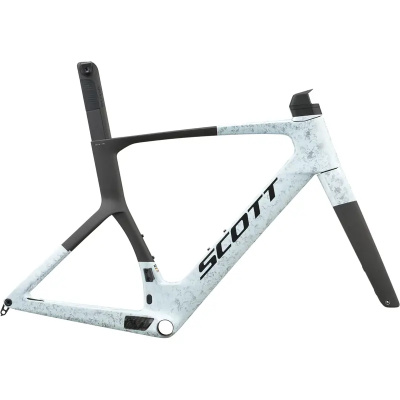
Scott Foil RC Pro
Race-proven aero speed and low weight, with enough compliance to handle long rides and rough tarmac.
- F01 Airfoil shaping: wind-tunnel-proven drag reduction
- Shimano Dura-Ace Di2: crisp, instant 12-speed shifts
- Syncros Duncan seatpost: flex zone smooths rough tarmac
- HMX carbon frame: 985 g, stiff where it counts
- Syncros Capital 1.0S wheels: 60 mm aero depth, DT Swiss hubs
- Clearance for 28 - 30 mm tyres: comfort without aero penalty
Scott Foil RC Pro Deals

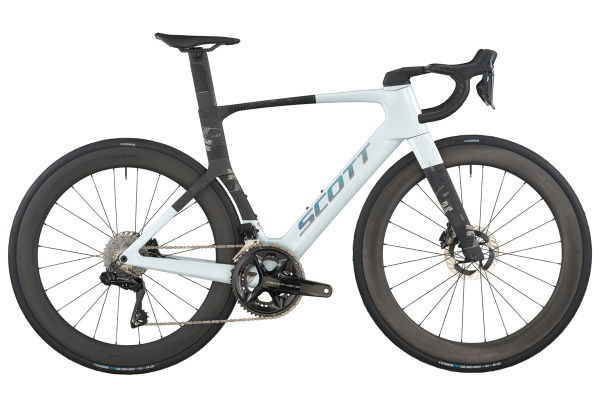
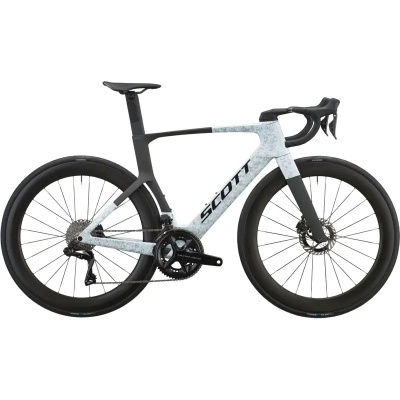
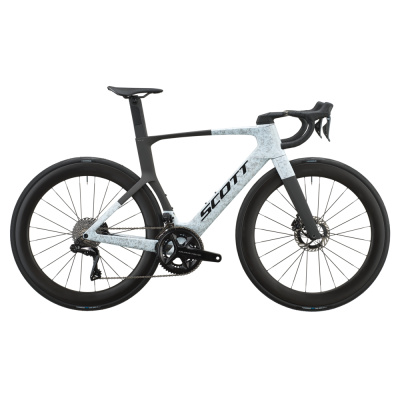
Prices and availability can change quickly. Delivery charges are not always included in listed prices.
Final price, stock status and delivery terms are set by retailer. We may receive a commission on purchases made.
Bikesy's Verdict
The Foil RC Pro is a race bike that's learned a few manners. It's fast - genuinely, measurably fast - thanks to wind-tunnel-proven tube shaping and an integrated cockpit that hides every cable and eliminates frontal area. But it's also light enough to climb with urgency, compliant enough to handle rough tarmac without rattling your fillings, and stable enough to inspire confidence when you're leaning into a fast corner or holding a wheel in a crosswind. Shimano's Dura-Ace Di2 gruppo is the benchmark for electronic shifting, and the Syncros Capital wheels with DT Swiss hubs roll fast and true.
It's not perfect. The proprietary cockpit and seatpost limit customisation, and the high price point reflects its elite-level spec and aero focus. But if you're the sort of rider who wants to attack, sprint, and hold high speeds without needing a massage therapist on speed-dial, the Foil RC Pro is hard to beat. It's a bike that makes you faster on the road and rewards commitment, and it does so with a ride quality that's surprisingly forgiving for something this aggressive. If your weekends involve crits, road races, fast club runs, or solo efforts where you're chasing segments or simply enjoying the sensation of speed, this is the bike.
Pros
- Exceptional aero performance with wind-tunnel-proven F01 Airfoil shaping
- Lightweight HMX carbon frame (985 g) climbs with urgency
- Surprisingly compliant for an aero bike, thanks to Duncan seatpost and frame tuning
- Shimano Dura-Ace Di2 gruppo: crisp, dependable 12-speed shifting
- Sharp, stable handling inspires confidence at speed and through corners
- Syncros Capital 1.0S wheels with DT Swiss 240 hubs roll fast and true
Cons
- No power meter as standard - add one separately if you need training data
- Proprietary Syncros cockpit and seatpost limit third-party customisation and can feel fussy to adjust
- High price point reflects elite-level spec and aero focus, not an entry-level choice
About the Scott Foil RC Pro
The Foil RC Pro is Scott's answer to the question nobody asked but everyone secretly wants answered: can an aero road bike feel fast and forgiving without turning into a plank? The answer, grounded in wind-tunnel data and a frame that weighs less than a kilogram, is a confident yes. Built around HMX carbon and draped in Shimano's Dura-Ace Di2 gruppo, this is a bike that lives for the moment you kick out of the bunch, pin it into a crosswind, or hold a wheel through a fast, sweeping descent. It's not trying to be an endurance machine or a gravel dabbler - it's a race bike, full stop, but one that's learned a few manners along the way.
At the heart of the Foil's character is Scott's F01 Airfoil Technology, a suite of tube profiles honed through CFD and real-world testing to slice through air with minimal fuss. The oversized head tube acts as a fairing, splitting the breeze and swallowing cables in one clean gesture; dropped seatstays guide airflow toward the spokes and add a touch of vertical give. You'll notice the integrated Syncros Creston iC SL Aero cockpit immediately - it's a one-piece bar-and-stem combo that looks like it was carved from a single block of carbon, and it routes every wire out of sight. Pair that with the Duncan SL Aero CFT seatpost, which features a flexible front section designed to absorb chatter without sacrificing power transfer, and you've got a bike that feels taut under load yet surprisingly pliant when the road surface turns to chip-seal or patched tarmac.
The 2026 Foil RC Pro sits at the sharp end of Scott's aero lineup, a step below the Ultimate with its HMX-SL layup but still packing enough stiffness and low weight to make climbers think twice. It's aimed squarely at riders who want to attack, sprint, and hold high speeds without needing a massage therapist on speed-dial. Whether you're chasing down a break, contesting a town-sign sprint, or simply enjoying the sensation of going fast with less effort, the Foil RC Pro delivers that addictive blend of efficiency and engagement.
Scott Foil RC Pro geometry
Scott's geometry for the Foil RC Pro is race-focused but not punishingly aggressive. Reach figures hover around 380 - 409 mm across the seven-size range, while stack climbs from 505 mm on the XXS to 606 mm on the XXL, giving taller riders enough front-end height to avoid a slammed-stem look straight out of the box. Head angles steepen as you move up the sizes - 70.5° on the XXS, 73.3° on the XL and XXL - which keeps the front end responsive without feeling twitchy when you're threading through a fast corner or holding a line in a crosswind.
The seat tube angle relaxes slightly as frame size grows, from 74.5° on the smallest frames to 72.5° on the XXL, a common pattern that helps maintain a consistent saddle-to-bar relationship across the range. Chainstays are locked at 412 mm regardless of size, a short-ish figure that snaps the rear end around when you stomp on the pedals but doesn't make the bike feel nervous at speed. Wheelbase stretches from 972 mm to 1012 mm, and bottom-bracket drop is a uniform 66 mm, giving you a low centre of gravity and stable cornering without the bike feeling like it's dragging its belly on the tarmac.
In practice, this geometry translates to a posture that's low and stretched but not uncomfortably so - you'll feel like you're part of the bike rather than perched on top of it. The front end inspires confidence when you're leaning into a fast bend or descending at speed, and the short rear triangle means power goes straight to the back wheel without any flex or lag. If you're used to an endurance bike's taller stack and shorter reach, the Foil will feel more committed, but it's not so extreme that you'll need a chiropractor after a three-hour ride.
Component choices & upgrades
The stock build on the Foil RC Pro is already sorted. Shimano's Dura-Ace Di2 R9270 gruppo is the benchmark for electronic shifting - crisp, instant, and utterly dependable, with a 12-speed cassette (typically 11-30T or 11-34T depending on spec) that covers most road scenarios. The hydraulic disc brakes use 160 mm rotors front and rear (some sources cite 140 mm at the back), and they offer plenty of modulation and power without feeling grabby. The Syncros Capital 1.0S Aero wheels are deep-section carbon hoops with DT Swiss 240 hubs, bladed spokes, and a 60 mm rim depth that balances aero advantage with crosswind stability. Tyres are usually Schwalbe Pro One Aero or Vittoria Corsa Cotton in 28 mm, both of which roll fast and grip well on dry tarmac.
That said, if you're chasing marginal gains or have specific needs, there are a few sensible upgrade paths. A power meter isn't included as standard, so adding a Shimano Dura-Ace power meter crankset or a set of power-meter pedals will give you the data you need for structured training. If you race in gusty conditions or want a touch more stability, swapping the 60 mm wheels for a shallower 40 - 50 mm set can make crosswinds less of a handful without sacrificing much speed. Tyres are another easy win: if you're riding rougher roads or want a bit more comfort, stepping up to 30 mm rubber (the frame clears it) will smooth out the ride without a noticeable aero penalty. The Syncros saddle is decent, but saddles are personal - if it doesn't suit you, swap it for your favourite perch.
The integrated cockpit is trickier. It looks stunning and delivers genuine aero benefits, but if you want to change bar width or stem length, you'll need to source another Syncros Creston iC unit, and you may need to bleed the brakes in the process. The Duncan seatpost is similarly proprietary, with a three-piece design that some find fussy to adjust. Both components work brilliantly once dialled in, but they're not plug-and-play if you like to tinker. For most riders, the stock setup is more than capable; upgrades should be driven by your riding style or race calendar, not by any shortcoming in the kit.
Where the Scott Foil RC Pro excels
The Foil RC Pro is outstanding at one thing above all: going fast on tarmac. If your weekends involve crits, road races, fast club runs, or solo efforts where you're chasing Strava segments or simply enjoying the sensation of speed, this bike will make you grin. Its aerodynamic profile means you'll hold higher speeds for less effort, and the low weight (around 7.1 - 7.4 kg depending on build and size) means it climbs with a snap and urgency that many aero bikes can't match. The handling is precise and stable, so you can carve through corners with confidence, and the Dura-Ace Di2 shifting is so smooth you'll forget it's there until you need it.
It's also surprisingly good at longer rides and sportives, provided the route is mostly smooth tarmac. The Duncan seatpost and frame engineering add enough compliance to take the sting out of rough patches, and the geometry isn't so aggressive that you'll be uncomfortable after three or four hours in the saddle. If you're the sort of rider who likes to push the pace on club runs or gran fondos, the Foil RC Pro will reward your efforts without punishing you on the way home.
Where it's not ideal is anywhere off-road or on truly rough surfaces. The 28 - 30 mm tyre clearance is generous for a race bike, but it's not enough for gravel or rutted lanes, and the aggressive geometry and aero focus mean the bike feels out of its element on loose or broken ground. It's also not the best choice if you prioritise comfort above all else - there are endurance bikes with more forgiving geometry and wider tyre clearance that will suit long, leisurely rides better. And if you're on a budget, the high price point and proprietary components mean this isn't an entry-level option. But if you want a bike that makes you faster on the road and rewards commitment, the Foil RC Pro is hard to beat.
Scott Foil RC Pro FAQs
Is the Scott Foil RC Pro a comfortable aero bike?
Yes, by aero-bike standards. The Duncan SL Aero CFT seatpost has a flexible front section that absorbs road chatter, and the frame's HMX carbon layup is tuned for compliance without sacrificing stiffness. You won't mistake it for an endurance bike, but it's far from a plank, and most riders find it manageable on longer rides over mixed surfaces.
What is the maximum tyre clearance on the Scott Foil RC Pro?
The frame is designed around 25 - 28 mm tyres, but it will clear up to 30 mm rubber. That's enough to add a touch of comfort or grip without compromising the aero profile, though it's not enough for gravel or off-road use.
Does the Scott Foil RC Pro come with a power meter?
No, a power meter isn't included as standard on most builds. If you want one, you'll need to add a Shimano Dura-Ace power meter crankset or a set of power-meter pedals separately.
How does the Scott Foil RC Pro compare to the Trek Madone or Specialized Venge?
All three are top-tier aero road bikes, but the Foil RC Pro is lighter than many rivals and offers a good balance of speed and comfort. The Madone has more integrated storage and a slightly more relaxed geometry, while the Venge (or Tarmac SL8 in its latest guise) is similarly aggressive. The Foil's proprietary cockpit and seatpost are more restrictive for customisation, but the ride quality and Dura-Ace spec are hard to fault.
What is the weight of the Scott Foil RC Pro?
Around 7.1 - 7.4 kg (15.65 - 16.37 lbs) without pedals, depending on the exact build and frame size. The frame alone weighs 985 g, and the fork is 475 g, which is competitive for an aero bike with this level of stiffness and integration.
Is the Scott Foil RC Pro suitable for long-distance rides or gran fondos?
Yes, provided the route is mostly smooth tarmac. The bike's compliance and relatively comfortable geometry make it viable for sportives and long club runs, though it's not as forgiving as a dedicated endurance bike. If you're happy to trade a bit of comfort for speed, it'll handle the distance.
What type of bottom bracket does the Scott Foil RC Pro use?
It uses a Shimano SM-BB92-41B, which is a PressFit BB86 standard. It's a common setup for Shimano cranks and is straightforward to service, though some riders prefer threaded bottom brackets for ease of maintenance.
Can I use non-Scott handlebars on the Foil RC Pro?
Not easily. The Syncros Creston iC SL Aero cockpit is a one-piece integrated unit, so swapping bars or stem means sourcing another Syncros component and potentially bleeding the brakes. It's not impossible, but it's not plug-and-play either, and you'll lose some of the aero benefit if you switch to a traditional setup.
What are the key technologies that make the Scott Foil RC Pro so fast?
F01 Airfoil tube shaping, validated through wind-tunnel testing, reduces drag across a range of yaw angles. The oversized head tube acts as a fairing and hides cables, the dropped seatstays guide airflow, and the integrated cockpit eliminates frontal area. The HMX carbon layup keeps weight low while maintaining stiffness, and the Duncan seatpost adds compliance without flex. It's a package that's been refined over several generations, and the gains are measurable.
Key Features & Benefits
- F01 Airfoil tube shaping and integrated cockpit: Cuts through wind with less effort, so you hold higher speeds for the same power output
- Syncros Duncan SL Aero CFT seatpost with flex zone: Absorbs road chatter and rough tarmac without sacrificing power transfer or stiffness
- HMX carbon frame (985 g) and fork (475 g): Climbs with snap and urgency, making it competitive even on hilly routes
- Shimano Dura-Ace Di2 R9270 12-speed gruppo: Instant, precise shifts and powerful hydraulic disc brakes you can trust in all conditions
- Clearance for 28 - 30 mm tyres: Adds comfort and grip on rougher roads without compromising aero profile
Scott Foil RC Pro 2025, 2024 & 2023 differences
The 2025 Foil RC Pro is virtually identical to the 2026 model, sharing the same HMX carbon frame, Shimano Dura-Ace Di2 R9270 gruppo, and Syncros integrated cockpit and seatpost. The only notable difference is cassette spec: some 2025 builds shipped with an 11-30T cassette, while the 2026 model often features an 11-34T for a bit more climbing range. Frame weight, geometry, and aerodynamic technology remain unchanged.
The 2024 model continues the same core platform - HMX carbon, Dura-Ace Di2, and Syncros integration - with no significant frame or geometry revisions. Component spec is consistent, though some 2024 builds may have used slightly different wheel or tyre options depending on market and availability.
The 2023 Foil RC Pro is similarly aligned, though some builds featured Shimano WH-R9270-C50 wheels instead of the Syncros Capital 1.0S Aero hoops that became standard on later models. The frame, cockpit, and seatpost design are the same, and the ride character is unchanged. The Foil RC platform was redesigned around 2022, introducing the current generation's aerodynamic improvements, weight savings, and increased compliance, so 2023 - 2026 models are all part of the same evolutionary step rather than distinct revisions.
Alternatives to Consider
Within Scott's own range, the Foil RC Ultimate sits a step above, featuring the lighter HMX-SL carbon layup and often specced with SRAM Red AXS for riders chasing every gram and watt. If you want a more versatile road bike that climbs even better and trades a bit of aero advantage for all-day comfort, the Scott Addict RC Pro is the natural counterpoint - it's lighter, more forgiving, and just as fast on anything that points upward.
Cross-brand, the Specialized Tarmac SL8 (or its predecessor, the Venge) is the closest rival, blending aero efficiency with low weight and a slightly more customisable cockpit. The Trek Madone SLR 7 Gen 8 offers similar speed with more integrated storage and a touch more endurance-bike comfort, while the Cervélo S5 is pure aero aggression with a stiffer ride and a focus on flat-out speed. For a more accessible price point without sacrificing too much performance, the Cannondale SystemSix Carbon Ultegra delivers impressive aero gains and a lively ride, though it's a bit heavier and lacks the Foil's Dura-Ace polish. The Merida Reacto Team-E is another strong contender, offering similar aero credentials and a well-sorted build at a competitive price, though it doesn't quite match the Foil's low weight or integrated aesthetic.
Reviews
Aerodynamics are the headline act, but the ride quality is what keeps you coming back. Frame stiffness is exactly where you want it - lateral rigidity under sprint loads, vertical give when the road turns rough. When you kick out of the saddle to chase a wheel or contest a town sign, the Foil snaps forward without any flex or lag, and the short 412 mm chainstays mean power goes straight to the tarmac. Descending is confidence-inspiring: the low centre of gravity and stable geometry let you lean into fast corners without second-guessing your line, and the Dura-Ace hydraulic discs offer plenty of modulation and power.
Comfort surprises. The Duncan seatpost's flexible front section absorbs high-frequency buzz and takes the sting out of chip-seal or patched tarmac, and the dropped seatstays add a touch of vertical compliance without turning the bike into a noodle. You won't mistake it for an endurance machine, but it's far from the plank-like ride of older aero bikes. Long rides are manageable, provided the route is mostly smooth and you're happy to trade a bit of forgiveness for speed.
Handling is sharp but never twitchy. The front end tracks beautifully through sweeping bends and holds a line in crosswinds, and the geometry strikes a good balance between race-ready aggression and real-world usability. Because the integrated cockpit is so clean, there's no cable rattle or visual clutter to distract you, and the whole bike feels like a single, cohesive unit. Weight is competitive for an aero bike - around 7.1 - 7.4 kg depending on build - so climbs don't feel like a slog, and you can accelerate out of corners without waiting for the bike to catch up.
Proprietary components are the trade-off. The Syncros cockpit looks stunning and delivers genuine aero benefits, but swapping bars or stem means sourcing another Syncros unit and potentially bleeding brakes. The three-piece seatpost works brilliantly once dialled in, but some find the adjustment process fussy. For most riders, the stock setup is more than capable, and the aero gains justify the lack of plug-and-play customisation. If you want a bike that makes you faster on the road and rewards commitment, the Foil RC Pro delivers.
Full Specification
| Spec | Value |
|---|---|
| Frame Material | FOIL RC Disc HMX Carbon |
| Frame Design | Aerodynamic F01 Airfoil Technology, oversized head tube, dropped seatstays, fully integrated cable routing |
| Frame Weight | 985g |
| Fork Weight | 475g |
| Tyre Clearance | Up to 30mm |
| Bottom Bracket | Shimano SM-BB92-41B (PressFit BB86) |
| Available Sizes | XXS, XS, S, M, L, XL, XXL |
| Drivetrain | 2x12 speed |
| Shifters | Shimano Dura-Ace Di2 ST-R9270 |
| Front Derailleur | Shimano Dura-Ace Di2 FD-R9250 |
| Rear Derailleur | Shimano Dura-Ace Di2 RD-R9250 |
| Crankset | Shimano Dura-Ace FC-R9200 Hollowtech II, 52/36T |
| Cassette | Shimano Dura-Ace CS-R9200-12, 11-30T or 11-34T |
| Chain | Shimano Dura-Ace CN-M9100-12 |
| Brakes | Shimano Dura-Ace BR-R9270 hydraulic disc |
| Rotors | Shimano RT-CL900, 160mm front and rear |
| Rims | Syncros Capital 1.0S Aero 60mm carbon |
| Hubs | DT Swiss 240 |
| Spokes | Bladed |
| Tyres | Schwalbe PRO ONE Aero TL-Easy or Vittoria CORSA Cotton TL, 700x28C |
| Handlebar | Syncros Creston iC SL Aero integrated, 40cm, 42cm, or 44cm widths |
| Stem | Integrated into Syncros Creston iC SL Aero cockpit |
| Headset | Acros AIF-1138 integrated |
| Seatpost | Syncros Duncan SL Aero CFT |
| Saddle | Syncros Belcarra V-Concept 1.0 or V1.0 NEO Cut Out |
| Approximate Weight | 7.1 - 7.43kg without pedals |