
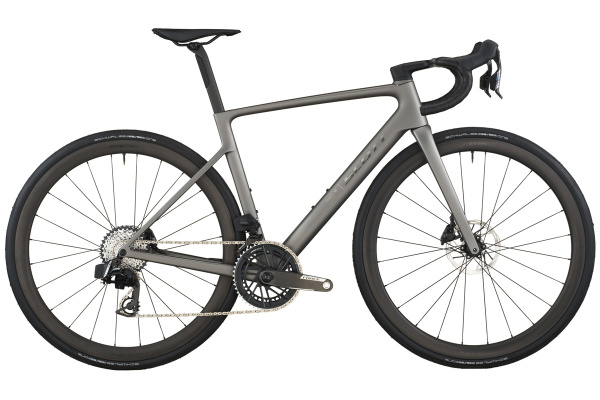
Scott Addict RC Team
Featherweight race machine that climbs like a dream and rewards every watt on long, fast rides.
- HMX carbon frame: sub-7kg complete weight
- SRAM Force AXS with integrated power meter
- Syncros Capital 1.0S carbon wheels, 40mm deep
- Clearance for 34mm tyres: comfort meets speed
- Integrated cockpit: clean lines, hidden cables
- Race geometry: aggressive position, precise handling
Scott Addict RC Team Deals

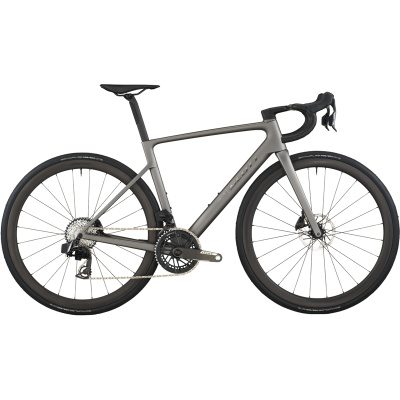
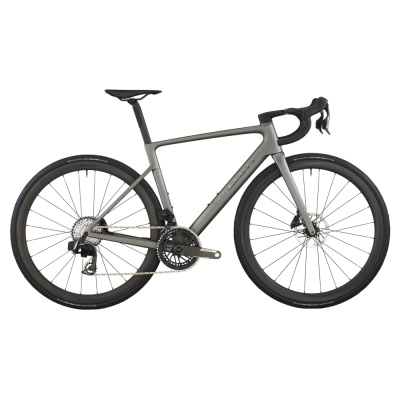
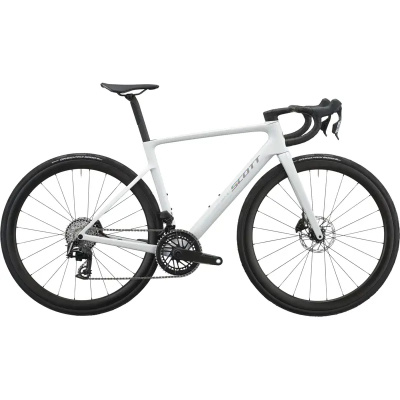
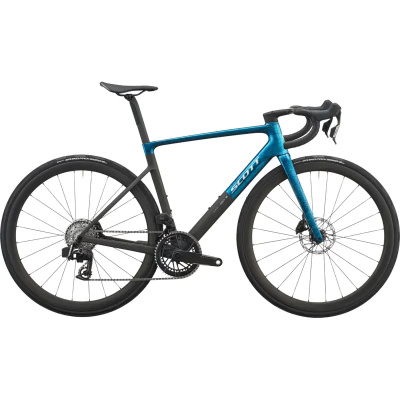
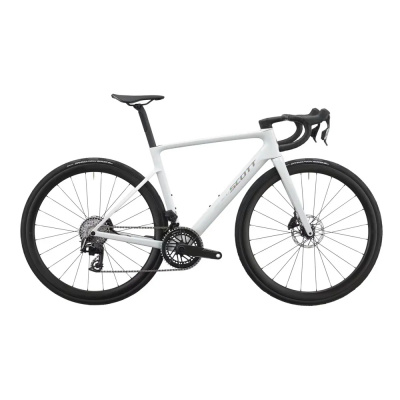
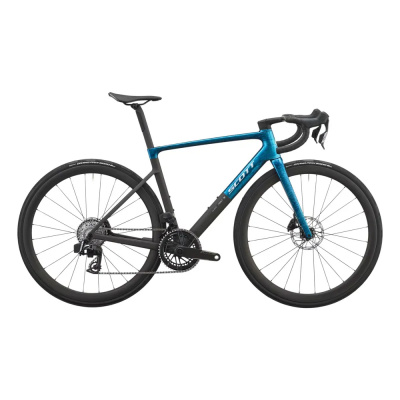
Prices and availability can change quickly. Delivery charges are not always included in listed prices.
Final price, stock status and delivery terms are set by retailer. We may receive a commission on purchases made.
Bikesy's Verdict
The Scott Addict RC Team is a lightweight race bike that delivers on its core promise: it climbs brilliantly, accelerates sharply, and handles with precision. The sub-7kg weight makes a tangible difference on gradients, and the stiff HMX carbon frame ensures every watt you put down translates into speed. SRAM Force AXS with an integrated power meter is a smart, race-ready spec, and the Syncros Capital 1.0S wheels are light, stiff, and aerodynamically competent. The 34mm tyre clearance adds a welcome dose of versatility, letting you run wider rubber for comfort or even venture onto well-surfaced gravel.
It's not a bike for everyone. The race-focused geometry and firm ride won't suit riders chasing all-day endurance comfort, and the integrated cockpit limits fit adjustments without replacing the entire unit. But if you're targeting hilly sportives, crits, or fast group rides - or you simply want a machine that rewards hard efforts and makes climbing feel effortless - the Addict RC Team is a brilliant choice. It's a bike that makes you want to ride harder and seek out the steepest roads you can find.
Pros
- Sub-7kg weight makes climbing feel effortless and acceleration sharp
- SRAM Force AXS with integrated power meter: race-ready electronics out of the box
- 34mm tyre clearance adds versatility for rough roads and light gravel
- Stiff HMX carbon frame translates every watt into forward motion
- Precise, confidence-inspiring handling on descents and technical corners
Cons
- Race geometry and stiff frame less forgiving if you're after all-day endurance comfort
- Integrated cockpit limits fit adjustments without replacing the entire unit
- Premium price point when lighter wheelsets or component tweaks tempt further spending
About the Scott Addict RC Team
The Addict RC has always been Scott's answer to one question: how light can a production road bike go without turning into a nervous, fragile sketch of a machine? The Team spec sits in the sweet spot of the range - lighter and sharper than the entry builds, yet more accessible than the stratospheric Ultimate. You're looking at a complete bike that hovers around 7kg, built on Scott's HMX carbon frameset and kitted with SRAM Force AXS electronic shifting and a proper power meter baked into the crankset. It's a bike that makes sense if you're chasing personal bests on climbs, racing crits, or simply want a machine that responds the moment you think about accelerating.
What sets this generation apart is the blend of old-school climbing purity with modern practicality. Scott hasn't chased aero at all costs here; instead, they've refined the Addict's core mission - minimal weight, maximum stiffness, and handling that inspires confidence whether you're threading through a fast descent or launching out of a hairpin. The frame clears 34mm rubber, which means you can run wider tyres for comfort on rough tarmac or even venture onto well-surfaced gravel without feeling like you're riding a knife-edge. The integrated Syncros cockpit tucks cables away neatly, and there's even a mini-tool hidden in the bars for trailside tweaks. It's a race bike that's grown up just enough to handle real-world roads.
This isn't a bike that shouts. It whispers - then vanishes up the road when you stamp on the pedals. The HMX carbon layup delivers a frame that's stiff enough to reward hard efforts but doesn't punish you over broken surfaces. Syncros Capital 1.0S wheels bring a 40mm rim depth that balances aerodynamics with low weight, and the Schwalbe ONE TLE tyres (30mm as standard) offer a supple, fast-rolling platform. You'll notice the bike's eagerness to accelerate, the way it holds speed on rolling terrain, and the planted, composed feel when you're leaning into corners at speed. It's a bike that rewards smooth, efficient riding - but it'll also let you get scrappy when the road tilts up or the pace ramps.
Scott Addict RC Team geometry
The Addict RC's geometry is race-bred but not extreme. Reach figures are moderate by modern standards, putting you in an efficient, aerodynamic position without demanding the flexibility of a WorldTour pro. Stack grows progressively across the size range, so taller riders aren't forced into a slammed position, and shorter riders get a cockpit that doesn't feel cramped. The head angle steepens as you move up through the sizes, which keeps the front end responsive and quick-steering across the board. It's a geometry that favours precision over stability - you'll feel connected to the front wheel, able to place it exactly where you want on technical descents or tight corners.
The short 410mm chainstays are consistent across all sizes, which sharpens the bike's acceleration and makes it feel lively when you're out of the saddle. Combined with a relatively low bottom bracket (74mm drop), the Addict RC sits you into the bike rather than perched on top of it. That low centre of gravity adds composure at speed and helps you lean into corners with confidence. The wheelbase grows steadily with frame size, so larger riders get the stability they need without sacrificing the bike's inherent agility. It's a geometry that suits aggressive riding - fast group rides, hilly sportives, crits - but it's not so twitchy that you'll feel nervous on long, straight descents.
When you're climbing, the steep seat angle (74.5° across the range) positions you over the bottom bracket, letting you drive power efficiently through the pedals without rocking the bike. The front end stays planted even when you're grinding up steep gradients, and the bike tracks straight when you're honking out of the saddle. On descents, the slightly longer wheelbase (compared to older race bikes) and moderate trail figure give you enough stability to carry speed without feeling like you're wrestling the bars. It's a bike that rewards smooth, deliberate inputs - not one that'll forgive sloppy line choices or late braking.
Component choices & upgrades
The Team build is already well sorted. SRAM Force AXS gives you wireless electronic shifting that's reliable, intuitive, and fast, with a 48/35T crankset and 10-36T cassette offering a wide enough range for most terrain. The integrated Quarq power meter means you can track your efforts without adding extra hardware, and the hydraulic disc brakes (160mm front, 140mm rear) deliver consistent, controlled stopping power in all conditions. Syncros Capital 1.0S wheels are light, stiff, and aerodynamically competent, with DT Swiss internals that'll keep spinning smoothly for years. The Schwalbe ONE TLE tyres are fast and grippy, though some riders might prefer a slightly more supple casing for rough roads.
If you're chasing marginal gains or have specific needs, there are sensible upgrade paths. Swapping to a lighter wheelset - something in the 1,300 - 1,400g range - will sharpen acceleration and climbing feel, though you'll pay handsomely for the privilege. Tyres are an easy win: moving to a 28mm or 32mm option with a more supple casing (like Schwalbe Pro One or Continental GP5000 S TR) can improve comfort and rolling resistance without sacrificing speed. The Syncros Belcarra saddle is decent, but saddles are personal - if it doesn't suit you, experiment with something that matches your sit-bone width and riding style.
The integrated Syncros cockpit is clean and functional, but it limits your ability to tweak bar width or stem length without replacing the entire unit. If you need a different fit, budget for a new cockpit - it's not a cheap swap. The SRAM Force AXS groupset is robust and performs brilliantly, so there's little reason to upgrade unless you're obsessed with shaving grams (in which case, SRAM RED AXS is the obvious step). The stock rotors are adequate, but if you're a heavier rider or frequently tackle long, steep descents, consider moving to 160mm front and rear for better heat management. Most riders, though, will find the Team spec hits the sweet spot between performance and value - it's a bike that's ready to race out of the box.
Where the Scott Addict RC Team excels
This bike is built for climbing. The sub-7kg weight makes it feel like it's pulling you up gradients, and the stiff frame ensures every watt you put down translates into forward motion. If your local roads are hilly, or you're targeting mountainous sportives and gran fondos, the Addict RC Team will reward you with a bike that feels eager and efficient when the road tilts skyward. It's also brilliant on fast, rolling terrain - the low weight and responsive handling mean you can accelerate out of corners and hold speed with minimal effort. Group rides, crits, and road races are all natural habitats for this machine.
It's surprisingly versatile, too. The 34mm tyre clearance means you can fit wider rubber for comfort on rough tarmac or even tackle well-maintained gravel roads without feeling out of your depth. The bike's stiffness and precise handling make it engaging to ride on technical descents, and the disc brakes give you the confidence to carry speed into corners. It's not a pure aero bike, so if you're spending most of your time on flat, windswept roads or time-trialling, you might feel like you're giving up a few watts compared to something like the Scott Foil. But for mixed terrain, varied pace, and routes that favour climbing over raw speed, the Addict RC Team is hard to fault.
Where it's less ideal: if you're after an endurance bike with all-day comfort and relaxed geometry, look elsewhere. The Addict RC's race-focused position and stiff frame are designed for performance, not leisurely café rides. It's also not a gravel bike - while it'll handle smooth dirt roads, loose surfaces, technical singletrack, or bikepacking duties will push it beyond its comfort zone. And if you're on a tight budget, the premium price tag (and the cost of replacing integrated components) might give you pause. But if you want a lightweight race bike that climbs brilliantly, handles with precision, and offers just enough versatility for real-world riding, the Addict RC Team delivers.
Scott Addict RC Team FAQs
What is the weight of the Scott Addict RC Team 2026?
The complete bike weighs around 7kg, depending on build spec and frame size. That's light enough to make a noticeable difference on climbs, yet robust enough for hard racing and rough roads. The HMX carbon frame itself is claimed at around 640 - 650g for a medium, which puts it among the lightest production frames available.
What kind of tyres does the Scott Addict RC Team 2026 use?
It comes with Schwalbe ONE TLE tyres in 700x30C, which are fast-rolling, grippy, and tubeless-ready. They're a solid all-rounder for racing and sportives, though you can swap to a 28mm or 32mm option if you prefer a different balance of speed and comfort. The frame clears up to 34mm, so you've got room to experiment.
Is the Scott Addict RC Team 2026 good for climbing?
Exceptional. The low weight, stiff frame, and efficient geometry make it one of the best climbing bikes you can buy. You'll feel the difference on long ascents, where every gram saved and every watt transferred matters. It's the kind of bike that makes you want to seek out hills rather than avoid them.
What is the tyre clearance on the Scott Addict RC Team 2026?
The frame clears up to 34mm tyres, which is generous for a lightweight race bike. That gives you the option to run wider rubber for comfort on rough roads or even venture onto well-surfaced gravel without feeling compromised. It's a practical touch that adds versatility without sacrificing the bike's core racing character.
What groupset does the Scott Addict RC Team 2026 come with?
SRAM Force AXS, which is wireless electronic shifting with hydraulic disc brakes. It's reliable, intuitive, and performs brilliantly in all conditions. The crankset includes an integrated Quarq power meter, so you can track your efforts without adding extra hardware. It's a well-chosen spec that balances performance and value.
How does the Scott Addict RC Team 2026 compare to the Specialized Aethos?
Both are lightweight climbing bikes with a focus on pure performance, but they take slightly different approaches. The Aethos is renowned for its ride quality and balanced handling, while the Addict RC leans more into stiffness and race-focused geometry. The Scott offers more tyre clearance (34mm vs 32mm) and an integrated cockpit, while the Specialized uses a traditional stem and bar setup. Both are brilliant; your choice depends on whether you prioritise outright stiffness or a slightly more forgiving ride feel.
Can I fit wider tyres on the Scott Addict RC Team 2026?
Yes, the frame clears up to 34mm tyres, so you can run anything from 28mm race rubber up to 34mm for added comfort or light gravel use. That's plenty of room to tailor the bike to your riding style and terrain. Just make sure your wheel rims are compatible with the tyre width you choose, and check that the tyres you're considering will fit within the frame and fork clearances when inflated.
Key Features & Benefits
- HMX carbon frameset (sub-650g for medium): Featherweight construction that climbs like a dream and accelerates instantly when you stamp on the pedals
- SRAM Force AXS with Quarq power meter: Wireless electronic shifting and built-in power tracking let you train and race with precision, no extra hardware needed
- Syncros Capital 1.0S carbon wheels (40mm deep): Light, stiff, and aerodynamically competent - they hold speed on rolling terrain and respond eagerly when you accelerate
- 34mm tyre clearance: Run wider rubber for comfort on rough tarmac or venture onto well-surfaced gravel without feeling compromised
- Integrated Syncros cockpit with hidden cables: Clean aesthetics, improved aerodynamics, and a mini-tool tucked in the bars for on-the-fly adjustments
Scott Addict RC Team 2025 differences
The 2025 model year brought a significant update to the Addict RC range, with Scott claiming up to 300g of weight savings in the frameset and improved aerodynamics. The geometry was tweaked for better stability and handling, and tyre clearance increased to 34mm (up from 32mm on earlier models). The 2025 Team spec featured SRAM Force AXS with a power meter and Syncros Capital 1.0S wheels, much like the 2026 build. The 2026 model appears to carry over the 2025 frameset and geometry, with minor spec adjustments and updated colourways. If you're considering a 2025 model, you're getting essentially the same bike as the 2026 - just check the specific build and pricing to see which offers better value.
Scott Addict RC Team 2024 differences
The 2024 Addict RC used the previous-generation HMX carbon frameset, which was slightly heavier and less aerodynamically refined than the 2025/2026 version. Tyre clearance was limited to 32mm, and the geometry was marginally more aggressive. Component specs varied, with some 2024 Team builds featuring Shimano Dura-Ace Di2 rather than SRAM Force AXS. The 2025 update brought meaningful improvements in weight, aero performance, and versatility, so if you're choosing between a 2024 and a 2025/2026 model, the newer bike is worth the step up - unless you find a significant discount on the older frameset.
Alternatives to Consider
Within Scott's own range, the Addict RC Ultimate is the flagship - lighter still (sub-5.9kg complete) with HMX-SL carbon and SRAM RED AXS, but you'll pay a significant premium for those marginal gains. If you're after more value, the Addict RC 10 drops to Shimano Ultegra Di2 and slightly heavier wheels, saving a chunk of cash while retaining the same frame and geometry. For a different flavour, the Scott Foil RC is Scott's aero road bike - heavier, more aggressive, and optimised for flat, fast terrain rather than climbing.
Cross-brand, the Specialized S-Works Aethos is the Addict RC's closest rival: similarly light, beautifully balanced, and renowned for its ride quality, though it uses a traditional cockpit and slightly less tyre clearance. The Trek Émonda SLR is another lightweight contender, with a focus on climbing and race performance, though it's often spec'd with Shimano rather than SRAM. The Cannondale SuperSix EVO blends low weight with aero features and a slightly more forgiving ride, making it a strong all-rounder if you want one bike for varied terrain. Finally, the BMC Teammachine SLR offers a similar race-focused package with excellent stiffness and handling, though it tends to feel a touch more planted and less eager than the Addict RC.
Your choice hinges on priorities: if outright climbing performance and low weight matter most, the Addict RC Team is hard to beat. If you want a more balanced aero-and-weight package, look at the SuperSix EVO or Teammachine. And if ride quality trumps the last few grams, the Aethos is the one to test.
Reviews
Stiffness is the first thing that registers when you lean into the pedals. The HMX carbon frameset doesn't flex or wallow - it channels power straight into forward motion, rewarding smooth, efficient pedalling with a bike that feels eager to accelerate. Climbs are where this character shines brightest; the sub-7kg weight makes gradients feel less punishing, and the responsive handling lets you dance out of the saddle without the bike wandering beneath you. When the road tilts up, the Addict RC Team feels like it's pulling you along rather than holding you back.
Descending reveals a composed, confidence-inspiring machine. The geometry strikes a balance between agility and stability - quick enough to flick through tight corners, planted enough to carry speed on fast, sweeping bends. Disc brakes deliver consistent, controlled stopping power, and the 34mm tyre clearance means you can run wider rubber for added grip and comfort on rough tarmac. We found the bike tracked straight and true even on broken surfaces, with none of the nervous, twitchy feel that can plague ultra-light race bikes.
Comfort is better than you'd expect from a pure race machine. The wider tyre clearance helps, as does the frame's ability to absorb high-frequency vibrations without sacrificing stiffness. Long rides on rough roads don't leave you battered, though the aggressive geometry and firm saddle mean this isn't an endurance bike in disguise. SRAM Force AXS shifts crisply and reliably, the integrated power meter works flawlessly, and the Syncros wheels hold speed well on rolling terrain. Because the bike is so light and responsive, it rewards active riding - you'll find yourself attacking climbs and chasing down gaps rather than settling into a steady tempo.
While it's not the most aerodynamic option for flat, windswept roads, the Addict RC Team's versatility and climbing prowess make it a brilliant choice for mixed terrain and hilly routes. It's a bike that makes you want to ride harder, climb faster, and seek out the steepest gradients you can find.
Full Specification
| Spec | Value |
|---|---|
| Frame Material | Scott HMX Carbon |
| Frame Construction | Road Race geometry with internal cable routing |
| Frame Features | Internal cable routing, replaceable derailleur hanger, integrated mini-tool in handlebar |
| Tyre Clearance | Up to 34mm |
| Bottom Bracket | SRAM DUB PF Road 86.5 mm |
| Rear Axle | Thru-Axle 12x142mm |
| Shifters | SRAM Force AXS HRD |
| Rear Derailleur | SRAM Force AXS |
| Front Derailleur | SRAM Force AXS |
| Crankset | SRAM Force Spindle Power Meter, 48/35T |
| Cassette | SRAM Force XG1270 E1, 10-36T |
| Chain | SRAM Force |
| Brakes | Hydraulic Disc |
| Brake Levers | SRAM Force AXS HRD |
| Calipers | SRAM Force AXS HRD |
| Rotors (Front) | SRAM Paceline, 160mm |
| Rotors (Rear) | SRAM Paceline, 140mm |
| Rims | Syncros Capital 1.0S carbon, 40mm depth |
| Spokes | 24 front and rear |
| Hubs (Front) | Syncros with DT Swiss internals |
| Hubs (Rear) | Syncros with DT Swiss internals |
| Tyres (Front) | Schwalbe ONE TLE Race-Guard, 700x30C |
| Tyres (Rear) | Schwalbe ONE TLE Race-Guard, 700x30C |
| Handlebar | Syncros Creston iC SL Aero Carbon combo |
| Headset | Acros AIF-1317 |
| Seatpost | Syncros SP-R101-CF |
| Saddle | Syncros Belcarra Regular 2.0 |
| Weight (Approx) | Approximately 7kg |