
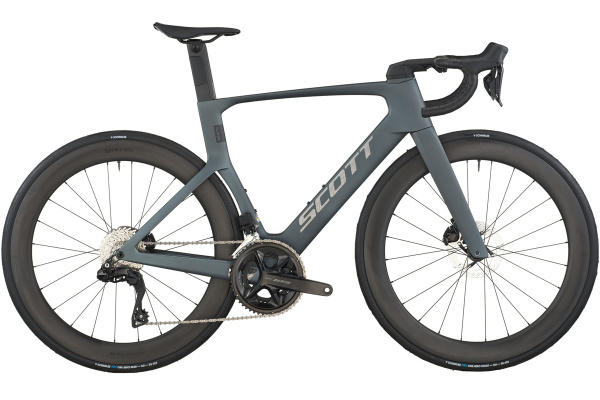
Scott Foil RC 20
Race-ready aero speed with surprising comfort when you're chasing breakaways or holding the front of the bunch.
- F01 Airfoil Technology: every tube shaped for maximum speed
- Shimano 105 Di2: crisp electronic shifting at the button
- Syncros Duncan SL Aero CFT seatpost: compliance without drag
- Syncros Capital 1.0 Aero 60mm wheels: deep, fast, hookless ready
- Dropped seatstays: smoother ride, cleaner airflow
- 8.2 kg: light enough to climb, slippery enough to fly
Scott Foil RC 20 Deals

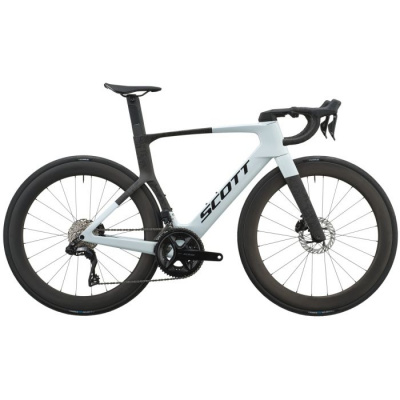
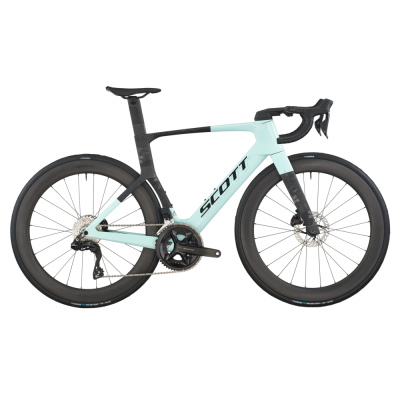
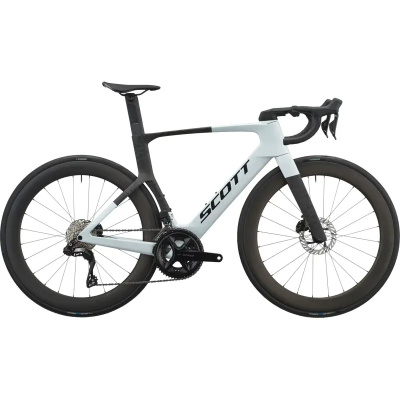
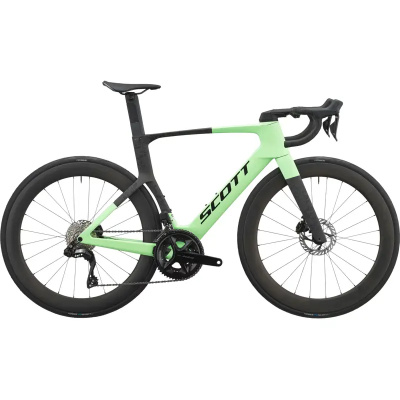
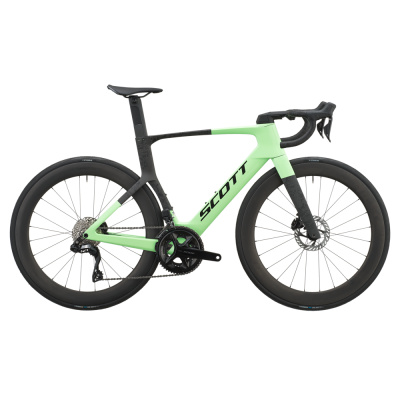
Prices and availability can change quickly. Delivery charges are not always included in listed prices.
Final price, stock status and delivery terms are set by retailer. We may receive a commission on purchases made.
Bikesy's Verdict
The Scott Foil RC 20 delivers WorldTour aerodynamics and race-ready handling at a price that won't demand a second mortgage. It's a bike for riders who know they want to go fast - in crits, chaingangs, sportives, or solo efforts - and are willing to accept a firmer, more focused ride in exchange for measurable speed gains. The HMX carbon frame, Shimano 105 Di2 groupset, and deep Syncros wheels form a sensible, well-sorted package that's ready to race out of the box, while the compliant seatpost and dropped seatstays take enough sting out of rough tarmac to keep it liveable on long rides.
You'll notice the difference when you're holding a wheel in a fast bunch or launching out of a corner - the bike accelerates cleanly, holds speed with less effort, and rewards committed handling. It climbs better than you'd expect for an aero machine, and the sharp, predictable steering inspires confidence on fast descents. If your riding mixes speed with rough roads or gravel, or if you're after all-day comfort over outright pace, an endurance frame will suit you better. But if you're chasing breakaways, closing gaps, or simply want to arrive faster, the Foil RC 20 is a compelling, race-proven tool that punches well above its price.
Pros
- Exceptional aerodynamic efficiency thanks to F01 Airfoil Technology and deep-section wheels
- Shimano 105 Di2 delivers crisp, reliable electronic shifting at a sensible price
- Syncros Duncan SL Aero CFT seatpost adds real compliance without compromising stiffness
- Sharp, predictable handling rewards committed cornering and fast descents
- Around 8.2 kg - light enough to climb without penalty
Cons
- Aggressive race geometry feels less forgiving if you're after all-day comfort or a relaxed position
- Tyre clearance maxes out around 30 mm, limiting rough-road and gravel versatility
- No integrated power meter - you'll need to add one if you train with data
About the Scott Foil RC 20
Scott's Foil RC 20 arrives as the accessible edge of the brand's fastest-ever road platform, wrapping WorldTour aerodynamics around a build that won't demand a second mortgage. The HMX carbon frame borrows every wind-tunnel lesson from the top-tier models - kinked seat tube hugging the rear wheel, dropped seatstays guiding air toward the spokes, deep head tube swallowing cables whole - then pairs it with Shimano's 105 Di2 groupset and a set of 60 mm-deep Syncros hoops. You're looking at a bike that thinks like a sprinter but won't punish you when the road tilts up or the tarmac crumbles.
The headline act is F01 Airfoil Technology, Scott's proprietary shaping protocol that optimises every tube profile and junction through simulation and real-world tunnel time. It's not just about slicing air; it's about doing so without turning the frame into a paint-shaker. The patented Duncan SL Aero CFT seatpost - a two-part design that flexes vertically while staying laterally stiff - keeps you planted and comfortable on rough surfaces, so you can hold power instead of bouncing out of the saddle. Dropped seatstays add another layer of compliance and clean up the wake behind the seat tube. The result is a bike that feels taut and responsive under power yet doesn't rattle your fillings on chipseal or cobbled town centres.
At around 8.2 kg for a medium, the Foil RC 20 sits in that sweet spot where aero efficiency doesn't come at the cost of climbing agility. You'll notice the difference when you're holding a wheel in a fast bunch or launching out of a corner; the bike accelerates cleanly and holds speed with less effort than a traditional round-tubed frame. It's not a featherweight climber - Scott's Addict RC owns that brief - but it won't anchor you on long drags either. The geometry is race-focused: low front end, taut wheelbase, sharp steering that rewards commitment. If you're after a bike that flatters casual Sunday spins, look elsewhere. This one wants to go fast.
Scott Foil RC 20 geometry
The Foil RC 20's geometry is drawn from the WorldTour playbook: aggressive, precise, built for riders who know where the front of the bunch is. The reach is long enough to stretch you out into an efficient aero tuck, while the stack keeps the bars low without requiring a forest of spacers. You'll feel the front end load up quickly in corners, rewarding smooth weight shifts and punishing vague inputs. The short rear centre snaps the back wheel into line when you're out of the saddle, making the bike feel eager rather than planted - think scalpel, not sledgehammer.
Head angle and fork offset conspire to deliver steering that's quick without being twitchy. On fast descents the bike tracks confidently, but you'll need to stay engaged; this isn't a bike that forgives wandering attention. The dropped seatstays and kinked seat tube tuck the rear wheel tight, shortening the wheelbase and sharpening turn-in. If you're used to endurance geometry - taller stack, longer wheelbase, more relaxed angles - the Foil will feel like a step change. You sit lower, lean further forward, and the bike responds faster to every shift in pressure. It's a posture that suits crit racing, fast chaingangs, and solo efforts where aerodynamics matter more than all-day plushness.
Sizing runs from XXS to XXL, covering riders from 152 cm to 210 cm. The medium we've examined suits riders around 170 - 179 cm, though your torso length and flexibility will dictate whether you size up for comfort or down for aggression. The integrated cockpit - Syncros Creston or Foil aero bar and stem - limits fit adjustments compared to a traditional round-bar setup, so getting the frame size right matters more than usual. If you're between sizes, consider whether you prioritise a lower, more aero position (size down) or a touch more stack and stability (size up).
Component choices & upgrades
The stock build is already well sorted. Shimano's 105 Di2 groupset delivers the same crisp, reliable electronic shifting as Ultegra or Dura-Ace, just with a modest weight penalty and slightly less exotic materials. The 52/36T crankset and 11 - 34T cassette cover everything from flat sprints to steep ramps, and the hydraulic disc brakes - 160 mm rotors front and rear - offer predictable, fade-free stopping in all conditions. The Syncros Capital 1.0 Aero 60 mm wheels are hookless-ready with a 23 mm internal width up front and 25 mm at the rear, wrapped in Schwalbe PRO ONE Aero TL-Easy tyres at 28 mm. It's a sensible, race-ready package that won't leave you hunting for upgrades on day one.
That said, if you're chasing marginal gains or your riding demands more, there are logical paths forward. The wheels are the obvious first target: a lighter, stiffer carbon clincher set - something in the 50 - 60 mm depth range with a wider internal profile - will sharpen acceleration and improve tyre support if you're running wider rubber or lower pressures. The tyres themselves are solid all-rounders, but if you're racing crits or time trials you might prefer a faster-rolling tubeless option with lower rolling resistance, while endurance riders could swap to a 30 mm tyre for extra cushion (frame clearance permitting). The Syncros Duncan seatpost is a clever piece of kit, but some riders find the three-piece mechanism fussy; if you're not fussed about the compliance benefit, a simpler one-piece aero post will save a few grams and simplify maintenance.
Power meter integration is the glaring omission. If you're training with structured intervals or racing with data, you'll want to add a crank-based or pedal-based unit. The 105 crankset accepts Shimano's power meter spider, or you could step up to an Ultegra or Dura-Ace power-equipped chainset for a cleaner install. Beyond that, the cockpit is already aero-optimised, the saddle is comfortable enough for most riders (though saddles are always personal), and the groupset will run for years with minimal fuss. The Foil RC 20 is one of those rare bikes where the stock spec doesn't feel like a placeholder for future spending - it's ready to race as it rolls out of the box.
Where the Scott Foil RC 20 excels
The Foil RC 20 is built for one thing above all: going fast on tarmac when the road is smooth to moderately rough and the pace is high. It's outstanding in fast bunch rides, criteriums, road races, and solo efforts where aerodynamics and efficiency matter more than outright comfort. If your weekends involve chaingangs, sportives with long flat sections, or races where holding a wheel in a crosswind makes the difference, this bike will reward you. The aero frame and deep wheels slice through air with measurably less drag than a traditional round-tubed frame, and the stiff bottom bracket and tight rear end translate every watt into forward motion. You'll hold higher speeds for the same effort, and when you do need to accelerate - out of a corner, closing a gap, launching a sprint - the bike responds immediately.
It also climbs better than you'd expect for an aero machine. The relatively low weight and stiff frame mean you're not hauling dead mass up long drags, and the gearing is well judged for everything short of Alpine epics. The dropped seatstays and compliant seatpost take enough sting out of rough tarmac that you won't be wincing over chipseal or patched roads, though it's not as plush as a dedicated endurance frame. If your rides mix fast flats with rolling hills and the occasional rough stretch, the Foil RC 20 strikes a sensible balance.
Where it's not ideal: rough lanes, gravel, or any surface that demands wide tyres and a relaxed geometry. The frame clears 28 mm tyres comfortably, possibly 30 mm depending on rim and tyre combo, but that's the limit. If you're venturing onto gravel byways or potholed back roads, you'll want something with more clearance and a less aggressive position. Likewise, if you're after a bike for all-day comfort on long, slow rides - think audax or touring - the Foil's race geometry and firm ride will feel less forgiving than an endurance frame. And if you're not riding in groups or chasing speed, you're paying for aerodynamic benefits you won't fully exploit. This is a bike for riders who know they want to go fast and are willing to accept a firmer, more focused ride in exchange.
Scott Foil RC 20 FAQs
What is the aerodynamic advantage of the Scott Foil RC 20?
Scott claims the latest Foil generation is ten per cent more aerodynamically efficient than the previous version, thanks to F01 Airfoil Technology optimising every tube shape and junction. In real-world terms, that translates to measurably lower drag at racing speeds - you'll hold higher speeds for the same power output, or save watts when sitting in a bunch. The deep 60 mm wheels and integrated cabling add to the aero benefit, making this one of the slipperiest bikes Scott has ever produced.
What is the difference between the Scott Foil RC and Scott Addict RC?
The Foil RC prioritises aerodynamics and high-speed efficiency, with deeper tube profiles, integrated cabling, and a geometry tuned for flat-out racing. The Addict RC is lighter and more focused on climbing and all-round road performance, with a slightly more relaxed geometry and less aggressive aero shaping. If you're chasing speed on flatter roads or in crits, the Foil is your bike; if you're climbing long cols or want a more versatile all-rounder, the Addict makes more sense.
What tyre clearance does the Scott Foil RC 20 have?
The frame comfortably clears 28 mm tyres - the stock Schwalbe PRO ONE Aero TL-Easy rubber runs at that width - and you might squeeze 30 mm on depending on rim width and tyre casing. Beyond that you're out of luck. It's enough for fast road riding and the occasional rough stretch, but if you're planning gravel adventures or want the cushion of 32 mm-plus tyres, you'll need a different frame.
Is the Scott Foil RC 20 comfortable for long rides?
For an aero race bike, yes - it's surprisingly liveable. The Syncros Duncan SL Aero CFT seatpost flexes vertically to absorb road buzz without compromising lateral stiffness, and the dropped seatstays add another layer of compliance. You won't mistake it for an endurance frame, but it's comfortable enough for four-hour sportives or long training rides on decent tarmac. If your definition of long rides involves rough roads, gravel, or a very upright position, an endurance bike will suit you better.
What is the weight of the Scott Foil RC 20?
Around 8.2 kg for a medium frame with the stock build - Shimano 105 Di2, Syncros Capital 1.0 Aero 60 mm wheels, and 28 mm tyres. That's competitive for an aero bike at this price point, light enough to climb without penalty yet not so feathery that you've sacrificed stiffness or durability. Higher-spec Foil models with Ultegra or Dura-Ace and lighter wheels dip below 7.5 kg, but the RC 20 strikes a sensible balance between weight and cost.
What are the key features of the Syncros Duncan SL Aero CFT seatpost?
It's a patented two-part design that allows vertical flex to absorb road vibration while maintaining lateral stiffness for efficient power transfer. The idea is to keep you seated and comfortable on rough surfaces so you can hold maximum power instead of bouncing around. Some riders find the three-piece mechanism a bit fussy to adjust, but the compliance benefit is real - it's one of the reasons the Foil feels less harsh than other aero race bikes.
What is the gear range on the Scott Foil RC 20?
You get a 52/36T crankset paired with an 11 - 34T cassette, giving you a two-by-twelve setup via Shimano 105 Di2. That's a wide enough range to handle everything from flat sprints to steep climbs, though if you're tackling Alpine passes regularly you might wish for a 32T inner ring or a larger cassette. For UK riding - rolling hills, sportives, fast group rides - it's spot on.
Can I fit wider tyres on the Scott Foil RC 20?
You can likely squeeze 30 mm tyres on, depending on rim internal width and tyre casing, but that's the practical limit. The frame is designed around 28 mm rubber, and clearance is tight. If you're planning to run 32 mm or wider for gravel or rough roads, you'll need a different bike - the Foil's aero-focused design doesn't leave room for big-volume tyres.
Key Features & Benefits
- F01 Airfoil Technology frame shaping: Measurably lower drag at racing speeds, so you hold higher pace for the same effort or save watts in the bunch
- Syncros Duncan SL Aero CFT seatpost: Vertical compliance absorbs road buzz and keeps you seated on rough tarmac, maintaining power output without sacrificing lateral stiffness
- Shimano 105 Di2 groupset: Crisp, reliable electronic shifting with the same logic as Ultegra or Dura-Ace, at a lower price and modest weight penalty
- Syncros Capital 1.0 Aero 60 mm wheels: Deep, aerodynamic profile cuts drag and holds speed, while hookless-ready rims support modern tubeless tyres at lower pressures
- Dropped seatstays and kinked seat tube: Tighter rear end sharpens handling and improves aerodynamics, while adding a layer of vertical compliance for a smoother ride
Scott Foil RC 20 2024 and 2023 differences
The 2025 Foil RC 20 represents an evolution of the platform launched in 2022, with the core aerodynamic design - F01 Airfoil Technology, dropped seatstays, kinked seat tube - remaining consistent across recent model years. The 2024 model shared the same HMX carbon frame and race geometry, though specific component choices varied slightly depending on market and availability. The 2025 iteration refines the build with confirmed Shimano 105 Di2 electronic shifting across the range, replacing mechanical or mixed groupsets on some 2024 variants, and updates the wheelset to the Syncros Capital 1.0 Aero 60 mm hoops with hookless-ready rims.
The 2023 Foil RC was noted as a benchmark for aero design even at launch, and the fundamental ride character - sharp handling, aerodynamic efficiency, surprising compliance - has carried forward largely unchanged. The most significant updates between 2023 and 2025 centre on component spec rather than frame geometry or technology: electronic shifting has trickled down to more accessible price points, wheel profiles have been optimised for tubeless and lower pressures, and tyre clearance has been confirmed at 28 - 30 mm across the range. If you're considering a 2024 or 2023 model, expect the same core performance with potentially mechanical shifting or slightly heavier wheels, but the aerodynamic advantage and race-ready handling remain intact.
Alternatives to Consider
Within Scott's own range, the Scott Addict RC 30 offers a lighter, more climbing-focused alternative with less aggressive aero shaping and a slightly more relaxed geometry - ideal if you're chasing cols rather than crits. Step up to the Scott Foil RC 10 and you'll gain Shimano Ultegra Di2, lighter wheels, and a modest weight saving, sharpening the aero edge without changing the fundamental character.
Cross-brand, the Specialized Tarmac SL7 Comp blends aero efficiency with all-round versatility, offering a more forgiving ride and wider tyre clearance while still delivering race-ready speed. The Trek Émonda SL 6 prioritises outright lightness and climbing prowess over pure aero, making it a strong choice if your local roads tilt upward more than they flatten out. For a closer aero match, the Giant Propel Advanced 2 delivers similar wind-cheating performance with a slightly more relaxed geometry and a competitive build at a comparable price. The Cervélo S3 Ultegra leans harder into aerodynamics with deeper tube profiles and a stiffer ride, rewarding riders who want maximum speed and don't mind sacrificing a touch of comfort. Finally, the Cannondale SuperSix EVO 3 splits the difference between aero and lightweight, offering a balanced platform that climbs well and still cuts through air efficiently - a genuine all-rounder for riders who want one bike to do it all.
Reviews
Sharp handling and predictable front-end feel define the Foil RC 20's character on fast descents and tight corners. The race geometry loads the front wheel quickly, rewarding smooth weight shifts and punishing vague inputs, while the short rear centre snaps the back end into line when you're out of the saddle. Aerodynamic efficiency is tangible at racing speeds - the deep-section wheels and sculpted frame hold higher pace for noticeably less effort than a traditional round-tubed bike, and the stiff bottom bracket translates every watt cleanly into forward motion.
Compliance surprises for an aero race machine. The Syncros Duncan SL Aero CFT seatpost flexes vertically to absorb road buzz without compromising lateral stiffness, keeping you planted and comfortable on chipseal or patched tarmac. Dropped seatstays add another layer of vertical give, so the bike doesn't rattle your fillings on rough stretches. When the road tilts up, the relatively low weight and taut rear end mean you're not hauling dead mass - it climbs with more agility than you'd expect from a bike with 60 mm-deep wheels.
Shimano 105 Di2 shifts crisply and reliably, delivering the same electronic logic as Ultegra or Dura-Ace with a modest weight penalty. The 52/36T crankset and 11 - 34T cassette cover everything from flat sprints to steep ramps, and the hydraulic disc brakes offer predictable, fade-free stopping in all conditions. Because the frame is designed around 28 mm tyres, clearance is tight - you might squeeze 30 mm on, but beyond that you're out of options. If your rides mix fast tarmac with rough lanes or gravel, you'll feel the limitation. We find the Foil RC 20 most rewarding when the road is smooth to moderately rough and the pace is high - it's a bike that wants to go fast and rewards riders who know how to use it.
Full Specification
| Spec | Value |
|---|---|
| Frame Material | FOIL Disc HMX Carbon |
| Frame Design | Road Race geometry, aerodynamic tube shaping (F01 Airfoil Technology), dropped seatstays, deep head tube, integrated cabling |
| Frame Features | Internal cable routing, replaceable derailleur hanger |
| Bottom Bracket | Shimano BB-RS500-PB (PressFit) |
| Rear Axle | Syncros SL Axle, removable lever with tool (142x12mm) |
| Shifters | Shimano 105 Di2 ST-R7170 |
| Rear Derailleur | Shimano 105 Di2 RD-R7150 |
| Front Derailleur | Shimano 105 Di2 FD-R7150 |
| Crankset | Shimano 105 FC-R7100 Hollowtech II 52x36T |
| Cassette | Shimano CS-R7100 11-34T |
| Chain | Shimano CN-M6100-12 |
| Brake Type | Hydraulic Disc |
| Brake Calipers | Shimano BR-R7170 Hyd.Disc |
| Rotors (Front) | Shimano SM-RT70 CL 160mm |
| Rotors (Rear) | Shimano SM-RT70 CL 160mm |
| Rims | Syncros Capital 1.0 Aero 60mm, hookless ready, 23mm internal width (front), 25mm internal width (rear) |
| Spokes (Front) | 24 |
| Spokes (Rear) | 24 |
| Hubs | Syncros SL Axle |
| Tyres (Front) | Schwalbe PRO ONE Aero TL-Easy 700x28C |
| Tyres (Rear) | Schwalbe PRO ONE Aero TL-Easy 700x28C |
| Tubeless Ready | Yes |
| Handlebar | Syncros Creston 2.0 Aero |
| Stem | Syncros Foil 1.5 Aero or Syncros RR 1.5 Aero |
| Headset | Acros AIF-1138 |
| Seatpost | Syncros Duncan SL Aero CFT |
| Saddle | Syncros Belcarra V-Concept 2.0 or Syncros Belcarra V2.0 NEO Cut Out |
| Weight (Approx) | 8.16 kg (medium size) |