
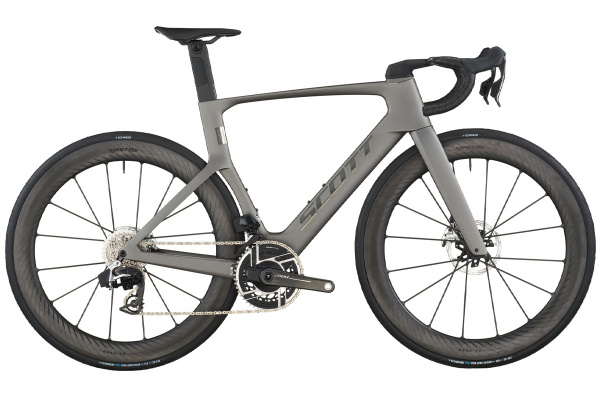
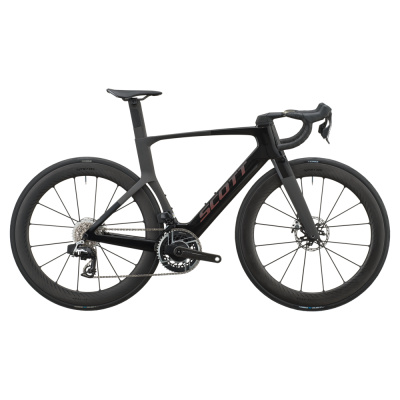
Scott Foil RC Ultimate
Chase down breakaways and hold threshold into headwinds on a bike that's light, stiff, and surprisingly comfortable.
- HMX SL carbon: stiffness and low weight combined
- F01 airfoil shaping slices through headwinds
- Integrated Syncros cockpit for clean aerodynamics
- Duncan CFT seatpost absorbs road chatter
- Clearance for 30 mm tyres adds versatility
- SRAM RED eTap AXS with Quarq power meter
Scott Foil RC Ultimate Deals

Prices and availability can change quickly. Delivery charges are not always included in listed prices.
Final price, stock status and delivery terms are set by retailer. We may receive a commission on purchases made.
Bikesy's Verdict
The Foil RC Ultimate is Scott's answer to the question: can an aero bike be light, stiff, and comfortable enough for real-world riding? The answer is a resounding yes. This is a machine that'll hold 50 km/h on the flat without punishing you when the road turns rough, a bike that climbs respectably and descends with the confidence of a much heavier frame. The HMX SL carbon, F01 airfoil shaping, and integrated Syncros cockpit deliver measurable aero gains, while the compliant seatpost and 30 mm tyre clearance add the versatility to tackle long sportives and varied tarmac.
It's not cheap, and it's not for everyone. The aggressive geometry demands flexibility and fitness, and if your riding is mostly steep climbs or rough roads, other bikes will serve you better. But if you're chasing speed on smooth tarmac - time trials, crits, fast chaingangs, or solo efforts into the wind - the Foil RC Ultimate is one of the fastest, most complete aero road bikes you can buy. It's a race bike that doesn't punish you for racing it.
Pros
- Exceptional aerodynamics without the weight penalty - around 7.2 kg for a full aero build
- Stiff, responsive power transfer rewards hard efforts and sprints
- Compliant seatpost and 30 mm tyre clearance add real-world comfort
- Stable, confidence-inspiring geometry at high speed and on descents
- SRAM RED eTap AXS with integrated Quarq power meter is race-ready out of the box
Cons
- Premium pricing reflects the top-tier spec and carbon layup
- Aggressive geometry demands flexibility and core strength for long rides
- Heavier and less agile than pure climbing frames when the road tilts up steeply
About the Scott Foil RC Ultimate
The Foil RC Ultimate sits at the sharp end of Scott's road range, built for riders who measure success in watts saved and seconds shaved. This is HMX SL carbon shaped by wind-tunnel hours and F01 airfoil profiles - tube sections that cheat the air without the weight penalty you'd expect. It's an aero bike that doesn't ride like one, thanks to dropped seatstays, a compliant Duncan CFT seatpost, and clearance for proper 30 mm rubber. You're looking at a machine that'll hold 50 km/h on the flat without punishing you when the road turns coarse.
Scott has dialled back the harshness that plagued earlier aero frames. The seatpost flexes at the front to absorb high-frequency buzz, and the wider tyre clearance lets you run volume for comfort or grip without compromising the aero story. It's still a race bike - stiff through the bottom bracket, sharp in the steering - but it won't rattle your fillings on a long sportive. The integrated Syncros Creston cockpit hides every cable and presents a clean leading edge to the wind, while SRAM's RED eTap AXS groupset and Quarq power meter give you the data and shifting precision to exploit every watt.
This isn't a bike for Sunday pootles or gravel exploration. It's for riders who want to go fast on tarmac, whether that's a crit, a time trial, a chaingang, or a solo effort into a block headwind. The geometry leans stable rather than twitchy, so you'll feel planted at speed and confident on fast descents. Climbs? It handles them better than most aero frames - low weight for the category helps - but if you're chasing pure climbing performance, Scott's Addict RC is the lighter, more agile choice. The Foil RC Ultimate is about speed everywhere else.
Scott Foil RC Ultimate geometry
The Foil's geometry strikes a balance between race-ready aggression and real-world stability. Stack and reach figures put you in a low, stretched position that favours aerodynamics and power transfer, but the head angle and wheelbase keep the front end calm when you're descending at terminal velocity or sprinting out of a corner. It's not as twitchy as a pure crit racer, nor as relaxed as an endurance frame - think of it as a bike that rewards commitment but doesn't punish hesitation.
The longer wheelbase and moderate trail mean the steering feels predictable rather than nervous, which matters when you're holding 60 km/h on a technical descent or threading through a fast group. The low bottom bracket keeps the centre of gravity planted, adding to the sense of stability, though it does mean you'll need to watch your pedal clearance in tight corners. The dropped seatstays and short rear end contribute to a snappy, responsive feel under power, so when you stamp on the pedals the bike surges forward rather than flexing away your effort.
Fit is crucial here. The aggressive stack-to-reach ratio demands flexibility and core strength; if you're not comfortable holding an aero tuck for hours, you'll find yourself fighting the bike rather than flowing with it. Sizing is generous - most riders will fit their usual road size - but if you're between sizes and prioritise comfort over outright speed, consider sizing up for a slightly taller stack. The integrated cockpit limits your adjustment options, so getting the frame size right matters more than on a bike with a conventional stem.
Component choices & upgrades
The Ultimate build is already at the top of the tree. SRAM's RED eTap AXS groupset is wireless, precise, and includes a Quarq power meter integrated into the crankset - data you'd otherwise pay hundreds to retrofit. The hydraulic disc brakes offer modulation and power that'll have you braking later into corners, and the 160 mm rotors front and rear provide ample stopping force without adding unnecessary weight. The Syncros Capital SL Aero wheels - 60 mm deep, tubeless-ready - are fast and stable in crosswinds, though some builds spec the one-piece Syncros Silverton SL hoops for even cleaner aerodynamics.
Schwalbe Pro One tyres in 28 mm are a sensible starting point: supple, fast-rolling, and tubeless-compatible. If you're chasing every marginal gain, the Aero variant shaves a few watts, but the standard Pro One offers better puncture protection for real-world riding. You can fit up to 30 mm rubber (some riders report squeezing in 32 mm), so if your routes include rougher tarmac or you want extra comfort on long days, a wider tyre is an easy win. Just remember that wider rubber adds a touch of weight and rolling resistance, so it's a trade-off between speed and compliance.
Upgrade paths are limited because the spec is already so high. If you're racing crits or time trials and want to shave grams, lighter tubular or hookless carbon wheels could save a few hundred grams, but you'll sacrifice the versatility of tubeless clinchers. The Syncros Duncan CFT seatpost is a clever piece of kit - its flexible front section absorbs road buzz - but if you prefer a firmer feel or want to experiment with setback, aftermarket aero posts are available, though you'll lose some of the compliance Scott engineered in. The integrated cockpit is harder to swap; if the fit doesn't suit, you're looking at a costly replacement of the entire bar-stem unit.
For most riders, the stock build is spot-on. Focus your budget on fit (a professional bike fit will unlock more speed than any component swap), tyres (experiment with width and pressure to suit your roads), and perhaps a saddle that matches your anatomy. The Syncros Belcarra is comfortable for many, but saddles are personal - if it doesn't work for you, swap it early. Beyond that, ride the bike as it comes. It's already fast enough.
Where the Scott Foil RC Ultimate excels
This bike is built for high-speed tarmac: flat-out efforts on smooth roads, time trials, crits, fast chaingangs, and solo missions where aerodynamics matter more than anything else. The aero tube shaping and integrated cockpit make a measurable difference when you're holding threshold power into a headwind, and the stiff bottom bracket and rear end mean every watt you produce goes into forward motion. If your riding involves sustained efforts above 35 km/h, the Foil RC Ultimate will reward you with speed that lighter, less aero bikes can't match.
It also handles long, fast sportives and gran fondos better than you'd expect from a pure aero frame. The compliant seatpost and wider tyre clearance take the sting out of rough tarmac, and the stable geometry means you can descend with confidence even when you're tired. It's not an endurance bike - you'll still feel bigger impacts through the frame - but it's comfortable enough for all-day efforts if you're fit and flexible. The disc brakes are a boon on long descents, offering consistent power and modulation without the fade or squealing that can plague rim brakes in the wet.
Where it's less ideal: technical climbing, especially steep, slow gradients where weight matters more than aerodynamics. The Foil climbs respectably for an aero bike, but if you're tackling Alpine cols or punchy British hills at 10 km/h, a lighter, more agile frame like the Scott Addict RC will feel livelier. It's also not a bike for rough roads, gravel, or winter training - despite the 30 mm tyre clearance, the aggressive geometry and low-profile frame are optimised for smooth tarmac. If your routes include long stretches of broken surfaces or you want a bike for year-round training, an endurance frame with more compliance and clearance will serve you better.
Scott Foil RC Ultimate FAQs
What is the weight of the Scott Foil RC Ultimate?
Around 7.2 kg for a size medium without pedals, though some builds dip as low as 6.9 kg depending on wheelset and component choices. That's impressively light for an aero frame with disc brakes and deep-section wheels, putting it on par with many lightweight race bikes.
Is the Scott Foil RC Ultimate comfortable for long rides?
More comfortable than earlier aero frames, thanks to the Duncan CFT seatpost and wider tyre clearance, but it's still a race bike with an aggressive position and firm ride quality. If you're fit, flexible, and riding smooth tarmac, it'll handle all-day efforts without complaint. Rough roads or a more upright position? Look at an endurance frame instead.
What is the tyre clearance on the Scott Foil RC Ultimate?
Officially 30 mm, though some riders report fitting 32 mm rubber with careful tyre and rim choice. That's generous for an aero bike and gives you room to add volume for comfort or grip without compromising aerodynamics too much.
What is the difference between the Scott Foil RC Ultimate and the Scott Addict RC?
The Foil prioritises aerodynamics and high-speed stability with deeper tube profiles and an integrated cockpit; the Addict is lighter, more agile, and better suited to climbing and technical descents. If you spend more time at 40 km/h-plus on flat or rolling roads, the Foil is faster. If you're chasing KOMs on steep climbs, the Addict will feel more responsive.
What kind of racing is the Scott Foil RC Ultimate best suited for?
Time trials, crits, flat or rolling road races, and any event where sustained high speed matters more than rapid accelerations or technical climbing. The aero advantage is measurable at threshold power, and the stable geometry inspires confidence in fast, tight racing.
Can I fit wider tyres on the Scott Foil RC Ultimate?
Yes, up to 30 mm officially, with some riders squeezing in 32 mm depending on tyre and rim combination. Wider rubber adds comfort and grip but costs a small amount of aerodynamic efficiency and weight, so choose based on your roads and priorities.
What is the price of the Scott Foil RC Ultimate?
The Ultimate build sits at the premium end of the aero road market, reflecting the HMX SL carbon frame, SRAM RED eTap AXS groupset with Quarq power meter, and high-end Syncros wheels. Expect to pay a significant sum, but you're getting race-ready performance and top-tier components out of the box.
What are the key aerodynamic features of the Scott Foil RC Ultimate?
F01 airfoil tube shaping optimised in the wind tunnel, an integrated Syncros Creston cockpit that hides all cables, dropped seatstays that smooth airflow around the rear wheel, and an oversized head tube that acts as a fairing. Every surface is shaped to cheat the wind, and the internal cable routing keeps the profile clean.
Key Features & Benefits
- HMX SL carbon frame with F01 airfoil shaping: Cuts through the wind at high speed while keeping weight low enough to climb respectably
- Syncros Duncan CFT seatpost with flexible front section: Absorbs road buzz and high-frequency vibration without sacrificing pedalling stiffness
- Integrated Syncros Creston cockpit with internal cable routing: Presents a clean, drag-reducing profile and eliminates cable rattle and maintenance faff
- SRAM RED eTap AXS groupset with Quarq power meter: Wireless, precise shifting and integrated power data for training and racing without retrofitting
- Clearance for 30 mm tyres and tubeless-ready wheels: Lets you run more volume for comfort, grip, or puncture protection without losing aero efficiency
Scott Foil RC Ultimate 2024 and 2023 differences
The 2025 model carries over largely unchanged from 2024, maintaining the HMX SL carbon frame, SRAM RED eTap AXS groupset, and Syncros Capital SL Aero 60 mm wheels. Some builds now spec the one-piece Syncros Silverton SL wheelset for cleaner aerodynamics, but the core performance and geometry remain identical. If you're considering a 2024 model at a discount, you're getting the same bike in all but name.
The 2023 model introduced the updated F01 airfoil design and HMX SL carbon frame that define the current generation. Earlier builds often featured Zipp 454 NSW wheels instead of Syncros hoops, and the frame was noted as being 9 per cent lighter than the previous iteration. Geometry, tyre clearance, and the Duncan CFT seatpost were already present in 2023, so the differences between 2023 and 2025 are minimal - mostly component tweaks rather than fundamental changes. If you're shopping used, a 2023 Foil RC Ultimate is still a very fast, very capable bike.
Alternatives to Consider
Within Scott's own range, the Addict RC Ultimate is the natural counterpoint: lighter, more agile, and better suited to climbing and technical descents, but without the Foil's aero advantage at high speed. If you're chasing KOMs on steep gradients or prefer a bike that darts through corners, the Addict is the sharper tool. For a more accessible entry into Scott's aero lineup, the Foil RC Pro shares the same frame but swaps SRAM RED for Force eTap AXS and less exotic wheels, saving a chunk of cash without sacrificing the core aero performance.
Cross-brand, the Specialized Tarmac SL8 is the closest rival: similarly light, similarly aero, with a geometry that's slightly more relaxed and a ride quality many find more forgiving on rough roads. The Trek Madone Gen 8 leans harder into aerodynamics with adjustable compliance via its IsoFlow seat tube, though it's a touch heavier and more complex. The Cervélo S5 is another pure aero weapon, stiffer and more aggressive than the Foil, but less comfortable on long rides. For riders who want a bit more versatility, the Cannondale SystemSix offers similar aero performance with slightly more forgiving geometry and clearance for wider tyres, making it a better all-rounder if your roads are less than perfect.
Reviews
Aerodynamics and low weight rarely coexist this gracefully. The HMX SL carbon frame delivers race-bike stiffness through the bottom bracket and rear end, translating power into forward motion with the directness sprinters demand, yet the overall package hovers around 7.2 kg - light enough to climb without the sluggishness that plagues heavier aero frames. When you're holding threshold into a block headwind or chasing a breakaway on rolling roads, the F01 airfoil shaping and integrated cockpit make a measurable difference; the bike simply cuts through the air with less effort than non-aero rivals.
Comfort has improved markedly over earlier iterations. The Duncan CFT seatpost's flexible front section absorbs road chatter and high-frequency vibration, and the clearance for 30 mm tyres lets you run enough volume to take the sting out of coarse tarmac. It's not an endurance bike - bigger impacts still telegraph through the frame - but it's no longer the boneshaker that pure aero frames used to be. Long sportives and gran fondos are well within its remit if you're fit and flexible enough to hold the aggressive position.
Handling inspires confidence at speed. The stable geometry and longer wheelbase mean the front end stays calm on fast descents and in tight racing, while the hydraulic disc brakes offer modulation and power that let you brake later into corners without drama. Climbing isn't the Foil's primary mission, but it handles moderate gradients with more poise than you'd expect; the low weight helps, though very steep, slow climbs will highlight its aero bias over lighter, more agile frames. Because the bike rewards sustained high-speed efforts rather than rapid accelerations, it's best suited to time trials, crits, flat road races, and solo missions where aerodynamics matter more than nimbleness.
Full Specification
| Spec | Value |
|---|---|
| Frame Material | HMX SL Carbon Disc |
| Frame Design | Aerodynamic F01 airfoil technology with wind tunnel-optimized tube shaping |
| Frame Features | Internal cable routing, replaceable derailleur hanger, dropped seatstays, oversized head tube fairing, compatible with electronic and mechanical shifting |
| Bottom Bracket | SRAM DUB PF ROAD 86.5 |
| Rear Axle | 12 x 142mm |
| Frame Weight | 915g |
| Fork Weight | 445g |
| Shifters | SRAM RED eTap AXS HRD Shift-Brake System |
| Rear Derailleur | SRAM RED eTap AXS |
| Front Derailleur | SRAM RED eTap AXS |
| Crankset | SRAM RED Power meter 48/35T |
| Cassette | SRAM RED XG1290 E1 10-33T |
| Chain | SRAM RED |
| Brake Type | Hydraulic Disc |
| Brake Levers | SRAM RED eTap AXS HRD |
| Brake Calipers | SRAM RED eTap AXS HRD |
| Rotors (Front) | SRAM CenterLine XR 160mm |
| Rotors (Rear) | SRAM CenterLine XR 160mm |
| Rims | Syncros Capital SL Aero 60mm depth |
| Hubs (Front) | Syncros SL integrated |
| Hubs (Rear) | Syncros SL integrated |
| Axles (Front) | Syncros SL with removable lever |
| Axles (Rear) | Syncros SL with removable lever |
| Tyres (Front) | Schwalbe PRO ONE Aero TL-Easy Fold 700x28C |
| Tyres (Rear) | Schwalbe PRO ONE Aero TL-Easy Fold 700x28C |
| Tyre Clearance | 700x30C maximum |
| Tubeless Ready | Yes |
| Handlebar | Syncros Creston iC SL Aero integrated 42cm |
| Stem | Syncros Creston iC SL Aero integrated |
| Headset | Acros AIF-1138 |
| Seatpost | Syncros Duncan SL Aero CFT Carbon |
| Saddle | Syncros Belcarra V1.0 NEO Cut Out |
| Weight (Approx) | 7.2kg |