
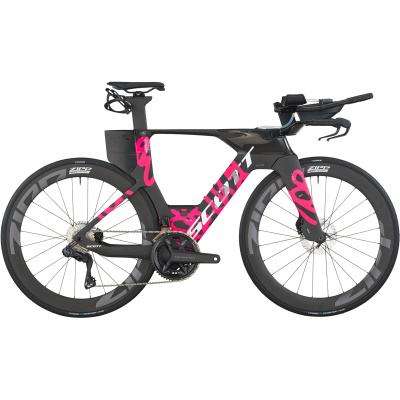
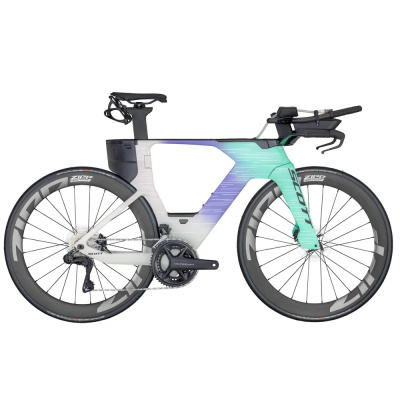
Scott Plasma RC Pro
Dominate long-course triathlon bike legs with aero efficiency, integrated storage, and a cockpit you can dial in perfectly.
- Plasma 6 HMX carbon frame: stiff, slippery, race-ready
- Integrated hydration and storage: nutrition within reach
- Shimano Ultegra Di2: precise electronic shifting
- Zipp 404 Firecrest wheels: 60 mm aero depth
- Adjustable cockpit: dial in your perfect position
- Weighs 9.9 kg complete with race kit
Scott Plasma RC Pro Deals

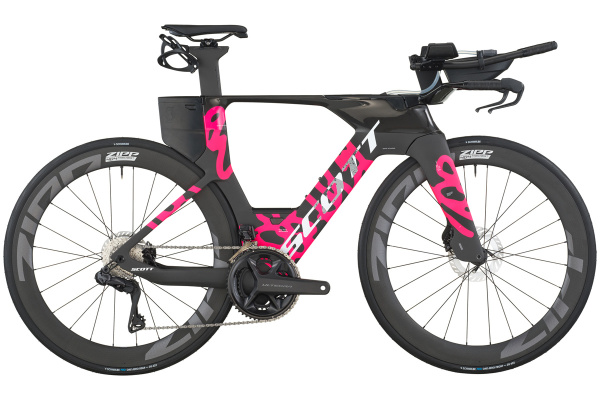
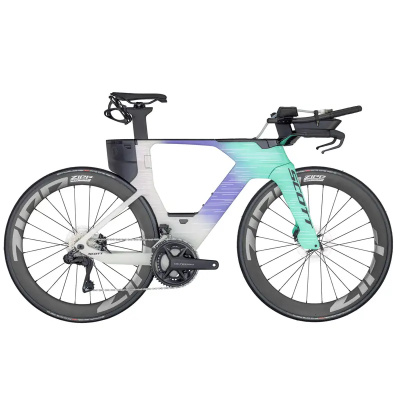
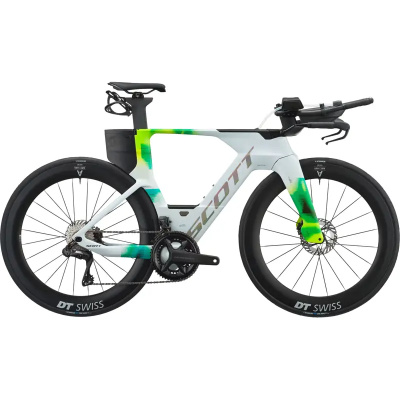
Prices and availability can change quickly. Delivery charges are not always included in listed prices.
Final price, stock status and delivery terms are set by retailer. We may receive a commission on purchases made.
Bikesy's Verdict
The Scott Plasma RC Pro is a serious tool for serious triathletes and time triallists. It's built around a frame that's been refined through wind tunnels and real-world racing, and every detail - from the integrated hydration to the adjustable cockpit to the six rear wheel mount positions - has been optimised to make you faster over long distances. The Shimano Ultegra Di2 groupset and Zipp 404 wheels deliver race-ready performance without the eye-watering cost of the Ultimate model, and the ride quality is smooth enough to keep you comfortable over hours in the aerobars.
This isn't a bike for weekend club rides or technical criteriums. It's a machine designed to excel on long-course triathlon bike legs and competitive time trials, where aerodynamic efficiency and sustained power output matter more than nimble handling or climbing prowess. If that's your racing, the Plasma RC Pro will give you a genuine advantage. It's stable, fast, and practical, with the kind of attention to detail that lets you focus on your effort rather than fighting the bike. Worth every penny if you're chasing personal bests or podium finishes on flat, fast courses.
Pros
- Exceptional aerodynamic efficiency with integrated hydration and storage
- Highly adjustable cockpit for personalised fit and position optimisation
- Shimano Ultegra Di2 and Zipp 404 wheels deliver race-ready performance
- Stable and confidence-inspiring at speed on long descents
- Surprisingly smooth ride quality for a full-aero tri bike
Cons
- Heavier and less agile on steep climbs compared to lightweight road bikes
- Long wheelbase makes tight, technical corners more work if you're racing twisty courses
- Tyre clearance limited to 28 mm, so no option for wider rubber if you want more comfort
About the Scott Plasma RC Pro
The Plasma RC Pro sits at the sharp end of Scott's triathlon and time-trial range, built around the Plasma 6 HMX carbon frame that's been refined through countless wind-tunnel hours and real-world racing with Team DSM. This is a machine engineered for one purpose: getting you from start to finish as fast as physics and your legs allow. The frame's aero shaping is aggressive without being fussy, and every tube profile has been optimised to cheat the wind whilst maintaining the stiffness you need when you're grinding out watts in the drops or on the extensions.
What sets the Plasma RC Pro apart is how it balances outright speed with the practicalities of long-course racing. Integrated hydration sits within the frame, a bento box perches on the top tube, and there's storage for nutrition and spares - all positioned to keep drag minimal and essentials accessible without breaking your aero tuck. The cockpit is endlessly adjustable, with Syncros' Creston iC TRI bar and carbon extensions offering the range to fine-tune your position down to the millimetre. Even the rear wheel can be mounted in six different positions to optimise alignment with different tyre profiles. It's the kind of attention to detail that matters when you're chasing marginal gains over 180 kilometres.
Shimano's Ultegra Di2 groupset handles shifting duties with the precision you'd expect from electronic actuation, whilst Dura-Ace hydraulic disc brakes deliver confident stopping power - crucial when you're carrying speed into technical corners or descending at pace. Zipp's 404 Firecrest wheels strike a sweet spot between aero efficiency and real-world versatility, and Schwalbe's Pro One Aero tyres roll fast whilst offering enough grip and compliance to keep you composed over less-than-perfect tarmac. The complete package weighs in at 9.9 kilograms, which is competitive for a bike this aero and this well-equipped.
Scott Plasma RC Pro geometry
The Plasma RC Pro's geometry is pure triathlon: steep seat angle, slack head angle, and a long front centre that prioritises stability and aerodynamic efficiency over nimble handling. That steep seat tube - 75.2 degrees across all sizes - rotates your hips forward, opening up your hip angle and letting you generate power whilst folded into the extensions. It's a position that takes some acclimatisation if you're coming from a road bike, but once you're dialled in, you'll find you can sustain higher outputs for longer without your quads screaming.
The head angle is relaxed at 72.5 degrees, which lengthens the wheelbase and plants the front wheel well ahead of you. This makes the bike stable at speed and confidence-inspiring on fast descents, but it's not a bike that wants to dart through tight switchbacks. The reach figures grow steadily from 373 millimetres on the XS to 468 on the XL, whilst stack climbs from 520 to 570 millimetres, giving taller riders the front-end height they need without resorting to towering stacks of spacers. The chainstays are a consistent 410 millimetres across the range, keeping the rear end snappy and responsive when you're accelerating out of corners or surging to close a gap.
What you get is a bike that feels planted and purposeful. It doesn't twitch or wander; it tracks straight and true, letting you focus on holding your position and maintaining your rhythm. When you're deep into an Ironman bike leg and fatigue is creeping in, that stability is a gift. The long wheelbase does mean you'll need to plan your lines through tighter corners, but that's a trade-off you make willingly for the confidence and speed the geometry delivers everywhere else.
Component choices & upgrades
The stock build on the Plasma RC Pro is already race-ready, and most riders will find little reason to change anything before their first event. Shimano's Ultegra Di2 groupset is reliable, precise, and proven at the highest levels of competition. The 52/36-tooth chainrings paired with an 11-30-tooth cassette offer enough range for most courses, though if you're tackling particularly hilly routes or prefer a lower bail-out gear, swapping to an 11-34 cassette is straightforward and won't compromise shifting performance.
The Zipp 404 Firecrest wheels are a sensible choice for most conditions - deep enough to deliver genuine aero gains, but not so deep that crosswinds become a constant battle. If you're racing in consistently calm conditions or want to chase every last watt saving, stepping up to a deeper rear wheel (an 808 or even a disc) is worth considering, though you'll want to keep the 404 up front for steering stability. The Schwalbe Pro One Aero tyres are fast and grippy, but if you're after a touch more comfort or puncture protection, Continental's GP5000 S TR or Vittoria's Corsa Pro are both excellent alternatives that won't cost you measurable speed.
The Syncros cockpit is highly adjustable, but if you're struggling to achieve your ideal position, a professional bike fit is a better investment than swapping stems or bars. The saddle - a Syncros Belcarra 1.5 TRI - is designed for the forward-rotated position, but saddle comfort is deeply personal, so don't hesitate to experiment if it's not working for you. Beyond that, the only upgrade that makes sense for most riders is adding race-day essentials: a computer mount, a rear light for training rides, and perhaps a more aggressive tyre choice if you're chasing a personal best on a known course.
Where the Scott Plasma RC Pro excels
The Plasma RC Pro is built for one thing above all else: going fast in a straight line against the clock. It's outstanding on long-course triathlon bike legs - Ironman, Ironman 70.3, and similar events where you're spending hours in the aerobars, maintaining a steady effort over rolling or flat terrain. The integrated hydration and storage mean you can carry everything you need without resorting to frame bags or bottle cages that disrupt airflow, and the adjustable cockpit lets you fine-tune your position to maximise comfort and power output over those long distances.
It's also superb for competitive time trials, where every second counts and the course is typically flat to rolling with minimal technical sections. The bike's stability at speed and aerodynamic efficiency make it a formidable weapon when you're racing solo against the clock. On fast, open roads with smooth tarmac, the Plasma RC Pro feels like it's being pulled forward by an invisible thread - you're working hard, but the bike is doing its share of the job by slipping through the air with minimal resistance.
Where it's less ideal is on technical, hilly courses with lots of tight corners or steep climbs. The long wheelbase and relaxed geometry make it stable but not agile, so if you're racing a criterium or a road race with frequent direction changes, you'll find yourself working harder to manoeuvre the bike. Similarly, whilst the lightweight frame means it climbs better than you might expect from a full-aero tri bike, it's still carrying the weight of integrated storage, deep-section wheels, and a position that's optimised for flat speed rather than climbing efficiency. If your local triathlon course features sustained climbs or technical descents, you'll manage fine, but you won't be at the same advantage you'd enjoy on flatter, faster terrain.
Scott Plasma RC Pro FAQs
What is the weight of the Scott Plasma RC Pro?
The complete bike weighs 9.9 kilograms as specced, which is competitive for a full-aero triathlon machine with integrated storage and deep-section carbon wheels. That figure includes the Shimano Ultegra Di2 groupset, Zipp 404 wheels, and all the integrated hydration and storage hardware, so you're getting a race-ready package without needing to strip weight through upgrades.
Is the Scott Plasma RC Pro good for climbing?
It climbs better than many full-aero tri bikes thanks to the lightweight HMX carbon frame, but it's not a dedicated climbing machine. The steep seat angle and forward position can feel efficient on steady gradients, but the long wheelbase and aero-optimised geometry mean it's happiest on rolling terrain rather than steep, sustained ascents. If your race includes significant climbing, you'll manage fine, but this bike truly shines on flatter, faster courses.
What are the key aerodynamic features of the Scott Plasma RC Pro?
The Plasma 6 HMX frame uses aggressive tube shaping and fully integrated cable routing to minimise drag, whilst the integrated hydration system and top-tube storage keep nutrition and fluids accessible without disrupting airflow. The rear wheel can be mounted in six different positions to optimise alignment with different tyre profiles, and the Syncros cockpit is designed to help you achieve a low, narrow frontal area. Every detail - from the frame profiles to the component integration - has been refined to cheat the wind.
What type of bottom bracket does the Scott Plasma RC Pro use?
It uses a Shimano PressFit BB86 bottom bracket (SM-BB71-41B), which is a press-fit standard that's common on modern carbon frames. It's reliable and stiff, though some riders prefer threaded bottom brackets for ease of maintenance. If you're swapping components or servicing the bike yourself, make sure you have the correct tools and grease to avoid creaking.
How adjustable is the Scott Plasma RC Pro's cockpit?
The Syncros Creston iC TRI bar and carbon extensions offer extensive adjustability in width, reach, stack, and angle, allowing you to fine-tune your position down to the millimetre. The integrated headset and stem system also provides some range for adjusting bar height and reach. It's designed to accommodate a wide variety of rider sizes and preferences, making it easier to achieve an optimal aerodynamic position without resorting to custom components.
What is the tyre clearance on the Scott Plasma RC Pro?
The bike is fitted with 700x28-millimetre tyres as standard, and that appears to be the practical limit for clearance given the tight frame tolerances and aerodynamic shaping. Wider tyres would likely compromise the aero profile and risk rubbing under load, so if you're looking for more comfort or grip, focus on tyre choice and pressure rather than going wider.
What are the main differences between the Scott Plasma RC Pro and Ultimate?
Both models share the same Plasma 6 HMX carbon frame, but the Ultimate steps up to SRAM's RED eTap AXS wireless electronic groupset and Zipp's 858 NSW wheels, which are deeper and more aerodynamically aggressive. The Ultimate is lighter and faster on paper, but the Pro offers exceptional value with Shimano Ultegra Di2 and Zipp 404 wheels that are more versatile in varied conditions. For most riders, the Pro delivers the same frame performance at a more accessible price point.
Can I fit wider tyres on the Scott Plasma RC Pro?
Not really. The frame is optimised for 700x28-millimetre tyres, and the tight clearances mean going wider risks rubbing and disrupts the aerodynamic profile. If you're after more comfort or grip, experiment with tyre pressure and tread pattern rather than width - modern tubeless tyres like the Schwalbe Pro One Aero or Continental GP5000 S TR offer excellent performance at 28 millimetres when run at the right pressure for your weight and the road surface.
Key Features & Benefits
- Plasma 6 HMX carbon frame with integrated hydration and storage: Keeps nutrition and fluids within reach without disrupting aerodynamics, so you stay fuelled and fast over long distances
- Syncros Creston iC TRI adjustable cockpit with carbon extensions: Dial in your perfect aero position down to the millimetre, maximising comfort and power output for hours in the bars
- Shimano Ultegra Di2 electronic shifting with Dura-Ace hydraulic disc brakes: Precise, reliable gear changes and confident stopping power when you're carrying speed into corners or descents
- Zipp 404 Firecrest carbon wheels with 60 mm rim depth: Genuine aero gains without the crosswind instability of deeper wheels, so you stay fast and composed in varied conditions
- Six rear wheel mount positions for tyre alignment optimisation: Fine-tune aerodynamic efficiency based on your tyre choice, squeezing out every marginal gain when seconds matter
Scott Plasma RC Pro 2024 and 2023 differences
The 2025 Plasma RC Pro carries over the same Plasma 6 HMX carbon frame, Shimano Ultegra Di2 R8150 groupset, and Zipp 404 Firecrest wheels that defined the 2024 model, so there are no significant spec or geometry changes between those two years. The 2023 model was similarly equipped, maintaining consistency across the Ultegra Di2 platform and the same integrated hydration and storage features. Scott's focus has been on refining the Plasma 6 frame platform over multiple seasons rather than introducing annual updates, so if you're considering a 2024 or 2023 model, you're getting essentially the same bike with the same performance characteristics. Any differences you'll encounter are likely to be minor component tweaks or colour options rather than meaningful changes to ride quality or capability.
Alternatives to Consider
Within Scott's own range, the Plasma RC Ultimate shares the same Plasma 6 HMX frame but steps up to SRAM's RED eTap AXS wireless groupset and Zipp's 858 NSW wheels, delivering lighter weight and deeper aero sections for riders chasing absolute speed. If you're after a more accessible entry point, the Scott Plasma 6 offers the same frame platform with a Shimano 105 Di2 build and slightly less exotic wheels, making it a smart choice for newer triathletes or those prioritising value over marginal gains.
Cross-brand, the Trek Speed Concept is a direct rival, offering UCI compliance alongside integrated storage and a similarly adjustable cockpit; it's slightly more versatile if you're racing both draft-legal and non-drafting events. The Cervélo P-Series P3X takes a different approach with wider tyre clearance and a more relaxed geometry, making it better suited to rougher roads or gravel-infused courses. The Specialized Shiv Expert is another strong contender, with a focus on hydration integration and a proven race pedigree, though its geometry is slightly more aggressive. Finally, the Giant Trinity Advanced Pro 2 delivers similar aero performance and integrated storage at a competitive price point, with Shimano Ultegra Di2 and deep-section wheels that make it a compelling alternative if you're weighing value against outright speed.
Reviews
Aerodynamic efficiency is the headline act here, and the Plasma 6 frame delivers it in spades. Tube profiles are aggressive without being fussy, and the fully integrated cable routing keeps everything tucked away where the wind can't find it. When you're holding a steady effort in the aerobars, the bike feels like it's being pulled forward - less drag means less work for the same speed, and that advantage compounds over the course of a long race.
Integrated hydration and storage are genuinely useful rather than gimmicky. Nutrition sits within reach on the top tube, fluids are accessible without breaking your aero tuck, and there's space for spares and tools without resorting to frame bags that disrupt airflow. It's the kind of practical integration that matters when you're deep into an Ironman bike leg and don't want to waste energy fumbling for a gel or bottle.
Shimano's Ultegra Di2 groupset is precise and reliable, with crisp shifts that happen exactly when you press the button. Dura-Ace hydraulic disc brakes offer confident stopping power, which is reassuring when you're carrying speed into technical corners or descending at pace. The Zipp 404 Firecrest wheels strike a smart balance between aero depth and crosswind stability - they're fast enough to deliver genuine gains, but not so deep that you're fighting the bike in gusty conditions.
Ride quality is surprisingly smooth for a full-aero tri bike. The frame absorbs road imperfections effectively, and the Schwalbe Pro One Aero tyres roll fast whilst offering enough compliance to keep you composed over less-than-perfect tarmac. Stability at speed is excellent, thanks to the long wheelbase and relaxed head angle, though that same geometry makes the bike less eager through tight, technical sections. Climbs are manageable - the lightweight frame helps - but this bike truly shines on flat to rolling terrain where you can hold a high, steady effort and let the aerodynamics do their work.
Full Specification
| Spec | Value |
|---|---|
| Frame Material | HMX Carbon |
| Frame Design | Plasma 6 Disc, TRI Geometry, fully integrated cables, aerodynamic shaping |
| Frame Features | Integrated hydration and storage compartments, internal cable routing, replaceable derailleur hanger |
| Bottom Bracket | Shimano SM-BB71-41B (PressFit BB86) |
| Rear Axle | Syncros SL Axle, removable lever with tool |
| Drivetrain | 2x12-speed (24-speed) |
| Shifters | Shimano Di2 SW-R9160 Electronic Shift System (Bar End Shifters) |
| Rear Derailleur | Shimano Ultegra Di2 RD-R8150 |
| Front Derailleur | Shimano Ultegra Di2 FD-R8150 |
| Crankset | Shimano Ultegra FC-R8100 52/36T |
| Cassette | Shimano Ultegra CS-R8100-12 11-30T |
| Chain | Shimano CN-M8100-12 |
| Brakes | Hydraulic Disc Brakes |
| Brake Levers | Shimano Di2 ST-R9180 |
| Calipers | Shimano BR-R9170 |
| Rotors (Front) | Shimano RT-CL800 160mm |
| Rotors (Rear) | Shimano RT-CL800 160mm |
| Rims | Zipp 404 Firecrest Carbon tubeless disc-brake, 60mm rim depth |
| Spokes | 24 front, 24 rear |
| Hubs | Syncros SL Axle |
| Tyres (Front) | Schwalbe PRO ONE Aero TL-Easy Fold 700x28C |
| Tyres (Rear) | Schwalbe PRO ONE Aero TL-Easy Fold 700x28C |
| Handlebar | Syncros Creston iC TRI, 400mm, with Syncros E1 Carbon extension |
| Headset | Syncros Integrated 1 1/4" - 1 1/2" drop-in headset |
| Seatpost | Syncros Plasma 6 HMX carbon with Ritchey WCS clamp, adjustable head |
| Saddle | Syncros Belcarra 1.5 TRI |
| Weight (Approx) | 9.9 kg |