
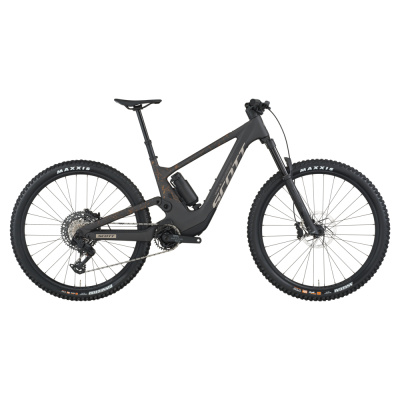
Scott Voltage 920
The Scott Voltage 920 is a lighter-weight, full-suspension e-MTB built around the TQ HPR60 motor for riders who want assisted climbing without sacrificing technical-trail handling.
- TQ HPR60 motor, up to 60Nm: Enough climbing assistance for technical trail riding without a heavy, bulky motor unit
- Claimed 19.8kg weight (without extender): Keeps the bike closer to a normal trail bike's handling than heavier e-MTBs manage
- Included 160Wh range extender: Extra battery capacity for longer days out, already in the box rather than an optional extra
- TracLoc 2 remote: Switch rear-suspension mode and operate the dropper post from one control without letting go of the bar
- 150mm Marzocchi Z2 fork and 155mm X-Fusion NUDE 5 rear shock: Full-suspension travel matched to genuine all-mountain and technical trail terrain
- SRAM DB4 four-piston brakes, 200mm rotors: Confident braking control for steep, repeated descents
Scott Voltage 920 Deals
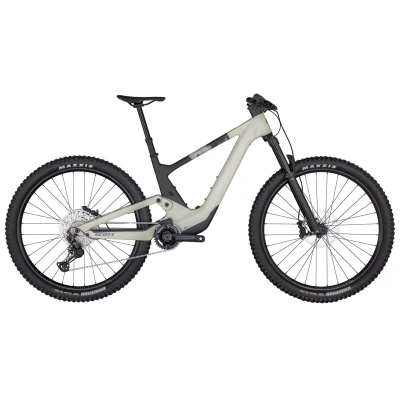
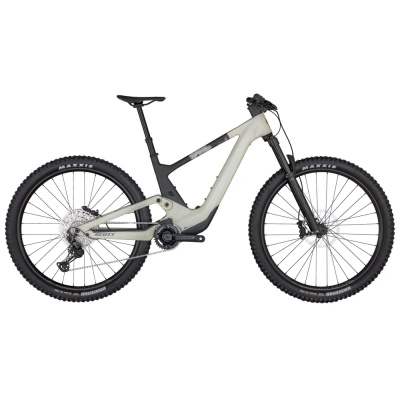
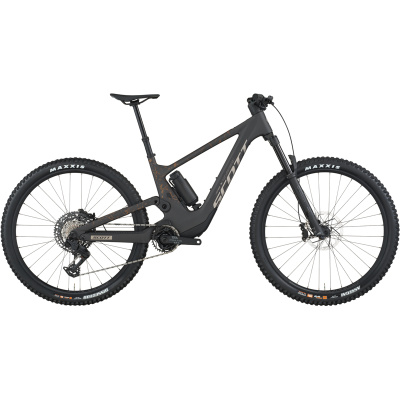

Prices and availability can change quickly. Delivery charges are not always included in listed prices.
Final price, stock status and delivery terms are set by retailer. We may receive a commission on purchases made.
Bikesy's Verdict
The Scott Voltage 920 suits an experienced trail rider who wants genuine all-mountain capability paired with a lighter, more manageable assist system rather than the biggest motor or battery going. Its 150mm/155mm suspension, TracLoc remote and four-piston SRAM brakes give it real technical-trail credentials, and the included range extender is a useful bonus rather than an optional extra to budget for later. The main trade-off is spec tier: mechanical SRAM Eagle 70 shifting and a Marzocchi fork sit below the wireless AXS shifting and FOX suspension fitted to the pricier Voltage 910 in the same range. For riders happy with that balance, it reads as a well-judged, lighter-weight e-MTB rather than a compromise.
Pros
- Full-suspension carbon-main-frame chassis with 150mm front and 155mm rear travel, built for genuine technical all-mountain riding rather than gentler trails
- TQ HPR60 motor and 360Wh battery keep the claimed weight to 19.8kg, noticeably lighter than many bigger-battery e-MTBs
- A 160Wh range extender is included in the price rather than sold as a separate accessory, useful for longer days out
- TracLoc lets you switch rear-suspension mode and control the dropper post from a single remote without taking a hand off the bar
- Four-piston SRAM DB4 brakes with 200mm rotors give confident stopping power on steep, repeated descents
Cons
- Mechanical SRAM Eagle 70 shifting and the Marzocchi/X-Fusion suspension sit a tier below the wireless AXS shifting and FOX suspension fitted to the pricier Voltage 910 in the same range
- 60Nm of torque and a 360Wh internal battery, even with the included extender, offer less peak assistance and capacity than heavier-format e-MTBs, so riders chasing maximum power should look further up the range
- Scott's five-year frame and rear-end guarantee drops to three years without registration and documented annual servicing at an authorised dealer, an ongoing cost worth planning for
The Scott Voltage 920 is aimed at riders who already know their way round a proper trail bike and want an assisted lift up the climbs without moving into a heavier, big-battery e-MTB. Scott specifies it for all-mountain and technical trail riding under its usage condition 4, which sits below its most extreme downhill rating, and builds it around a carbon main frame with an alloy rear triangle, 150mm of front travel and 155mm at the back. That's the appeal in a sentence: a genuinely capable full-suspension chassis carrying a lighter, less bulky assist system than you'll find on heavier e-MTBs.
The TQ HPR60 motor and its included range extender
Power comes from a TQ HPR60 mid-drive with up to 60Nm of maximum torque, which is a peak figure rather than a continuous output. It draws from a 360Wh internal battery, and Scott includes a 160Wh range extender in the price rather than selling it as an optional add-on. That matters for anyone planning longer days out, since it's extra capacity you already own rather than something to budget for later. Scott's claimed 19.8kg weight is quoted without the 1.1kg extender fitted, so the bike as ridden with the extender in place will sit a little above that figure. The TQ display on the top tube and its handlebar control show battery percentage, estimated remaining distance and rider watts, and the companion app lets you tweak assist characteristics rather than relying on fixed factory modes.
Suspension, brakes and how it handles technical terrain
Up front is a Marzocchi Z2 Air Rail fork with 150mm of travel, paired with an X-Fusion NUDE 5 RLX rear shock giving 155mm. The TracLoc 2 remote on the bar lets you flick between a fully active Descend mode, a firmer 100mm Traction Control setting and a full Lockout, and the same remote also runs the dropper post, so you can adjust the bike's behaviour without taking a hand off the grip mid-climb or mid-descent. Braking is handled by four-piston SRAM DB4 discs with 200mm rotors front and rear, which is a sensible amount of stopping power for a bike that's clearly intended for steep, repeated descents rather than flat towpaths. Tyres are Maxxis Assegai up front and Dissector at the rear, both 2.5in and tubeless-ready on Syncros X-30S rims, a sensible combination of front-end grip and a faster-rolling rear.
Voltage 920 or Voltage eRIDE 920 - know which one you're looking at
Searching for this bike in the UK throws up an earlier, similarly named model, the Voltage eRIDE 920, and it's worth being clear these are different bikes. That earlier generation runs the older TQ HPR50 system with 50Nm of torque and a 360Wh battery where the range extender is only described as compatible rather than included, alongside Shimano XT/Deore shifting, SRAM DB8 brakes and a FOX Float rear shock with Scott's TwinLoc system. None of that earlier equipment carries over to the current HPR60 Voltage 920 described here, so if you come across a Voltage eRIDE 920 listing, treat it as a separate, older bike rather than an alternative offer on this one.
Sizing across S to XL
The Voltage 920 is offered in four sizes, S through XL, and Scott gives each one meaningfully different reach and standover figures rather than stretching one frame geometry across the range, so getting the right size matters here more than on some bikes. A retailer's general height-based guide is a reasonable starting point, but Scott itself points riders towards a measurement-based fit tool rather than a simple height bracket, which is worth using if you're between sizes. Sizing also affects the cockpit: dropper post travel runs from 140mm on the S up to 210mm on the XL, and handlebar rise increases from 15mm on the S and M to 25mm on the L and XL, so the riding position is tailored per frame rather than identical across the board.
Ownership: weight limits and keeping the warranty intact
Scott sets a 130kg maximum system weight, which covers the bike, rider, kit and any luggage together rather than being a rider-only limit, so it's worth adding up your typical loaded weight before assuming you're comfortably under it. On the warranty side, Scott's guarantee requires the first owner to register the bike within a year of purchase. Frame and rear-end cover then runs for five years, but that drops to three years if the bike isn't serviced at least annually by an authorised Scott dealer with the work documented, and components themselves sit outside this guarantee entirely. None of that is unusual for a modern e-MTB, but it's a real cost and admin commitment worth building into your ownership plans from day one.
Key Features & Benefits
- Tubeless-ready Syncros X-30S rims with Maxxis Assegai/Dissector tyres: Grippy, puncture-resistant trail tyres ready to set up tubeless without swapping rims first
- Size-specific dropper travel (140mm to 210mm) and bar rise: A cockpit tailored to each frame size rather than one setup stretched across S to XL
- UDH derailleur hanger interface: Simplifies replacing or servicing the derailleur further down the line
Geometry
Voltage 920 HPR60 build geometry (standard frame, 29in wheels)
| Size | Reach | Stack | Effective top tube | Head angle | Seat angle | Chainstay | Wheelbase | Standover | Other measurements |
|---|---|---|---|---|---|---|---|---|---|
| S | 437.4mm | 622.3mm | 580.2mm | 63.9° | 77.1° | 455mm | 1232.8mm | 765mm | Head tube 110.0mm; seat tube 404.6mm; max seatpost insertion 190.0mm; crank length 170.0mm |
| M | 457.2mm | 622.4mm | 600mm | 63.9° | 77.1° | 455mm | 1252.6mm | 765mm | Head tube 110.0mm; seat tube 424.5mm; max seatpost insertion 210.0mm; crank length 170.0mm |
| L | 485mm | 631.3mm | 629.9mm | 63.9° | 77.1° | 455mm | 1284.8mm | 772mm | Head tube 120.0mm; seat tube 449.6mm; max seatpost insertion 235.0mm; crank length 175.0mm |
| XL | 512.7mm | 640.2mm | 659.8mm | 63.9° | 77.1° | 455mm | 1316.9mm | 788mm | Head tube 130.0mm; seat tube 479.7mm; max seatpost insertion 265.0mm; crank length 175.0mm |
Alternatives to Consider
The Scott Voltage 910 sits above the 920 in the same HPR60 Voltage range, with a longer-travel 160mm FOX 36 fork, a FOX Float X NUDE rear shock, wireless SRAM S1000 AXS Transmission and SRAM Maven Bronze brakes. That's a step up in suspension travel and shifting technology for a rider who wants the extra capability and prefers the higher build tier. The Voltage 920 keeps the same core chassis and motor concept but with a mechanical SRAM Eagle 70 drivetrain, a 150mm Marzocchi fork and SRAM DB4 brakes, which suits a rider who wants strong trail capability without needing the top-tier suspension and wireless shifting.
Reviews
Electric Bike Report's Griffin Hales tested the earlier HPR50-generation Voltage eRIDE 920, not the current HPR60 Voltage 920 described on this page, and found its 455mm-chainstay chassis felt planted at speed but less agile through tight switchbacks. The current Voltage 920 publishes the same 455mm chainstay length, so this chassis-handling observation is likely to still apply, though the earlier bike's HPR50 motor, FOX rear shock and other fitted equipment tested at the time do not carry over to today's build.
Full Specification
Voltage 920 HPR60 build specification
| Area | Detail |
|---|---|
| UK RRP | £5,999.00 |
| Frame and suspension platform | Carbon HMF main frame, alloy rear triangle; integrated-shock Virtual 4 Link suspension; adjustable head angle |
| Fork | Marzocchi Z2 Air Rail, 150mm travel |
| Rear suspension and controls | X-Fusion NUDE 5 RLX Trunnion, 155mm rear travel; TracLoc 2 remote selects Descend, Traction Control (100mm) or Lockout, and also operates the dropper post |
| Motor | TQ HPR60 mid-drive, maximum 60Nm torque (peak, not continuous output); EU assistance limit 25km/h |
| Battery | 360Wh internal battery plus an included 160Wh TQ range extender |
| Display and charging | TQ HPR top-tube display and handlebar control, Bluetooth/ANT+ and TQ app; TQ 4A charger. Display shows battery percentage, estimated remaining distance and rider watts |
| Drivetrain | Mechanical SRAM Eagle 70 Transmission 12-speed derailleur and shifter; SRAM XS-1270 10-52T cassette; 34T chainring |
| Brakes | SRAM DB4 Stealth four-piston discs; SRAM HS2 200mm front and rear rotors |
| Wheels and tyres | 29in wheels; tubeless-ready Syncros X-30S rims; Maxxis Assegai front and Dissector rear, 2.5in, foldable, tubeless-ready EXO+ 3C MaxxTerra |
| Claimed weight | Approximately 19.8kg, tubeless setup, without the 1.1kg range extender; no size specified alongside this figure |
| Maximum system weight | 130kg total, including bicycle, rider, equipment and any luggage |
Size-specific cockpit (S to XL, standard frame)
| Size | Syncros Duncan 1.5s dropper travel | Handlebar rise (780mm width) |
|---|---|---|
| S | 140mm | 15mm |
| M | 180mm | 15mm |
| L | 180mm | 25mm |
| XL | 210mm | 25mm |