
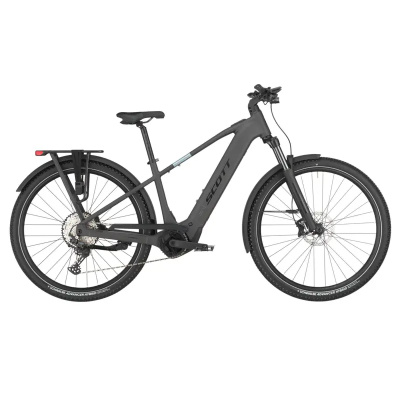
Scott Axis 20
The Scott Axis 20 is a Bosch CX-powered, fully equipped hardtail e-bike for riders who want a single machine for daily commuting and rougher weekend routes.
- Bosch Performance Line CX motor with up to 100Nm: Strong assistance for loaded commutes and hilly starts
- Removable 720Wh Bosch PowerTube battery: Charge indoors without needing a plug near where you store the bike
- 120mm SR Suntour fork and wide 29in tyres: Copes with rough paths and unpaved terrain, not just tarmac
- Fitted rack, mudguards and lights: Ready for commuting and errands without buying extra kit
- Syncros dropper post as standard: Useful control when the fitted suspension and tyres take you off smooth roads
- Two frame styles: standard (S-XXL) and Wave (S-XL): Choose conventional or easier-mount geometry to suit your fit
Scott Axis 20 Deals

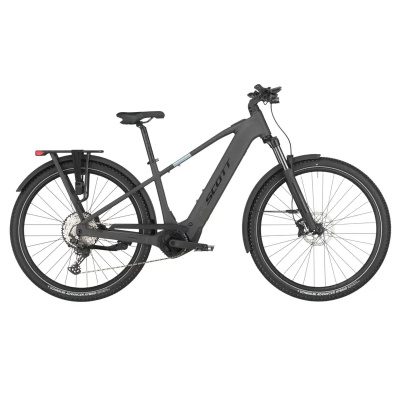
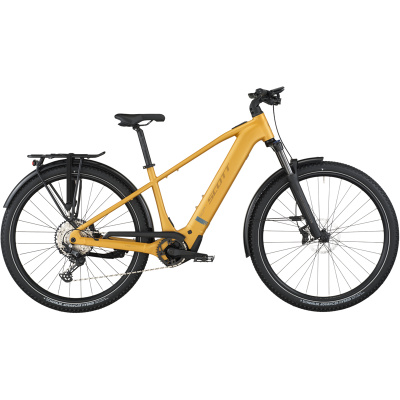
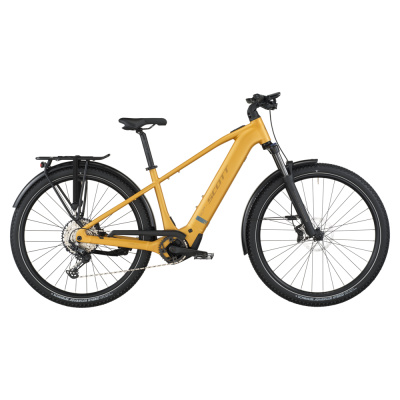

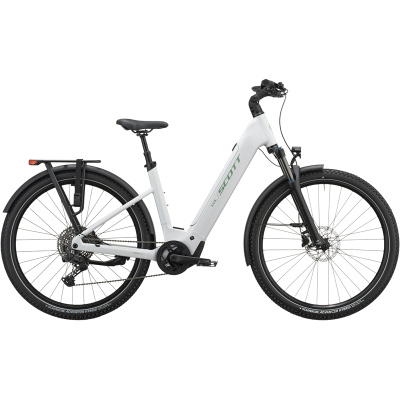

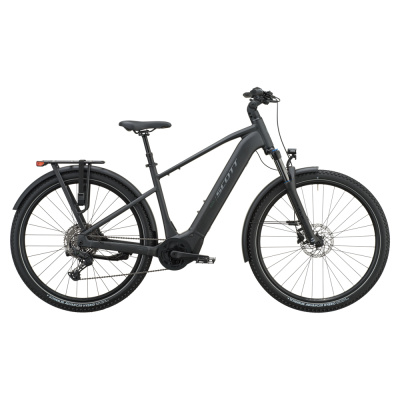
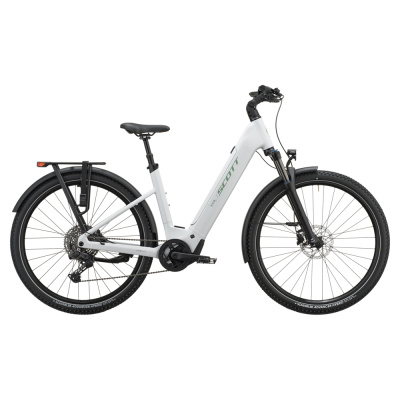
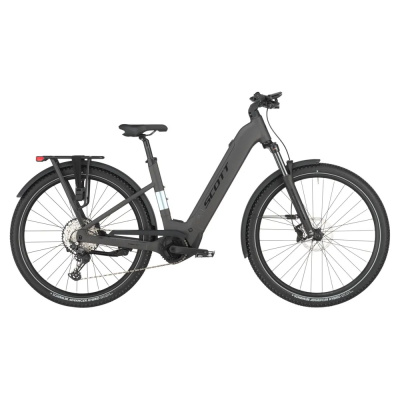
Prices and availability can change quickly. Delivery charges are not always included in listed prices.
Final price, stock status and delivery terms are set by retailer. We may receive a commission on purchases made.
Bikesy's Verdict
The Axis 20 earns its price by doing two jobs well: a properly equipped commuter with lights, guards, a hefty rack and a torquey Bosch CX motor, and a hardtail capable enough for Scott to rate it for rough, unpaved terrain. That combination suits a rider who wants one bike for the week rather than a bike for the city and another for the trail. Choose the standard frame if you need the XXL size or prefer conventional mounting, and the Wave if easier step-through access matters more. The main thing to weigh up is heft: at roughly 28 to 29kg before you add anything to that rack, it's not a bike you'll want to lift onto a high car rack or carry up stairs often.
Pros
- Bosch Performance Line CX motor delivers up to 100Nm, useful for loaded or hilly commuting
- Comes fully equipped with rack, mudguards, lights, kickstand and a dropper post
- 120mm fork and wide tyres let the same bike handle rough or unpaved routes
- Removable 720Wh battery makes indoor charging straightforward
- Two frame styles (standard and Wave) with different size ranges and mounting styles
Cons
- At roughly 28.2kg (standard) or 29.1kg (Wave), it's a heavy bike to lift or carry
- Wave frame only goes up to XL, so taller riders needing XXL must choose the standard frame
- No published height or inseam guidance for either build; sizing relies on Scott's own measurement-based fit tool
The Scott Axis 20 is built for riders who want more than a simple street-only e-bike: it pairs Bosch's punchy Performance Line CX motor with a genuinely useful set of commuting equipment, then adds a suspension fork and wide tyres so the same bike can handle a rutted towpath or gravel lane on the way home. If you want one machine for the daily grind and the odd rougher detour, this is the appeal.
Choosing between the standard frame and the Wave
Scott sells the Axis 20 in two frame styles that share exactly the same motor, drivetrain, brakes and equipment. The standard frame has a conventional top tube, side-extraction battery access and runs from S right up to XXL, so it covers the widest range of rider heights. The Wave frame lowers the front triangle for easier mounting and dismounting, swaps to top-extraction battery access, and is offered from S to XL, one size short of the standard frame's top end. Both get an adjustable stem, but the handlebar rise and saddle are set up differently for each frame: the standard bike has a 12mm rise bar and a 170mm saddle, while the Wave has a 19mm rise bar and a wider 195mm saddle. Neither is inherently better; it's a question of which mounting style and cockpit fit suits you, and whether you need the XXL size that only the standard frame offers.
What the Bosch CX motor and 720Wh battery mean day to day
Both builds use the Bosch Performance Line CX motor, Bosch's most capable mid-drive, with up to 100Nm of assistance. That's a maximum figure rather than a constant one; how much help arrives depends on the riding mode and your own effort, but it gives the motor real headroom for loaded starts and steep or hilly commutes. The 720Wh battery is removable, using Bosch's PowerTube system, so it can be carried indoors to charge rather than needing a socket beside wherever the bike is stored, and the supplied 4A charger fills it faster than a smaller charger would. A Bosch Purion 200 display handles mode and battery information without cluttering the bars. For anyone wanting extra range beyond 720Wh, Scott lists the bike as compatible with its PowerMore 250 range extender, an optional accessory sold separately rather than something fitted from new.
Built to carry things and to leave the tarmac behind
What sets the Axis 20 apart from a purely urban e-bike is the amount of proper equipment fitted as standard. A 30kg-rated Racktime SNAPIT 2.0 rack, Lezyne lights front and rear, full-length Curana Apollo 75 mudguards and a kickstand are all included, so it's ready for a loaded commute or a supermarket run without needing to add anything. A Syncros dropper post is a slightly unusual inclusion on a bike pitched this way, but it earns its place because Scott classifies the Axis 20 for riding condition 3, its category for rough trails and unpaved terrain that calls for some technical ability. Together with the 120mm-travel SR Suntour fork and wide 29-inch Schwalbe Advancer tyres, that means this isn't just a commuter with knobbly tyres bolted on for looks; it's a hardtail genuinely set up to leave smooth paths behind when you want to. Bear in mind the total system weight limit is 160kg, and that figure includes the bike itself alongside rider, equipment and luggage, so it's worth doing that sum if you're planning to load the rack heavily; the rack itself has its own separate 30kg limit. If you want to carry more than the rack allows, Scott's rack is compatible with Racktime's KID'n'CARRY accessories, and the frame includes a thru-axle Scott describes as trailer-compatible; neither a child seat, cargo basket nor trailer is supplied, so treat these as upgrades to budget for rather than included kit.
Making sense of Axis 20 listings that don't match
Because the Axis 20 name has been used across more than one specification, it's worth checking exactly what you're being offered rather than assuming every listing describes the same bike. The current generation, covered here, runs a 720Wh battery, Shimano's Cues 10-speed groupset, Shimano BR-MT200 brakes and a 4A charger, with a 30kg rack. An earlier version carried a smaller 600Wh battery, Shimano Deore 12-speed gearing, BR-MT420 brakes, a slower 2A charger and a 27kg rack. If a listing mentions Deore and a 600Wh battery, you're looking at the older bike, not either of the two builds described here. Scott's UK list price for either current build is £3,599, though that's a manufacturer list figure rather than a guide to which build is cheaper to buy today; live retailer pricing can move independently of it and is worth comparing directly rather than assumed from the RRP.
What that combination adds up to is a bike that doesn't ask you to choose between practicality and adventure: the same lights, guards and rack that make a wet Tuesday commute easier are still attached when you point the front wheel at a bridleway at the weekend.
Key Features & Benefits
- Compatible with Bosch's PowerMore 250 range extender: An optional way to add capacity beyond the 720Wh battery for longer days, bought separately
- Rack compatible with Racktime KID'n'CARRY accessories and a trailer-ready thru-axle: Scope to add child-carrying or trailer equipment later without needing a different bike
- Five-year Scott frame guarantee with annual authorised-dealer servicing (three years without): Registering the bike and keeping up servicing protects the frame warranty; components aren't covered by this guarantee
Geometry
Wave build geometry (29in wheels)
| Size | Reach (mm) | Stack (mm) | Effective top tube (mm) | Head angle | Seat angle | Chainstay (mm) | Wheelbase (mm) | Standover (mm) | Seat tube (mm) | Head tube (mm) |
|---|---|---|---|---|---|---|---|---|---|---|
| S | 399 | 696 | 575 | 67° | 76° | 482 | 1201 | 448 | 440 | 160 |
| M | 419 | 696 | 595 | 67° | 76° | 482 | 1221 | 448 | 480 | 160 |
| L | 437 | 705 | 615 | 67° | 76° | 482 | 1243 | 448 | 520 | 170 |
| XL | 437 | 705 | 615 | 67° | 76° | 482 | 1243 | 448 | 560 | 170 |
These measurements apply to the Wave build only and should not be used to estimate the standard frame's geometry.
Full Specification
Shared specification (both 720Wh builds)
| Area | Detail |
|---|---|
| Motor and battery | Bosch Performance Line CX (BDU384Y), up to 100Nm; removable Bosch PowerTube 720Wh battery; Bosch Purion 200 display; 4A charger. |
| Drivetrain | Shimano Cues RD-U6000 derailleur and SL-U6000 shifter; 10-speed CS-LG400 11-48T cassette; CN-LG500 chain. |
| Brakes | Shimano BR-MT200 two-piston hydraulic discs; 180mm Shimano SM-RT30 rotors front and rear. |
| Frame and suspension | 6061 alloy hardtail with UDH interface and 12x148mm rear axle; SR Suntour XCM34 BOOST COIL LO fork, 120mm travel. |
| Wheels and tyres | 29-inch wheels; Schwalbe Advancer 60-622 tyres. |
| Everyday equipment | 30kg Racktime SNAPIT 2.0 rack; Lezyne front and rear lights; Curana Apollo 75 mudguards; Ursus kickstand; adjustable stem with SP Connect mount; Syncros dropper post. |
| Load limit | 160kg maximum total system weight (bike, rider, equipment and luggage); rack limit is a separate 30kg. |
Build differences
| Detail | Standard frame | Wave |
|---|---|---|
| Frame access | Side-extraction battery | Top-extraction battery |
| Sizes | S, M, L, XL, XXL | S, M, L, XL |
| Handlebar | Syncros UC3.0 680mm, 12mm rise | Syncros UC3.0 680mm, 19mm rise |
| Saddle | Selle Royal Explora Moderate, 170mm | Selle Royal Explora Moderate Wide, 195mm |
| Claimed weight | Approximately 28.2kg (not assigned to a specific size) | Approximately 29.1kg (not assigned to a specific size) |
| UK RRP | £3,599 | £3,599 |
Optional upgrades
| Area | Standard fitment | Upgrade path |
|---|---|---|
| Extra battery capacity | Removable 720Wh PowerTube | Compatible with Bosch's PowerMore 250 range extender (sold separately, not fitted) |
| Carrying accessories | 30kg rack; front light positioned to allow a front basket | Compatible with Racktime SNAPIT 2.0 and KID'n'CARRY accessories; Syncros thru-axle described as trailer-compatible (accessories not supplied) |
Ownership
| Area | Detail |
|---|---|
| Frame guarantee | Five years with annual authorised-dealer servicing, reduced to three years without it; first owner must register within one year of buying from an authorised dealer. Components are excluded from this guarantee. |