

Scott Sub Sport 20
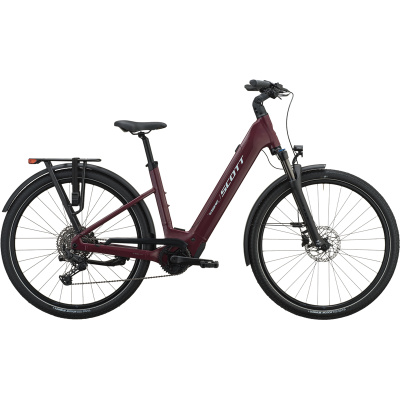
The Scott Sub Sport 20 is a fully equipped Bosch-powered commuting e-bike with a removable 720Wh battery, available in standard or easier-mounting Wave frames for riders who want hill assistance and everyday carrying capacity built in from the start.
- Bosch Performance Line PX motor, up to 90Nm: Strong assistance for loaded commutes and hills without needing to work hard.
- Removable 720Wh Bosch PowerTube battery: Large capacity for daily riding, plus the convenience of charging indoors away from the bike.
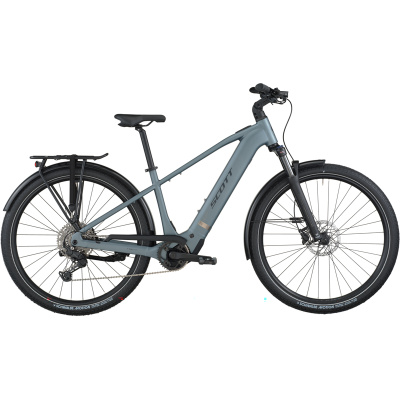
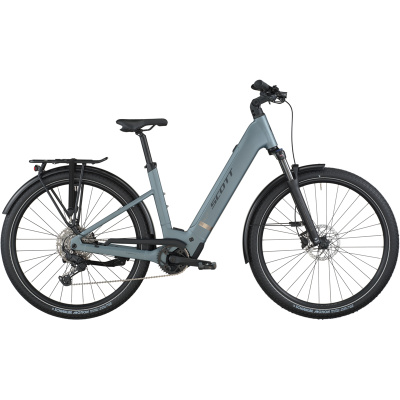
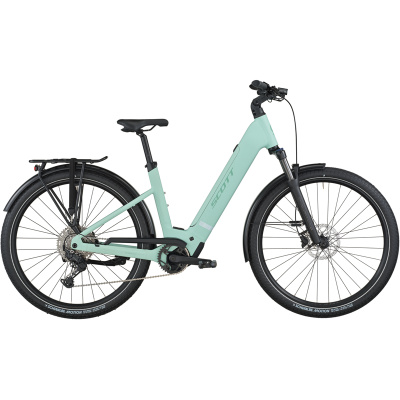
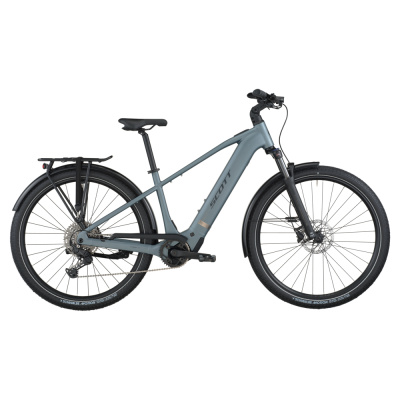
- Standard or Wave frame choice: Wave's low step-through makes mounting and dismounting easier; standard extends to a larger XXL size.
- Lights, mudguards and kickstand fitted as standard: Ready to commute straight away without buying extra kit.
- 30kg-rated, KID'n'CARRY ready rear rack: Carries shopping now, with a child seat available as a later upgrade.
- Shimano Cues 10-speed drivetrain and BR-MT200 disc brakes: Wide gear range for hills plus confident stopping power in town traffic.
Scott Sub Sport 20 Deals
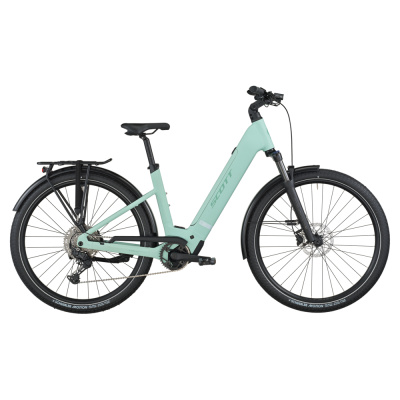


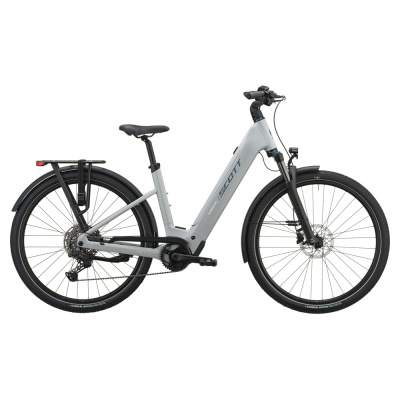
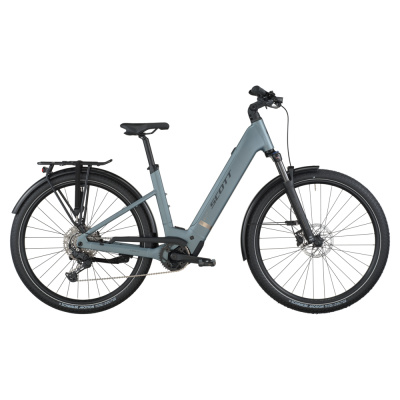
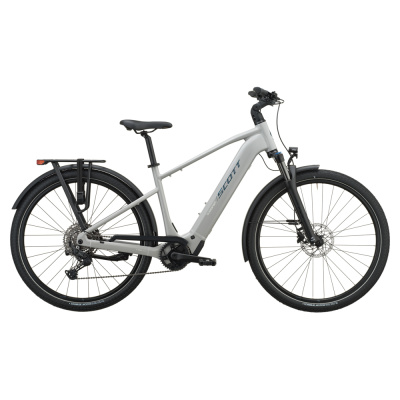
Prices and availability can change quickly. Delivery charges are not always included in listed prices.
Final price, stock status and delivery terms are set by retailer. We may receive a commission on purchases made.
Bikesy's Verdict
The Sub Sport 20 makes a strong case for riders who want a genuinely complete e-bike rather than a base machine needing extras bolted on: a torquey Bosch motor, a large removable battery, and lights, mudguards, a kickstand and a load-rated rack all fitted from the outset. Choosing between the standard and Wave frames is mostly about how you want to get on and off the bike and how large a size you need, since the electrics and running gear are identical either way. The main things to weigh up are its heavier all-up weight if you're lifting it regularly, and making sure any offer you're comparing is genuinely this 720Wh specification rather than Scott's older 600Wh version. For daily commuting and errands, it's an easy bike to recommend.
Pros
- Bosch Performance Line PX motor rated up to 90Nm handles loaded hills with ease
- Large removable 720Wh battery suits long daily commutes and convenient indoor charging
- Arrives with lights, mudguards, kickstand and a load-rated rack already fitted
- Wave frame option makes mounting and dismounting easier for less flexible riders
- Frame guarantee extends to five years with regular authorised-dealer servicing
Cons
- Chain-and-derailleur drivetrain needs more upkeep than Scott's belt-drive Sub Tour alternative
- At roughly 28.9-30.6kg, it's heavy to lift up steps or store somewhere awkward
- UK listings mix this 720Wh version with an older 600Wh specification, so it pays to check battery and rack details before buying
The Sub Sport 20 is Scott's answer for riders who want an e-bike that's ready for real life from day one: hill-flattening assistance, a proper commuting battery, and all the bits you'd otherwise buy separately already bolted on. It suits daily journeys, weekly shops and longer leisure rides where you don't want to think about the last few miles home. The main choice here isn't between different levels of kit so much as between two frame shapes built around the same electrics and running gear.
Standard or Wave frame
Both builds share the same motor, battery, gearing and brakes, so the decision comes down to how you get on and off the bike, and how far up the size range you need to go. The standard frame runs from S to XXL and pairs a narrower-sweep bar with a 170mm saddle. Wave uses a low step-through frame instead, stopping at XL, with a wider-sweep bar and a broader 195mm saddle to suit the more upright position that shape encourages. If mounting and dismounting with shopping bags, a work bag or simply less flexibility is part of your daily reality, Wave is the more forgiving shape; if you want the largest size available, the standard frame is the one that gets there. The trade-off shows up in weight too: Scott quotes the standard build at around 28.9kg against roughly 30.6kg for Wave, worth knowing if you'll be lifting the bike up steps or into a hallway regularly.
What the Bosch system actually does
Both builds use a Bosch Performance Line PX motor, which Scott specifies at up to 90Nm of assistance, paired with a removable 720Wh PowerTube battery. In practice, that torque figure is what deals with a loaded pannier and a short rise without much extra effort from you, and 720Wh is a genuinely large capacity for this class of bike, though Scott doesn't attach a specific mileage figure to this build, so it isn't something to plan an exact route length around. The battery slides out of the frame for charging indoors with the supplied 2A charger, which matters if there's no convenient socket where the bike lives. Control is via Bosch's Purion 200 display; the stem's own spec sheet references a Kiox 300 mount, but that's a compatible fitting rather than the display you actually get, so it isn't a Kiox screen out of the box. If ordinary commuting range isn't quite enough for your route, Scott lists compatibility with the Bosch PowerMore 250 extender, though it isn't fitted as standard and carries no bike-specific mileage figure of its own.
Gearing, brakes and suspension for everyday riding
Gear changes go through a Shimano Cues 10-speed derailleur setup with an 11-48T cassette, giving a wide enough spread for loaded hill starts and faster flat sections without much thought required. Stopping is handled by Shimano's BR-MT200 two-piston disc brakes, with a larger 180mm rotor at the front and 160mm at the rear, a sensible split given the front does more of the work under braking. A SR Suntour fork with 100mm of travel takes the edge off potholes and dropped kerbs, useful on the mixed street and cycle-path surfaces this bike is built for. None of this is the belt-drive, internal hub-gear arrangement Scott builds into its Sub Tour range instead, so there's a chain and derailleur to keep clean and adjusted over time, the usual trade-off for a wider gear range and easier roadside fixes if something does go wrong.
Carrying capacity and everyday ownership
Both builds come with a rear rack rated to 30kg and marked KID'n'CARRY ready, so a child seat is a genuine option to add later rather than something needing a workaround, though it isn't supplied with the bike. Lights, mudguards and a kickstand are all fitted already, which is the difference between an e-bike you can commute on immediately and one that needs another shopping trip first. Scott's stated system weight limit is 160kg, and that figure covers the bicycle itself plus rider and luggage together, not just what you weigh. Register as the first owner within a year of purchase and keep up annual servicing at an authorised dealer, and the frame carries a five-year guarantee, dropping to three years without that servicing history; components sit outside this cover.
Checking you're looking at the right version
Scott's UK site currently lists an earlier version of the Sub Sport 20 built around a 600Wh battery, alongside 60-622 tyres and a 25kg-rated rack, at £3,399 for each frame shape; that's a different specification to the 720Wh, 55-622 tyre, 30kg-rack builds described here, so it's worth checking which battery and rack figure an offer is actually quoting rather than assuming the older price carries across. This 720Wh version is Scott's latest official specification, though the manufacturer does not currently list this latest official version in its UK catalogue, which is part of why older and newer listings get mixed together online. It's also worth not confusing this with the Sub Sport eRIDE 20, an earlier bike built around a different 625Wh Bosch Performance CX motor rather than the Performance PX system described here.
What stands out about living with this kind of setup daily is less any single spec figure and more how the parts add up: a motor with genuine hill-flattening torque, a battery large enough that charging becomes a routine rather than a chore, and enough carrying capacity that errands rarely need a second trip. That's the real case for choosing it over assembling an equivalent commuter from separate parts.
Key Features & Benefits
- Bosch PowerMore 250 battery extender compatibility: An optional way to add range for longer routes, without it being part of the standard build.
- Five-year frame guarantee with annual servicing: Rewards keeping up dealer servicing with longer cover, dropping to three years otherwise.
- Syncros through-axle trailer adapter compatibility: Opens up towing a trailer as a later addition for cargo or child transport.
Geometry
720Wh standard-frame build (standard frame)
| Size | Wheel | Reach (mm) | Stack (mm) | Effective top tube (mm) | Head angle (°) | Seat angle (°) | Chainstay (mm) | Wheelbase (mm) | Standover (mm) | Seat tube (mm) |
|---|---|---|---|---|---|---|---|---|---|---|
| S | 29-inch | 410 | 672 | 580 | 66 | 76 | 495 | 1228 | 806 | 440 |
| M | 29-inch | 426 | 687 | 600 | 67 | 76 | 495 | 1237 | 828 | 480 |
| L | 29-inch | 444 | 696 | 620 | 67 | 76 | 495 | 1259 | 859 | 530 |
| XL | 29-inch | 462 | 705 | 640 | 67 | 76 | 495 | 1281 | 892 | 580 |
| XXL | 29-inch | 459 | 715 | 640 | 67 | 76 | 495 | 1282 | 906 | 600 |
720Wh Wave build (Wave frame)
| Size | Wheel | Reach (mm) | Stack (mm) | Effective top tube (mm) | Head angle (°) | Seat angle (°) | Chainstay (mm) | Wheelbase (mm) | Standover (mm) | Seat tube (mm) |
|---|---|---|---|---|---|---|---|---|---|---|
| S | 29-inch | 413 | 696 | 575 | 68.2 | 76.9 | 482 | 1190 | 638 | 440 |
| M | 29-inch | 433 | 688 | 595 | 68.2 | 76.9 | 482 | 1210 | 633 | 480 |
| L | 29-inch | 450 | 705 | 615 | 68.2 | 76.9 | 482 | 1232 | 630 | 520 |
| XL | 29-inch | 450 | 705 | 615 | 68.2 | 76.9 | 482 | 1232 | 630 | 560 |
Full Specification
Shared specification (both 720Wh builds)
| Area | Detail |
|---|---|
| Motor and battery | Bosch Performance Line PX, up to 90Nm; removable Bosch PowerTube 720Wh. |
| Controls and charging | Bosch Purion 200 display; Bosch 2A Charger 230V. Note: a Kiox 300 mount is referenced in the stem specification, but the fitted display is Purion 200, not Kiox 300. |
| Frame and wheels | 6061 aluminium frame with side-extraction battery, UDH interface and 29-inch wheels; Schwalbe Big Apple Performance 55-622 tyres. |
| Suspension | SR Suntour XCM34 BOOST COIL LO fork; Scott specifies 100mm travel. |
| Drivetrain | Shimano Cues 10-speed derailleur drivetrain: RD-U6000, SL-U6000 shifter, CS-LG400 11-48T cassette, CN-LG500 chain and FSA 38T chainring. |
| Brakes | Shimano BR-MT200 2-piston discs; Shimano SM-RT30 CL rotors, 180mm front and 160mm rear. |
| Everyday fittings | Lezyne Hecto Pro STVZO E400 front and integrated rear lights, Curana Apollo 65 mudguards, Ursus U-Mount kickstand, chaincase cover and adjustable stem with SP Connect mount. |
| Rear rack | Racktime SNAPIT 2.0 rack rated 30kg; KID'n'CARRY ready. A child seat is optional, not fitted. |
| Maximum system weight | 160kg including bicycle, rider, equipment and luggage; this is not a 160kg rider limit. |
| Manufacturer's frame guarantee | For the first buyer from an authorised dealer: register within one year; five years on the frame with annual authorised-dealer servicing, reduced to three years without it. Components are excluded. |
720Wh standard-frame build
| Area | Detail |
|---|---|
| Frame and sizes | Standard frame; S, M, L, XL, XXL. |
| Cockpit and saddle | Syncros UC3.0 680mm bar, 12mm rise and 15° backsweep; Selle Royal Explora Moderate 170mm saddle. |
| Approximate bicycle weight | 28.9kg (Scott's approximate figure; size not specified). |
720Wh Wave build
| Area | Detail |
|---|---|
| Frame and sizes | Low step-through Wave frame; S, M, L, XL. |
| Cockpit and saddle | Syncros UC3.0 680mm bar, 26mm rise and 30° backsweep; Selle Royal Explora Moderate Wide 195mm saddle. |
| Approximate bicycle weight | 30.6kg (Scott's approximate figure; size not specified). |
Upgrade paths (not fitted as standard)
| Area | Stock | Possible upgrade | Practical effect |
|---|---|---|---|
| Additional battery capacity | Removable 720Wh PowerTube | Scott states compatibility with Bosch PowerMore 250; the extender is not fitted. | An optional range-extension route, without a model-specific mileage promise. |
| Trailer towing | 12x148mm rear-axle frame | Scott describes a purpose-designed Syncros through-axle adapter for towing a trailer; the adapter and trailer are not listed as fitted. | Check the adapter and trailer arrangement before treating towing as ready to use. |