
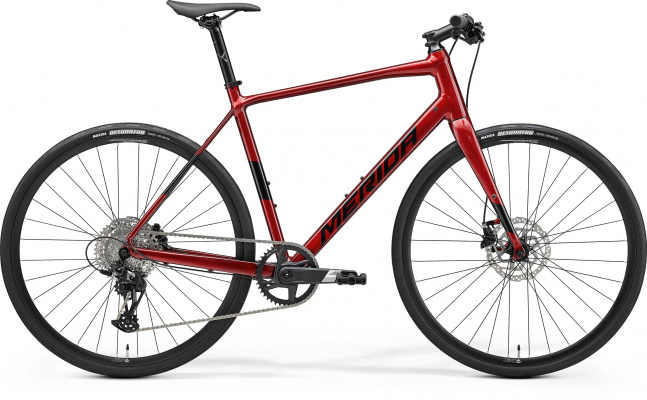
Merida SPEEDER 500
Fast, light, and practical: the flat-bar road bike that turns commutes into training and errands into adventures.
- Triple-butted 6066 aluminium frame: light, stiff, durable
- Full carbon fork absorbs road buzz, sharpens steering
- SRAM Apex 1×12: wide range, clean cockpit
- Shimano MT200 hydraulic discs: confident wet-weather stops
- Fits 35mm tyres; rack and mudguard mounts
- Weighs around 9.7 kg (size M)
Merida SPEEDER 500 Deals

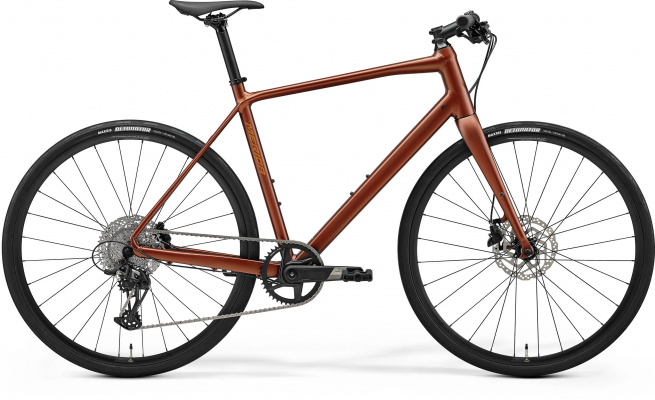
Prices and availability can change quickly. Delivery charges are not always included in listed prices.
Final price, stock status and delivery terms are set by retailer. We may receive a commission on purchases made.
Bikesy's Verdict
The Merida Speeder 500 is one of those rare bikes that genuinely earns the label 'versatile' without compromising on speed or quality. You get a lightweight, responsive aluminium frame, a smooth carbon fork, reliable hydraulic discs, and a wide-range 1×12 drivetrain - all wrapped in geometry that keeps you comfortable and in control whether you're sprinting for a green light or settling into a long fitness loop.
It's the bike for riders who want one machine that'll handle the daily commute, the weekend club ride, and the occasional adventure on rougher roads without feeling like a compromise in any of those roles. The Speeder 500 rewards effort with speed, adapts to changing terrain and conditions, and does it all with a build quality and spec that punches well above its weight. If you're after a fast, practical, do-it-all flat-bar bike that'll make you smile every time you swing a leg over it, this is it.
Pros
- Lightweight triple-butted aluminium frame and full carbon fork deliver speed and comfort
- SRAM Apex 1×12 drivetrain offers wide range and low-maintenance simplicity
- Shimano MT200 hydraulic discs provide confident stopping in all conditions
- Upright geometry balances visibility, comfort, and efficiency over distance
- Practical mounts for racks, mudguards, and kickstand; clears 35 mm tyres
Cons
- Maxxis Detonator tyres are serviceable but not exceptional; worthwhile upgrade for speed or grip
- Less aerodynamic than drop-bar road bikes if you're chasing outright pace or racing
- Modest tyre clearance (35 mm max) limits capability on rougher gravel compared to dedicated gravel bikes
About the Merida SPEEDER 500
The Speeder 500 sits in that sweet spot where road-bike pace meets real-world practicality. You get a lightweight triple-butted aluminium frame paired with a full carbon fork, hydraulic disc brakes, and a 1×12 SRAM Apex drivetrain - all wrapped in geometry that keeps you upright enough to spot potholes and traffic without sacrificing forward momentum. It's the bike for riders who want to arrive quickly, whether that's the office, the café stop, or the end of a sixty-kilometre fitness loop, and who'd rather not wrestle with a twitchy race position or a sluggish hybrid frame.
Merida's SPEEDER LITE III frame uses hydroformed 6066-series aluminium, triple-butted to shed grams where they don't matter and add stiffness where they do. The carbon fork - tapered steerer, full-monocoque lay-up - filters out road chatter and keeps the front end precise when you're threading through urban traffic or leaning into a fast descent. Shimano's MT200 two-piston hydraulic calipers clamp 180 mm rotors front and rear, delivering predictable power in the wet without the maintenance drama of rim brakes. The SRAM Apex XPLR rear mech and SX Eagle shifter manage an 11 - 44T cassette, giving you a climbing gear that'll handle steep ramps and a top end that won't leave you spinning out on the flat.
This isn't a pure road racer - you'll sit more upright, the bars are flat, and the frame carries mounts for racks, mudguards, and a kickstand - but it's not a plodding commuter either. The Speeder 500 rewards effort with speed, holds a line confidently on rough tarmac, and adapts to whatever your week throws at it: fast morning commutes, lunchtime fitness blasts, weekend rides that mix cycle paths and back lanes, even light touring if you bolt on some panniers. It's the kind of bike that makes you want to take the long way home.
Merida SPEEDER 500 geometry
The Speeder's geometry strikes a deliberate balance between comfort and control. You're not hunched over the bars - the stack is generous, the reach moderate - so you'll have a clear view of the road ahead and less strain on your lower back during longer rides. The head angle hovers around 71 - 72 degrees depending on size, relaxed enough to inspire confidence on rough surfaces and in traffic, but still sharp enough to carve through corners when you pick up the pace.
Chainstays are a consistent 408 mm across the size run, keeping the rear end snappy and responsive without making the bike feel nervous. The wheelbase grows as you move up through the sizes, adding stability for taller riders without dulling the bike's agility. Bottom bracket drop sits in the mid-sixties to low seventies, low enough to plant you firmly over the pedals for efficient power transfer, high enough to clear kerbs and speed bumps without clipping a pedal.
When you're out of the saddle on a climb, the frame feels taut and direct; when you're seated and spinning, the upright position lets you breathe deeply and scan the road ahead. It's a posture that works for the daily grind and the weekend escape in equal measure, and it means you'll arrive fresher than you would on a more aggressive machine.
Component choices & upgrades
The stock build is well judged. SRAM's Apex XPLR rear derailleur and SX Eagle shifter deliver crisp, reliable shifts across the 11 - 44T cassette, and the single-ring setup keeps the cockpit uncluttered and maintenance straightforward. Shimano's MT200 hydraulic brakes offer plenty of stopping power for the bike's intended use - commuting, fitness rides, light touring - and the 180 mm rotors front and rear mean you won't be hunting for bite on steep descents or in the rain.
The Maxxis Detonator tyres are serviceable - they roll reasonably fast and offer decent puncture protection - but they're the first place many riders will look to upgrade. If you're chasing lower rolling resistance for faster road rides, a set of Continental Grand Prix or Schwalbe One tyres in 28 or 32 mm will sharpen the bike's pace. If you're venturing onto rougher surfaces more often, something like a Panaracer GravelKing or Schwalbe G-One in 35 mm (the frame's maximum clearance) will add cushioning and grip without turning the Speeder into a slug.
The Merida-branded aluminium cockpit - bars, stem, seatpost - is solid and functional. Unless you're chasing specific fit tweaks or a weight reduction, there's little reason to swap it out. The saddle is comfortable enough for most riders on shorter rides, but if you're logging serious miles, a perch that suits your sit-bone width and riding style will make a noticeable difference. The wheels are tubeless-ready, so adding sealant and tubeless valves is a worthwhile upgrade that'll reduce puncture hassles and let you run lower pressures for better comfort and traction.
Beyond tyres and saddle, the Speeder 500's spec is well sorted. It's a bike that rewards riding more than tinkering, and most upgrades should be driven by your terrain or ambitions rather than any shortcoming in the stock kit.
Where the Merida SPEEDER 500 excels
The Speeder 500 is outstanding as a fast commuter and fitness bike. If your typical ride involves smooth tarmac, cycle paths, and the occasional stretch of chipseal or packed gravel, this bike will feel quick, comfortable, and utterly dependable. The upright position gives you the visibility and control you need in traffic, the hydraulic discs inspire confidence in all weather, and the wide-range 1×12 drivetrain means you can tackle steep urban hills without grinding to a halt or spinning out on the flat.
It's also excellent for longer recreational rides - club runs, charity sportives, weekend fitness loops - where you want road-bike efficiency without the aggressive posture. The carbon fork smooths out rough roads, the geometry keeps you comfortable over distance, and the frame's stiffness ensures your effort translates into forward speed rather than flex. Bolt on a rack and some panniers, and the Speeder 500 becomes a capable light tourer, happy to carry a weekend's worth of kit on quiet back roads.
Where it's less ideal: pure road racing. The flat bars, upright position, and slightly relaxed geometry mean you won't be as aerodynamic or as aggressive in a sprint as you would on a drop-bar road bike. It's also not a dedicated gravel bike - while it'll handle light gravel and rough lanes with aplomb, especially if you fit wider tyres, it lacks the slack angles, long wheelbase, and generous tyre clearance of a true gravel machine. If your rides regularly involve deep gravel, singletrack, or technical descents, you'll want something with more capability off-road.
But for the vast majority of riders - those who want one bike that's fast enough for fitness, practical enough for commuting, and versatile enough for weekend adventures - the Speeder 500 delivers in spades.
Merida SPEEDER 500 FAQs
What is the top speed of a Merida Speeder 500?
Top speed depends on your fitness, the terrain, and conditions, but the Speeder 500's lightweight frame, efficient drivetrain, and relatively aerodynamic flat-bar position mean you'll comfortably cruise in the mid-to-high twenties (mph) on the flat. The 42T chainring and 11T top cog give you enough gear to keep pedalling well into the thirties if you've got the legs and a tailwind.
Is the Merida Speeder 500 good for long-distance cycling?
Yes, it's very capable over distance. The upright geometry reduces strain on your back and neck, the carbon fork absorbs road vibration, and the wide-range gearing means you can tackle varied terrain without suffering. Fit a comfortable saddle, add some bar ends or ergonomic grips if you want hand-position variety, and the Speeder 500 will happily carry you through century rides and multi-day tours.
Can I fit wider tyres on the Merida Speeder 500?
The frame clears up to 700×35C tyres, or 700×32C if you're running full mudguards. That's enough width to add meaningful comfort and grip on rough roads or light gravel without compromising speed on tarmac. The rims are tubeless-ready, so you can run lower pressures for even more cushioning and traction.
What is the weight of the Merida Speeder 500?
Around 9.7 kg for a size medium, which is impressively light for a flat-bar bike with hydraulic discs, a wide-range drivetrain, and practical features like rack mounts. That low weight makes the Speeder 500 feel lively and responsive, especially when you're accelerating out of junctions or climbing.
Is the Merida Speeder 500 suitable for gravel roads?
It'll handle light gravel and packed dirt confidently, especially if you fit wider tyres (up to 35 mm). The frame is robust, the geometry is stable, and the hydraulic discs provide reliable stopping power on loose surfaces. It's not a dedicated gravel bike - the geometry is more road-focused, and the tyre clearance is modest by gravel standards - but for mixed-surface rides that are mostly tarmac with occasional gravel sections, the Speeder 500 is more than capable.
What is the difference between Merida Speeder 500 and Merida Crossway?
The Crossway is more comfort-oriented, with a more upright position, wider tyres as standard, and often suspension forks on some models. It's designed for leisurely rides, gentle commuting, and maximum comfort. The Speeder 500 is faster and more performance-focused, with a stiffer frame, lighter weight, and geometry that favours efficiency and speed over outright comfort. If you want to go quickly and cover distance, choose the Speeder; if you prioritise a relaxed ride and maximum cushioning, the Crossway is the better fit.
How does the SRAM Apex 1×12 drivetrain perform on the Merida Speeder 500?
It's a smart, reliable setup. The 11 - 44T cassette gives you a wide range - low enough for steep climbs, high enough for fast flats - and the single-ring simplicity means less to go wrong and easier maintenance. Shifts are crisp and predictable, and the SX Eagle shifter is intuitive to use. It's not as refined as higher-tier SRAM groups, but it's more than adequate for the Speeder's intended use and keeps the bike's weight and cost in check.
What maintenance does the Merida Speeder 500 require?
Standard bike maintenance: keep the chain clean and lubed, check brake pads and rotor condition regularly, and bleed the hydraulic brakes annually or when they feel spongy. The 1×12 drivetrain is low-maintenance - no front derailleur to adjust - and the sealed cartridge bottom bracket and hubs should run smoothly with minimal attention. If you're riding in wet or dirty conditions, clean the bike regularly to prevent grit from wearing components, and check tyre pressures before each ride. It's a straightforward machine that rewards basic care with reliable performance.
Key Features & Benefits
- Triple-butted 6066 aluminium frame with hydroforming: Delivers a stiff, responsive ride without excess weight, so your effort translates directly into speed
- Full carbon fork with tapered steerer: Absorbs road vibration and sharpens steering precision, keeping you comfortable and in control
- SRAM Apex 1×12 drivetrain with 11 - 44T cassette: Wide gear range tackles steep climbs and fast flats with simple, reliable single-ring operation
- Shimano MT200 hydraulic disc brakes with 180 mm rotors: Confident, predictable stopping power in wet or dry conditions, with minimal maintenance
- Upright geometry with rack, mudguard, and kickstand mounts: Balances speed and comfort for commuting, fitness rides, and light touring without compromising practicality
Merida SPEEDER 500 2025, 2024 & 2023 differences
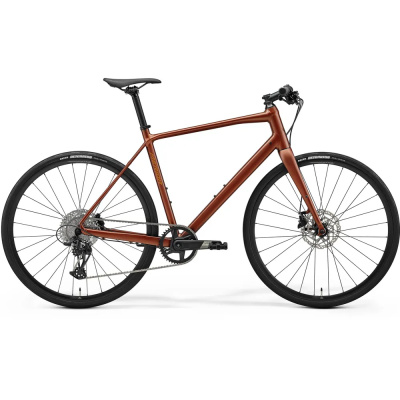
The 2026 model largely retains the 2025 specification, with the SRAM Apex 1×12 drivetrain (SX Eagle shifters, Apex XPLR rear derailleur, 42T chainring, 11 - 44T cassette) and Shimano MT200 hydraulic disc brakes with 180 mm rotors front and rear. New colour options such as 'Silk Glamour Rust' have been introduced for 2026, but the core spec remains unchanged.
The 2025 model marked a significant update, introducing the SRAM Apex 1×12 drivetrain in place of the earlier Shimano-based setups. This shift brought wider-range gearing, simpler maintenance, and a cleaner cockpit. The Shimano MT200 hydraulic brakes replaced the MT-400 units found on some earlier models, and the Maxxis Detonator 700×32C tyres became standard.
Earlier 2024 models varied in specification. Some retained a Shimano Ultegra or FSA-based 2×11 drivetrain with Shimano MT-400 brakes, while later 2024 production aligned with the 2025 SRAM Apex setup. Rotor sizes also varied, with some earlier models featuring 160 mm rotors rather than the current 180 mm standard. The shift to the SRAM 1×12 drivetrain and larger rotors represents a clear evolution towards simpler operation, wider gearing, and more confident braking performance.
Models from 2023 and earlier featured a range of Shimano groupsets - Ultegra, 105, or lower-tier options - often in 2×10 or 2×11 configurations, with either hydraulic or mechanical disc brakes. The move to the current SRAM Apex 1×12 spec reflects Merida's focus on streamlining the Speeder 500's performance and practicality for modern riders.
Alternatives to Consider
Within Merida's own range, the Speeder 300 offers a more budget-conscious entry point with a similar frame but lower-tier components - typically a Shimano Altus or Acera drivetrain and mechanical disc brakes - making it a solid choice if you're prioritising value over outright performance. Step down further to the Speeder 100 and you'll find an even more accessible spec, ideal for casual riders or those new to fitness cycling. If you want more comfort and a more relaxed ride, Merida's Crossway 600 shares the practical mounts and upright position but trades the Speeder's speed-focused geometry for a plusher, more leisurely feel, often with wider tyres and sometimes a suspension fork.
Cross-brand, the Trek FX Sport 4 is a direct rival, often specced with a full carbon frame, Shimano 105 or similar drivetrain, and hydraulic discs; it's typically lighter and more refined, though usually pricier. The Giant FastRoad Advanced 2 offers a carbon frame and similar flat-bar road performance, with a focus on low weight and sharp handling. For a slightly more relaxed take, the Giant Roam 1 Disc blends fitness-bike speed with a touch more comfort and versatility, while the Marin Presidio 3 sits in a similar space to the Speeder 500, offering a lightweight aluminium frame, hydraulic discs, and practical mounts at a competitive price. The Specialized Sirrus 4.0 is another close match, with a focus on urban speed and fitness, often featuring a Future Shock front suspension for added comfort on rough roads.
Each of these alternatives tweaks the balance between speed, comfort, and practicality in slightly different ways, but the Speeder 500's combination of low weight, wide-range gearing, and real-world versatility keeps it firmly in the conversation.
Reviews
Lightweight aluminium and a full carbon fork combine to deliver a bike that feels eager from the first pedal stroke. The triple-butted frame sheds grams without sacrificing stiffness, and the tapered carbon fork absorbs road buzz while keeping the front end precise through corners and traffic. When you're threading through urban junctions or carving into a fast descent, the Speeder 500 responds with a confidence that belies its practical, upright geometry.
SRAM's Apex 1×12 drivetrain proves itself across varied terrain. The 11 - 44T cassette offers enough range to spin up steep ramps without grinding and enough top-end to keep pedalling on fast flats. Shifts are crisp and predictable, and the single-ring simplicity means less to adjust and fewer things to go wrong. Shimano's MT200 hydraulic brakes deliver consistent, powerful stopping in all conditions - wet roads, steep descents, sudden traffic stops - without the fade or maintenance drama of rim brakes.
Upright geometry keeps you comfortable over distance, with a clear view of the road ahead and less strain on your back and neck. Because the position is more relaxed than a drop-bar road bike, you'll breathe easier on climbs and feel fresher at the end of a long ride. The frame's stiffness ensures your effort translates into forward speed, and the low weight (around 9.7 kg for a medium) makes the bike feel lively and responsive, especially when you're accelerating out of junctions or climbing.
Practical features - rack mounts, mudguard mounts, kickstand mount, clearance for 35 mm tyres - mean the Speeder 500 adapts to whatever your week demands. Bolt on some panniers and it's a capable light tourer; fit wider tyres and it'll handle rough lanes and packed gravel with aplomb. The Maxxis Detonator tyres are serviceable but not exceptional, and swapping them for something faster or grippier is a worthwhile upgrade if you're chasing specific performance gains. We appreciate the tubeless-ready rims, which let you run lower pressures for better comfort and traction once you've added sealant and valves.
This is a bike that rewards riding more than tinkering. It's fast enough to satisfy fitness ambitions, practical enough for daily commuting, and versatile enough for weekend adventures that mix tarmac, cycle paths, and the occasional stretch of gravel. The Speeder 500 makes you want to take the long way home, and that's the best compliment we can give it.
Full Specification
| Spec | Value |
|---|---|
| Frame Material | SPEEDER LITE III (Triple butted 6066 series aluminum, hydroformed) |
| Frame Features | Internal cable routing; Tapered head tube; Inboard disc mount; BSA bottom bracket standard; Mounts for rack, mudguards, and kickstand |
| Tyre Clearance | 700x35C; 700x32C with mudguards |
| Bottom Bracket | SRAM DUB BSA Road Wide |
| Rear Axle | 135x9mm QR |
| Fork | MERIDA SPEEDER CF2, Full carbon, Tapered steerer |
| Drivetrain | 1x12 speed |
| Shifters | SRAM SX Eagle |
| Rear Derailleur | SRAM Apex XPLR |
| Crankset | SRAM Apex 1 Wide, 42T chainring |
| Crank Length | 170 mm (XXS/XS); 172.5 mm (S/M); 175 mm (L/XL) |
| Cassette | SRAM PG1231 XPLR, 11-44T, 12 speed |
| Chain | SRAM Apex |
| Brakes | Hydraulic Disc |
| Brake Calipers | Shimano MT200 (2-piston) |
| Rotors | Shimano RT10, 180 mm (front and rear) |
| Rims | MERIDA COMP SL, 17mm internal width, 22mm height, aluminum, Tubeless ready |
| Hubs (Front) | Joytech D471SBT, 100x9mm, QR, Centerlock, 28 spoke holes |
| Hubs (Rear) | Joytech D472TSBT, 135x9mm, QR, Centerlock, 28 spoke holes |
| Spokes | Black stainless, 28 holes |
| Tyres (Front) | Maxxis Detonator, 700x32C, fold (clincher) |
| Tyres (Rear) | Maxxis Detonator, 700x32C, fold (clincher) |
| Handlebar | MERIDA EXPERT CC, aluminum, 600mm width, flat |
| Handlebar Clamp Diameter | 31.8mm |
| Stem | MERIDA EXPERT CC, aluminum, 31.8mm diameter, 7° angle |
| Stem Length | 80mm (XXS/XS); 90mm (S); 100mm (M); 110mm (L/XL) |
| Grips | MERIDA Expert EC |
| Headset | MERIDA M2331 Neck |
| Seatpost | MERIDA COMP CC, aluminum, 30.9mm diameter, 5mm setback |
| Saddle | MERIDA COMP SL, V-mount, 25-28% recycled material |
| Pedals | VP VPE-891 |
| Weight (Approx) | 9.7 kg (size M) |