
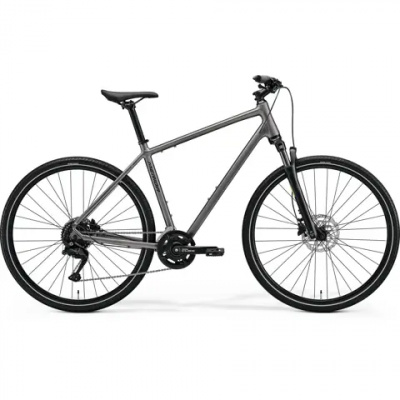
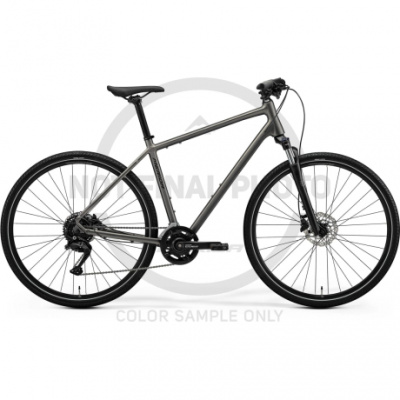
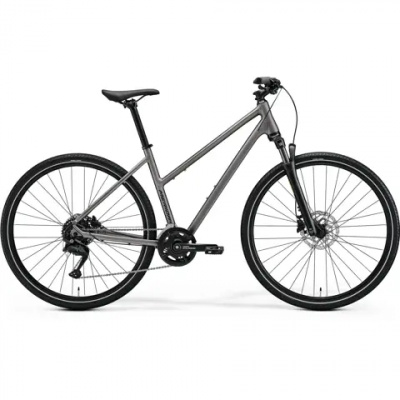
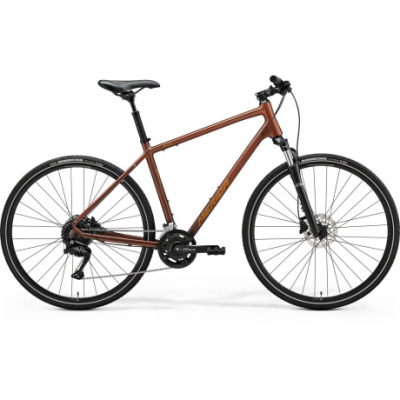
Merida CROSSWAY 100
Comfortable, upright hybrid that handles commutes, towpaths, and weekend rides with practical mounts and reliable components.
- Upright geometry: see traffic, arrive fresh
- Shimano CUES 2×9: wide range, smooth shifts
- Hydraulic discs: confident stops, all weather
- Suspension fork & post: tame rough tarmac
- Rack & mudguard mounts: commute-ready versatility
- 700×40C tyres: grip, comfort, reflective safety
Merida CROSSWAY 100 Deals
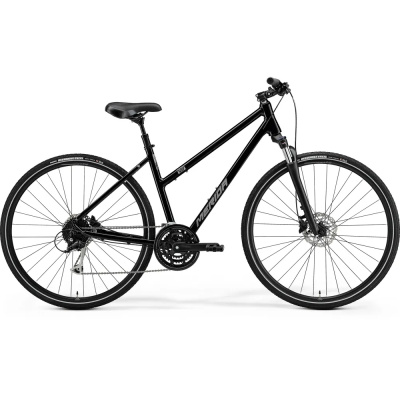
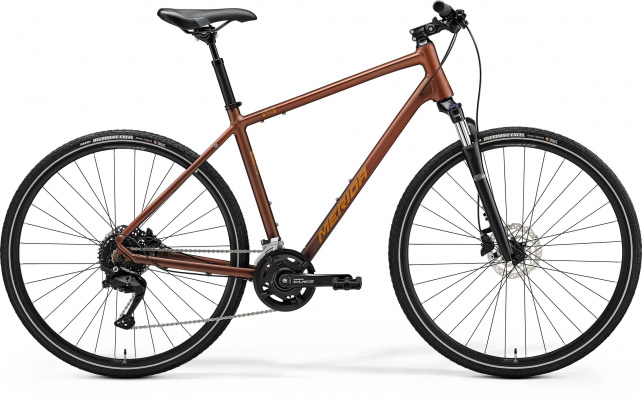
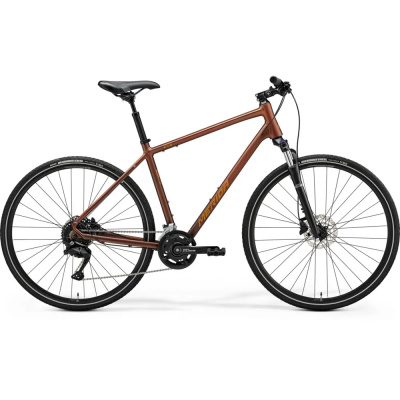
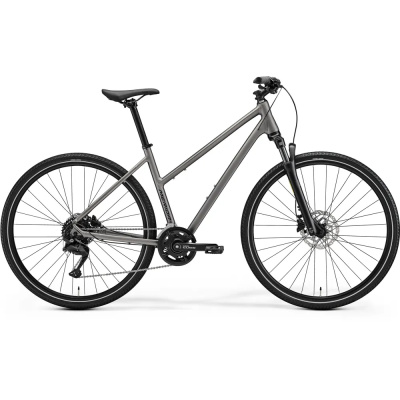
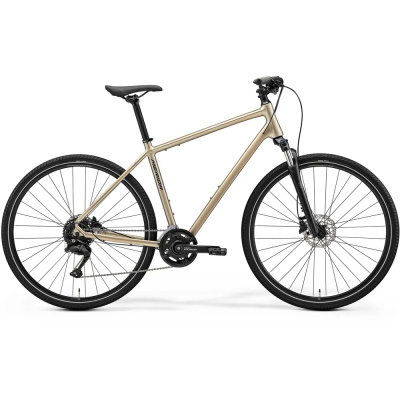
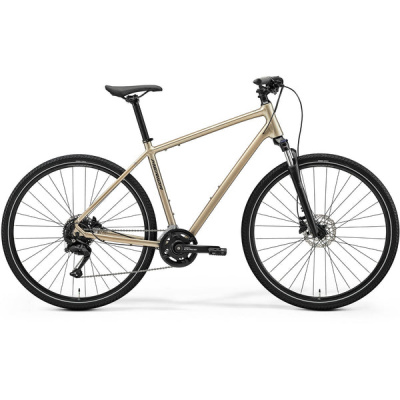
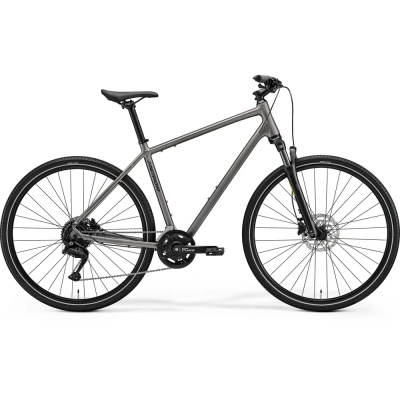
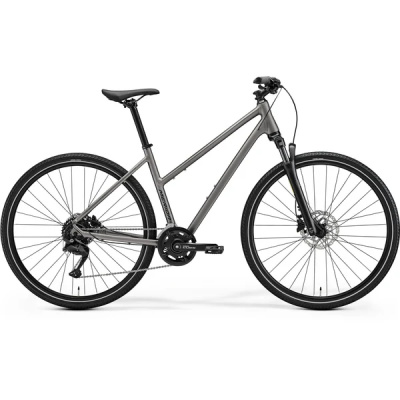
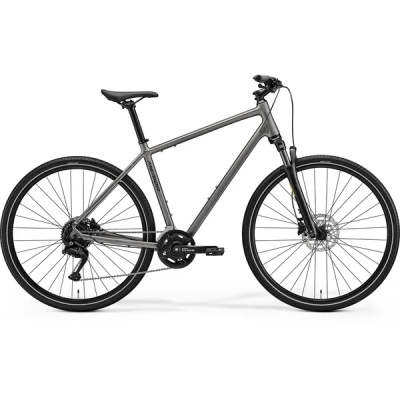
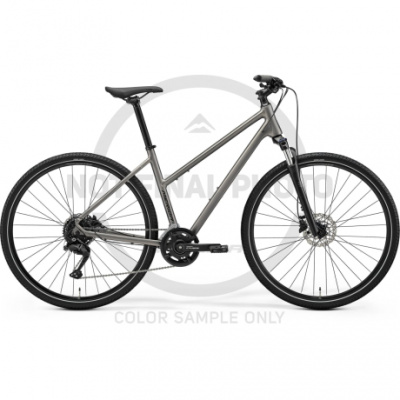

Prices and availability can change quickly. Delivery charges are not always included in listed prices.
Final price, stock status and delivery terms are set by retailer. We may receive a commission on purchases made.
Bikesy's Verdict
The Merida CROSSWAY 100 is a bike that knows its job and gets on with it. It's not chasing podiums or Instagram likes; it's built to handle the daily grind - commutes, weekend rides, the odd gravel detour - without complaint. The upright geometry and suspension components deliver genuine comfort over distance, the Shimano CUES drivetrain shifts smoothly and reliably, and the hydraulic brakes inspire confidence in all conditions. Rack mounts and mudguard eyelets mean it's ready to work the moment you roll it out of the shop.
It's heavier and less efficient than a rigid fitness hybrid, and it's not built for technical off-road, but those aren't the rides it's designed for. If you want one bike that'll handle mixed surfaces, carry a load, and leave you fresh enough to enjoy the journey, the CROSSWAY 100 delivers. It's versatile, practical, and refreshingly honest about what it does well. For riders who value comfort and capability over outright speed, it's a very sensible choice.
Pros
- Upright geometry and suspension components deliver genuine all-day comfort
- Shimano CUES 2×9 drivetrain offers smooth, reliable shifting with a versatile gear range
- Hydraulic disc brakes provide confident, consistent stopping in all conditions
- Rack and mudguard mounts make it commute- and tour-ready straight from the shop
- Wide tyre clearance and reflective sidewalls add versatility and safety
Cons
- Suspension fork and post add weight if you're chasing pure speed on tarmac
- Upright position trades outright efficiency for comfort - you'll work harder keeping pace with road bikes
- Not built for technical off-road; roots and rocks will test its limits
About the Merida CROSSWAY 100
The Merida CROSSWAY 100 sits squarely in that sweet spot where comfort meets capability. It's built for riders who want one bike that'll handle the commute, the weekend canal path, and the occasional gravel detour without complaint. Merida's TFS aluminium frame brings proper strength without the weight penalty, and the upright geometry means you're scanning ahead rather than staring at your front hub. Rack mounts, mudguard eyelets, and a suspension seatpost signal the intent: this is a bike that works for a living.
For 2026 the CROSSWAY 100 continues with Shimano's CUES drivetrain - a 2×9 setup that offers eighteen gears spanning climbs, cruising, and everything between. Hydraulic disc brakes are standard, the fork gets a lockout for when the road smooths out, and those 40mm tyres strike a tidy balance between rolling speed and cushioning. It's not chasing Strava segments, but it'll get you there without drama and leave enough in the tank for the ride home.
What makes the CROSSWAY 100 compelling is its refusal to specialise. You're not locked into pure road pace or trail-only duty; instead you get a frame that adapts. Throw on a rear rack and it's a load-lugger. Lock out the fork and it's efficient on tarmac. Point it down a bridleway and the suspension soaks up the chatter. It's the kind of versatility that makes one bike do the work of three.
Merida CROSSWAY 100 geometry
The CROSSWAY 100's geometry is drawn for comfort, not aggression. That upright posture puts your weight over the saddle rather than the bars, easing pressure on wrists and shoulders during longer stints. The head angle is relaxed enough to inspire confidence when the surface gets loose, and the longer wheelbase adds stability - useful when you're carrying shopping or threading through traffic.
Reach figures are moderate across the size run, so you're not stretched out like a time-triallist. Stack is generous, meaning the bars sit higher relative to the saddle; you'll feel more bolt-upright than hunched. When you're scanning for potholes or checking over your shoulder in town, that visibility matters. The tapered head tube adds front-end stiffness without harshness, and the short chainstays keep the bike manoeuvrable despite the longer overall footprint.
On the bike it translates to a planted, predictable feel. Steering inputs are calm rather than twitchy, and the frame doesn't punish you for sitting up and enjoying the view. If you're used to racier hybrids you might find it less eager to change direction, but that's the trade-off for all-day comfort and load-carrying poise. It's geometry that prioritises arriving fresh over arriving fast.
Component choices & upgrades
Merida's specced the CROSSWAY 100 with components that'll serve most riders straight out of the box. The Shimano CUES drivetrain is a modern, reliable workhorse - smooth shifts, wide range, and built to last. The 40-26 chainring pairing and 11-36 cassette give you enough gears for steep climbs without resorting to a triple, and the two-piston MT200 hydraulic brakes offer consistent stopping power in all weathers. The SR Suntour NEX fork with its lockout function adds compliance when you need it and efficiency when you don't.
That said, if your riding evolves there are sensible upgrade paths. Swapping the Maxxis Overdrive tyres for something with a more aggressive tread - say a Schwalbe Marathon or Continental Contact - can sharpen grip on wet roads or loose gravel. If you're logging serious miles, a Brooks or Selle Royal saddle might suit your sit bones better than the stock perch. The suspension seatpost does a decent job, but a quality rigid post with some setback can fine-tune your position if you find yourself wanting more forward weight bias.
Wheels and hubs are solid rather than spectacular; if you're chasing lower weight or faster engagement, a wheelset upgrade will make a noticeable difference. But honestly, for the riding this bike's designed for, the stock build is well-judged. Spend your money on lights, a good lock, and perhaps a rear rack before you start chasing marginal gains elsewhere.
Where the Merida CROSSWAY 100 excels
The CROSSWAY 100 is outstanding at mixed-surface commuting and recreational riding where comfort trumps outright speed. If your typical week mixes tarmac, towpaths, and the odd bridleway, this bike handles the lot without fuss. The upright position and suspension components mean you can rack up miles without your back or wrists staging a protest, and the hydraulic brakes inspire confidence when you're filtering through traffic or descending a damp lane.
It's also brilliant for riders who want one bike that can wear multiple hats. Fit a rack and panniers and it's a capable tourer for weekend overnighters or shopping runs. Strip it down and it's a fitness tool that'll handle tempo rides on quiet roads. The wide tyre clearance means you can experiment with rubber to suit the season or terrain, and the lockout fork lets you firm things up when efficiency matters.
Where it's less ideal is pure road speed or technical off-road. The upright position and suspension components add a bit of weight and sap some efficiency compared to a rigid, racier hybrid. You'll keep up with mates on the flat, but if they're on drop-bar road bikes you'll be working harder. Similarly, while the fork and tyres cope with gravel and hardpack trails, this isn't a mountain bike - roots, rocks, and steep descents will expose its limits. It's a bike that does many things well rather than one thing brilliantly, and that's exactly the point.
Merida CROSSWAY 100 FAQs
What is the best tyre pressure for a Merida CROSSWAY 100?
Start around 50 - 60 psi for the 40mm tyres; heavier riders or those carrying loads can nudge towards the upper end, while lighter riders chasing comfort can drop a few psi. Check the sidewall for the manufacturer's range and adjust based on feel - too hard and you'll rattle over bumps, too soft and you risk pinch flats.
How much does a Merida CROSSWAY 100 weigh?
A medium frame comes in around 13.75 to 14.5 kg depending on the model year and exact spec. That's respectable for a hybrid with suspension and practical features, though lighter than pure tourers and heavier than rigid fitness hybrids.
Can I fit pannier bags to a Merida CROSSWAY 100?
Yes, the frame has dedicated rack mounts on the rear dropouts and seatstays, so fitting a standard pannier rack is straightforward. You'll want to check clearance with wider tyres, but the frame's designed with load-carrying in mind.
Is the Merida CROSSWAY 100 good for long-distance touring?
It'll handle light touring and weekend trips comfortably, especially with its upright position and rack mounts. For serious multi-week expeditions with heavy loads you might want a dedicated tourer with lower gearing and a more robust wheelset, but for credit-card touring or overnighters it's more than capable.
What is the difference between Merida CROSSWAY and Merida Speeder?
The CROSSWAY prioritises comfort with an upright position, suspension fork, and wider tyres, making it ideal for mixed surfaces and relaxed riding. The Speeder is sportier - more aggressive geometry, often a rigid fork, and narrower tyres - aimed at riders chasing speed on tarmac. Think CROSSWAY for versatility, Speeder for fitness.
How do I adjust the stem on a Merida CROSSWAY 100?
The adjustable stem uses a simple clamp mechanism. Loosen the bolts on the front faceplate, adjust the angle to suit your preferred reach and bar height, then retighten evenly. Don't overtighten - you're clamping aluminium and carbon steerer tubes can crack if you're ham-fisted. If you're unsure, a bike shop will sort it in minutes.
What is the maximum rider weight for a Merida CROSSWAY 100?
Merida doesn't publish a specific limit, but aluminium hybrids of this type typically handle riders up to around 110 - 120 kg including luggage. If you're at the upper end or carrying heavy loads regularly, check spoke tension and tyre pressure more frequently, and consider a wheelset upgrade for added durability.
Key Features & Benefits
- TFS aluminium frame with tapered head tube: Light, stiff, and durable construction that handles daily abuse without flexing or cracking
- Shimano CUES 2×9 drivetrain with 40-26T chainrings and 11-36T cassette: Wide gear range for steep climbs and flat cruising, with smooth, dependable shifts
- SR Suntour NEX fork with lockout and suspension seatpost: Absorbs road buzz and rough surfaces for comfort, locks out for efficient pedalling on smooth tarmac
- Shimano MT200 hydraulic disc brakes with 160mm rotors: Powerful, consistent stopping in wet or dry conditions, with minimal hand effort
- Integrated rack, mudguard, and kickstand mounts: Transform the bike for commuting, touring, or shopping without aftermarket bodges
Merida CROSSWAY 100 2025, 2024 & 2023 differences
The 2025 and 2026 models share the same core specification: Shimano CUES U4000/U3020 2×9 drivetrain, Shimano MT200 hydraulic disc brakes, SR Suntour NEX HLO fork with lockout, and Maxxis Overdrive Excel 700×40C tyres. The TFS III aluminium frame, suspension seatpost, and practical mounts remain consistent across both years, with only minor cosmetic or regional spec variations.
The 2024 model was similarly equipped, continuing the CUES drivetrain and MT200 brakes introduced in that generation. Earlier models from 2022 and 2023 featured a 3×9 drivetrain (27 gears) using Shimano Altus front and Alivio rear derailleurs, paired with Tektro M275 hydraulic disc brakes. Those older bikes offered a wider gear range on paper, though the triple chainring setup brought larger jumps between gears and added weight. The shift to the 2×9 CUES system in 2024 streamlined the drivetrain, improved shift quality, and reduced maintenance complexity without sacrificing practical range.
Tyre spec has varied slightly: some 2025 sources list Kenda Ambra K1278 700×45C tyres instead of the Maxxis Overdrive, likely reflecting regional or batch differences. Frame geometry and suspension travel have remained stable across recent years, with the 63mm SR Suntour NEX fork and suspension seatpost carrying over unchanged. If you're considering an older model, the 2024 - 2026 bikes offer a more refined drivetrain and better brake performance than the 2022 - 2023 versions, though the earlier bikes remain capable and comfortable for their intended use.
Alternatives to Consider
Within Merida's own range, the Merida Speeder 100 offers a sportier take on the hybrid formula - more aggressive geometry, a rigid fork, and narrower tyres for riders chasing tarmac speed over all-surface versatility. If you want more comfort and capability for rougher terrain, the Merida CROSSWAY 300 steps up with better suspension, a wider gear range, and improved components, though it'll cost you a bit more.
Cross-brand, the Giant Escape 2 Disc is a direct rival, offering similar comfort-focused geometry, hydraulic discs, and practical mounts at a comparable price. The Trek FX 2 Disc delivers a slightly sportier ride feel with a more forward position, while the Specialized Sirrus 2.0 leans towards fitness with a stiffer frame and less suspension. For riders wanting a touch more off-road capability, the Trek Dual Sport 2 adds wider tyres and a more robust fork, though it sacrifices some on-road efficiency. The Cannondale Quick 4 offers a lighter, more responsive feel if you're willing to trade some comfort for pace.
Reviews
Comfort defines the CROSSWAY 100's character. Upright posture, suspension fork, and that compliant seatpost combine to smooth out cracked tarmac, cobbles, and rutted towpaths without leaving your wrists or lower back complaining. When you're threading through stop-start traffic or logging a twenty-mile loop, that relaxed position keeps fatigue at bay.
Shimano's CUES drivetrain earns its keep with smooth, predictable shifts and a gear range that covers steep climbs and flat cruising without drama. The 2×9 setup avoids the big jumps of older triples, and the 11-36 cassette gives you enough low gears for loaded climbs. Hydraulic MT200 brakes deliver consistent, powerful stopping - no grabbing, no fade, just reliable modulation in wet or dry conditions.
Handling is stable rather than sharp. The longer wheelbase and relaxed head angle mean the bike tracks calmly over rough surfaces and doesn't twitch when you're carrying a load or riding no-hands. It's not a bike that begs to be flicked through tight corners, but that's the trade-off for poise and predictability. Lock out the fork on smooth roads and you'll notice the efficiency improve, though it's never going to match a rigid fitness hybrid for outright pace.
Practicality shines through in the details: rack mounts that actually work, mudguard clearance that doesn't rub, and reflective tyre stripes that boost visibility. The 40mm Maxxis tyres offer decent grip on gravel and enough cushioning on tarmac, though they're not the fastest rollers if you're chasing speed. Because the frame's built for versatility, you can swap rubber to suit your riding without worrying about clearance.
Weight is noticeable if you're used to lighter bikes, but for the riding this bike's designed for - commuting, leisure, light touring - it's perfectly adequate. The suspension components add a bit of heft, but they also add comfort, and that's the whole point. It's a bike that does many things well rather than one thing brilliantly, and for riders who need that breadth, it's a sensible, well-judged package.
Full Specification
| Spec | Value |
|---|---|
| Frame Material | 6061 Aluminium (Racelite 61) |
| Frame Construction | CROSSWAY TFS III/IV (Techno Forming System) |
| Frame Features | Internal cable routing, tapered head tube, rack/mudguard/kickstand mounts, EQ-Kit ready |
| Tyre Clearance | 700x50C |
| Bottom Bracket | BSA threaded, Shimano BB-UN101 73mm |
| Rear Axle | 135x9mm |
| Fork | SR Suntour NEX HLO |
| Fork Travel | 63mm |
| Fork Adjustments | Coil spring with lockout |
| Drivetrain | Shimano CUES U4000, 2x9 speed (18 gears) |
| Shifters | Shimano CUES U4000 |
| Front Derailleur | Shimano CUES U4000 |
| Rear Derailleur | Shimano CUES U3020 SGS |
| Crankset | Shimano CUES U4000, 40-26T |
| Crank Length | 170mm (XXS/XS/S), 175mm (M/XL) |
| Cassette | Shimano LG300, 11-36T, 9-speed |
| Chain | Shimano LG500 or KMC xGlide |
| Brakes | Shimano MT200 hydraulic disc |
| Brake Calipers | Shimano MT200, 2-piston |
| Rotors (Front) | 160mm |
| Rotors (Rear) | 160mm |
| Rims | Merida COMP TK, 20mm internal width |
| Hubs (Front) | Shimano QC300, 100x9mm, Centerlock |
| Hubs (Rear) | Shimano QC300-HM, 135x9mm, Centerlock |
| Spokes | Black stainless steel |
| Tyres (Front) | Maxxis Overdrive Excel 700x40C, wire bead, Silkshield, reflective stripe |
| Tyres (Rear) | Maxxis Overdrive Excel 700x40C, wire bead, Silkshield, reflective stripe |
| Handlebar | Merida COMP CC, aluminium, 660mm width, 25mm rise, 31.8mm clamp |
| Stem | Merida COMP TK, aluminium, 31.8mm clamp, adjustable, 95mm (XXS/XS/S/M), 110mm (L/XL) |
| Headset | Merida M2346 Neck |
| Seatpost | Merida TK or Expert, 30.9mm diameter, 45mm suspension travel |
| Saddle | Merida Cross Sport or COMP TK |
| Pedals | VP VPE-891 |
| Weight (Approx) | 13.75 - 14.5 kg (medium) |