
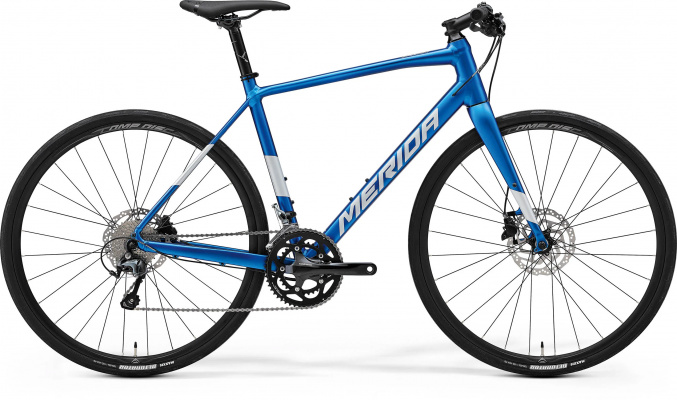
Merida SPEEDER 300
Fast, practical flat-bar fitness that blends road-bike efficiency with everyday comfort and year-round versatility.
- Triple-butted 6066 aluminium frame: road-bike responsiveness
- Full carbon fork absorbs chatter, sharpens steering
- Shimano Tiagra 2×10: smooth, reliable shifting
- Hydraulic disc brakes: confident wet-weather stopping
- Fits 35 mm tyres; mounts for rack and guards
- Weighs around 10.5 kg (size M)
Merida SPEEDER 300 Deals
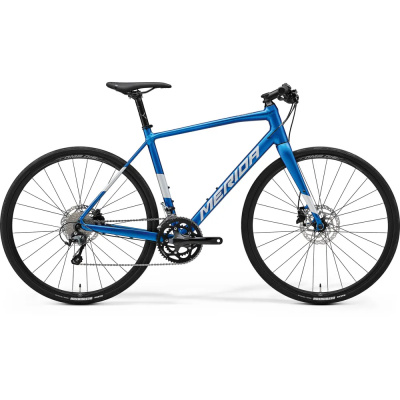
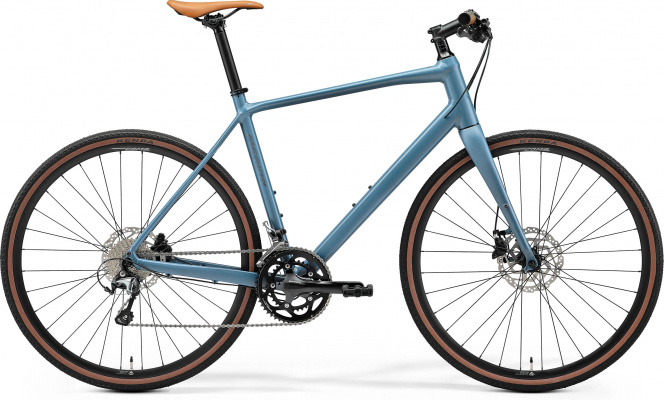
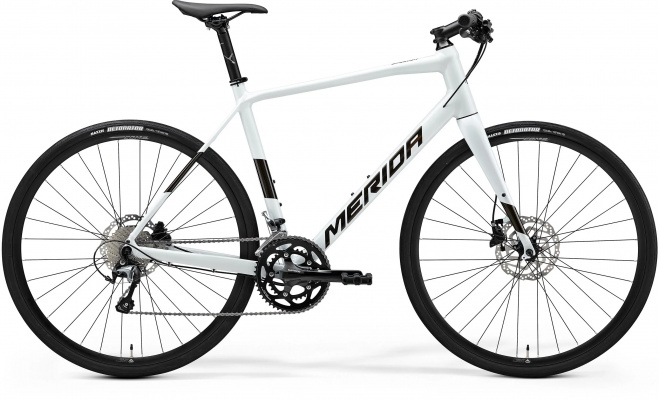

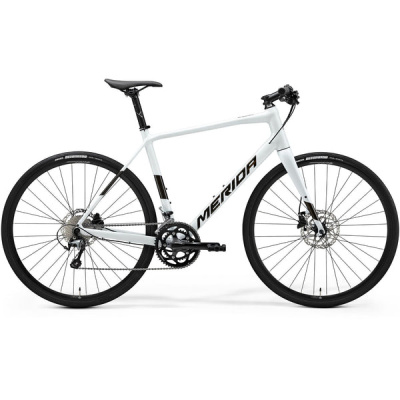
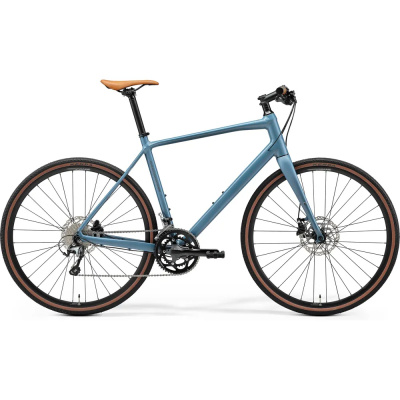
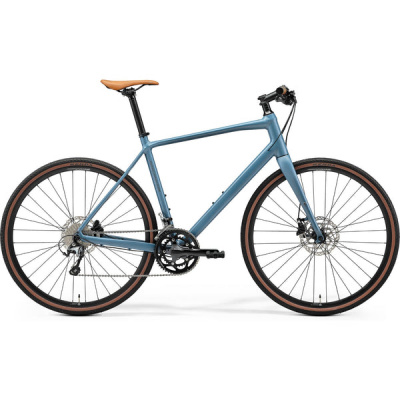
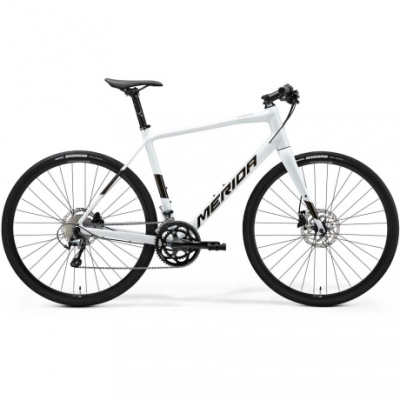

Prices and availability can change quickly. Delivery charges are not always included in listed prices.
Final price, stock status and delivery terms are set by retailer. We may receive a commission on purchases made.
Bikesy's Verdict
The Merida SPEEDER 300 is one of those rare bikes that does exactly what it promises without fuss or compromise. It's light enough to feel lively, practical enough to wear mudguards and a rack, and equipped well enough - Tiagra drivetrain, hydraulic discs, carbon fork - that you won't be planning upgrades before you've even clocked a hundred miles. The upright geometry keeps you comfortable and visible in traffic, yet the extended reach and responsive aluminium frame mean you can still chase a personal best along the canal path or keep up with road bikes on a social club run.
If you want one bike that handles the Monday commute, the midweek fitness loop, and the Saturday gravel byway without asking you to choose between speed and practicality, this is it. It's not the lightest machine out there, and the flat bar won't win you any aero points, but for the vast majority of riders who value reliability, versatility, and a genuinely engaging ride, the SPEEDER 300 delivers. Merida has built a bike that works hard, adapts to your life, and rewards you with a grin every time you twist the pedals. That's worth a lot.
Pros
- Lightweight triple-butted aluminium frame and carbon fork deliver road-bike responsiveness
- Shimano Tiagra 2×10 drivetrain shifts smoothly and reliably under load
- Hydraulic disc brakes offer confident stopping in all weathers
- Upright geometry balances comfort, visibility, and efficiency
- Fits up to 35 mm tyres; mounts for mudguards, rack, and kickstand
Cons
- Heavier than pure road bikes if you're chasing KOMs or racing
- Flat bar limits aerodynamic options on long, fast rides
- Gearing range may feel wide for experienced riders; a closer-ratio cassette sharpens the feel
About the Merida SPEEDER 300
The Merida SPEEDER 300 sits in that sweet spot where road-bike efficiency meets everyday practicality. Built around a triple-butted 6066 aluminium frame - the same alloy Merida uses in its road range - and topped with a full carbon fork, it's lighter and livelier than most flat-bar hybrids yet still wears mudguards and a rack without complaint. The 2025 iteration (the latest confirmed release) refines a formula that's been winning over commuters and fitness riders for years: upright enough to see over traffic, long enough in the reach to feel stable at speed, and equipped with Shimano Tiagra components that shift cleanly whether you're threading through rush hour or chasing a personal best along the canal path.
You'll notice the hydroformed tubes and internal cable routing first - details that signal intent. This isn't a bike content to plod; it wants to move. The carbon fork soaks up road buzz and keeps the front end precise, while the flat bar and slightly taller stack let you breathe and look around without folding yourself in half. Hydraulic disc brakes (either Shimano MT200 or Tektro M275, depending on the build) haul you down in the wet, and the ability to run up to 35 mm rubber means you can dial in comfort or grip as the season demands. It's a bike that works Monday to Friday, then happily stretches its legs at the weekend.
Merida pitches the SPEEDER 300 as a step up from entry-level fitness machines, and the spec sheet backs that claim. The Tiagra 2×10 drivetrain offers a 50/34 chainset paired with an 11 - 32 cassette - enough range for steep urban ramps and long, rolling efforts without resorting to granny gears or spinning out on the flat. The tubeless-ready aluminium rims and quick-release hubs keep things simple and serviceable, and there are mounts for fenders, a kickstand, and a rear rack. It's the sort of bike that adapts to your life rather than demanding you adapt to it.
Merida SPEEDER 300 geometry
The Speeder Lite III frame geometry strikes a balance between stability and agility. Merida extends the reach compared to traditional hybrids, giving you a longer front centre that calms the steering and inspires confidence when you're carrying speed on open roads or threading through traffic. At the same time, the head angle is relaxed enough to keep the bike planted, and the stack is generous - so you're upright enough to scan junctions and breathe deeply without sacrificing too much aerodynamic efficiency.
Chainstays are moderate in length, which means the rear wheel sits close enough to give you snap out of corners and responsive acceleration, yet the overall wheelbase remains long enough to smooth out rough tarmac and keep the bike tracking straight when you're loaded with panniers or a rucksack. The effective top tube grows with each frame size, and Merida varies stem length (from 80 mm on XXS up to 110 mm on XL) to keep the cockpit proportional. Standover clearance is ample across the range, so you can dab a foot at lights without drama.
In practice, this geometry translates to a bike that feels composed at 30 km/h on the flat, doesn't wander when you take a hand off to signal, and climbs without pitching you too far forward. It's not as aggressive as a pure road machine, but it's far from the sit-up-and-beg posture of a Dutch city bike. You get enough weight over the front wheel to keep traction on steep ramps, and enough room in the cockpit to settle in for an hour or three without your lower back staging a protest.
Component choices & upgrades
The stock build is well sorted. Shimano Tiagra has been the workhorse of mid-tier road groupsets for years, and here it delivers smooth, predictable shifts under load. The 50/34 chainset and 11 - 32 cassette give you a wide enough spread for most terrain, and the KMC X10 chain is durable and easy to replace. Hydraulic disc brakes - whether you get the Shimano MT200 or Tektro M275 calipers - offer consistent modulation and power, and the 160 mm or 180 mm rotors (depending on the build) are more than adequate for a bike of this weight and intended use.
Wheels are tubeless-ready Merida Comp SL rims laced to either Joytech or Shimano quick-release hubs. They're not the lightest hoops you'll find, but they're robust and straightforward to service. The Maxxis Detonator or Kenda tanwall tyres fitted as standard are fine for dry conditions and light gravel, though if you're riding year-round in the UK or venturing onto rougher byways, swapping to a grippier, more supple 32 mm or 35 mm tyre - something like a Schwalbe Marathon or Continental Contact - will transform comfort and confidence without any other changes.
If you're chasing marginal gains or planning longer tours, consider a lighter wheelset or a saddle that better suits your sit bones; the Merida Comp SL saddle is serviceable but not bespoke. The flat Merida Expert CC bar is wide enough for control, though riders with narrower shoulders might prefer trimming it down or swapping to a 580 mm option. The aluminium seatpost and stem are solid and offer plenty of adjustment, so there's no urgent need to upgrade unless you're chasing a specific fit or weight target. In short, ride the bike as it comes, identify what you'd change based on your own needs, and upgrade only when your skills or terrain genuinely demand more.
Where the Merida SPEEDER 300 excels
This bike is outstanding at fast, efficient commuting and fitness riding on tarmac and well-maintained paths. If your daily route mixes cycle lanes, shared-use paths, and the occasional stretch of chipseal or hardpack towpath, the SPEEDER 300 will cover ground quickly and comfortably. The upright position keeps you visible and alert in traffic, the hydraulic discs inspire confidence in the wet, and the ability to fit mudguards and a rack means you can carry a change of clothes or a week's shopping without resorting to a rucksack.
It's also very good for weekend fitness rides and social club runs where the pace is brisk but not race-hard. The Tiagra drivetrain and lightweight frame let you keep up with road bikes on the flat and moderate climbs, and the flat bar gives you multiple hand positions (with the right grips or bar ends) for longer efforts. The wider tyre clearance means you can explore gravel byways and bridleways without worrying about pinch flats or losing traction, though this isn't a gravel bike - it's happiest on smoother surfaces.
Where it's not ideal: technical off-road riding, sustained steep climbs where you'd benefit from a lower gear range, or pure road racing where every gram and every watt counts. The flat bar limits your aerodynamic options, and while the bike is light for a hybrid, it's heavier than a dedicated road machine. If you're planning multi-day tours with heavy panniers, a bike with a more relaxed geometry and lower gearing (like Merida's own Crossway range or a dedicated touring frame) will be more forgiving. But for the vast majority of riders who want one bike that does commuting, fitness, and light adventure without compromise, the SPEEDER 300 hits the mark.
Merida SPEEDER 300 FAQs
What is the maximum tyre size for the Merida SPEEDER 300?
The frame and fork will clear up to 700×35C tyres, or 32 mm if you're running full mudguards. That's enough width to smooth out rough tarmac, add grip on gravel, and run lower pressures for comfort without risking pinch flats.
Is the Merida SPEEDER 300 good for commuting?
Yes, it's excellent for commuting. The upright position improves visibility and comfort in traffic, hydraulic disc brakes work in all weathers, and there are mounts for mudguards, a rack, and a kickstand. The Tiagra drivetrain is reliable and low-maintenance, and the bike is light enough to carry up stairs or lift onto a train.
What is the weight of the Merida SPEEDER 300?
A size medium weighs approximately 10.5 kg. That's competitive for a flat-bar bike with mudguard and rack mounts, though lighter than many budget hybrids and heavier than a pure road bike.
What is the difference between Merida SPEEDER 200 and 300?
The SPEEDER 300 typically features a Shimano Tiagra 2×10 drivetrain, while the 200 uses Shimano Sora (2×9). The 300 also tends to have slightly better finishing kit - wheels, brakes, and contact points - making it a more refined and capable machine for riders who want a bit more performance and durability.
Does the Merida SPEEDER 300 have disc brakes?
Yes, it comes with hydraulic disc brakes as standard - either Shimano MT200 or Tektro M275 calipers, depending on the build, paired with 160 mm or 180 mm rotors. They offer consistent, powerful stopping in wet and dry conditions.
Is the Merida SPEEDER 300 a road bike or a hybrid?
It's a fitness hybrid with strong road-bike DNA. The frame and fork are borrowed from Merida's road range, but the flat bar, upright geometry, and practical features (mudguard and rack mounts, wider tyre clearance) make it a hybrid in spirit. Think of it as a road bike you can ride every day without compromise.
What kind of components does the Merida SPEEDER 300 come with?
The bike is built around a Shimano Tiagra 2×10 drivetrain (50/34 chainset, 11 - 32 cassette), hydraulic disc brakes, tubeless-ready aluminium wheels, and a full carbon fork. Contact points are Merida's own-brand alloy bar, stem, seatpost, and saddle, with VP platform pedals. It's a well-balanced, mid-tier spec that prioritises reliability and performance over weight savings.
Key Features & Benefits
- Triple-butted 6066 aluminium frame with hydroforming: Delivers road-bike stiffness and responsiveness while absorbing vibration for all-day comfort
- Full carbon fork with tapered steerer: Reduces weight, sharpens steering precision, and soaks up road chatter for a smoother, more controlled ride
- Shimano Tiagra 2×10 drivetrain with 50/34 chainset and 11 - 32 cassette: Wide gear range tackles steep urban ramps and long rolling roads with smooth, reliable shifts
- Hydraulic disc brakes with 160 mm or 180 mm rotors: Consistent, powerful stopping in wet and dry conditions inspires confidence in traffic and on descents
- Clearance for up to 700×35C tyres and mounts for mudguards, rack, and kickstand: Adapts to commuting, fitness, and light touring with comfort, grip, and practical load-carrying
Merida SPEEDER 300 2024 & 2023 differences
The 2024 and 2023 models share the same core architecture as the 2025 release: a triple-butted 6066 aluminium Speeder Lite III frame, full carbon fork with tapered steerer, and a Shimano Tiagra 2×10 drivetrain (50/34 chainset, 11 - 32 cassette). Hydraulic disc brakes (Shimano MT200 or Tektro M275) and tubeless-ready aluminium rims remain consistent across all three years, as does the ability to fit up to 700×35C tyres and the full complement of mudguard, rack, and kickstand mounts.
Differences between the years are minimal and largely confined to minor component substitutions - tyre brands (Maxxis Detonator versus Kenda tanwall), hub suppliers (Joytech versus Shimano), and rotor sizes (160 mm versus 180 mm) - rather than meaningful geometry or technology changes. The 2025 model represents an iterative refinement rather than a redesign, maintaining the proven formula that has made the SPEEDER 300 a popular choice for commuters and fitness riders. If you're considering a 2024 or 2023 bike, expect the same ride character and capability; any differences in price or availability will be down to stock levels rather than performance.
Alternatives to Consider
Within Merida's own range, the Merida SPEEDER 200 offers a more accessible entry point with a Shimano Sora 2×9 drivetrain and slightly simpler finishing kit, while the Merida SPEEDER 400 (where available) steps up with lighter wheels and higher-tier components for riders chasing extra performance. If you want a more relaxed, comfort-first hybrid, Merida's Crossway 300 trades some speed for a plusher ride and lower gearing suited to leisurely touring.
Cross-brand, the Specialized Sirrus 3.0 is a direct rival, offering a similar blend of flat-bar efficiency and practicality with Shimano Altus or Acera components and hydraulic discs; it's slightly more upright and comfort-focused. The Giant Escape 2 Disc delivers comparable performance with a lightweight ALUXX aluminium frame, Shimano Tourney or Altus gearing, and mechanical or hydraulic discs depending on the year - it's a proven workhorse at a competitive price. For a sportier feel, the Trek FX 3 Disc uses an Alpha aluminium frame, Shimano Acera or Altus drivetrain, and hydraulic discs, with a geometry that leans slightly more towards fitness riding than commuting. Finally, the Cube Nature Pro offers a well-equipped package with Shimano Deore or Alivio components, hydraulic discs, and a comfortable, stable ride that's ideal for mixed-surface commuting and light touring. Each of these bikes prioritises reliability and versatility, but the SPEEDER 300's Tiagra drivetrain and carbon fork give it a performance edge over most peers at this price point.
Reviews
Triple-butted aluminium and a full carbon fork deliver a ride quality that punches above the fitness-hybrid class. The frame feels taut under power yet absorbs enough road buzz to keep your hands and lower back happy over an hour or more. Steering is direct without being twitchy, and the longer wheelbase means the bike tracks straight when you're carrying speed or loaded with a pannier.
Shimano Tiagra shifts cleanly under load, and the 50/34 chainset paired with an 11 - 32 cassette offers enough range for steep urban ramps and long, rolling efforts without leaving you spinning out on the flat. Hydraulic disc brakes - whether Shimano MT200 or Tektro M275 - bite predictably in the wet, and modulation is good enough to feather speed through tight corners or crowded cycle lanes. When you're threading through traffic or descending a slick hill, that confidence matters.
Upright geometry keeps you visible and alert, and the flat bar gives you leverage for quick direction changes. The bike accelerates briskly from lights and holds momentum well on the flat, though it's not as slippery as a drop-bar road machine. Wider tyre clearance (up to 35 mm) means you can dial in comfort or grip as conditions demand, and the ability to fit mudguards and a rack without compromise makes this a genuine year-round tool. Some builds mix component brands (Tektro brakes, Shimano drivetrain, Merida finishing kit), but nothing feels mismatched in use. Weight is competitive for the spec - around 10.5 kg - though lighter wheels or tyres would sharpen the feel if you're chasing marginal gains. For fast commuting, fitness rides, and weekend exploration on tarmac and hardpack, it's a bike that works hard and asks for very little in return.
Full Specification
| Spec | Value |
|---|---|
| Frame Material | Triple butted 6066 series aluminium, hydroformed |
| Frame Design | Speeder Lite III |
| Frame Features | Internal cable routing; mounts for fenders, kickstand, rear rack |
| Tyre Clearance | 700x35C max; 700x32C with mudguards |
| Bottom Bracket | Shimano BB-RS500 BSA |
| Rear Axle | 100x9/135x9mm QR |
| Fork | Merida Speeder CF2, full carbon, tapered steerer |
| Drivetrain | 2x10 speed |
| Shifters | Shimano Tiagra |
| Rear Derailleur | Shimano Tiagra GS |
| Front Derailleur | Shimano Tiagra |
| Crankset | Shimano FC-RS400, 50-34 teeth |
| Crank Length | 170mm (XXS/XS/S/M); 175mm (L/XL) |
| Cassette | Shimano CS-HG500 or Shimano GRX HG500, 11-32 teeth, 10 speed |
| Chain | KMC X10 |
| Brakes | Hydraulic disc |
| Brake Levers & Calipers | Tektro M275 or Shimano MT200 2-piston |
| Rotors | Shimano RT10, 160mm or 180mm |
| Rims | Merida Comp SL, 17mm inner width, 22mm height, aluminium, tubeless ready |
| Spokes | Black stainless steel, 32 holes |
| Hubs (Front) | Joytech D471SBT-SC-CL or Shimano HB-QC300, QR, Centerlock |
| Hubs (Rear) | Joytech D472TSBT-SC-CL or Shimano FH-QC300-HM, QR, Centerlock |
| Tyres (Front) | Maxxis Detonator 700x32C or Kenda Tanwall 700x35C |
| Tyres (Rear) | Maxxis Detonator 700x32C or Kenda Tanwall 700x35C |
| Handlebar | Merida Expert CC, aluminium, 600mm width, flat |
| Stem | Merida Expert CC, aluminium, 7° angle |
| Stem Length | 80mm (XXS/XS); 90mm (S); 100mm (M); 110mm (L/XL) |
| Grips | Merida Comp EC |
| Headset | Merida M2331 Neck or Merida M2341 |
| Seatpost | Merida Comp CC, aluminium, 30.9mm diameter, 5mm setback |
| Saddle | Merida Comp SL |
| Pedals | VP VPE-891 |
| Weight (Approx) | 10.5 kg (Size M) |