
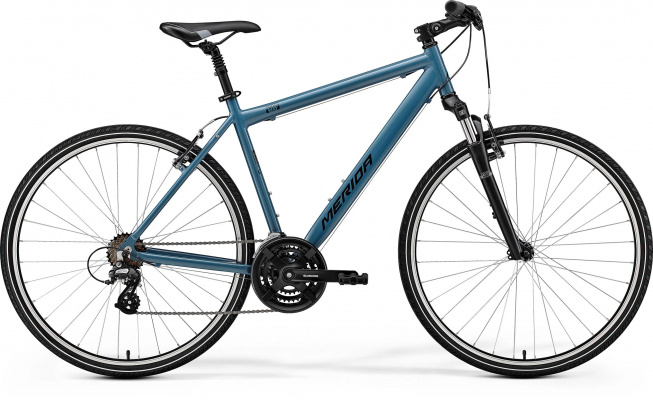
Merida CROSSWAY 10-V SE
Comfortable, upright hybrid that smooths rough commutes and weekend rides with practical mounts and forgiving suspension.
- Upright geometry: easy on back and neck
- Suspension fork and seatpost smooth rough tarmac
- Rack and mudguard mounts for practical commuting
- 21-speed range tackles varied terrain comfortably
- Adjustable stem lets you dial in fit
- 700×40c tyres: cushioned ride, light trail capable
Merida CROSSWAY 10-V SE Deals
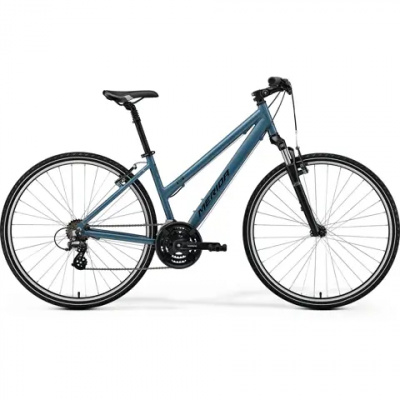

Prices and availability can change quickly. Delivery charges are not always included in listed prices.
Final price, stock status and delivery terms are set by retailer. We may receive a commission on purchases made.
Bikesy's Verdict
The Merida CROSSWAY 10-V SE is a bike that knows its job and does it well. If you're after a comfortable, practical hybrid for commuting, weekend rides, or light trail exploring, it ticks every box without fuss or pretension. The upright geometry and suspension elements make it genuinely pleasant to ride, even on rough roads, and the rack mounts mean you can actually use it for real-world tasks. It's not fast, it's not light, and the V-brakes are a compromise in wet weather, but for the vast majority of riders who just want to get out and ride without drama, those trade-offs are entirely reasonable.
This is a bike that rewards regular use rather than occasional heroics. Ride it daily, load it up, take it on a canal path or a country lane, and you'll appreciate the thought that's gone into making it comfortable and dependable. It's not trying to be a race bike or a mountain bike, and that clarity of purpose is its greatest strength. If you want something that'll get you there feeling fresh, with room for a pannier and mudguards, the CROSSWAY 10-V SE is a very sensible choice.
Pros
- Upright, comfortable geometry ideal for commuting and leisurely rides
- Suspension fork and seatpost smooth rough roads and towpaths effectively
- Rack, mudguard, and kickstand mounts make it genuinely practical
- Broad 21-speed range tackles hills and flats without fuss
- Adjustable stem lets you fine-tune fit easily
Cons
- V-brakes lack power in wet conditions compared to disc brakes
- Heavier than sportier hybrids if you're chasing speed or climbing efficiency
- Basic suspension fork can feel bouncy under hard pedalling
About the Merida CROSSWAY 10-V SE
The Merida CROSSWAY 10-V SE sits squarely in that sweet spot where everyday practicality meets genuine comfort. Built around a 6061 double-butted aluminium frame with mounts for everything you'll actually use - racks, mudguards, kickstand - it's the sort of bike that makes daily riding less of a chore and more of something you'll look forward to. The 2026 model carries forward the recipe that's made the CROSSWAY range a staple for commuters and weekend explorers: forgiving geometry, enough suspension to take the sting out of patchy roads, and a spec that won't leave you stranded when the weather turns.
You're not buying a race machine here, and that's precisely the point. The upright position keeps your weight off your wrists and lets you scan traffic or enjoy the scenery without craning your neck. An SR Suntour NEX fork with 63mm of travel and a suspension seatpost with 40mm of give work together to smooth out the kind of surfaces that make rigid hybrids feel like punishment. Shimano's 3×7 drivetrain delivers 21 gears - more than enough to spin up short climbs or cruise flat towpaths without spinning out. It's a bike that prioritises getting you there comfortably over getting you there fastest, and for the vast majority of riders, that's exactly the right trade.
Where the CROSSWAY 10-V SE really earns its keep is in the details. The adjustable stem means you can tweak bar height without needing a stack of spacers or a new stem. The 700×40c tyres offer enough volume for cushioning and light trail work, with clearance for up to 42c on the frame and a generous 50c on the fork if you fancy something even plusher. V-brakes keep the weight and maintenance down, though you'll need to respect their limitations when it's wet. This is a bike designed to be ridden often, loaded up when needed, and left outside the café without too much worry.
Merida CROSSWAY 10-V SE geometry
The frame geometry is all about comfort and confidence rather than speed or aggression. You sit more upright than you would on a road bike or even a sportier hybrid, which takes pressure off your hands and lower back - ideal if you're commuting daily or spending a few hours in the saddle at the weekend. The relaxed angles and shorter reach mean steering feels stable and predictable, not twitchy, so navigating traffic or potholed lanes doesn't demand constant micro-corrections.
That upright posture does sacrifice a little efficiency when you're pushing hard into a headwind or trying to keep up with faster riders, but it's a deliberate choice. You'll feel more planted when you're carrying a pannier load or riding no-handed to adjust a jacket. The longer wheelbase adds to that planted feel, especially on rougher surfaces where a twitchier bike might skip around. If you've spent time on a mountain bike, the CROSSWAY will feel familiar in its stability; if you're coming from a road bike, you'll notice the difference immediately - less aero, more armchair.
Frame sizes run from XXS through to L, covering a broad range of rider heights, and the availability of both standard and low step-through frames means accessibility is baked in. The adjustable stem gives you a bit of wiggle room to fine-tune your cockpit without needing a workshop, which is a thoughtful touch for a bike at this price point.
Component choices & upgrades
The stock build is sensible and well-matched to the bike's intent. Shimano's ST-EF500 shifters and the TY-series drivetrain are entry-level, sure, but they're also proven, easy to service, and perfectly adequate for the kind of riding this bike does best. The 48-38-28 triple chainring paired with a 14-28 seven-speed cassette gives you a wide spread of gears - low enough for steep climbs with a loaded rack, tall enough for flat cruising. Some riders find triples fiddly, but if you're new to cycling or prefer having options, the range is genuinely useful.
The Promax V-brakes are the most obvious place you might consider an upgrade. They work fine in the dry and they're light, but wet weather performance is noticeably weaker than even basic mechanical disc brakes. If you're riding year-round in the UK, swapping to a disc-equipped CROSSWAY model (like the 15-MD or 20-D) might be worth the extra outlay. That said, decent brake pads and proper setup will get you a long way, and V-brakes are dead simple to maintain.
Tyres are another easy win if you want to tailor the ride. The stock Merida K1171 40c rubber is fine for mixed surfaces, but if you're mostly on tarmac, a slicker tyre will roll faster and feel livelier. If you're venturing onto rougher trails more often, the frame and fork will happily swallow something wider and knobbier - up to 42c on the frame, 50c on the fork. The Merida CC rims are basic but sturdy; unless you're a heavier rider or regularly loading the bike heavily, they'll hold up without complaint.
The suspension fork and seatpost are comfort-focused rather than performance-oriented. The NEX fork is a coil unit without much in the way of damping sophistication, so it can feel a bit bouncy under power, but it does absorb the worst of potholes and kerb drops. If you find it too soft, check whether your model has a lockout lever - it'll firm things up on smoother roads. The suspension seatpost is a nice touch for longer rides; if you're only doing short hops, you could swap it for a rigid post and save a bit of weight, but most riders appreciate the extra cushioning.
Where the Merida CROSSWAY 10-V SE excels
This bike is outstanding for daily commuting and leisurely weekend rides where comfort and practicality matter more than speed. If your typical ride involves a mix of tarmac, towpaths, and the occasional gravel track, the CROSSWAY 10-V SE will handle it all without drama. The upright position and suspension elements make it especially good for riders who want to arrive feeling fresh rather than battered, and the rack and mudguard mounts mean you can actually use it for errands, shopping, or light touring without needing a second bike.
It's also a strong choice for newer riders or those returning to cycling after a break. The stable handling, broad gear range, and forgiving ride quality build confidence quickly, and the adjustable stem means you can tweak the fit as you get more comfortable. The weight - just under 14kg - isn't featherlight, but it's not a burden either, and the extra heft contributes to that planted, reassuring feel.
Where it's less ideal is anything that demands speed or precision. Group rides with faster cyclists will leave you working harder to keep up, and the upright position and suspension fork aren't optimised for efficiency when you're pushing the pace. The V-brakes are a limitation in wet conditions, so if you're descending steep hills regularly or riding in heavy traffic in the rain, you'll want to factor that in. It's also not a bike for serious off-road work - the fork travel is modest, the tyres are more touring than trail, and the geometry isn't designed for technical riding. Think bridleways and canal paths, not singletrack.
Merida CROSSWAY 10-V SE FAQs
What is the best tyre pressure for a Merida CROSSWAY 10-V SE?
Start around 50 - 60 psi for the 40c tyres and adjust based on your weight and the terrain. Lower pressure (closer to 50) gives more comfort and grip on rough surfaces; higher pressure (closer to 60) rolls faster on smooth tarmac. Check the sidewall for the manufacturer's recommended range and stay within it.
How do I adjust the suspension on a Merida CROSSWAY?
The SR Suntour NEX fork is a basic coil unit with limited adjustability - some versions have a lockout lever on the crown that firms it up for smoother roads. The suspension seatpost has no external adjustment; if it feels too soft or harsh, you may need to add or remove preload spacers inside, though most riders leave it as-is. For more control, consider upgrading to a fork with rebound damping.
Is the Merida CROSSWAY 10-V SE good for long-distance cycling?
It's comfortable enough for all-day rides at a relaxed pace, especially on mixed surfaces where the suspension and upright position pay dividends. The broad gear range helps on varied terrain, and the rack mounts let you carry what you need. That said, the weight and less aerodynamic position mean it's slower than a dedicated touring or road bike, so if you're covering big miles regularly, you might want something lighter and more efficient.
What is the maximum rider weight for a Merida CROSSWAY 10-V SE?
Merida doesn't publish a specific rider weight limit for this model, but most hybrid bikes of this type are designed for riders up to around 100 - 110kg, plus luggage. If you're a heavier rider or plan to carry significant loads, check with a dealer and consider upgrading to stronger wheels or tyres for added durability.
How does the Merida CROSSWAY 10-V SE compare to a mountain bike?
It's more efficient on tarmac and smoother paths thanks to the 700c wheels, slicker tyres, and less suspension travel, but it's not built for technical trails or rough off-road riding. A mountain bike has wider tyres, more suspension, and burlier components for tackling roots, rocks, and steep descents. The CROSSWAY is better for commuting, fitness rides, and light trail use; a mountain bike is better for proper off-road adventures.
Can I fit pannier racks to a Merida CROSSWAY 10-V SE?
Yes, the frame has integrated mounts for a rear rack, and most standard racks will fit without issue. The fork also has mounts for a front rack if you want to spread the load or carry more gear. Make sure any rack you choose is compatible with the 700c wheel size and the frame's mounting points.
What type of brakes does the Merida CROSSWAY 10-V SE have?
It uses Promax V-brakes (rim brakes) front and rear. They're light, simple to maintain, and effective in dry conditions, but they lose power when the rims are wet. If you ride year-round in the UK or need stronger, more consistent braking, consider a CROSSWAY model with disc brakes instead.
Key Features & Benefits
- Upright comfort geometry: Reduces strain on your back, neck, and wrists for all-day riding comfort
- SR Suntour NEX fork (63mm) and suspension seatpost (40mm): Absorbs potholes and rough surfaces, keeping you fresh on longer rides
- Integrated rack and mudguard mounts: Transforms the bike into a practical commuter or light tourer without aftermarket hassle
- Shimano 3×7 drivetrain (21 speeds): Wide gear range lets you spin up climbs and cruise flats with ease
- 700×40c tyres with generous clearance: Cushioned ride on tarmac, capable on light trails, room to fit wider rubber if needed
Alternatives to Consider
Within Merida's own range, the CROSSWAY 15-MD steps up with mechanical disc brakes and a slightly refined spec, addressing the V-brake limitation if you ride year-round in wet conditions. For a lighter, sportier feel, the Merida SPEEDER 100 trades some comfort for speed with a more aggressive geometry and slicker tyres, though you lose the suspension and some practicality.
Cross-brand, the Giant Escape 2 Disc offers similar comfort-focused geometry with the advantage of hydraulic disc brakes and a slightly lighter frame, making it a strong all-rounder for mixed conditions. The Specialized Sirrus 2.0 leans more towards fitness riding with a sportier position and nimbler handling, though it's less forgiving on rough roads. The Trek FX 2 Disc sits in a similar space to the CROSSWAY, with disc brakes and a comparable spec, while the Cube Nature offers a touch more refinement in the drivetrain and finishing kit at a similar price point. If you're after something even more upright and relaxed, the Ridgeback Meteor prioritises comfort above all, though it's a bit heavier and less versatile off tarmac.
Reviews
Comfort is the defining trait here, and it shows in every pedal stroke. The upright position takes the load off your hands and lower back, making longer rides feel less punishing than they would on a sportier hybrid. When you hit a pothole or a rough patch of tarmac, the suspension fork and seatpost work together to smooth things out - not with the sophistication of a high-end system, but with enough give to make a noticeable difference. Rough lanes and towpaths feel manageable rather than jarring.
Climbing with the 3×7 drivetrain is straightforward. The low gears are genuinely low, so even steep pitches with a loaded rack don't leave you grinding. Because the bike sits you upright, you're not generating the same power as you would in a more aggressive position, but the trade-off is that you can keep spinning comfortably without your back or shoulders complaining. On flatter sections, the middle chainring and cassette range let you settle into a steady rhythm without running out of gears.
Handling is stable and predictable, which inspires confidence when you're navigating traffic or riding with one hand to signal. The longer wheelbase and relaxed angles mean the bike doesn't dart around beneath you, even when you're carrying weight or riding over uneven surfaces. It's not a bike that rewards aggressive cornering or quick direction changes, but that's not what it's built for. When you're threading through city streets or cruising a canal path, the planted feel is reassuring.
Braking is the one area where the bike shows its budget roots. The Promax V-brakes work well enough in the dry, but wet rims reduce power noticeably, and you'll need to plan your stops more carefully in the rain. Modulation is decent once you're used to them, but if you're riding in heavy traffic or descending regularly, the lack of disc brakes is a limitation worth considering. Maintenance is simple, though, and replacement pads are cheap.
Load it up with a rack and panniers, and the CROSSWAY doesn't complain. The frame feels solid, the wheels stay true, and the suspension still does its job even with extra weight on board. It's a bike that genuinely works as a practical tool, not just a recreational toy. Short punchy efforts feel a bit sluggish - the weight and suspension fork sap some efficiency - but for steady-state riding, it's more than capable.
Full Specification
| Spec | Value |
|---|---|
| Frame Material | Lightweight 6061 double butted technoformed aluminium |
| Frame Design | Comfort geometry, upright riding position |
| Frame Features | Mounts for rear rack, mudguards, and kickstand |
| Available Sizes | XXS, XS, S, M/L, L |
| Bottom Bracket | FSA TH-7420ST, 68-124, BSA |
| Rear Axle | 135x9mm QR |
| Fork | SR Suntour NEX |
| Fork Travel | 63mm |
| Fork Type | Coil suspension |
| Tyre Clearance Frame | 700x42c |
| Tyre Clearance Fork | 700x50c |
| Drivetrain | 21-speed (3x7) |
| Shifters | Shimano ST-EF500-L / Shimano ST-EF500-7R |
| Front Derailleur | Shimano FD-TY510-3 |
| Rear Derailleur | Shimano RD-M310-7 |
| Crankset | Shimano TY301, 48-38-28 teeth |
| Crank Length | 170mm (XXS/XS/S), 175mm (M/L/XL) |
| Cassette | Shimano MF-TZ500, 14-28 teeth, 7-speed |
| Chain | SunRace CNM 84 |
| Brakes | V-brakes (rim brakes) |
| Brake Levers | Promax MTV-117A |
| Brake Calipers | Promax MTV-117A |
| Wheels | 700c |
| Rims | Merida CC, 17mm internal width |
| Spokes | Steel UCP |
| Hubs Front | Joytech JY-751DSE, 100x9mm |
| Hubs Rear | Joytech JY-752DSE, 135x9mm |
| Tyres | Merida K1171, 700x40c |
| Handlebar | Merida CC, steel, 620mm wide, 30mm rise |
| Stem | Merida TK, aluminium, 100mm or 110mm |
| Headset | FSA TH888 |
| Grips | Merida EC |
| Seatpost | Merida TK, aluminium, 27.2mm diameter, 13mm layback, 40mm suspension travel |
| Saddle | Merida Cross Sport |
| Pedals | VP VPE-891 |
| Weight Approx | 13.98kg |