
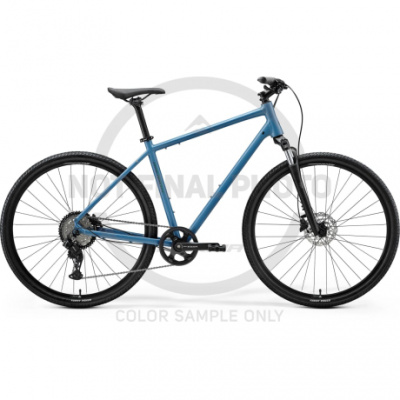
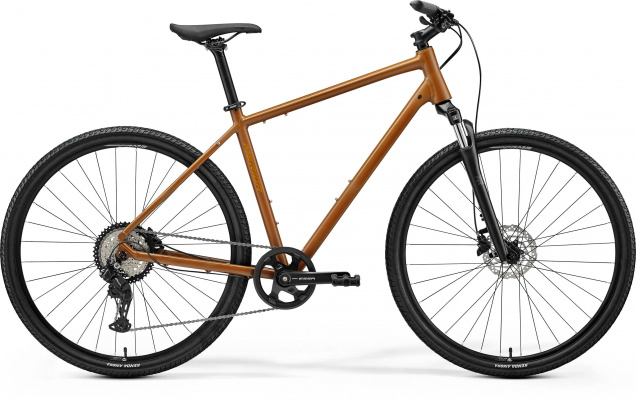
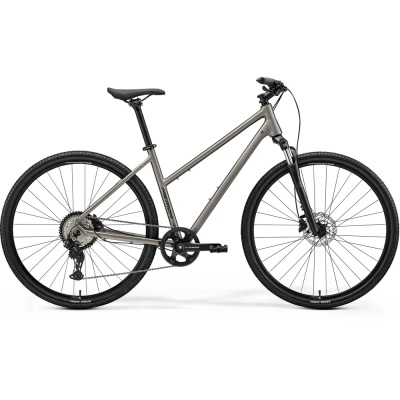
Merida CROSSWAY 20
Comfortable, practical hybrid that handles commutes, weekend rides, and light gravel with reliable brakes and all-day ease.
- Upright comfort geometry for relaxed all-day riding
- SR Suntour NEX fork with lockout smooths rough roads
- Hydraulic disc brakes: confident stopping in all weathers
- Integrated mounts for racks, mudguards, and kickstand
- 700×40C tyres with clearance up to 50mm
- Suspension seatpost adds extra bump absorption
Merida CROSSWAY 20 Deals
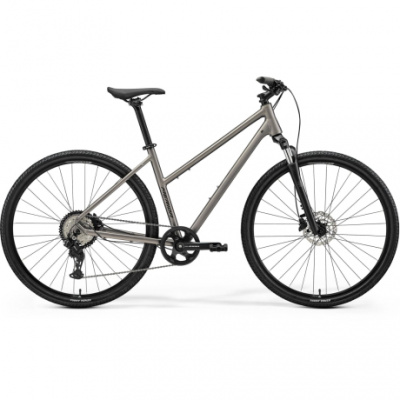
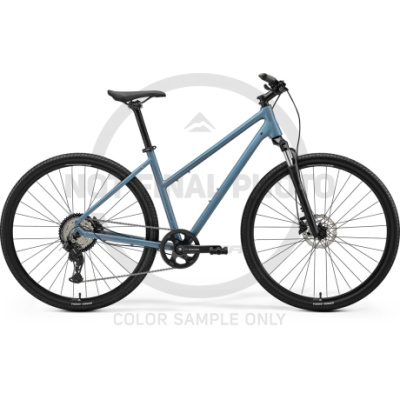

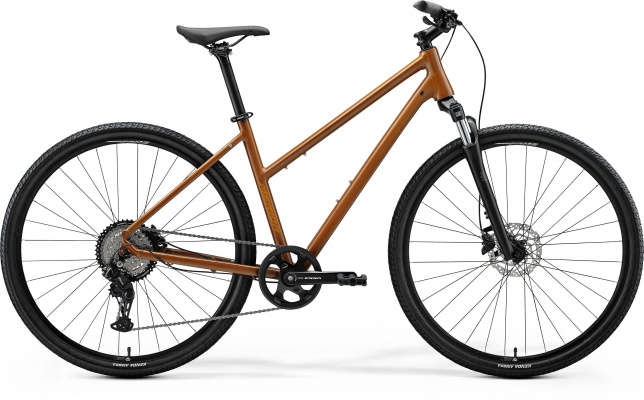
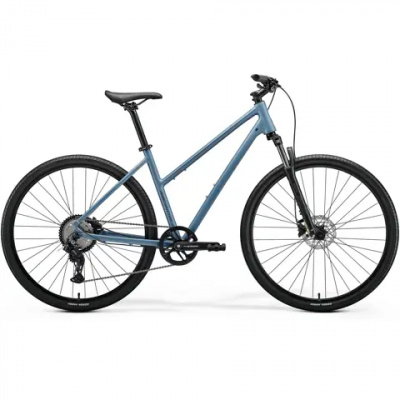
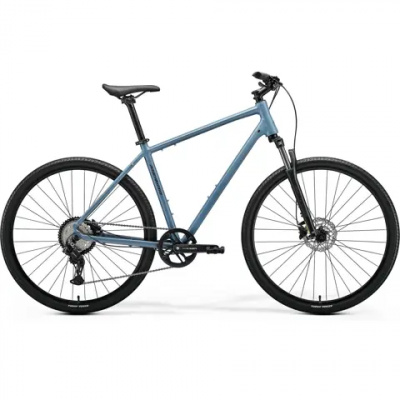
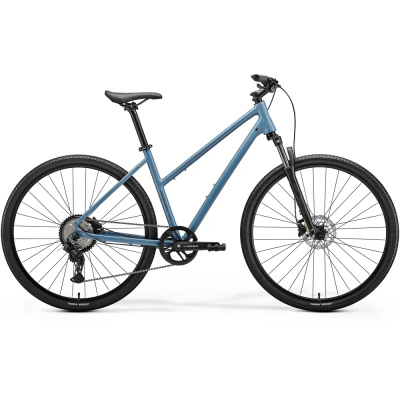
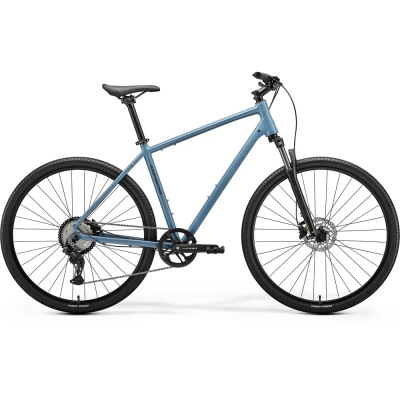
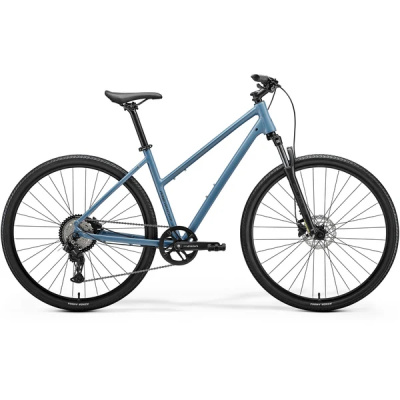
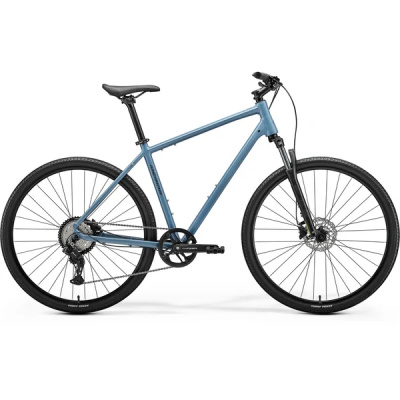
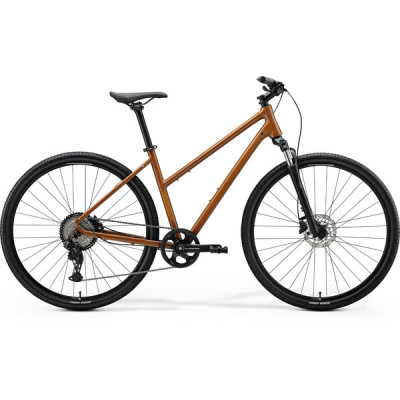
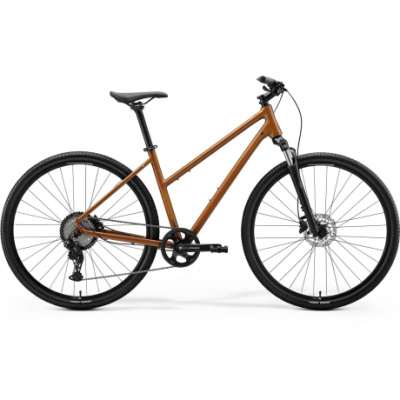
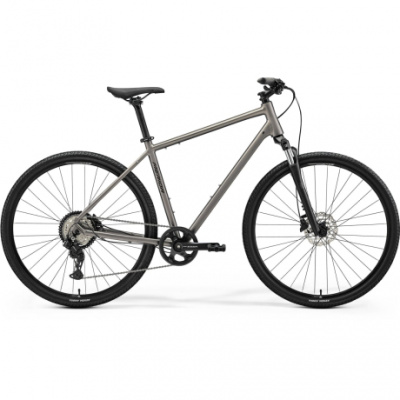
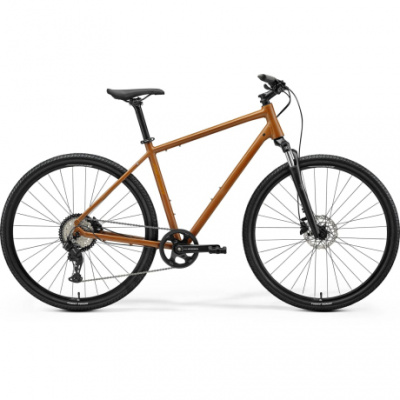
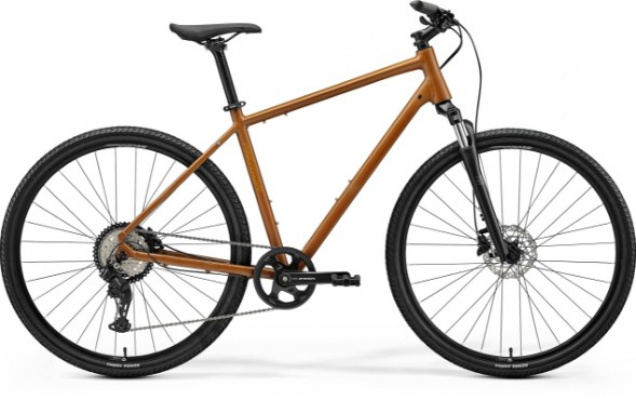
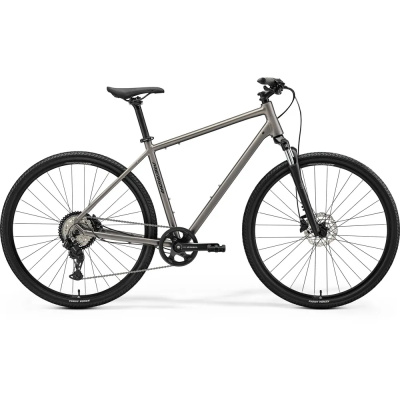
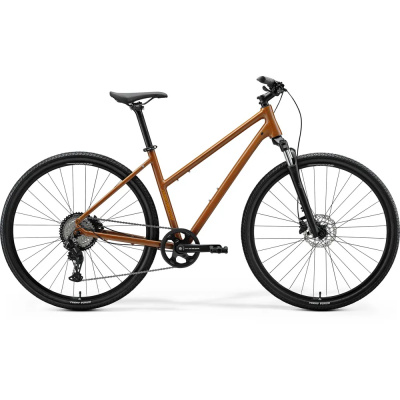
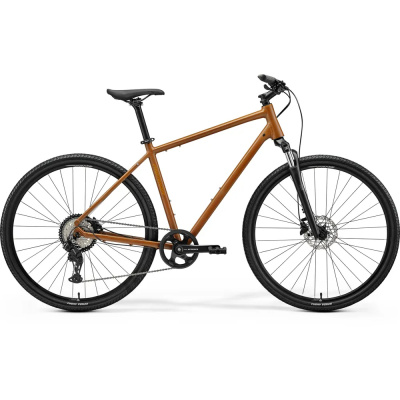
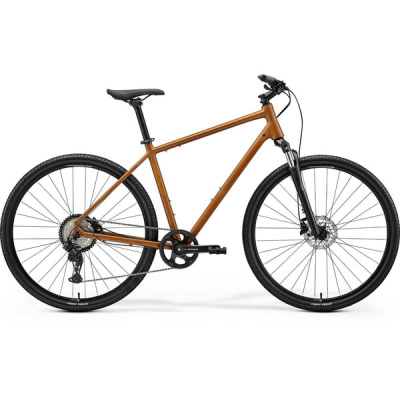
Prices and availability can change quickly. Delivery charges are not always included in listed prices.
Final price, stock status and delivery terms are set by retailer. We may receive a commission on purchases made.
Bikesy's Verdict
The Merida CROSSWAY 20 is a thoroughly sensible choice if you want one bike that'll handle your commute, your weekend rides, and the occasional gravel detour without fuss. It's comfortable, practical, and built to last, with hydraulic disc brakes, suspension where it counts, and enough mounting points to turn it into a proper workhorse when you need it. The componentry is honest and reliable rather than flashy, and the ride quality is exactly what you'd hope for: smooth, stable, and forgiving.
It's not a bike for chasing speed or tackling technical trails, but that's not the point. If you're after a versatile hybrid that prioritises comfort and utility over outright performance, the CROSSWAY 20 delivers exactly that. It's the kind of bike you'll ride regularly, load occasionally, and rely on completely - and that's worth more than a few grams saved or a flashier spec sheet.
Pros
- Comfortable upright geometry keeps you fresh on longer rides
- Hydraulic disc brakes deliver reliable stopping power in all conditions
- Suspension fork and seatpost smooth out rough roads and light trails
- Integrated mounts for racks, mudguards, and kickstand boost practicality
- Generous tyre clearance up to 50mm for comfort and versatility
- Internal cable routing keeps things tidy and protects cables
Cons
- Heavier than racier hybrids if you're chasing speed or climbing performance
- Componentry is functional rather than high-end; may appeal less to discerning upgraders
- Upright position trades outright efficiency for comfort on long, fast road rides
About the Merida CROSSWAY 20
The Merida CROSSWAY 20 sits squarely in that sweet spot where practicality meets proper ride quality. Built around a hydroformed RACELITE 61 aluminium frame with Merida's TFS III tube shaping, it's designed for riders who want one bike that'll handle the commute, the weekend café run, and the occasional towpath detour without complaint. The upright riding position keeps your back happy, the suspension fork and seatpost soak up the worst of Britain's crumbling tarmac, and there's enough mounting hardware to turn it into a proper load-lugger when you need it.
This isn't a bike chasing Strava segments or pretending to be a gravel racer. It's honest, versatile transport that prioritises comfort and utility over outright speed. The hydraulic disc brakes deliver dependable stopping power whether you're threading through rush-hour traffic or descending a damp country lane, and the gearing - typically a 1×8 or 3×8 setup depending on spec - covers everything from gentle gradients to steeper climbs without leaving you spinning out on the flat. Merida's internal cable routing keeps things tidy, and the frame's clearance for up to 50mm rubber means you can fit wider tyres if you're venturing further off the beaten track.
What you're getting is a well-sorted hybrid that knows its audience. It's built to be ridden regularly, loaded occasionally, and maintained easily. The componentry is functional rather than flashy - Shimano Tourney or ESSA drivetrains, Tektro or Shimano hydraulic brakes, SR Suntour suspension - but it's all chosen to deliver reliability at a sensible price point. If you're after a bike that'll slot into your life without drama, the CROSSWAY 20 makes a compelling case.
Merida CROSSWAY 20 geometry
Merida's comfort geometry puts you in a relaxed, upright posture that takes the strain off your lower back and wrists. You're sitting more over the bike than hunched into it, which feels natural from the first pedal stroke and stays comfortable even after a couple of hours in the saddle. The steering is stable and predictable - there's no twitchiness here - so you can hold a line confidently on straight roads or navigate tight urban spaces without second-guessing the front end.
The frame's proportions favour control and ease over outright agility. Longer chainstays and a relaxed head angle mean the bike tracks smoothly over rough surfaces and doesn't get unsettled by potholes or gravel. It's not a bike that'll carve tight switchbacks or respond to every weight shift like a race machine, but that's not the point. When you're carrying shopping, threading through traffic, or just enjoying a steady roll along a canal path, the CROSSWAY 20's geometry delivers exactly the kind of planted, reassuring feel you want.
The adjustable stem - typically a 90mm or 110mm unit with a 17-degree angle - lets you fine-tune your reach and bar height to suit your flexibility and preference. Combined with the 660mm or 680mm bars, you've got plenty of leverage for steering and a wide, stable platform that inspires confidence. It's a setup that prioritises comfort and control, and it does both jobs well.
Component choices & upgrades
The stock build on the CROSSWAY 20 is already well-judged for its intended use. The Shimano Tourney or ESSA drivetrain delivers reliable shifting across a wide gear range, the Tektro or Shimano hydraulic brakes offer strong, consistent stopping power, and the SR Suntour NEX fork with its lockout function gives you the option to firm things up on smoother roads. The 700×40C tyres strike a sensible balance between speed and comfort, and the suspension seatpost adds an extra layer of bump absorption that you'll appreciate on longer rides.
That said, if you're planning to spend serious time on rougher surfaces or you're a heavier rider, swapping the stock tyres for something wider - up to the frame's 50mm clearance - will boost comfort and grip. A set of quality mudguards and a rear rack are obvious additions if you're commuting year-round or touring, and Merida's integrated F-Mount, C-Mount, and K-Mount fittings make installation straightforward. The grips and saddle are decent enough, but they're personal contact points; if you're clocking up big miles, upgrading to something that suits your anatomy better is never a bad investment.
The drivetrain and brakes are solid for the price point, and unless you're pushing the bike beyond its design brief, there's little need to change them. If you do find yourself wanting sharper shifting or lighter weight, a move to a higher-tier Shimano groupset is possible, but you're probably better off enjoying the bike as it is and saving your money for a more performance-focused machine if that's where your riding takes you.
Where the Merida CROSSWAY 20 excels
The CROSSWAY 20 is outstanding at comfortable, practical everyday riding. If your typical week involves commuting through town, weekend rides on mixed surfaces, and the occasional trip to the shops with a pannier full of groceries, this bike will do it all without fuss. The upright position and suspension keep you fresh, the hydraulic brakes inspire confidence in traffic, and the mounting points mean you can kit it out for utility without resorting to bodges or aftermarket clamps.
It also handles light gravel and towpaths with composure. The 40mm tyres and suspension fork smooth out the bumps, and the stable geometry means you're not fighting the bike when the surface gets loose or rutted. It's not a dedicated gravel bike - you won't want to tackle technical singletrack or aggressive descents - but for fire roads, canal paths, and country lanes with a bit of dirt, it's more than capable.
Where it's less ideal is on long, fast road rides or hilly sportives. The upright position and heavier build mean you're working harder to maintain higher speeds, and the gearing, while adequate for most climbs, doesn't offer the range or precision of a dedicated road or endurance bike. If you're chasing KOMs or planning multi-day tours with big elevation, you'll want something lighter and more performance-oriented. But for the vast majority of riders who want one bike that'll handle everything from the daily commute to a Sunday potter, the CROSSWAY 20 hits the mark.
Merida CROSSWAY 20 FAQs
What is the Merida CROSSWAY 20 good for?
The CROSSWAY 20 excels at commuting, fitness riding, and recreational cycling on a mix of tarmac, light gravel, and towpaths. Its comfortable geometry, suspension, and practical mounting points make it ideal for everyday use, whether you're riding to work, running errands, or exploring country lanes at the weekend.
How much does the Merida CROSSWAY 20 weigh?
Complete bike weight sits between 13.4kg and 14.7kg depending on size and spec. That's not featherweight, but it's reasonable for a hybrid with suspension and practical features, and you won't notice the extra grams when you're enjoying the comfort and versatility.
Is the Merida CROSSWAY 20 suitable for gravel roads?
Yes, for light to moderate gravel. The 700×40C tyres and suspension fork handle unpaved paths, fire roads, and canal towpaths comfortably, and the frame clears up to 50mm rubber if you want more cushion and grip. It's not built for aggressive or technical off-road riding, but it'll cope with most gravel byways without drama.
What size Merida CROSSWAY 20 should I get?
Merida's sizing runs from XXS to XL, covering riders from under 149cm to over 188cm. Use your height as a starting point - S for 158 - 170cm, M for 168 - 179cm, L for 176 - 187cm - but if you're between sizes, consider whether you prefer a more upright position (size down) or a slightly longer reach (size up).
Can I fit pannier racks and mudguards to a Merida CROSSWAY 20?
Absolutely. The frame features Merida's F-Mount for mudguards, C-Mount for rear racks, and K-Mount for a kickstand, so you can kit it out for commuting or light touring without any hassle. It's designed with practicality in mind.
What is the difference between Merida CROSSWAY models?
The CROSSWAY range spans multiple models - 10, 20, 100, 300, and low step-through variants - with differences in component spec, frame features, and price. The CROSSWAY 20 sits in the mid-range, offering hydraulic disc brakes, suspension, and solid Shimano drivetrains at a sensible price point, while higher-numbered models typically feature lighter builds or upgraded componentry.
Is the Merida CROSSWAY 20 a mountain bike or a road bike?
Neither - it's a hybrid. It blends the upright comfort and practicality of a mountain bike with the efficiency and speed of a road bike, making it ideal for mixed-surface riding, commuting, and recreational use. It's not designed for technical trails or racing, but it'll handle a bit of everything in between.
What is the maximum tyre clearance on a Merida CROSSWAY 20?
The frame clears up to 700×50C (50mm) tyres, giving you plenty of room to fit wider, more comfortable rubber if you're venturing onto rougher surfaces or want extra cushioning for long rides. The stock 40mm tyres are a sensible starting point, but you've got options if you need them.
Key Features & Benefits
- SR Suntour NEX fork with lockout and 63mm travel: Absorbs bumps and vibrations on rough roads, with the option to lock out for efficient pedalling on smooth tarmac
- Hydraulic disc brakes with 160mm rotors: Confident, consistent stopping power in wet or dry conditions with minimal maintenance
- Integrated F-Mount, C-Mount, and K-Mount fittings: Easy installation of mudguards, racks, and kickstand for commuting and light touring without aftermarket bodges
- Suspension seatpost with 40mm travel: Extra layer of comfort that soaks up road chatter and keeps you fresh on longer rides
- 700×40C tyres with clearance up to 50mm: Balanced comfort and speed on tarmac, with room to fit wider rubber for gravel and rougher surfaces
Merida CROSSWAY 20 2024, 2023 & 2022 differences
The 2025 CROSSWAY 20 shifts towards a 1×8 drivetrain on some configurations, featuring a Shimano ESSA FC-U2001 40T crankset, Shimano ESSA RD-U2000-8 rear derailleur, and an 11-45T cassette. This simplifies the gearing compared to earlier models while maintaining a wide range. Tektro HD-M275 hydraulic brakes appear on some 2025 specs, though Shimano hydraulic options remain available.
The 2023 and 2024 models typically featured a 3×8 drivetrain with a Shimano TY301 crankset (48-38-28T), Shimano Tourney front derailleur (FD-TY710), Shimano Acera rear derailleur (RD-M360), and a Sunrace 11-32T cassette. Brakes were often Power DS100 hydraulic discs with Shimano RT10 rotors. The 2022 model shared very similar specifications to the 2023/2024 versions, with the same 3×8 setup and SR Suntour NEX HLO fork with 63mm travel.
Across all recent model years, the core design philosophy - comfort geometry, suspension fork and seatpost, hydraulic disc brakes, and integrated mounting points - has remained consistent. The shift to 1×8 gearing on some 2025 models is the most notable change, offering simpler operation and reduced maintenance while retaining adequate range for the bike's intended use.
Alternatives to Consider
Within Merida's own range, the CROSSWAY 10 offers a step down in spec and price if you're after the same comfort and practicality but can live with slightly simpler componentry. For a step up, the CROSSWAY 100 brings lighter weight and sharper shifting, though you'll pay more for the privilege. If you prefer a low step-through frame for easier mounting, Merida's CROSSWAY L variants deliver the same ride character with a more accessible design.
Beyond Merida, the Trek FX 2 Disc is a direct rival, offering similar comfort-focused geometry, hydraulic disc brakes, and practical mounting points at a comparable price. The Giant Escape 2 Disc is another strong contender, known for its smooth ride and reliable Shimano drivetrains, while the Specialized Sirrus 2.0 leans slightly sportier with a more road-oriented feel but retains hybrid versatility. If you're drawn to a more upright position and wider tyres, the Cannondale Quick 4 delivers a comfortable, stable ride with a focus on urban practicality. For riders who want a bit more off-road capability, the Marin Fairfax 2 offers similar hybrid comfort with slightly beefier tyres and a more adventure-ready vibe.
Reviews
Comfort dominates the ride experience. The upright position and suspension fork combine to deliver a smooth, forgiving feel that's immediately noticeable on rough tarmac and light gravel. When you're threading through traffic or rolling along a towpath, the bike feels planted and reassuring, never twitchy or unsettled. Hydraulic disc brakes inspire confidence - modulation is good, power is ample, and they work consistently in the wet.
Gearing covers the bases without drama. Whether it's a 1×8 or 3×8 setup, you've got enough range for moderate climbs and flat cruising, though the ratios favour steady progress over outright speed. Shifting is reliable if not lightning-quick, and the lockout on the fork is a welcome feature when you want to firm things up on smoother roads. Because the bike prioritises comfort over performance, you're not fighting a sluggish front end or vague steering - it just gets on with the job.
Practicality shines through. Mounting points for racks and mudguards are well-placed, and the frame's clearance for wider tyres means you can tailor the bike to your terrain. We appreciate the suspension seatpost's contribution to all-day comfort, and the internal cable routing keeps things tidy. Weight is noticeable if you're hauling the bike upstairs, but on the road it's not a hindrance - just a reminder that this is built for durability and utility, not racing.
Trail manners with commuter lungs. The CROSSWAY 20 won't set your pulse racing on a fast club ride, but it'll get you there comfortably, carry your kit without complaint, and handle the detour home via the gravel path. That's exactly what it's designed to do, and it does it well.
Full Specification
| Spec | Value |
|---|---|
| Frame Material | RACELITE 61 Aluminium (6061, hydroformed and technoformed) |
| Frame Construction | TFS III (Techno Forming System), double-butted tubing |
| Frame Features | Internal cable routing, F-Mount (mudguards), C-Mount (racks), K-Mount (kickstand) |
| Tyre Clearance | 700x50C |
| Bottom Bracket | BSA threaded |
| Rear Axle | 135x9mm |
| Fork | SR Suntour NEX HLO |
| Fork Travel | 63mm |
| Fork Adjustments | Coil spring with lockout |
| Drivetrain | 1x8 or 3x8 speed (varies by model variant) |
| Shifters | Shimano ST-EF505 or Shimano ESSA SL-315-8R |
| Rear Derailleur | Shimano RD-M360 (Acera) or Shimano ESSA RD-U2000-8 |
| Front Derailleur | Shimano FD-TY710 (Tourney) or Shimano FD-TY601 |
| Crankset | Shimano TY301 (48-38-28T) or Shimano ESSA FC-U2001 (40T) |
| Crank Length | 170mm (XXS-S), 175mm (M-XL) |
| Cassette | Sunrace CSM668 11-32T (3x8) or Shimano CS-HG400-8 11-45T (1x8) |
| Chain | KMC Z8.1 or KMC Z8.3 |
| Brakes | Hydraulic disc |
| Brake Calipers | Tektro M275 or Shimano MT200 |
| Brake Levers | Shimano ST-EF505 |
| Rotors | 160mm, Centerlock |
| Rims | MERIDA CC, 17mm inner width, aluminium |
| Hubs (Front) | Shimano TX505, 100x9mm |
| Hubs (Rear) | Shimano TX505, 135x9mm |
| Spokes | Black steel |
| Tyres (Front) | MERIDA K1171, 700x40C, wire bead |
| Tyres (Rear) | MERIDA K1171, 700x40C, wire bead |
| Handlebar Width | 660mm or 680mm |
| Handlebar Rise | 10mm or 25mm |
| Handlebar Material | Aluminium |
| Stem Length | 90mm or 110mm |
| Stem Angle | 17° |
| Headset | MERIDA M2345 |
| Seatpost Diameter | 27.2mm |
| Seatpost Travel | 40mm suspension travel |
| Saddle | MERIDA Cross Sport |
| Pedals | VP VPE-891 |
| Weight (Approx) | 13.4 - 14.7 kg |