

Merida CROSSWAY 10-V
Comfortable, practical hybrid that smooths rough roads and tackles hills without fuss - ideal for commuting, leisure, and light exploration.
- Upright comfort geometry for relaxed all-day riding
- 63mm suspension fork and 40mm seatpost smooth rough roads
- 21-speed Shimano drivetrain tackles hills and flats
- Mounts for racks, mudguards, and kickstand ready
- 700×40C tyres: fast tarmac, confident on gravel
- Adjustable stem lets you dial in handlebar height
Merida CROSSWAY 10-V Deals
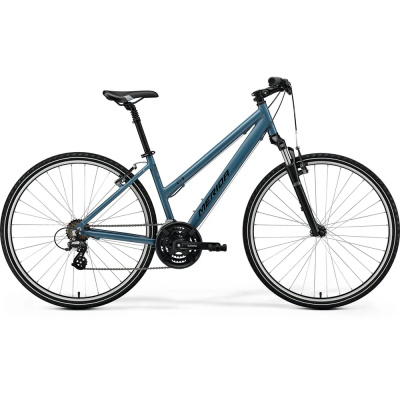
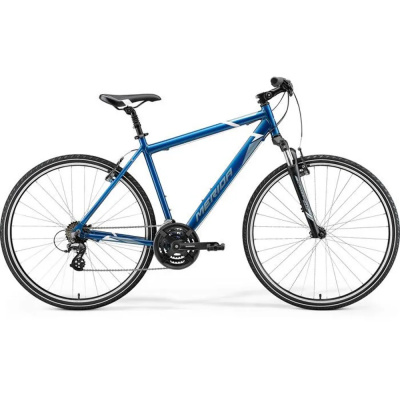
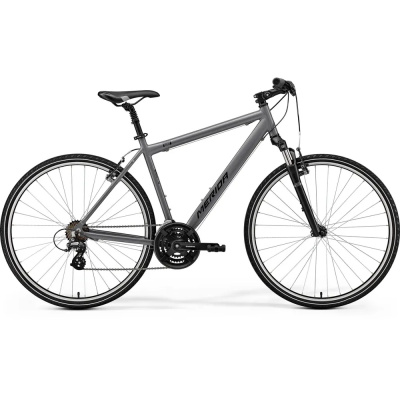
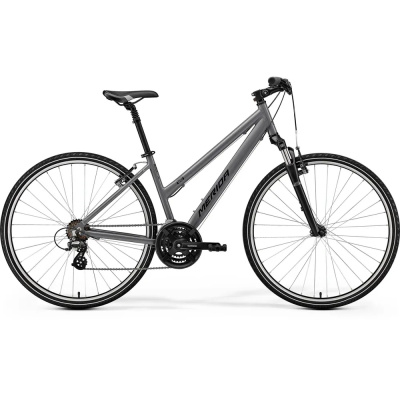
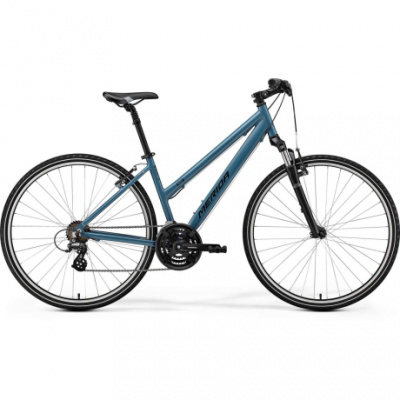
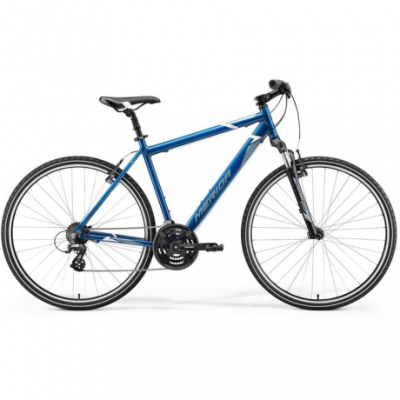
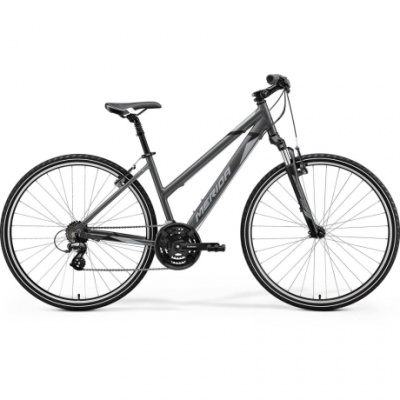
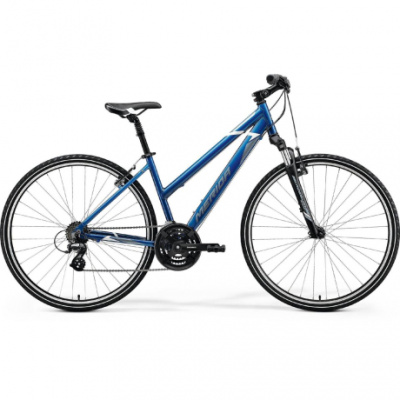

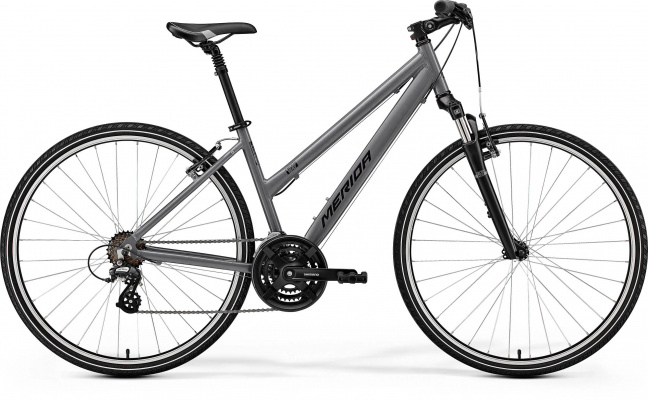
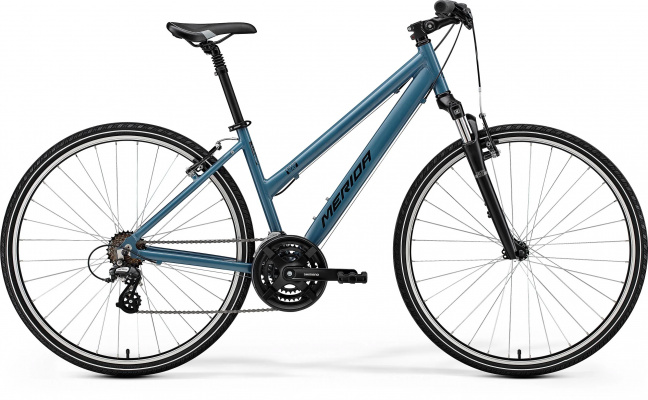
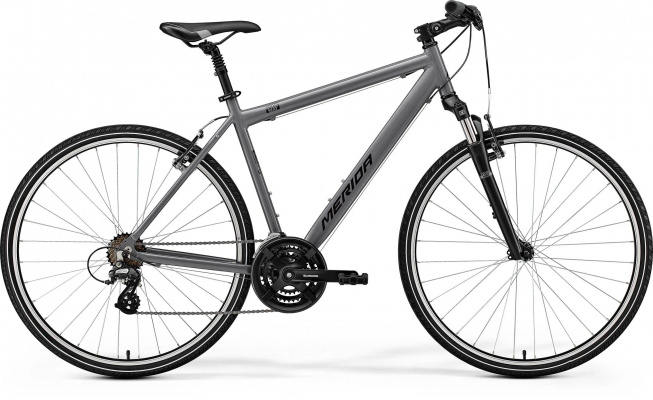
Prices and availability can change quickly. Delivery charges are not always included in listed prices.
Final price, stock status and delivery terms are set by retailer. We may receive a commission on purchases made.
Bikesy's Verdict
The Merida CROSSWAY 10-V is a bike that knows exactly what it's for and does it well. It's not trying to be the fastest, lightest, or most exciting hybrid on the market - it's trying to make everyday riding comfortable, practical, and enjoyable, and it succeeds. The upright position, dual suspension, and wide gear range mean you can ride for hours without discomfort, tackle hills without suffering, and explore rough roads or gravel paths without getting beaten up. The mounts for racks and mudguards turn it into a proper utility machine, and the stable handling inspires confidence whether you're loaded up with shopping or cruising unladen.
The V-brakes are the obvious weak point if you're riding year-round in wet conditions, and the weight means it's not going to keep up with sportier hybrids or road bikes on fast group rides. But if you're after a single bike that'll handle commuting, leisure rides, light touring, and the occasional gravel detour without costing a fortune to buy or maintain, the CROSSWAY 10-V delivers exactly that. It's a bike that rewards curiosity and practicality over speed and performance - and for a lot of riders, that's exactly the right trade-off.
Pros
- Genuinely comfortable upright position and dual suspension smooth rough roads
- Wide 21-speed range makes hills manageable without knee-grinding
- Mounts for racks, mudguards, and kickstand turn it into a practical workhorse
- Stable, predictable handling suits mixed surfaces and loaded riding
- Good value for a versatile hybrid that does everyday riding well
Cons
- V-brakes lose bite in wet conditions; disc brakes would suit year-round UK commuting better
- 14.4kg weight means it's slower on climbs than lighter hybrids if you're chasing fitness
- Front shifter can feel stiff, and entry-level drivetrain lacks the crispness of higher-tier kit
About the Merida CROSSWAY 10-V
The Merida CROSSWAY 10-V sits squarely in that sweet spot where practicality meets proper comfort - a hybrid that doesn't pretend to be a road bike in disguise. Built around a double-butted 6061 aluminium frame shaped through Merida's technoforming process, it's light enough to pedal without feeling like a chore yet robust enough to carry panniers, mudguards, and the weekly shop without complaint. The 'V' in the name tells you everything about the braking: Promax V-brakes front and rear, a choice that keeps weight down and maintenance simple, though you'll want to remember their limits when the roads turn slick.
This isn't a bike chasing Strava segments or pretending it belongs on singletrack. Instead, it's designed for the rider who wants a single machine that'll handle the commute, the Saturday café loop, the towpath detour, and the occasional gravel byway without needing a support van. The upright position puts your weight over the saddle rather than the bars, and both the SR Suntour NEX fork (63mm travel, lockout included) and the suspension seatpost (40mm of squish) work together to take the sting out of potholes, kerb drops, and rutted bridleways. You're not going to mistake it for a full-suspension trail bike, but you will arrive feeling fresher than you would on a rigid hybrid.
Merida's pitched this at riders who value versatility over specialisation - people who'd rather own one capable bike than three niche ones gathering dust. The 21-speed Shimano drivetrain (48-38-28 triple up front, 14-28 seven-speed out back) gives you enough range to spin up steep climbs without grinding your knees to dust, and the 700×40C tyres strike a sensible balance between rolling speed on tarmac and grip when the surface turns to compacted gravel or damp leaves. It's a bike that rewards curiosity: take the long way home, explore that bridleway you've been eyeing, or load it up for a weekend away. The CROSSWAY 10-V won't complain.
Merida CROSSWAY 10-V geometry
The geometry here is all about keeping you comfortable for hours rather than carving tight corners at speed. The head angle sits around 71 degrees on the smaller sizes, slackening slightly as you move up the range - steep enough to keep steering responsive in traffic but relaxed enough that the bike doesn't feel twitchy when you're cruising. The reach figures are short by modern standards, which means you're sitting more upright, chest open, eyes naturally scanning ahead rather than staring at your front tyre. Stack is generous, too, so even if you're not particularly flexible, you won't feel folded in half.
Chainstays hover around the 410 - 430mm mark depending on size, which gives the bike a stable, planted feel rather than a nervous, darty one. The wheelbase stretches out accordingly - over a metre on most sizes - so the CROSSWAY 10-V tracks straight and true on rough surfaces and doesn't get unsettled by a gust of wind or a passing lorry. Bottom bracket drop is moderate, keeping your centre of gravity low enough for confidence without dragging pedals through corners (not that you'll be railing berms on this). The result is a bike that feels predictable and reassuring: you point it where you want to go, and it goes there without drama.
Standover clearance is generous thanks to the sloping top tube, and Merida offers a low step-through frame option if you prefer easier mounting and dismounting - handy if you're stopping frequently in town or carrying a load. The adjustable stem (100mm across all sizes, 25.4mm diameter) lets you fine-tune bar height to suit your back, shoulders, and preferred riding style. It's a small detail that makes a big difference over the course of a long ride or a week of commuting.
Component choices & upgrades
The stock build is sensibly sorted for the bike's intended use. Shimano's TY301 triple crankset and ST-EF500 shifters are entry-level, sure, but they're also bombproof and easy to service - qualities that matter more than a few grams when you're using the bike daily. The RD-M310 rear mech and FD-TY510 front mech shift reliably if not with the crispness of higher-tier kit, and the 14-28 cassette gives you enough range for most UK terrain. The KMC chain is durable, and the Joytech hubs spin smoothly enough without costing a fortune to replace if they eventually wear out.
Where the CROSSWAY 10-V shows its budget-conscious roots is in the Promax MTV-117A V-brakes. They work perfectly well in dry conditions - progressive, easy to modulate, simple to adjust - but they lose bite when the rims get wet, and they'll chew through brake pads faster if you're riding in gritty, damp conditions regularly. If you're commuting year-round in British weather, a swap to mechanical disc brakes (the frame has the mounts) would be the single most impactful upgrade, though it's not a cheap one. Otherwise, decent brake pads and keeping your rims clean will get you a long way.
The Merida-branded 700×40C tyres are adequate for mixed surfaces but nothing special; if you're spending more time on gravel or towpaths, a set of tyres with a bit more tread - something like a Schwalbe Marathon or Continental Contact - will give you more confidence and puncture protection. The suspension seatpost does its job, but if you're a heavier rider or carrying a load, you might find it bottoms out more than you'd like; a firmer elastomer or a quality aftermarket post (like a Cane Creek Thudbuster) would smooth things out further. The saddle is comfortable enough for shorter rides, but saddles are personal - if you're planning longer days, budget for something that suits your sit bones.
The adjustable stem is a nice touch, but if you want more precise fit, a fixed-length stem in your preferred angle will feel stiffer and more direct. The grips are basic; if you're doing longer rides, ergonomic grips with palm support will reduce hand fatigue. None of these upgrades are urgent - the bike works as-is - but they're worth considering if your riding evolves or you find yourself using the CROSSWAY 10-V more than you expected.
Where the Merida CROSSWAY 10-V excels
This bike is outstanding at one thing above all: making everyday riding comfortable and practical. If your typical week involves commuting through town, nipping to the shops, meeting friends for a café ride, and maybe exploring a canal path or quiet country lane at the weekend, the CROSSWAY 10-V handles all of it without fuss. The upright position means you can see traffic, pedestrians, and potholes clearly, and the suspension fork and seatpost mean you're not rattled to bits by rough tarmac or gravel. The wide gear range lets you tackle hills without suffering, and the mounts mean you can fit a rack, panniers, and mudguards to turn it into a proper utility machine.
It's also excellent for riders who want one bike that does everything reasonably well rather than owning multiple specialists. You can ride it to work on Monday, take it on a 50km loop on Saturday, and use it to carry a week's shopping on Sunday. It's not the fastest, lightest, or most exciting bike you'll ever ride, but it's dependable, comfortable, and versatile - qualities that matter more in real life than on a spec sheet.
Where it's less ideal is anywhere speed or performance matters. The weight (just over 14kg) means it's not going to keep up with road bikes on club rides, and the V-brakes mean you'll need to plan your braking earlier in wet conditions. The suspension fork adds comfort but also a bit of bob when you're pedalling hard out of the saddle, even with the lockout engaged. And while the 700×40C tyres are fine for light gravel and towpaths, they're not aggressive enough for proper off-road trails or muddy bridleways - this isn't a gravel bike or a mountain bike in disguise.
If you're after something racier, lighter, or more capable off-road, you'll want to look elsewhere. But if you're after a bike that'll get you where you need to go in comfort, carry your stuff, and not cost a fortune to run, the CROSSWAY 10-V delivers exactly that.
Merida CROSSWAY 10-V FAQs
What is the best tyre pressure for a Merida CROSSWAY 10-V?
Start around 50 - 60 psi for the 700×40C tyres and adjust based on your weight and the surface you're riding. Lower pressure (closer to 50 psi) gives more comfort and grip on rough roads or gravel; higher pressure (closer to 60 psi) rolls faster on smooth tarmac. If you're carrying a load, add 5 - 10 psi to prevent pinch flats.
Can I fit pannier bags to a Merida CROSSWAY 10-V?
Yes, the frame has integrated mounts for a rear rack, and once you've fitted one, you can hang panniers without any issues. The stable geometry and robust frame handle a load well, making this a solid choice for commuting or light touring. Just make sure your rack is rated for the weight you're planning to carry.
How much does a Merida CROSSWAY 10-V weigh?
The bike weighs approximately 14.4kg, which is typical for a comfort-focused hybrid with a suspension fork and seatpost. It's not a lightweight, but the extra weight comes from features that make everyday riding more comfortable and practical rather than unnecessary bulk.
What is the difference between the Merida CROSSWAY 10-V and the CROSSWAY 300?
The CROSSWAY 300 sits higher in the range with better components - typically a more refined drivetrain, disc brakes instead of V-brakes, and lighter wheels. The 10-V prioritises value and simplicity, making it a better choice if you're on a budget or prefer easier maintenance, while the 300 suits riders who want more performance and all-weather braking.
Is the Merida CROSSWAY 10-V good for long-distance touring?
It's capable of light touring - weekend trips with moderate loads on decent surfaces - but it's not designed for serious expedition touring. The V-brakes and entry-level drivetrain are fine for shorter distances, but for multi-day tours with heavy panniers, you'd want disc brakes, a wider gear range, and more robust wheels. Think of it as a bike for exploring rather than crossing continents.
Can I upgrade the brakes on a Merida CROSSWAY 10-V to disc brakes?
The frame has mounts for a rear rack and mudguards, but whether it has disc brake mounts depends on the specific model year and variant. Some CROSSWAY models do, some don't. If yours doesn't have the mounts, retrofitting disc brakes isn't practical. If it does, you'll need new wheels (with disc hubs), brake calipers, levers, and cables - it's a significant upgrade cost-wise, so weigh that against simply buying a disc-equipped model.
What size Merida CROSSWAY 10-V should I buy for my height?
Merida's sizing runs roughly as follows: XXS for 147 - 155cm, XS for 155 - 165cm, S for 165 - 170cm, M for 170 - 180cm, L for 175 - 185cm, and XL for 180 - 190cm. If you're between sizes, go smaller for a more upright, manoeuvrable feel or larger for more stability and a slightly longer reach. The adjustable stem gives you some wiggle room to fine-tune fit once you're on the bike.
Key Features & Benefits
- 63mm SR Suntour NEX fork with lockout and 40mm suspension seatpost: Absorbs potholes, kerb drops, and rough gravel so you arrive fresher and less rattled
- Shimano 21-speed drivetrain (48-38-28 triple, 14-28 cassette): Wide gear range lets you spin up steep climbs and cruise fast on the flat without grinding your knees
- Integrated mounts for rear rack, mudguards, and kickstand: Transforms the bike into a practical commuter or tourer ready to carry shopping, panniers, or camping kit
- Adjustable stem and upright comfort geometry: Lets you fine-tune handlebar height and keeps your weight over the saddle for relaxed, pain-free riding
- 700×40C tyres with clearance up to 50C: Fast on tarmac, confident on gravel and towpaths, with room to fit wider rubber if you explore rougher routes
Merida CROSSWAY 10-V 2024, 2023 & 2022 differences
The 2025 model carries over the core specification from 2024 with minimal changes: the same 6061 aluminium frame, SR Suntour NEX fork, Shimano 21-speed drivetrain, and Promax V-brakes remain in place. Some sources suggest a 'Crossway 10' variant (without the 'V' suffix) may have gained mechanical disc brakes for 2025, but the 10-V designation continues to denote the V-brake model, maintaining consistency with previous years.
The 2024 model itself was largely unchanged from 2023, retaining the 700c aluminium frame, suspension fork and seatpost, and the same Shimano TY-series components. Reviewers in 2023 noted the bike's dependable comfort-boosting features and wide gear range, though they also flagged the weight as a trade-off for the added suspension and robust build.
The 2022 model shared the same fundamental design and component choices, with Promax rim brakes and the Shimano triple drivetrain. Geometry data from 2021 shows the comfort-focused angles and dimensions have remained consistent across recent years, suggesting Merida has settled on a proven formula rather than chasing annual updates. The low step-through frame option has been available since at least 2020, when the comfort-focused design was first introduced.
Alternatives to Consider
Within Merida's own range, the CROSSWAY 300 steps up with disc brakes, a more refined Shimano drivetrain, and lighter wheels - worth the extra outlay if you're riding year-round in wet conditions or want sharper performance. If you prefer a lower step-through frame for easier mounting, the CROSSWAY L 10-V SE shares the same comfort-focused spec but with a more accessible frame design. For something sportier, Merida's SPEEDER 100 drops the suspension and adds a more aggressive geometry, turning the hybrid formula towards fitness and speed rather than all-day comfort.
Cross-brand, the Giant Escape 3 is a direct rival: similar comfort geometry, V-brakes, and a wide gear range, though Giant's frame tends to feel slightly stiffer and more responsive if you're pushing the pace. The Trek FX 2 Disc offers hydraulic disc brakes and a slightly lighter build at a comparable price point, making it a smarter choice if wet-weather braking matters to you. Specialized's Sirrus 2.0 leans more towards fitness riding with a firmer ride and no suspension, so it's faster on smooth roads but less forgiving on rough ones. For a more upright, utility-focused option, the Ridgeback Meteor matches the CROSSWAY's comfort and practicality but often comes with disc brakes as standard. Finally, the Boardman HYB 8.6 offers a similar comfort-hybrid formula with slightly better components and disc brakes, though availability can be patchy.
Reviews
Comfort is the defining trait here, and it's not just marketing talk. The combination of the SR Suntour NEX fork and the 40mm-travel suspension seatpost genuinely smooths out rough tarmac, gravel tracks, and potholed urban streets in a way that rigid hybrids simply can't match. Riders consistently note arriving less fatigued after longer rides, and the upright position means you're not hunched over the bars with aching shoulders after an hour in the saddle.
Handling is stable and confidence-inspiring rather than quick or playful. The longer wheelbase and relaxed head angle mean the bike tracks straight and true on rough surfaces, doesn't get flustered by crosswinds or passing traffic, and feels planted when you're carrying a load. It's not a bike that rewards aggressive cornering or sprinting out of junctions, but that's not what it's built for - predictability and comfort trump excitement here, and most riders appreciate that trade-off.
The Shimano 21-speed drivetrain delivers exactly what you'd expect from entry-level kit: reliable, simple, and easy to service, but not particularly refined. Shifts are functional rather than crisp, and the front mech can be a bit clunky when you're moving between the triple chainrings. That said, the wide gear range is genuinely useful - the 28-tooth inner ring makes steep climbs manageable without destroying your knees, and the 48-tooth outer gives you enough top-end speed for flat roads and gentle descents. It's a practical spread that suits mixed terrain and varied fitness levels.
Braking is where opinions split. The Promax V-brakes work well in dry conditions - progressive, easy to modulate, and simple to adjust - but they lose bite noticeably when the rims get wet, and they chew through pads faster if you're riding in gritty, damp conditions regularly. For fair-weather riding or occasional use, they're perfectly adequate. For year-round commuting in British weather, they're the bike's weakest link, and several riders have flagged them as the first upgrade they'd make.
Weight is noticeable if you're used to lighter bikes or trying to keep up with faster riders. At just over 14kg, the CROSSWAY 10-V isn't sluggish, but it's not quick either - you'll feel the extra mass on climbs and when accelerating from a standstill. The flip side is that the bike feels solid and planted rather than skittish, and the weight comes from features (suspension, robust frame, practical mounts) that add real-world value rather than unnecessary bulk. Practicality wins over speed here, and most riders seem happy with that compromise.
Full Specification
| Spec | Value |
|---|---|
| Frame Material | Aluminium 6061, double-butted, technoformed |
| Frame Design | Comfort geometry, sloping top tube, step-through option available |
| Frame Features | Mounts for rear rack, mudguards, kickstand; internal cable routing |
| Bottom Bracket | BSA, threaded |
| Rear Axle | 135×9 mm QR |
| Fork | SR Suntour NEX, coil |
| Fork Travel | 63 mm |
| Fork Adjustments | Lockout function |
| Drivetrain | Shimano 3×7 (21-speed) |
| Shifters | Shimano ST-EF500 |
| Front Derailleur | Shimano FD-TY510 or FD-TY610 |
| Rear Derailleur | Shimano RD-M310 |
| Crankset | Shimano TY301, 48 - 38 - 28 teeth |
| Crank Length | 170 mm (XXS/S/M), 175 mm (M/L and up) |
| Cassette | Shimano MF-TZ500 or CS-HG200-7, 7-speed, 14 - 28 teeth or 12 - 32 teeth |
| Chain | KMC NS8 or KMC Z8.3 or Sunrace CNM84 |
| Brakes | V-brakes (rim) |
| Brake Calipers | Promax MTV-117A |
| Wheels | 700c |
| Rims | MERIDA CC, 17 mm internal width |
| Spokes | Steel UCP |
| Hubs (Front) | Joytech JY-751DSE |
| Hubs (Rear) | Joytech JY-752DSE |
| Tyres (Front) | MERIDA K1171, 700×40C |
| Tyres (Rear) | MERIDA K1171, 700×40C |
| Tyre Clearance | 700×42C or 700×50C |
| Handlebar | MERIDA CC, steel, 620 mm wide, 30 mm rise |
| Stem | MERIDA TK, aluminium, adjustable, 100 mm length, 25.4 mm clamp diameter |
| Headset | FSA TH888 |
| Seatpost | MERIDA TK, 27.2 mm diameter, suspension, 40 mm travel, 13 mm setback |
| Saddle | MERIDA Cross Sport |
| Pedals | VP VPE-891 |
| Weight (Approx) | 14.43 kg |