
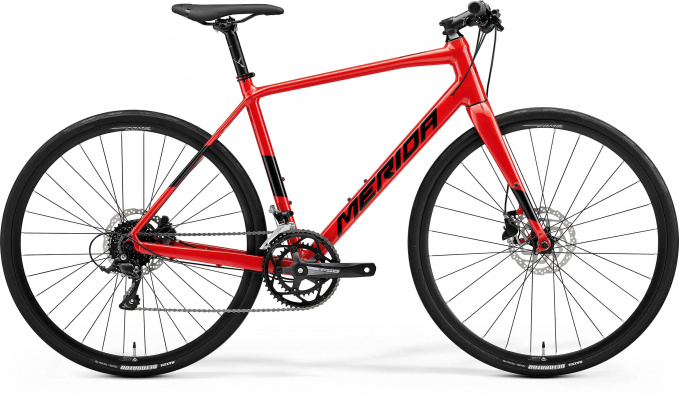
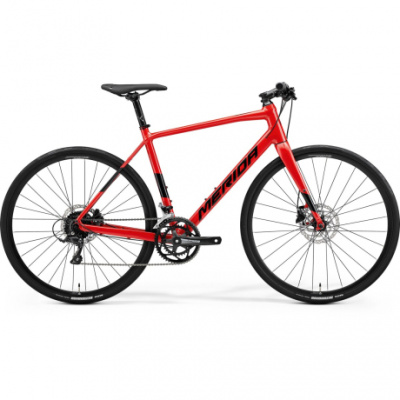
Merida SPEEDER 200
Fast, practical flat-bar road bike that turns commutes into training and handles fitness rides, errands, and light gravel without fuss.
- Speeder Lite III aluminium frame: light, stiff, practical
- Carbon fork soaks up road chatter, sharpens handling
- Tektro hydraulic discs: confident wet-weather stopping
- Shimano Sora 2×9: wide range for hills and flats
- Mounts for mudguards, racks, kickstand: proper utility
- 700×35C clearance: room for comfort or light gravel
Merida SPEEDER 200 Deals


Prices and availability can change quickly. Delivery charges are not always included in listed prices.
Final price, stock status and delivery terms are set by retailer. We may receive a commission on purchases made.
Bikesy's Verdict
The Speeder 200 is the bike you'll actually ride. It's quick enough to make commuting feel like training, comfortable enough to stretch a fitness loop into an all-day adventure, and practical enough to handle the weekly shop without complaint. Merida's nailed the balance between road-bike efficiency and flat-bar accessibility, wrapping it in a spec that's honest, dependable, and ready to rack up serious miles.
If you want one bike that does everything - commute, fitness, light gravel, weekend errands - without forcing you to choose between speed and practicality, the Speeder 200 delivers. It's not the lightest or the raciest, but it's the one you'll reach for, day after day, because it just works.
Pros
- Fast, efficient platform with proper road-bike speed and light weight
- Flat bar and upright position: confident control in traffic and on long rides
- Hydraulic discs and carbon fork: reliable stopping, smooth ride quality
- Practical mounts for mudguards, racks, kickstand - ready for real-world use
- Wide gear range and 35C tyre clearance suit varied terrain and fitness goals
Cons
- Stock tyres can feel skittish in the wet; grippier rubber helps
- Quick-release axles rather than thru-axles if you prefer the latest standards
- Flat bar limits hand positions and aero tuck on fast group rides
About the Merida SPEEDER 200
The Speeder 200 sits in that sweet spot where road-bike efficiency meets flat-bar practicality. You get the speed and lightness of a proper tarmac machine - Speeder Lite III aluminium frame, carbon fork, 700c wheels - but with the upright control and intuitive shifting that makes threading through traffic or tackling a long fitness loop feel natural rather than nerve-wracking. It's a bike that doesn't ask you to choose between commuting on Monday and chasing personal bests on Saturday; it'll do both without complaint.
Merida's built the Speeder 200 around a philosophy of versatility without compromise. The frame carries mounts for mudguards, racks, and a kickstand, so you can load it up for the weekly shop or strip it down for a fast evening blast. Shimano Sora shifting and Tektro hydraulic discs bring mid-tier reliability and all-weather confidence, while the carbon fork takes the sting out of rough tarmac and keeps the front end responsive. It's a bike that rewards you for putting in the miles, whether those miles are racked up in lycra or jeans.
We've spent time examining the Speeder 200 at shows and in showrooms, poring over the spec, and tracking the feedback from riders who've clocked serious hours on it. What emerges is a picture of a bike that's faster than most hybrids, more practical than most road bikes, and more comfortable than either when you're settling into a rhythm. It's not trying to be a race machine or a gravel bruiser - it's aiming to be the bike you actually reach for, day after day.
Merida SPEEDER 200 geometry
The Speeder 200's geometry leans towards stability and comfort without sacrificing forward momentum. Extended reach across the size range means you're not cramped over the bars; instead, you get a slightly stretched-out posture that opens your chest and lets you breathe deeply on longer efforts. The head angle is calm enough to inspire confidence when you're carving through roundabouts or navigating potholed lanes, yet the bike doesn't feel sluggish when you stand on the pedals and accelerate.
Stack height keeps you upright - more so than a drop-bar road bike, less so than a sit-up-and-beg hybrid. That middle ground translates to a riding position where you can see over cars and hedges, react quickly to hazards, and still tuck down a little when the wind picks up or the road tilts downhill. The flat handlebar puts brake levers and shifters exactly where your hands expect them, and the 600 mm width offers leverage without feeling like you're wrestling a tractor.
Across the six frame sizes - XXS through to XL - Merida adjusts stem length and crank arm length to keep the fit proportional. Shorter riders get an 80 mm stem and 170 mm cranks; taller riders move up to 110 mm and 175 mm respectively. The result is a bike that feels balanced whether you're 155 cm or 195 cm tall, with none of the toe-overlap or twitchiness that can plague smaller frames. Quick-release axles (100 mm front, 135 mm rear) keep wheel changes simple, and the BSA bottom bracket standard means you're not locked into proprietary parts when it's time for maintenance.
Component choices & upgrades
Out of the box, the Speeder 200 is well sorted. Shimano Sora offers nine speeds at the back and a 50-34 compact double up front, giving you a 34-tooth bailout gear for steep climbs and a 50-11 top end for when gravity's on your side. The FSA Tempo crankset is stiff enough to transmit your effort cleanly, and the KMC chain runs quietly through the Shimano CS-HG200 cassette. It's a drivetrain that'll take you from beginner to confident rider without feeling like a limitation.
Tektro M275 hydraulic brakes with 160 mm Shimano rotors deliver progressive, fade-free stopping power. They're not the lightest or most exotic option, but they work - properly, reliably, in the wet - and that's what matters when you're descending a slick hill or braking hard for a junction. The Merida Comp SL rims are tubeless-ready, so if you want to shed a bit of weight and gain puncture resistance, a tubeless conversion is straightforward. The stock Maxxis Detonator tyres in 700×32C are fast-rolling and durable, though some riders find them a touch skittish in the wet; swapping to a grippier compound or stepping up to 35 mm rubber (the frame's maximum clearance) will boost confidence on damp roads or light gravel.
If your riding evolves - longer distances, rougher surfaces, or faster group rides - consider a saddle upgrade first; contact points matter more than grams. A set of lighter wheels will sharpen acceleration and climbing, but the stock Merida/Joytech/Shimano setup is honest and dependable. Unless you're chasing marginal gains or have specific fit needs, the Speeder 200's factory build will serve you well for thousands of miles.
Where the Merida SPEEDER 200 excels
The Speeder 200 is outstanding as a fast commuter and fitness bike. If your typical ride involves a mix of smooth tarmac, the occasional pothole, and perhaps a stretch of towpath or compacted gravel, this bike will feel like it was designed for exactly that. The flat bar gives you instant control in traffic, the hydraulic discs let you brake late and confidently, and the geometry keeps you comfortable whether you're spinning easy or pushing tempo. It's also brilliant for riders who want one bike to handle weekday commutes and weekend fitness loops without needing to swap machines or compromise on speed.
It does well on longer rides, too. The carbon fork and relatively relaxed position mean you can rack up 50 or 60 miles without your hands going numb or your lower back staging a protest. The gear range is wide enough for rolling terrain, and the frame's mounts mean you can bolt on a rack and turn it into a light tourer if the mood takes you. With 35 mm tyres fitted, it'll handle bridleways and canal paths with composure, though it's not built for technical singletrack or aggressive off-road use.
Where it's not ideal: pure road racing or fast club rides with drop-bar devotees. The flat bar limits your hand positions and aerodynamics, so you'll work harder to hold a wheel at 25 mph. It's also not a gravel race bike - the geometry is too comfort-focused, the gearing too road-oriented, and the tyre clearance too modest for chunky off-road rubber. If you're after a dedicated road racer or a bike to tackle rocky descents and deep mud, look elsewhere. But if you want a single, sensible, surprisingly quick machine that fits into real life rather than demanding you fit into its niche, the Speeder 200 nails it.
Merida SPEEDER 200 FAQs
What is the Merida Speeder 200 good for?
The Speeder 200 excels at fast commuting, fitness riding, and everyday use. It's designed for riders who want road-bike speed and efficiency but prefer the upright control and simplicity of a flat handlebar. Mounts for mudguards, racks, and a kickstand make it practical for daily errands, while the lightweight frame and wide gear range suit longer fitness rides and weekend adventures.
Is the Merida Speeder 200 a road bike or a hybrid?
It's a flat-bar road bike, sometimes called a fitness bike. The frame, fork, wheels, and drivetrain are all road-bike DNA - lightweight, efficient, fast-rolling - but the flat handlebar and upright geometry borrow from the hybrid playbook. Think of it as a road bike that's been made more accessible and practical, rather than a hybrid that's been made faster.
What is the max tyre clearance on a Merida Speeder 200?
The frame and fork will accommodate tyres up to 700×35C. That's enough to fit a slightly wider, more comfortable tyre for rough tarmac or to experiment with light gravel and towpath riding. The stock 32 mm Maxxis Detonators leave a bit of room if you want to go plusher or grippier.
How much does the Merida Speeder 200 weigh?
Around 10.4 to 10.5 kg, depending on size and model year. That's respectably light for a flat-bar bike with hydraulic discs and practical mounts, and you'll feel the benefit on climbs and when lifting it onto a bike rack or up a flight of stairs.
Is the Merida Speeder 200 suitable for gravel?
It'll handle light gravel - compacted trails, canal paths, smooth forest roads - especially if you fit 35 mm tyres. The geometry is stable, the brakes are confident, and the gear range is wide enough for varied terrain. But it's not a gravel race bike; the tyre clearance is modest, the frame isn't designed for rough technical descents, and the road-focused gearing won't suit deep sand or steep, loose climbs. For occasional gravel detours, it's fine. For dedicated off-road adventures, you'd want something with more clearance and a burlier build.
What are the best upgrades for a Merida Speeder 200?
Start with tyres if you're riding in the wet or venturing onto gravel; a grippier compound or a 35 mm width will boost confidence and comfort. A saddle swap is worthwhile if the stock Merida Comp SL doesn't suit your sit bones. Converting the tubeless-ready rims to a proper tubeless setup will save weight and reduce punctures. Beyond that, lighter wheels or a shorter stem can refine the ride, but the stock build is solid enough that you're better off spending money on miles rather than marginal gains.
What is the gear range of the Merida Speeder 200?
It runs a Shimano Sora 2×9 drivetrain with a 50-34 compact double chainring and an 11-32 cassette. That gives you 18 gears in total, ranging from a 34-32 low gear for steep climbs to a 50-11 high gear for fast descents and tailwinds. It's a versatile spread that covers most road and light off-road riding without leaving you spinning out or grinding to a halt.
Key Features & Benefits
- Speeder Lite III aluminium frame with carbon fork: Light, stiff, and comfortable - climbs quickly, soaks up rough tarmac, and keeps weight low for everyday practicality.
- Shimano Sora 2×9 drivetrain with 50-34 / 11-32 gearing: Wide range for steep climbs and fast flats; reliable shifting that suits beginners and experienced riders alike.
- Tektro M275 hydraulic disc brakes with 160 mm rotors: Confident, fade-free stopping in all weathers - essential for commuting and descending with control.
- Mounts for mudguards, racks, and kickstand: Transform the bike from fitness flyer to practical commuter or light tourer without compromise.
- 700×35C maximum tyre clearance and tubeless-ready rims: Fit wider, grippier rubber for comfort and light gravel; go tubeless to save weight and reduce punctures.
Merida SPEEDER 200 2025, 2024, 2022, 2021 & 2018 differences
The 2025 and 2024 models share the same core specification as the 2026 bike: Speeder Lite III aluminium frame, Merida Speeder CF2 carbon fork, Shimano Sora 2×9 drivetrain, and Tektro M275 hydraulic disc brakes. Component choices and geometry have remained consistent across these years, reflecting Merida's confidence in the platform.
The 2022 model also ran the same Shimano Sora groupset and Tektro M275 brakes, with Maxxis Detonator 700×32C tyres and the Speeder Lite III frame. The 2021 version was praised for offering good value and solid spec, though reviewers noted the absence of thru-axles and the basic wheelset - both of which remain unchanged in the current model, which still uses quick-release axles.
The 2018 Speeder 200 featured Shimano M315 hydraulic disc brakes rather than the Tektro M275 units found on later models, and it also ran the Maxxis Detonator 700×32C tyres. The frame was listed as Speeder Lite aluminium with a full carbon fork, indicating a similar lightweight, practical build philosophy. Over the years, Merida has refined the spec slightly - swapping brake suppliers, tweaking component tiers - but the Speeder 200's core identity as a fast, versatile flat-bar road bike has remained unchanged.
Alternatives to Consider
Within Merida's own range, the Speeder 100 steps down with a more basic component package - mechanical disc brakes and a simpler drivetrain - if budget is tight and you're happy to sacrifice a bit of refinement. Step up to the Speeder 400 or Speeder 900 and you'll find lighter frames, higher-tier Shimano groupsets, and more sophisticated wheelsets, though the core philosophy remains the same. If you're drawn to drop bars and want to stay with Merida, the Scultura 200 offers a similar aluminium-and-carbon recipe in a traditional road-bike package.
Cross-brand, the Specialized Sirrus 3.0 is a direct rival - flat-bar, fitness-focused, with hydraulic discs and a similar blend of speed and practicality. The Giant FastRoad Advanced 2 brings a composite frame and a slightly racier edge, while the Trek FX 3 Disc leans more towards hybrid comfort but still delivers respectable pace. The Cannondale Quick 4 is another strong contender, often praised for its lively aluminium frame and confident handling. All of these bikes occupy the same fast-commuter, fitness-ride territory; your choice will come down to fit, local dealer support, and which spec details matter most to your riding.
Reviews
Flat-bar road bikes often split opinion - too upright for roadies, too racy for hybrid fans - but the Speeder 200 threads that needle with surprising grace. The Speeder Lite III frame feels taut under power yet forgiving over broken tarmac, and the carbon fork adds a layer of refinement that you notice most on longer rides when your hands and forearms stay fresh. Hydraulic discs inspire confidence; one finger is enough to scrub speed or lock up if a car door swings open, and they stay consistent whether it's dry or drizzling.
Shimano Sora shifting is crisp and intuitive. The 2×9 setup might look complex to absolute beginners, but in practice the wide range means you're rarely hunting for the right gear - just click up or down and the bike responds. When the road tilts upward, the 34-32 low gear keeps your cadence spinning; when it drops away, the 50-11 top end lets you chase speed without spinning out. We appreciate how the gearing suits both urban stop-start riding and sustained tempo efforts on open roads.
Comfort is a standout. The upright position opens your chest and takes pressure off your wrists, so you can ride for an hour or three without numbness creeping in. Because the geometry is stable rather than twitchy, the bike tracks straight through ruts and holds a line when you're one-handing it to signal or grab a bottle. With 35 mm tyres fitted, it'll handle canal paths and compacted gravel with composure, though the road-focused build means it's happiest on tarmac.
Stock tyres are the one weak spot; the Maxxis Detonators roll fast but can feel a touch vague in the wet. Swap them for something grippier and the bike's confidence grows noticeably. Otherwise, the Speeder 200 delivers exactly what it promises: a fast, practical, comfortable machine that fits into real life rather than demanding you rearrange your riding around it.
Full Specification
| Spec | Value |
|---|---|
| Frame Material | Speeder Lite III Aluminum |
| Frame Design | Sporty yet comfortable geometry with extended reach for stability; internal cable routing |
| Frame Features | Mounts for fenders, kickstand, and rear rack |
| Tyre Clearance | 700x35C maximum |
| Bottom Bracket | BSA standard; FSA TH-7420ST Cartridge Bearing |
| Axles (Front) | 100x9mm Quick Release |
| Axles (Rear) | 135x9mm Quick Release |
| Fork | Merida Speeder CF2 carbon fork, rigid, tapered steerer |
| Drivetrain | 2x9 speed (18-speed total) |
| Shifters | Shimano SL-R3000 |
| Front Derailleur | Shimano Sora |
| Rear Derailleur | Shimano Sora |
| Crankset | FSA Tempo, 50-34 teeth |
| Crank Length | 170mm (XXS/XS); 175mm (L/XL) |
| Cassette | Shimano CS-HG200, 11-32 teeth |
| Chain | KMC M99 |
| Brakes | Hydraulic Disc Brakes |
| Brake Levers | Tektro M275 |
| Calipers | Tektro M275 |
| Rotors (Front) | Shimano RT10, 160mm |
| Rotors (Rear) | Shimano RT10, 160mm |
| Wheels | 700c |
| Rims (IW) | Merida Comp SL, 17mm internal width, 22mm height, aluminum, tubeless ready |
| Spokes | Black Stainless |
| Hubs (Front) | Joytech D471SBT-SC-CL, 100x9mm QR, 28 spoke, centerlock |
| Hubs (Rear) | Shimano FH-TX505, 135x9mm QR, 32 spoke, centerlock |
| Tyres (Front) | Maxxis Detonator, 700x32C |
| Tyres (Rear) | Maxxis Detonator, 700x32C |
| Handlebar | Merida Comp TK, aluminum, 600mm width, flat |
| Stem | Merida Comp CC, aluminum, 31.8mm clamp, 6° angle; 80mm (XXS/XS), 90mm (S), 100mm (M), 110mm (L/XL) |
| Headset | Merida M2331 Neck |
| Seatpost | Merida Comp CC, aluminum, 30.9mm diameter, 5mm setback |
| Saddle | Merida Comp SL |
| Pedals | VP VPE-891 |
| Weight (Approx) | 10.46 kg |