
Scott Aero TT Helmets
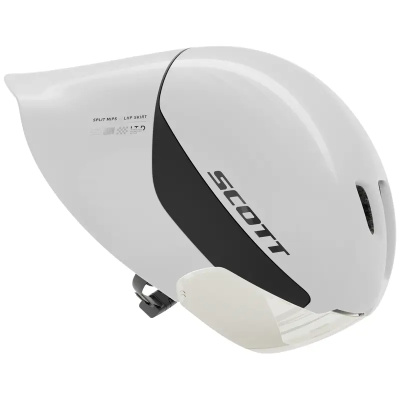
Scott Aero TT Helmets exist for one reason: to get you down the road faster when every tenth of a second is on the line. Developed through wind tunnel testing and proven across WorldTour racing, helmets like the Scott Split Plus are engineered specifically for the aggressive tuck position that time trialists and triathletes live in. The shape is purpose-built - long tail, minimal frontal profile, flush integration with your back - to cut drag where it matters most. Integrated magnetic visors replace the faff of sunglasses, offering a wider field of vision, better anti-fog performance in the damp conditions that greet most UK early-morning start sheets, and a cleaner aero profile than anything perched on your nose. MIPS brain protection sits inside without compromising the external shape, so you're not trading safety for speed. Dynamic ventilation channels keep airflow moving during hard threshold efforts, because overheating mid-effort costs you just as many watts as drag does. If you're targeting a club 10, a regional championship, or a full-distance triathlon, this is the category where free speed is genuinely on the table.
Prices and availability can change quickly. Delivery charges are not always included in listed prices.
Final price, stock status and delivery terms are set by retailer. We may receive a commission on purchases made.
Aerodynamics and Ventilation: What the Wind Tunnel Actually Delivers
The aerodynamic shape on Scott's TT helmets isn't styling - it's the direct output of wind tunnel testing. The extended tail is designed to sit against your back in the time trial position, smoothing airflow off the rear of the helmet rather than letting it break away turbulently. That drag reduction translates into real watt savings over a 10- or 25-mile course, and at race pace, those watts compound into meaningful time gains over a standard vented road lid.
Ventilation is where aero helmets have historically asked for a compromise, but Scott's approach on helmets like the Split Plus uses dynamic ventilation channels routed to move air across your head without creating aerodynamic penalties. The channels are shaped to work with the overall aerodynamic form, not against it. Think of it less as open vents and more as managed airflow - enough cooling to keep your effort sustainable on a muggy August race day, without punching holes in the drag profile. On a humid summer evening in the flatlands of Lincolnshire or Essex, that balance matters more than riders often expect before their first race. If you're comparing options, Giro aero TT helmets and Kask aero TT helmets take slightly different approaches to the ventilation-versus-aero trade-off, so it's worth comparing shapes directly if cooling is a priority for you.
Fit Profile and Visor Integration
A TT helmet only delivers its aerodynamic benefit when it fits correctly. That means sitting snug - no pressure points, but no movement either - and positioned low on the forehead so it integrates cleanly with your head position in the aero tuck. The tail needs to sit as flush as possible against your back; if it's riding high, you're losing the aero gain and adding instability. When you're trying helmets on, replicate your actual race position, not just standing upright. What feels fine in a shop can behave completely differently when your chin is three inches from your stem.
Scott's integrated magnetic visor system is one of the more practical solutions in this category. Magnetic attachment means fast, reliable swaps - important if conditions change between your warm-up and the start ramp - and the visor itself offers an uninterrupted field of vision that conventional eyewear simply can't match. Anti-fog performance is a genuine functional advantage for UK racing, where early-morning humidity and low temperatures make fogging a real problem rather than a theoretical one. The magnetic mechanism also removes the aerodynamic disruption that stems from glasses arms breaking the helmet's surface profile. Scott TT helmet sizing follows standard head circumference measurements, but given how position-dependent fit is in this category, use the brand's size guide carefully and err towards the snugger end if you're between sizes.
Looking for everyday road or trail protection? Head over to our main Scott Helmets or Scott Kids Helmets pages - the TT range is purpose-specific and not what you want for general riding.
Racing in the UK: Practical Prep for Real Conditions
UK time trial courses are rarely kind. Exposed dual carriageways, crosswinds off flat fenland, and weather that changes between your alarm going off and your start time - these are the conditions Scott's aero helmets are tested against, not just the controlled air of a wind tunnel. Crosswind stability is worth understanding before race day: the Split Plus's shape is optimised to minimise yaw-induced drag across a range of wind angles, which means it tracks predictably rather than pushing your head around when a lorry passes or a gust catches you on an exposed stretch.
Visor care is something riders tend to overlook until it's too late. In your transition bag or kit box, the visor is vulnerable to scratching from kit zips, CO2 canisters, and anything else rattling around. A soft cloth sleeve or a dedicated case keeps the optical clarity intact - a scratched visor in low morning sun is a genuine safety issue, not just an annoyance. For anti-fog performance in damp conditions, avoid touching the inner surface with your fingers, as skin oils break down the coating quickly. A light application of an anti-fog treatment before a wet race is worth adding to your kit-check routine.
Pairing your helmet with the right setup matters too. If you're building a proper race package, Scott time trial and triathlon bikes are engineered to work with the same aerodynamic philosophy - the position geometry and the helmet shape are designed as a system. Round it out with Scott bib shorts and Scott base layers that won't bunch or billow, and you're reducing drag across the whole package rather than in isolation. For alternative helmet options in this category, MET aero TT helmets and POC aero TT helmets are worth a look if you want to compare fit profiles before committing.
Scott Aero TT Helmets FAQs
Are aero helmets worth it for time trials?
Yes - a TT helmet is one of the most cost-effective aero gains you can make. Compared to a standard vented road helmet, the drag reduction delivers genuine watt savings and can shave meaningful seconds off your time. At club 10 pace or faster, the difference is measurable and consistent.
How should a Scott TT helmet fit?
Snug across the whole head with no pressure points, sitting low on the forehead. The key check is the tail - in your actual race tuck position, it should sit flush against your back. Try it in the position you race in, not standing upright, and if you're between sizes, go snugger.
Can you wear sunglasses with an aero TT helmet?
You can, but Scott's integrated magnetic visor is a better option in nearly every case. It offers a wider, unobstructed field of vision, better anti-fog performance for UK conditions, and a cleaner aero profile than glasses arms breaking the helmet's surface. The magnetic attachment also makes swaps fast and fuss-free at the start line.